Enrichment activities give dogs physical, mental, and sensory stimulation that supports their wellbeing; trainers have used scatter feeding at 92% , snuffle mats at 87% , sniff-based walks at 85% , and sensory garden spaces at 46% in one companion-dog study. On a weekday morning, that can mean turning a rushed breakfast and ordinary walk into a few purposeful minutes of searching, moving, learning, and exploring before you leave for work.
You don't need a house full of equipment or an open afternoon. You need to understand what your dog is trying to do naturally, then build small opportunities around those needs. A food search can satisfy foraging, a new route can add sensory variety, and a calm interaction with a trusted person can provide social connection.
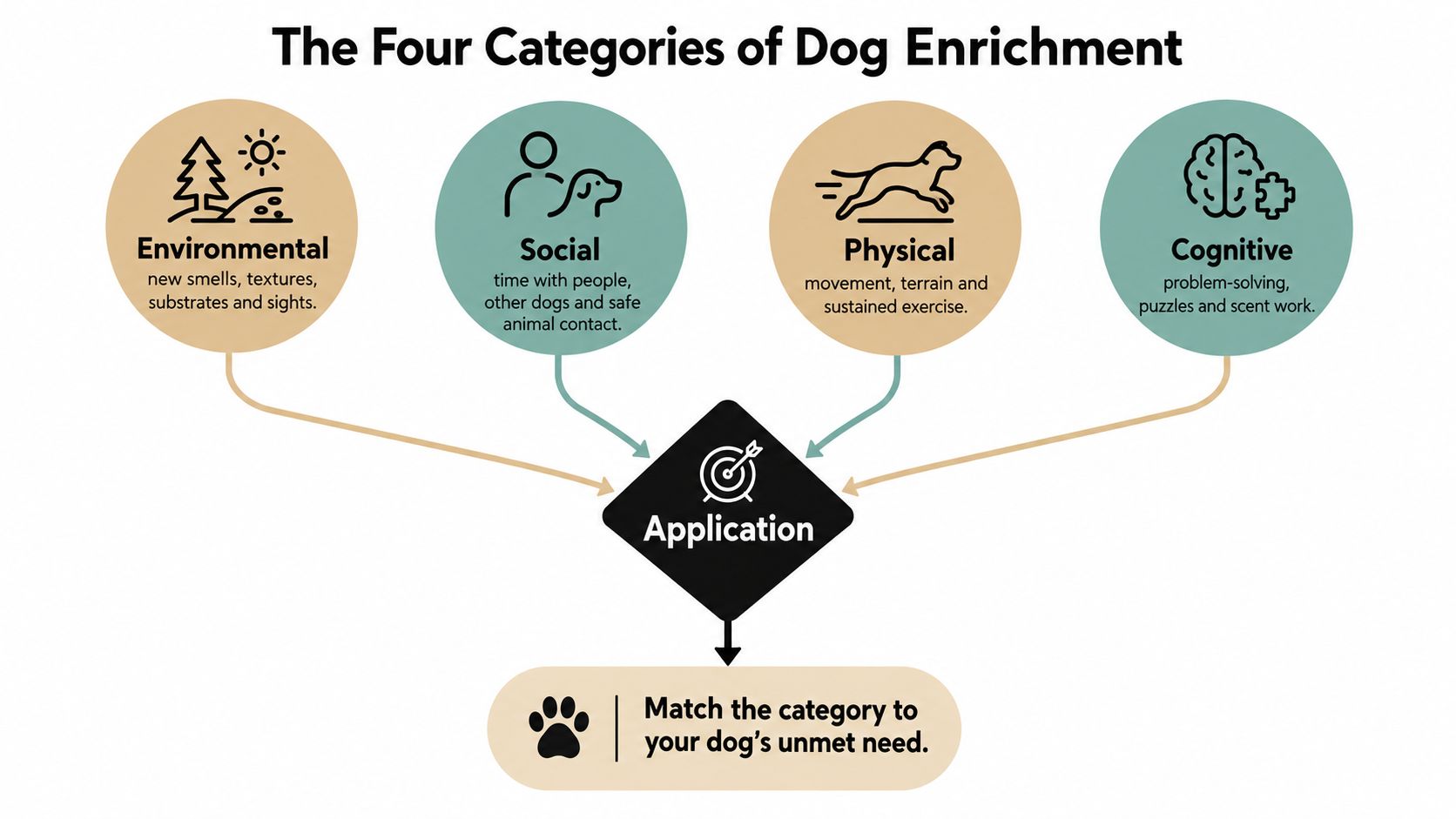
The most useful approach combines environmental, social, cognitive, and physical enrichment . These categories often overlap, which is why a structured on-leash walk or hike can provide far more than exercise alone.
What Enrichment Activities Mean for Your Dog
At 6:15 in the morning, your alarm goes off. Your dog has been staring at an empty bowl for ten minutes, and you've got forty-five minutes to feed them, get ready, and start your commute. You could rush through a short walk and leave a toy on the floor, or you could make those same ordinary tasks more purposeful.
Enrichment activities are structured opportunities for physical, mental, and sensory stimulation that let a dog express natural behaviors while recovering from the pressures of domestic life. Sniffing, searching, chewing, exploring, learning, moving, and socializing all belong in that definition. The activity doesn't need to be complicated. It needs to give your dog something meaningful to do.
A longer walk isn't automatically a richer walk. A dog can cover plenty of distance while being hurried past every smell, pulled away from interesting textures, or asked to focus on a pace that leaves no room for exploration. Duration matters, but the quality and variety of engagement matter too .
Start with the unmet need
Use this simple sequence when choosing an activity:
- Observe the behavior. A dog who paces may need movement or a calmer sensory outlet. A dog who raids bins may need safe foraging opportunities.
- Match the activity. Offer a scent search, food puzzle, training game, social interaction, or controlled movement instead of guessing at random.
- Watch the recovery. Your dog should be able to settle afterward. More activity isn't always better if the dog becomes frantic or unable to relax.
Environmental enrichment became a formal animal-care concept in the 1920s , but it wasn't widely used in animal-care settings until the 1980s . For dogs, U.S. federal policy later helped normalize exercise as part of welfare. The 1985 Animal Welfare Act amendments explicitly mandated exercise for dogs, USDA-APHIS began enforcing regulations in March 1987 , and a proposal on dog exercise and socialization standards followed in March 1989 . This history of enrichment in animal care shows how the idea developed from general husbandry into a recognized welfare practice.
The rest of the answer to “what are enrichment activities” comes down to four categories, the benefits they support, and a routine you can maintain even when your workday is full.
The Four Categories of Dog Enrichment
Think of the four categories as a menu rather than four separate boxes. Each one meets a different need, and one activity can satisfy several needs at the same time.
Environmental enrichment
This changes what your dog can smell, see, touch, and investigate. A slow walk along a new trail, a safe patch of grass, a different surface under the paws, or a cardboard box filled with familiar scents can all add environmental variety.
The common mistake is treating novelty as a constant stream of excitement. Your dog doesn't need every outing to be intense. Calm investigation is useful enrichment , especially when your dog can choose the pace and move away from something uncomfortable.
Social enrichment
Social enrichment includes appropriate time with people, compatible dogs, and other safe animals. It might be a structured playdate, a calm greeting with a trusted neighbor, a group walk with space between dogs, or relaxed mat time beside you while you cook.
A dog park isn't the only option, and it isn't suitable for every dog. Social enrichment should account for temperament, communication style, health, arousal, and the dog's ability to disengage. A shy dog may benefit more from quiet companionship than from a crowded play area.
Cognitive enrichment
Cognitive activities ask your dog to make choices and solve manageable problems. Puzzle feeders, scent work, shaping exercises, and novel training cues all encourage the dog to think rather than just react.
Don't make the task so difficult that your dog gives up. Start with an easy food search or familiar behavior, then increase complexity gradually. The goal is engaged problem-solving , not frustration.
Physical enrichment
Physical enrichment includes controlled walking, running, climbing, balancing, and movement across suitable terrain. A short game of tug can help one dog, while another may need a steady on-leash hike with pauses and varied ground.
The mistake is assuming physical enrichment means endless fetch. Repetitive high-arousal games can leave some dogs more wound up, not more settled. Include recovery, control, and appropriate pacing.
If your dog has digestive sensitivities or you use food frequently in enrichment, discuss suitable options with your veterinarian. A resource about dog probiotics may also help you understand one part of broader digestive-care planning, but it doesn't replace professional veterinary advice.
A single trail outing can combine all four categories. The terrain supplies movement, the surroundings provide smells and textures, route choices create mental engagement, and shared attention with the handler builds social connection.
Why Enrichment Activities Matter for Behavior and Health
A dog who lacks appropriate outlets often creates their own. Counter-surfing, destructive chewing, persistent barking, or frantic attention-seeking can become rewarding because the behavior provides stimulation, access to food, movement, or interaction. Enrichment doesn't erase every behavior problem, but it gives your dog safer ways to use the same instincts.
The clearest welfare findings involve stress and visible behavior. A review of pet-dog research reports that play and familiar-human interaction can increase oxytocin and lower cortisol, while cognitive and scent activities increase engagement and mental stimulation. In shelter settings, a 45-minute human interaction session was associated with lower salivary cortisol the following day, and calming enrichment items reduced stress-related behaviors compared with no enrichment. This review of enrichment and canine welfare explains why the activity's type and emotional intensity matter.
Match the benefit to the behavior
A dog who raids the kitchen may need a supervised food-search routine before you prepare dinner. A dog who becomes tense outdoors may benefit from a quiet sniff walk with distance from triggers rather than a crowded, fast-paced outing. A dog who struggles to settle may need lower-arousal exploration and calm social contact, not more frantic ball play.
Research with shelter dogs found that games, toys, and food-based enrichment reduced depression-like and stereotypic behaviors. After enrichment was introduced, dogs spent less time lying down and showed fewer repetitive stress behaviors. The findings support a practical principle: structured foraging, sensory work, and problem-solving can change how a dog spends their time . The shelter-dog study also supports adding sniffing, route variation, and controlled exploration to a walking service.
| Enrichment Category | Primary Behavior and Health Benefit |
|---|---|
| Environmental | Encourages exploration, sensory engagement, and confidence in varied surroundings |
| Social | Supports connection, communication, and appropriate interaction |
| Cognitive | Builds focus and problem-solving through manageable challenges |
| Physical | Supports movement, body awareness, and a healthy outlet for energy |
Enrichment is best viewed as preventive welfare care , not a luxury. It supports a dog's daily emotional and physical needs, while also giving owners information. If a puzzle is too hard, your dog may show frustration. If a walk is too stimulating, your dog may struggle to settle. Those responses help you adjust the plan. For broader context on the relationship between dog care and owner wellbeing, see dog health benefits for dogs and owners.
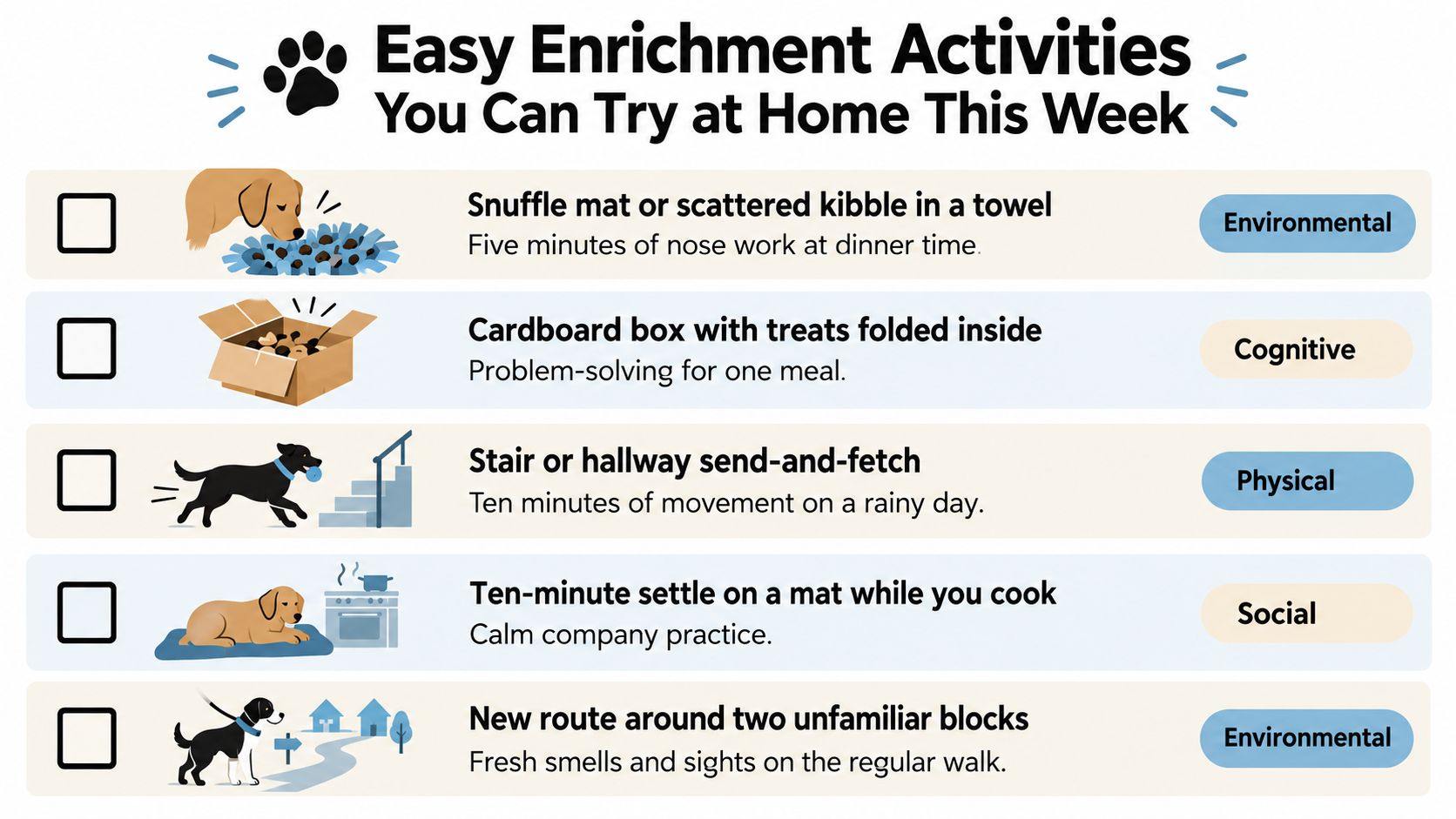
Easy Enrichment Activities You Can Try at Home This Week
Start with activities that use what you already have. Each option below has a clear purpose, a short time requirement, and an easy way to make it simpler or harder.
- Muffin-tin search, cognitive, five to ten minutes: Place part of your dog's regular kibble in a muffin tin and cover some spaces with safe, lightweight objects that your dog can move. Supervise the activity, and begin with several uncovered spaces so the puzzle doesn't become frustrating.
- Long-lead sniff walk, environmental, ten to fifteen minutes: In a secure yard or permitted safe area, use a suitable long lead and let your dog investigate grass, soil, and familiar objects at a slow pace. Scatter a small portion of the normal meal in grass if your dog needs help starting the search.
- Tug or flirt-pole session, physical, five minutes: Use clear start and stop cues, keep movements controlled, and end with a calm behavior such as a sit or mat settle. The session should leave your dog engaged, not frantic.
- Structured neighbor playdate, social, fifteen to thirty minutes: Choose a compatible dog and a neutral, safe setting. Begin with parallel walking if direct play is too intense, then allow brief interaction while watching body language and giving both dogs breaks.
The RSPCA's low-cost DIY enrichment guidance also recommends hiding kibble or treats in a muffin tin, scattering food in grass or around a room, and using cardboard boxes or toilet-paper rolls. These activities work because they invite searching and problem-solving through natural foraging behavior.
Remove your dog's collar during tug to reduce the chance of catching or twisting it, and supervise all food puzzles. Stop using any item that breaks apart or creates a choking risk. More practical ideas appear in this guide to dog enrichment activities for busy Denver pet parents.
On-Leash Hiking and Running as Multi-Category Enrichment
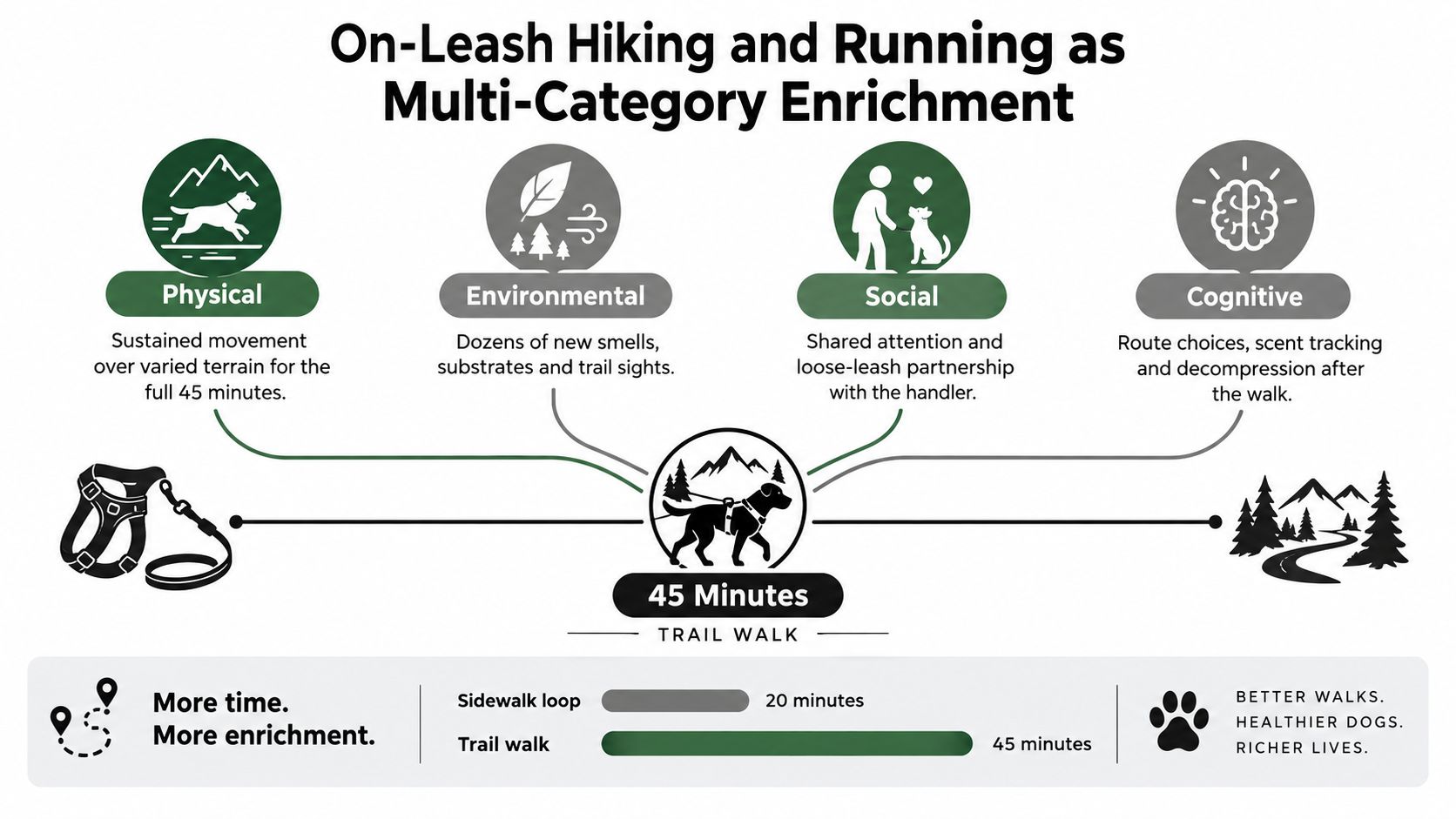
A structured on-leash outing can turn one block of your calendar into several forms of enrichment. The difference between a rushed sidewalk loop and a purposeful trail walk isn't only distance. It's what your dog is allowed to notice, process, and practice along the way.
During a 45-minute trail walk , your dog can receive:
- Physical input: Sustained movement, changes in pace, and varied terrain challenge the body in a controlled way.
- Environmental input: New smells, wind, trail surfaces, vegetation, and changing sights create sensory variety.
- Cognitive input: Route choices, obstacles, scent trails, and pauses require observation and decision-making.
- Social input: Loose-leash partnership, shared attention, and handler communication build a cooperative relationship.
A hurried pavement loop may provide necessary movement, but it often gives the dog little time to investigate. On a trail, you can alternate walking with sniffing, pause before a narrow section, reward a check-in, and let your dog process a new smell before continuing. That rhythm can support decompression without turning the outing into uncontrolled wandering.
Keep the outing safe and readable
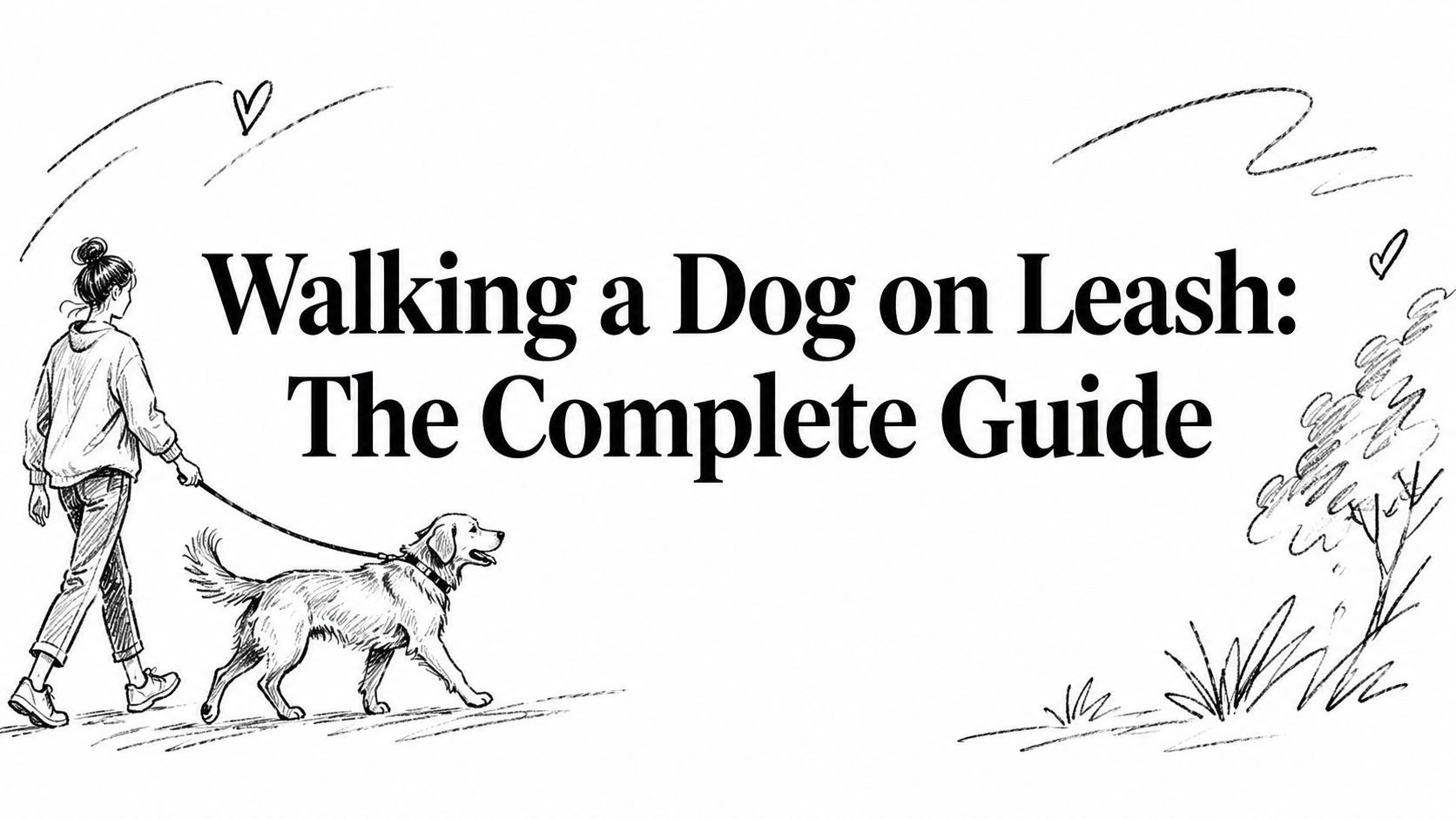
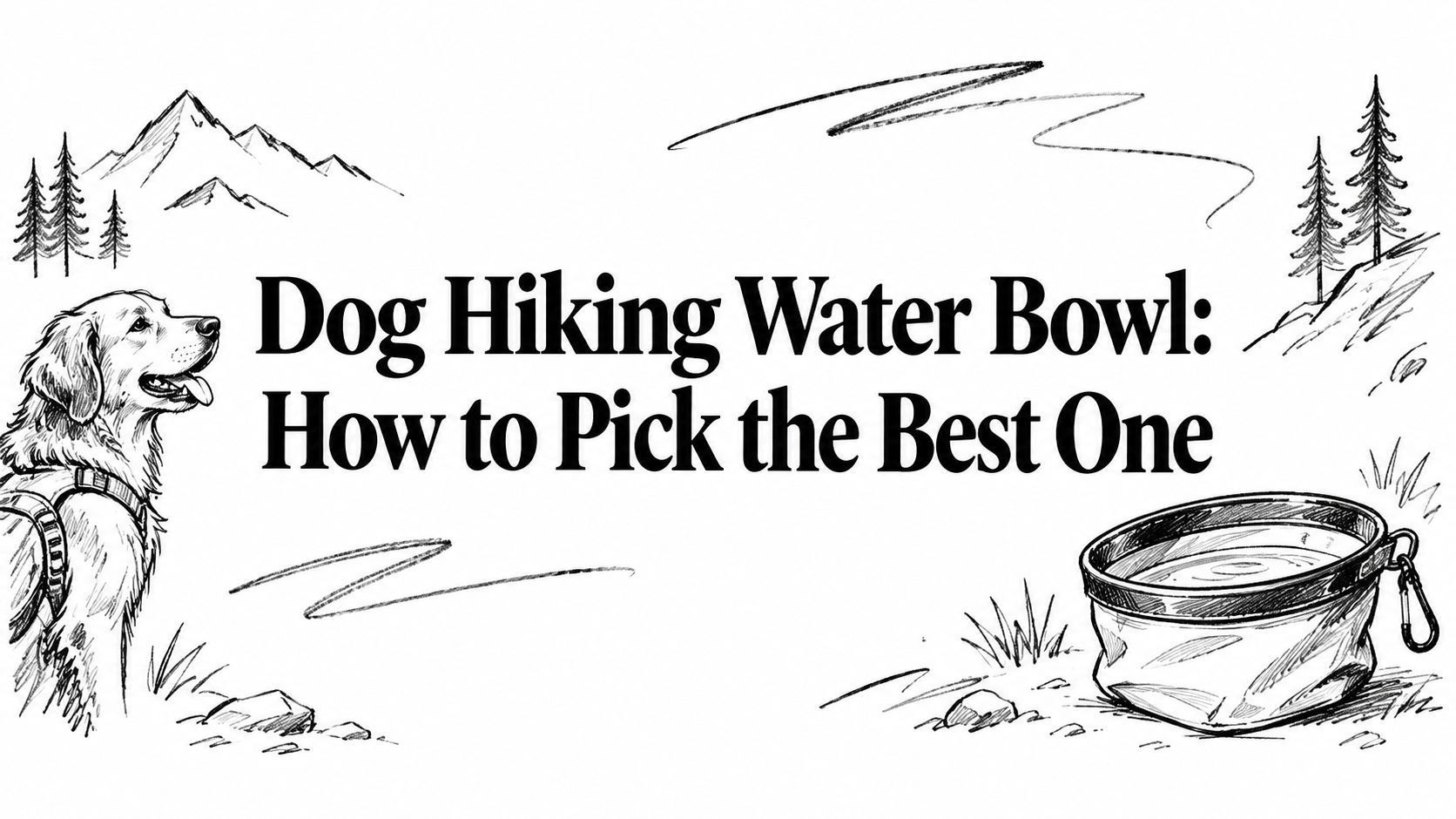
Use equipment that fits correctly and gives you reliable control. A well-fitted harness may suit many dogs, but the right choice depends on body shape, pulling behavior, health, and handler skill. Keep water and weather in mind, and choose terrain appropriate for your dog's age, conditioning, paws, and joints.
Read the body, not just the clock. Loose movement, normal interest in smells, responsive check-ins, and an ability to settle during pauses suggest the pace is workable. Repeated lunging, frantic scanning, tucked posture, excessive panting, or inability to disengage signal that you should add distance, reduce intensity, or end the outing.
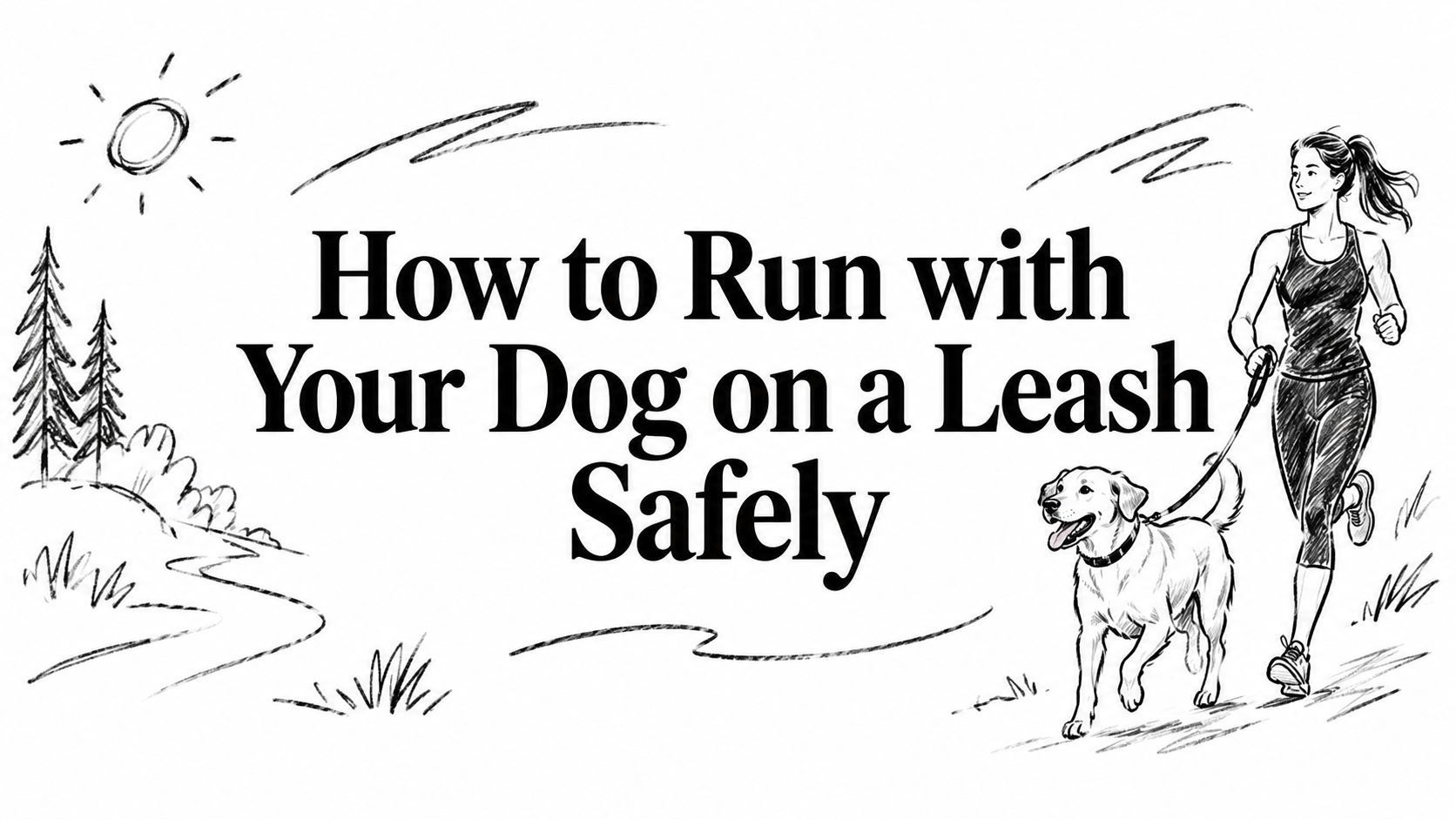
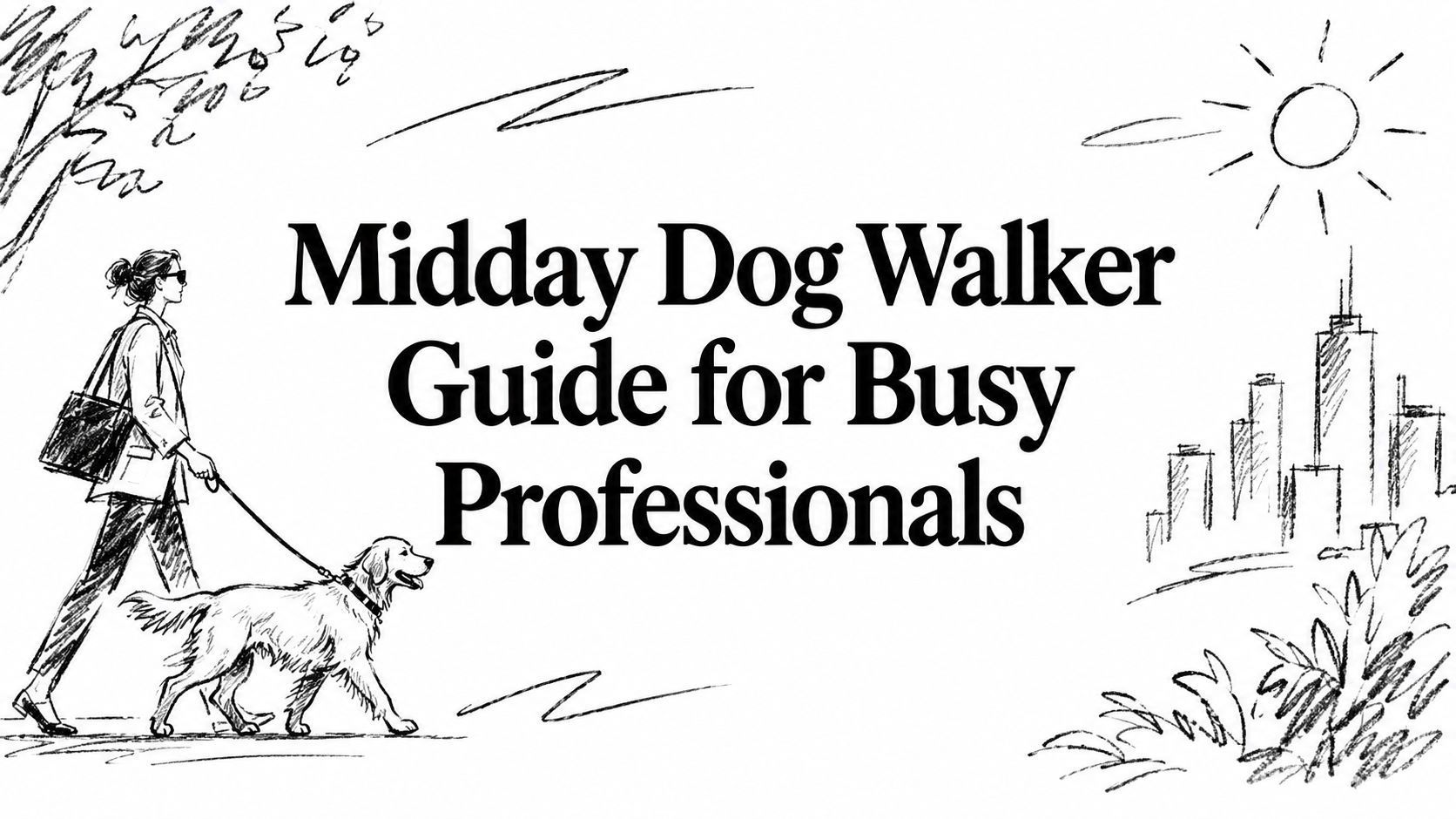
A professional on-leash hiking or running service can fill the gap when your work calendar leaves no room for trail time. The right provider should match pace and terrain to the dog's energy level and temperament, use safe handling practices, and keep the session structured instead of just releasing energy. For owners adding running, safe on-leash running guidance can help establish an appropriate routine.
Building a Realistic Enrichment Routine for Busy Weekdays
Consistency beats an ambitious plan that lasts only a few days. Use short home activities on ordinary mornings, reserve more involved outings for days when someone else can provide them, and leave room for your dog to rest.
| Day | Time Block | Activity | Category | DIY or Service |
|---|---|---|---|---|
| Monday | 7:00 a.m., 10 minutes | Muffin-tin breakfast search | Cognitive | DIY |
| Tuesday | Midday, 45 minutes | Structured on-leash trail hike | Environmental, physical, cognitive, social | Service |
| Wednesday | 6:30 p.m., 15 minutes | Yard sniff walk followed by a mat settle | Environmental, cognitive | DIY |
| Thursday | Midday, 30 to 45 minutes | On-leash run matched to the dog's pace | Physical, social, cognitive | Service |
| Friday | 5:30 p.m., 5 minutes | Controlled tug, then calm-down practice | Physical, social | DIY |
| Saturday | Morning, 30 minutes | Compatible-dog parallel walk or playdate | Social, environmental | DIY |
| Sunday | Flexible, 15 minutes | Cardboard-box search using part of a meal | Cognitive, environmental | DIY |
The exact times can move. The structure should remain familiar: search, move, connect, then recover . If your dog eats breakfast quickly, reserve part of the meal for a search activity rather than adding extra treats. If your dog is tired after a trail outing, offer quiet rest instead of scheduling another demanding game.
Adjust the plan from behavior
Track a few simple observations for a week. Note whether your dog settles after the activity, whether they remain interested without becoming frantic, and whether boredom behaviors appear later. This is more useful than counting activities without considering their effect.
If your dog shows boredom behaviors for three days in a row , add a second structured outing. That outing can be short and calm. A sniff-focused walk may be more appropriate than another high-speed run, especially if the earlier activity already created substantial physical fatigue.
Home enrichment is often sufficient when you can provide safe variety, your dog settles afterward, and the main challenge is an occasional gap in the day. Booking structured walking or hiking support makes more sense when work keeps you away during your dog's active period, your dog needs consistent weekday exercise, or you aren't confident managing trail environments and leash behavior.
For Denver-area owners, a professional service can cover Arvada, Denver, Englewood, Golden, Lakewood, Littleton, and Wheat Ridge through this Denver Dog service area page. Details and availability may change, so check the service page before planning the week.
Denver Dog offers structured on-leash walking, running, and hiking sessions designed around a dog's energy level and temperament, giving busy owners a practical way to add movement, sensory exploration, and engagement to the weekday routine. Visit Denver Dog to review the available programs and choose a suitable next outing for your dog.
The Run Down