It's 5:30 p.m. in Denver, you're just home from work, and your dog is already bouncing off the furniture. You've walked him this morning, you've thrown the ball at lunch, and he's still not settled. Or maybe your dog has the opposite problem, where she's gained weight, slows down on walks, and you aren't sure how much more exercise is safe to add.
That gap between a casual walk and a safe, effective workout is where a canine conditioning fitness coach comes in. Understanding what that professional does, and how to judge one, helps you spend your time and money on exercise that builds fitness instead of just burning an hour.
What Is a Canine Conditioning Fitness Coach
Think of a young Border Collie in an apartment. A quick trip around the block handles bathroom needs, but it doesn't touch her energy, her muscle development, or her focus. She comes home and herds the kids, chews the baseboards, and waits for the next short outing. A dog walker solves the bathroom and boredom problem for that day. A canine conditioning fitness coach solves a different problem over weeks.
More Than a Longer Walk
A coach designs and oversees structured exercise programs built around your individual dog. The goal isn't to tire a dog out. It's to improve cardiovascular fitness , body condition , strength, and movement quality in a planned, progressive way, much like a personal trainer does for a person.
A dog trainer, by contrast, focuses mainly on behavior and skills like recall, leash manners, or settling on cue. Those skills matter, and a coach needs solid handling, but conditioning is about the physical workload itself. How often, how hard, how long, on what surface, and with what recovery.
What That Looks Like in Practice
For that Border Collie, a coach might start with controlled trotting intervals on a soft, flat route, add short hill work only after her gait stays clean, and finish with calm walking so her breathing recovers. For an overweight Labrador, the first weeks might look almost boring, with steady low impact walks that get slightly longer, plus simple strength work, because joints and fitness need time to adapt.
- A regular walker: Provides a walk, often at the dog's chosen pace, with little progression planned week to week.
- A trainer: Teaches cues and changes behavior, though exercise may not be dosed like a fitness program.
- A conditioning coach: Assesses the dog, sets a workload, monitors response, and adjusts the plan as fitness changes.
Tired is a short term outcome. Fitter is a measurable change in stamina, muscle, body condition, and recovery over time.
That distinction is why breed, age, health history, and temperament shape every program. Two dogs can go out for the same amount of time and get completely different training effects. A good coach knows why, and plans for it.
The Science Behind Canine Conditioning
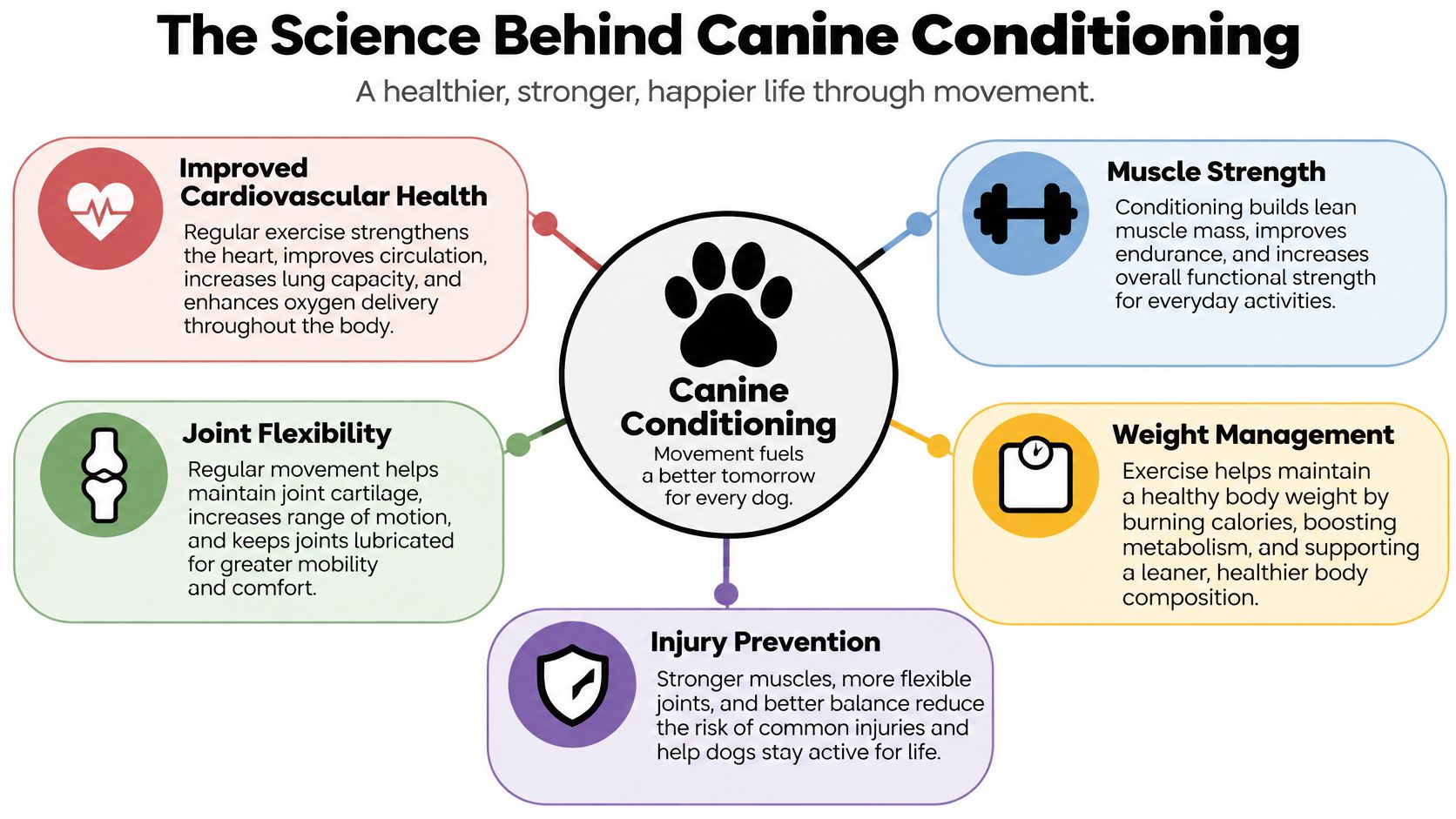
Conditioning works because a dog's body adapts to repeated, gradually increasing demands. Muscles get better at using fuel, the heart and lungs support longer effort more comfortably, and body composition can shift toward more muscle and less excess fat. You don't get those adaptations reliably from occasional, random hard outings.
Duration and Weight
A large UK study of 11,154 adult dogs found that 16.1% were classified as overweight, and compared with dogs exercised for more than one hour, the odds of being overweight were 1.266 times higher for dogs exercised 30 to 60 minutes, 1.754 times higher for 11 to 30 minutes, and 2.241 times higher for 0 to 10 minutes, as reported in the UK study of walking duration and overweight risk in dogs. That's a clear dose response pattern . Shorter, less frequent exercise lines up with higher overweight risk, and each step down in duration lines up with higher odds.
That doesn't mean every dog should suddenly run for over an hour. It means volume and consistency matter, and a short irregular outing shouldn't be treated as interchangeable with structured work. Weight control also needs veterinary assessment and appropriate calorie control, not exercise alone.
What Changes Inside the Muscle
A study of 12 adult Alaskan Huskies after seven months of progressive endurance conditioning found a 1.31 fold increase in GLUT1 , a 1.80 fold increase in GLUT4 , and a 2.46 fold increase in GLUT12 in muscle, according to the sled dog study on glucose transport proteins and endurance conditioning. In plain language, these proteins help muscle take in and use fuel. Trained muscle becomes better equipped to do work.
Those were highly athletic sled dogs, so you shouldn't copy their workload for a pet. The takeaway is narrower and more useful. Consistent, progressive training creates physiological change that a single hard weekend hike can't. A coach builds that consistency while watching gait, breathing, and recovery, which also supports sound injury prevention strategies for active dogs rather than relying on enthusiasm alone.
Core Responsibilities and Techniques of a Coach
A professional session starts before anyone clips on a leash. The coach first learns what your dog can safely do today, then decides what should change over the next few weeks.
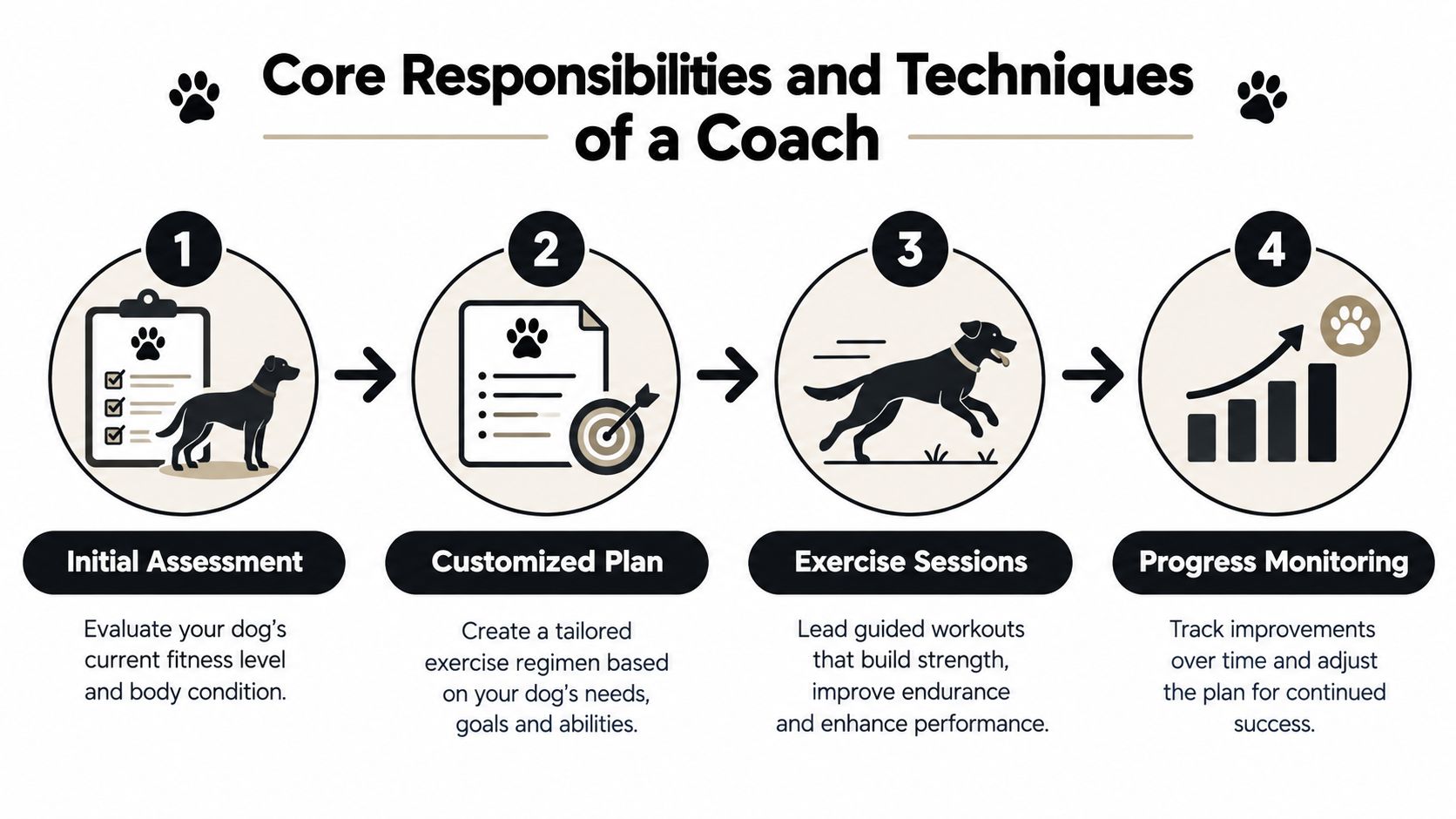
Step One Is Assessment
An intake should cover body condition , age, breed structure, orthopedic history, current routine, gait, and any veterinary restrictions. The coach watches your dog walk and trot, checks how she turns, and notices whether one side looks weaker or stiffer. Temperament matters too, because an anxious dog and a wildly social dog won't handle the same route or distractions in the same way.
If something looks off, such as limping, repeated lagging, or pain on stairs, the right move isn't to push through. It's to pause progression and refer you back to your veterinarian.
Building the Program With FITT-VP
Good coaches don't guess the workload. A canine exercise review describes the FITT-VP framework , covering frequency, intensity, time or duration, type, volume, and progression, as a scientific method for designing dog exercise programs where intensity and workload should increase incrementally while trainers monitor the dog's response, as explained in the review of the FITT-VP framework for canine exercise programs.
In practice, that means changing one variable at a time. Add a little duration before you add speed. Add a gentle slope before you add a rocky trail. Keep most work at a pace where your dog moves evenly and recovers well.
The video below shows what controlled, form focused conditioning work looks like compared with letting a dog run until she's exhausted.
Inside a Session
- Warm up: Several minutes of easy walking, then controlled trotting, so muscles and joints prepare for work.
- Main work: Aerobic exercise such as steady trotting or hiking, matched to the dog's current fitness and the day's temperature and surface.
- Strength and control: Exercises for the back, abdomen, and hips, plus balance and proprioception work for uneven ground and turns.
- Cool down: Slower walking and a check of breathing, coordination, and willingness to move normally.
Throughout, the coach records duration, surface, pace, fatigue signs, and next day stiffness. Recovery quality is data. If your dog is sore the next morning or her gait deteriorates mid session, the plan gets easier, not harder. Heat also changes the plan, since a route that's fine on a cool morning can be inappropriate on a hot, humid afternoon.
Essential Skills and Certifications to Look For
Anyone can enjoy running with dogs. That doesn't make them qualified to dose exercise for a senior dog, a brachycephalic breed, or a dog returning from injury. You're looking for a mix of tested knowledge, observation skill, and professional judgment.
Knowledge You Should Be Able to Ask About
A competent canine conditioning fitness coach should explain, in plain language, how canine anatomy and gait affect exercise choices. They should understand why growth stage, joint health, body condition, breathing structure, and heat tolerance change what is safe. If every answer comes back to running farther, that's a warning sign.
Ask what formal education or certification they've completed in canine fitness, conditioning, handling, or first aid, and how they stay current. Our guide to canine fitness certification and how veterinary standards protect your dog gives you useful questions for that conversation. Certification alone isn't proof of quality, but it does show structured study and assessment rather than experience by trial and error.
Skills That Show Up in Real Time
Observation is the skill you'll see fastest. A good coach notices a shortened stride, a dog drifting to one side, excessive panting that isn't settling, or a sudden loss of enthusiasm, and they act early. They also handle dogs calmly on leash around traffic, other dogs, cyclists, and wildlife without letting the workout override safety.
| Area to check | Strong sign | Concern |
|---|---|---|
| Assessment | Asks for health history and watches gait | Starts running with no intake |
| Progression | Explains gradual increases and rest | Promises fast results for every dog |
| Referral judgment | Sends pain concerns to a veterinarian | Tries to diagnose or treat lameness |
| Communication | Sends clear session notes | Reports only that the dog seemed tired |
Communication deserves its own emphasis. You need honest notes about distance or duration, surface, behavior, recovery, and anything unusual. A coach who can't explain why they shortened a session probably isn't monitoring closely enough to lengthen one safely either.
Benefits of Conditioning for Different Dog Types
The right program looks different depending on the dog in front of the coach. That tailoring is the point, and it's where owners often get confused by generic advice online.
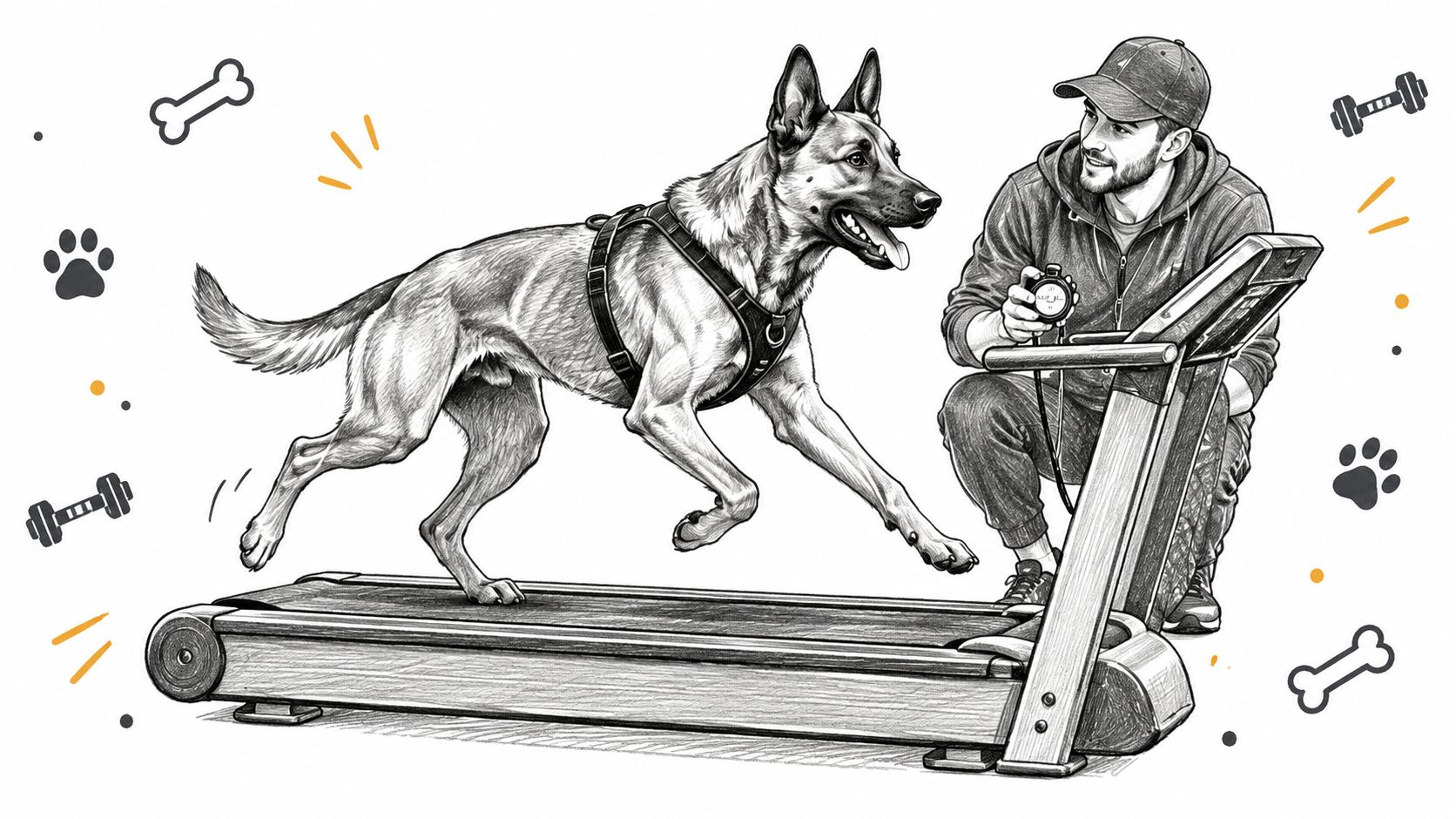
High Energy and Athletic Dogs
Young sporting and herding breeds often need structured stamina work , not frantic bursts that spike arousal and end in sloppy movement. Steady trots, controlled intervals, and trail work with rules can build fitness while protecting joints. If your dog fits this profile, our complete guide to exercise for high energy dogs walks through how to structure that energy across the week.
Overweight and Deconditioned Dogs
These dogs need the most patience, not the hardest workouts. A coach starts low impact, keeps intensity modest, and increases duration only as recovery improves. Severely obese dogs may need veterinary assessment and initial weight loss before they can tolerate much added exercise, and calorie control remains central.
There's encouraging evidence for the gradual approach. A peer reviewed study of 21 healthy dogs in an eight week program combining jogging and strength exercises found mean body condition score declined from 5.1 plus or minus 0.9 to 4.7 plus or minus 0.6 , and dogs rated at ideal body condition increased from 13 of 21 to 19 of 21 , as reported in the eight week jogging and strength study in healthy dogs. The dogs maintained stable weight while thigh circumference increased, which suggests body composition improved rather than the scale dropping.
Senior, Sport, and Working Dogs
Senior dogs benefit from maintaining muscle mass, mobility, and balance with shorter, more frequent, carefully surfaced sessions. Sport and working dogs need conditioning that matches their job, including sprint or endurance elements, core and hip strength, and consistent warm ups and cool downs to manage injury risk.
New owners often benefit from reading alongside hands on help, and this roundup of best dog books for new owners can support the routine and training foundations that make conditioning sessions calmer and safer.
How to Evaluate and Hire a Coach
Treat hiring a coach like hiring any other health adjacent professional for your dog. You'll check credentials, ask specific questions, watch how they work, and start with a trial period before you commit to a long package.
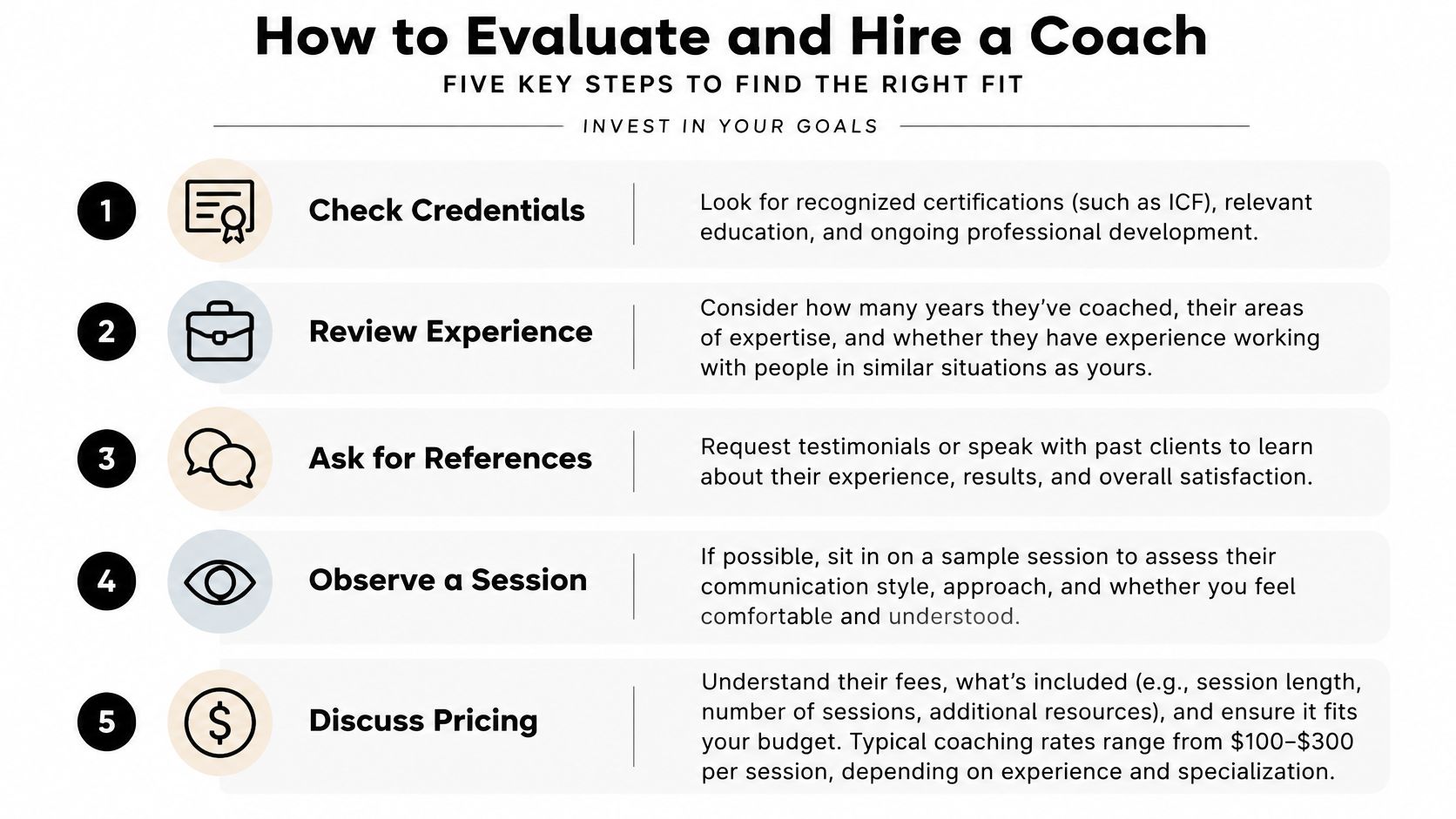
Use This Checklist
- Check credentials and training: Ask about canine fitness education, handling training, first aid knowledge, and ongoing retraining.
- Review relevant experience: Prioritize work with dogs like yours in age, size, fitness, and energy, not just general dog experience.
- Ask how assessment works: You want health history, body condition, gait observation, and a discussion of veterinary restrictions before running starts.
- Observe a session if you can: Watch pace control, leash handling, rest breaks, water, and how the coach responds when your dog slows down.
- Discuss reporting and pricing clearly: Confirm what's included, how progress is tracked, and how missed or shortened sessions are handled in bad weather.
Questions That Reveal Judgment
- How do you decide when to progress: Listen for recovery, gait quality, and next day response, not a fixed calendar.
- What are your stop signals: Strong answers mention limping, stumbling, excessive panting, disorientation, refusal to continue, or a clear gait change.
- How do you handle heat or cold: The plan should change with temperature, humidity, sun, and your dog's size and coat.
- What happens in an emergency: Ask about transport, veterinary contact, and how quickly you'll be notified.
- When would you refuse to run my dog: A trustworthy coach has an answer ready, because saying no is part of the job.
Trust check: Your dog should come home pleasantly worked, moving normally, and able to recover well by the next day. Repeated exhaustion isn't a badge of quality.
References help, but your dog's response over the first few sessions tells you more. Start conservatively, review the session notes together, and make sure the coach welcomes your veterinarian's input rather than treating it as interference.
How Denver Dog's Trained Staff Compare
You can apply the same checklist to Denver Dog that you'd apply to an independent canine conditioning fitness coach . The comparison is useful because Denver Dog is a service with a staff model, rather than a single solo coach, so training standards and safety systems matter as much as individual handling skill.
Denver Dog offers on leash running, walking, and hiking through its Denver Dog Joggers and Denver Dog Hikers programs. Sessions are matched to each dog's energy level, temperament, and fitness, with onboarding that includes baseline assessment of cardio, gait, mobility, and energy, followed by gradual increases in duration and intensity. That aligns with the progressive approach described earlier in this article, rather than sending every dog out on the same route at the same pace. Staff are trained and retrained several times a year on canine handling, fitness, and welfare, and fitness tracking after workouts includes GPS tracked journals documenting stamina and progress.
On the safety criteria from your checklist, Denver Dog requires drivers to maintain a seven year clean driving record and uses in vehicle camera technology that tracks speeding, following distance, distraction, and drowsiness, with real time coaching. That's relevant if your dog is transported to trails, since the drive is part of the service's risk profile, not separate from it.
For experience, Denver Dog reports delivering more than 135,000 sessions since 2010 and earning top ratings on Google and other platforms. Those are company reported figures, so weigh them alongside references, session notes, and your own trial experience, just as you would with any provider.
If you're considering weekday running, walking, or hiking in Arvada, Denver, Englewood, Golden, Lakewood, Littleton, or Wheat Ridge, you can check the details on Denver Dog's service areas for the Denver Metro and confirm whether your neighborhood and schedule fit. The best comparison test remains the same one you'd use anywhere. Ask about assessment, progression, heat decisions, and reporting, then watch how your dog recovers.
Building a Fitness Plan for Your Dog
A fitness plan isn't a single long run that fixes everything. It's a repeatable weekly rhythm that your dog's body can adapt to, built from the right mix of frequency, intensity, duration, type, and rest for her age, breed, and health.
Start with a veterinary check if your dog is overweight, senior, deconditioned, or has any history of limping, breathing difficulty, or joint disease. Then define one clear goal, such as steadier leash trotting, better trail stamina, improved body condition, or maintaining muscle in an older dog. One goal keeps progression honest, because you can tell whether the plan is working.
From there, a canine conditioning fitness coach or a structured running and hiking service can build the week for you, monitor recovery, and adjust when weather, surfaces, or your dog's response changes. At home, you support that work with consistent feeding, adequate rest days, and low intensity enrichment. A simple home obstacle course for dogs can add controlled balance and coordination practice on easy days, as long as you keep heights low, surfaces stable, and sessions short.
Track a few basics yourself. Note how your dog moves the next morning, whether stairs look easier or harder, how quickly breathing settles after work, and whether body condition is changing over weeks. Those observations make your conversations with a coach and your veterinarian far more productive.
The encouraging part is that you don't need perfect knowledge to begin well. You need a conservative starting point, gradual progression, and someone qualified watching the details you'd miss when you're busy. That combination turns daily exercise from a chore you're squeezing in into a plan that's building your dog's health.
If your dog needs structured, on leash running, walking, or hiking that's matched to his energy, fitness, and recovery, take a look at how Denver Dog structures weekday sessions across the Denver Metro. Book an introductory session, share your dog's health history and fitness goal, and use the first GPS tracked report to decide whether the pace and progression feel right for your dog.
The Run Down