A dog hiking water bottle should hold 16–24 oz for short outings with small or medium dogs , and 24–32 oz for larger dogs or longer hikes . Carrying clean water matters more than extra features because trail water can be dangerous.
You're a mile from the car, the trail has climbed into full sun, and your dog is still pulling toward the next bend. A creek appears below the path. It looks refreshing, but cloudy water, surface scum, or a foul smell can turn that convenient drink into a veterinary emergency. The right bottle gives you a cleaner choice, controls how much your dog drinks, and helps you plan the entire route instead of improvising when fatigue appears.
For Front Range outings, hydration planning has to account for dry air, elevation, sun exposure, exertion, and changing weather . A bottle is more than just a container clipped to your pack. Used correctly, it's part of your trail-safety system.
Why a Dog Hiking Water Bottle Matters on the Trail
A dog can look energetic while already losing the hydration margin needed for a safe return. Panting, uphill effort, warm ground, and dry mountain air all increase fluid loss. By the time a dog stops willingly, lags behind, or searches aggressively for a puddle, the handler may already be making decisions under pressure.
A veterinary review reports that resting dogs generally need about 40–60 ml of water per kilogram of body weight daily , while exercise and temperature extremes can increase requirements three- to fourfold . The same review warns that dehydration above a few percent can cause illness, losses above 15% may be fatal , and hunting dogs in Norway needed around 3.5 liters per day even in winter . See the veterinary review of canine hydration for the underlying discussion.
The bottle changes trail decisions
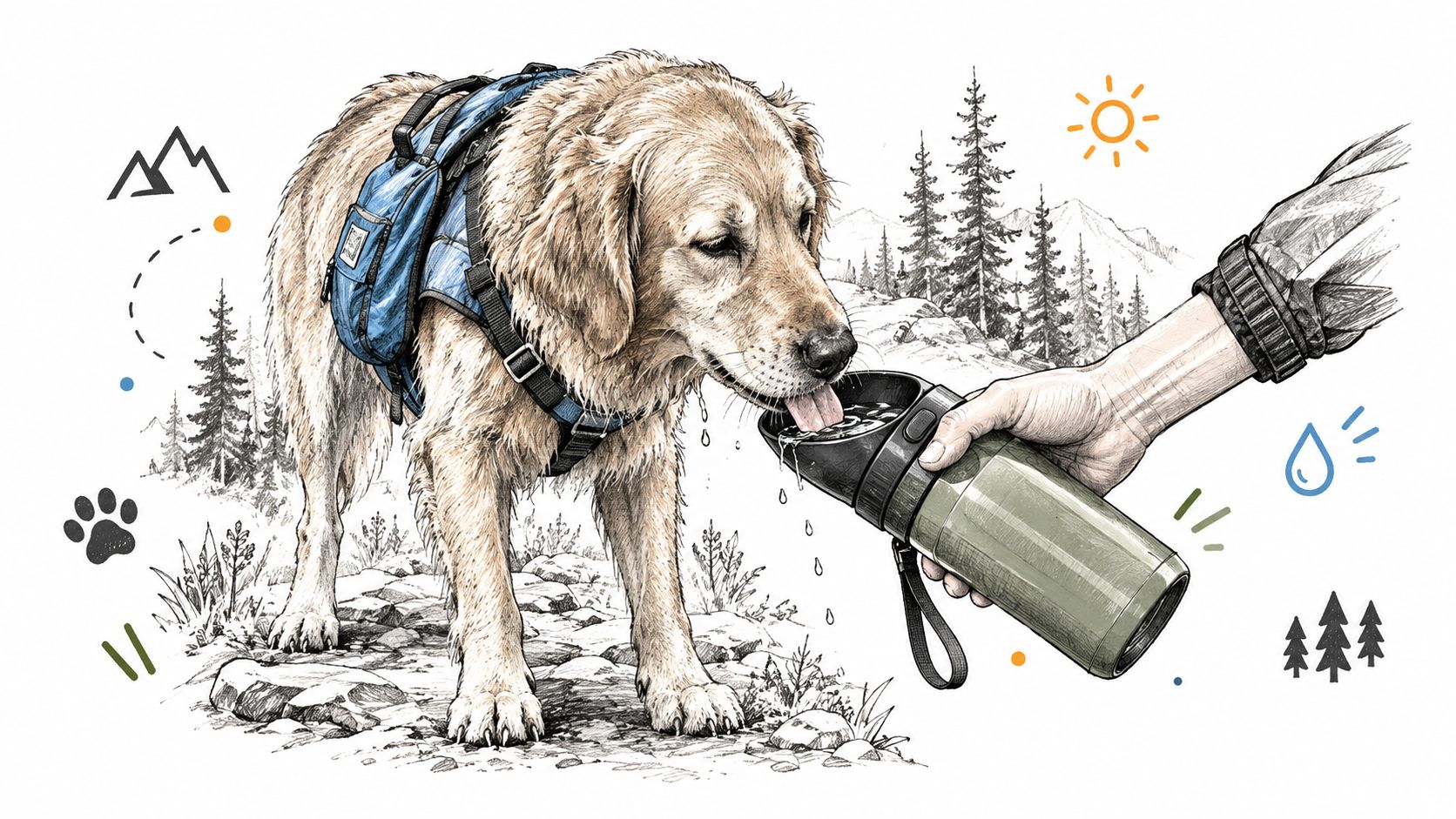
A dedicated bottle lets you offer small drinks at planned pauses , rather than waiting for obvious thirst. That matters on a route where turning around takes time, the return climb is harder than the approach, or the car is farther away than it looked on the map.
It also keeps your dog from sharing your personal bottle or drinking from a questionable puddle. An integrated trough or a separate collapsible bowl creates a clean drinking surface and lets you recover unused water instead of pouring it onto the ground.
Practical rule: Offer water before your dog looks desperate for it, then keep enough available for the return trip.
Denver-area conditions make this discipline especially useful. A shaded section can feel cool while exposed trail still produces heavy panting. Winter weather doesn't eliminate the need for water either, and cold air can make handlers underestimate exertion because the dog isn't visibly overheated.
Why natural water isn't a backup plan
A creek may contain contaminants that aren't obvious from a quick glance. Even clear water can be a poor substitute for the supply you carried, and a dog that drinks freely from several sources can consume more than you can track.
The bottle therefore serves two purposes: it supplies clean water and gives you a reason to refuse unsafe water . That second function is easy to overlook, but it often matters most when a dog is tired and the nearest alternative appears tempting.
How Canine Hydration Science Should Shape Your Choice
Bottle capacity should follow the dog and the route, not the largest number printed on a package. A sedentary day at home and a sustained hike place very different demands on the body, even for the same dog.
Peer-reviewed research found that total body water represented about 60%–68.6% of body weight in minimally conditioned Labradors and 74%–78.5% in highly conditioned Labradors . During exercise, daily water turnover reached up to 45% of total body water in cold conditions . In a stage race, Alaskan Huskies required an average of 6.56 liters per day , equal to about 44.43% of total body water . These dogs were elite working and racing animals, not ordinary pets, so the figures aren't serving instructions for a family hike. They do show how quickly sustained work can raise the stakes. The peer-reviewed canine athlete research provides the physiological context.
Translate physiology into trail behavior
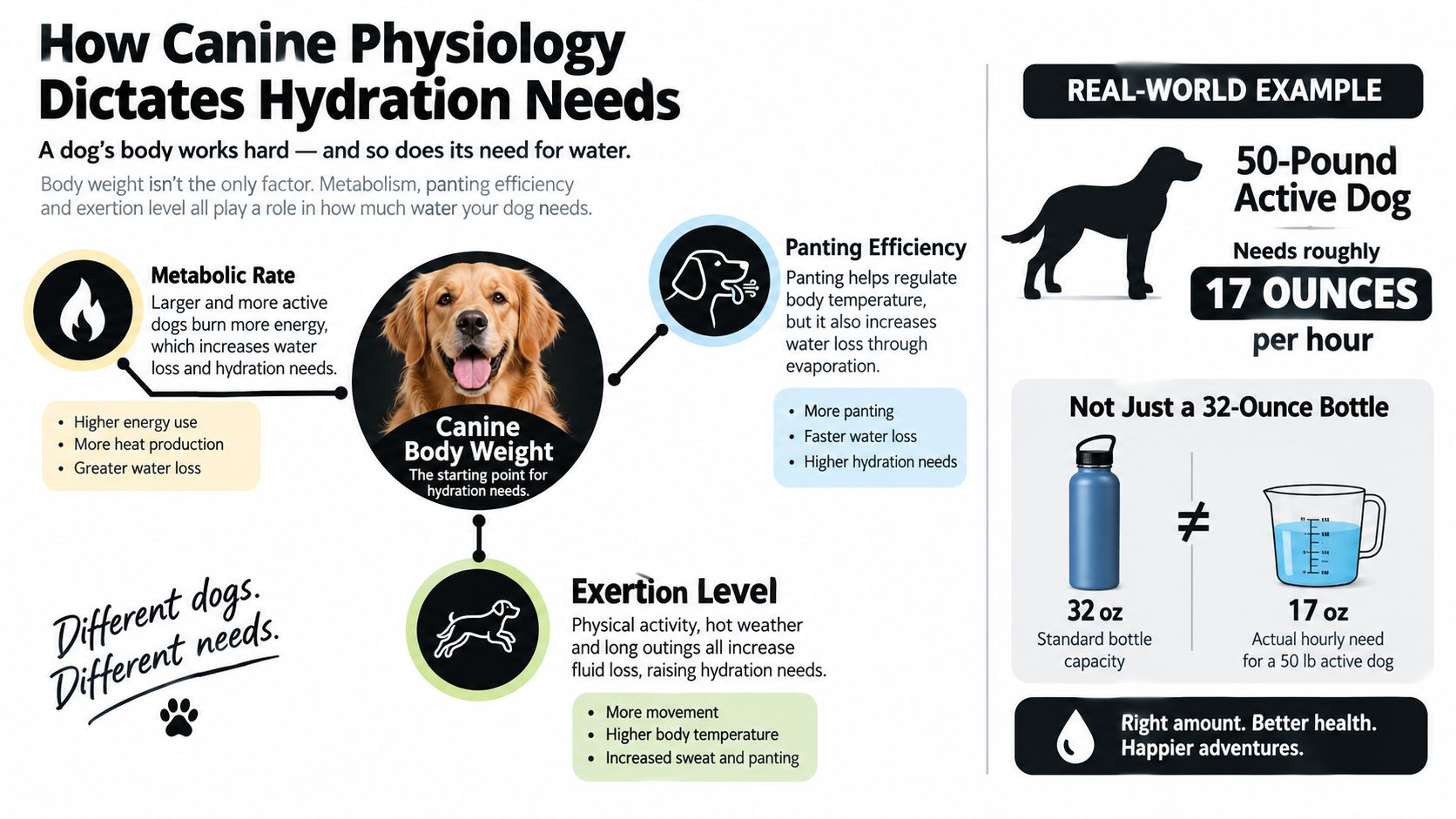
A bottle should support frequent, controlled drinks , not one large drink at the summit. Offer water during natural pauses, after demanding climbs, and before beginning the return section. Watch the dog rather than following a rigid schedule, because diet, coat, conditioning, pace, terrain, and temperature all affect intake.
A 50-pound active dog could potentially need about 3–4 liters over a demanding day when exercise and temperature raise requirements, although actual intake varies considerably. That estimate is a planning warning, not a universal serving target. A single small bottle may be inadequate for a long, exposed route, especially if no safe refill exists.
Build a margin instead of chasing precision
The useful question isn't “Which bottle has the most ounces?” It's “How much clean water can I carry without compromising the rest of the safety kit?” A larger dog, a dense coat, a steep route, or a second dog can push a compact bottle beyond its practical role.
For more detail on recognizing exertion-related hydration needs, use this guide to hydration during exercise for dogs. The right approach combines physiological awareness with conservative route planning. If the planned supply barely covers ideal conditions, the setup is too small.
Comparing Dog Hiking Water Bottle Designs and Features
A dog hiking water bottle has to work with one hand, stay closed in a pack, and give the dog a stable drinking surface. Those requirements create trade-offs. A bottle that looks convenient in a product photo may be awkward when your other hand holds a leash, trekking poles, or a nervous dog.
Independent testing lists common capacities from 15–44 oz and notes that a 20-pound dog with an approximate daily requirement of 20 oz generally doesn't need a 40 oz bottle for a single-day hike. The same testing supports 16–24 oz for short, serviced outings or small-to-medium dogs, and 24–32 oz for larger, highly active dogs or longer routes without reliable water access. Some systems left about 0.25 oz per use after dispensing. See the independent dog water bottle testing for the comparative details.
Dog Hiking Water Bottle Design Comparison
| Design Type | Capacity Range | Water Waste Risk | Cleaning Difficulty | Best Trail Use |
|---|---|---|---|---|
| Integrated bowl bottle | Commonly compact to medium | Low to moderate, depending on return mechanism | Moderate, with crevices around the bowl and valve | Short hikes and frequent controlled drinks |
| Simple squeeze bottle with trough | Compact to medium | Moderate if leftover water can't return | Low to moderate | Fast stops when one-handed use matters |
| Standalone bottle and collapsible bowl | Flexible, based on reservoir | Low if the bowl is used carefully | Usually easiest, especially with a wide-mouth reservoir | Longer outings and refill-based systems |
| Hybrid reservoir with detachable dish | Medium to large | Low to moderate | Moderate, with more parts to rinse | Larger dogs, multiple dogs, and longer routes |
What works well in the field
An integrated bowl reduces the number of loose items in your pack. The best versions let you squeeze or press water into a broad trough, then return unused water to the bottle. That gives the handler portion control and avoids turning every pause into a spill.
A simple squeeze bottle is often lighter and quicker, but it can be less forgiving. If the trough is narrow, a large dog may struggle to drink without bumping the bottle. If the design doesn't recover leftovers, repeated stops can reduce your supply.
A standalone collapsible bowl remains the most adaptable arrangement. You can pour from a larger reservoir, share water between dogs, and replace the bowl independently when it becomes worn. The trade-off is that you must carry both pieces, and you need a stable place to set the bowl.
Cleaning beats cleverness
Silicone bowls collapse efficiently, but folds can hold grit and saliva if you only rinse them briefly. BPA-free plastic may feel less flexible, yet a wide, smooth drinking surface can be easier to inspect and clean. On longer routes, simple parts and accessible seams usually matter more than a highly engineered button.
Look closely at the cap, valve, hinge, and trough connection. Those areas collect dirt and can develop leaks. Before trusting a new bottle on a remote route, fill it at home, invert it, operate the dispensing mechanism repeatedly, and check whether the return function recovers the water.
When to Refuse Trail Water and Use the Bottle Instead
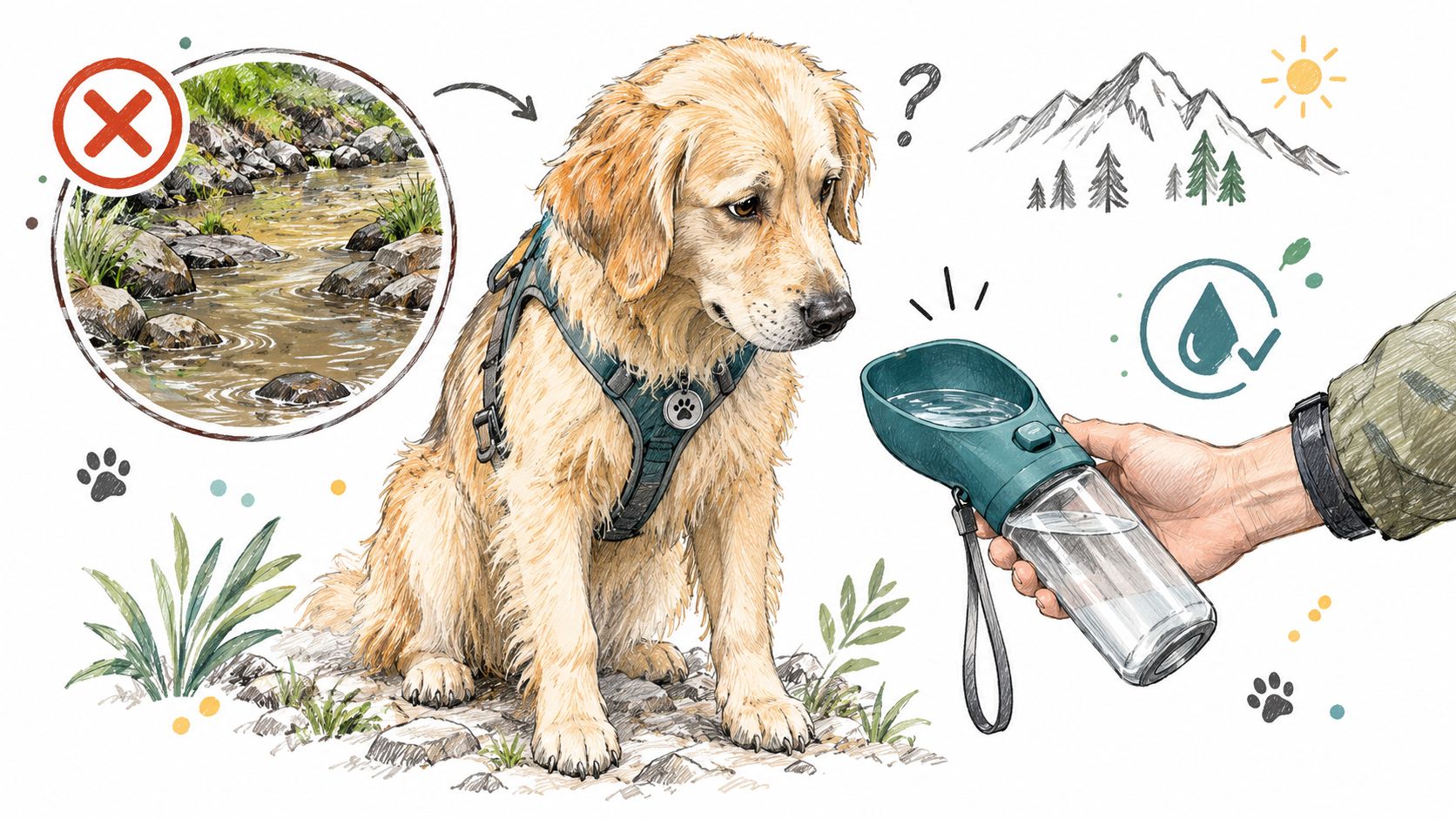
Many hikers treat a creek as a natural dog bowl. That habit is risky because the water's appearance and location don't guarantee safety. A bottle gives you a controlled alternative, so your decision doesn't depend on whether a tired dog finds the next puddle appealing.
The CDC warns that dogs can become severely ill or die after drinking water contaminated with cyanobacterial toxins, sometimes within hours. It advises keeping pets away from water that is discolored, foamy, scummy, foul-smelling, or otherwise suspicious . Symptoms may begin as soon as 15 minutes or as late as several days after exposure, including vomiting, weakness, staggering, drooling, breathing difficulty, and seizures, as described in this CDC guidance on freshwater harmful algal blooms.
Use a refusal checklist
Before the hike, check local water advisories for the lake, creek, reservoir, or trail corridor you plan to visit. On the trail, treat any uncertainty as a reason to use the bottle.
- Color: Keep your dog away from water that looks unusually green, blue-green, brown, or otherwise changed.
- Surface: Refuse water with foam, mats, scum, or an oily-looking layer.
- Smell: A foul or unusual odor is enough to stop access.
- Weather and conditions: Boulder guidance advises bringing plenty of water and a portable bowl, and warns that Boulder Creek, Boulder Reservoir, and other natural water bodies aren't safe for dogs to drink from. It also recommends avoiding creek swimming for 48 hours after a rainstorm or whenever water appears cloudy or discolored. See the official Boulder recreation guidance.
Don't allow a dog to drink from a suspicious source just because the bottle is empty. If the route lacks reliable clean water, carry more at the start, shorten the outing, or choose a route with dependable refill access.
Respond quickly after questionable exposure
If your dog drinks questionable water, rinse the mouth and body with clean water as soon as practical, prevent further exposure, and contact a veterinarian promptly. Don't wait for symptoms to become dramatic, because the possible onset can vary widely.
For a broader overview of warning signs, refer to this guide to dog dehydration signs for Denver pet parents. The bottle can't remove every trail risk, but it can remove the need to gamble on a suspicious creek.
Planning Water for Your Next Denver-Area Hike
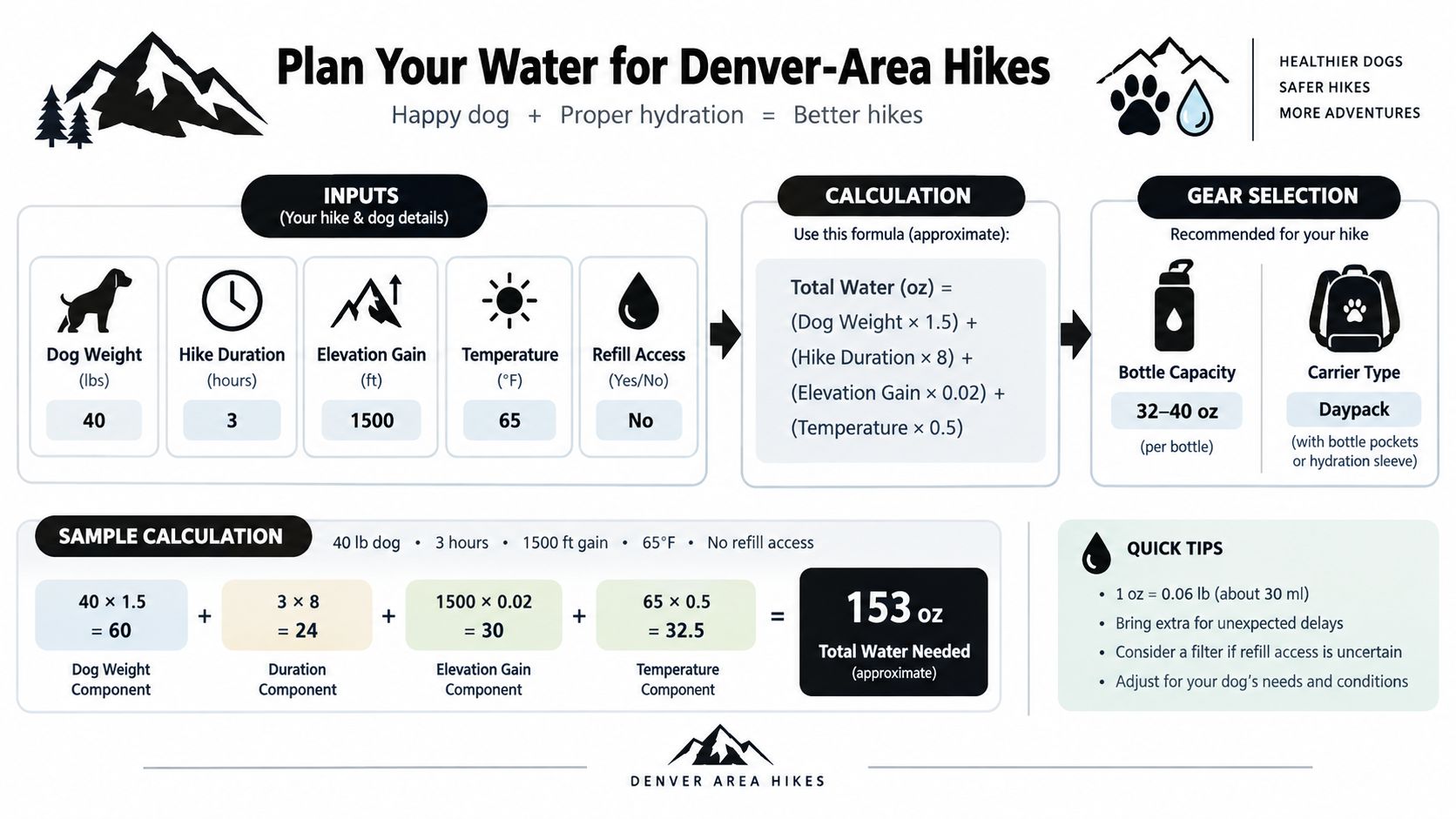
Capacity becomes useful only after you connect it to a specific route. Start with the dog's size and expected effort, then consider duration, elevation, temperature, coat, pace, and whether a verified clean refill point exists. A nominal bottle capacity is not a route plan.
Use a repeatable planning rhythm
- Record the dog: Note body weight, conditioning, coat, age, and whether the dog tends to drink eagerly or needs encouragement.
- Describe the route: Write down expected duration, elevation gain, exposure, terrain, and pace. A steep, sunny route deserves a larger margin than a shaded, level outing.
- Check the forecast: Heat and cold can both mislead handlers. Cold weather doesn't erase exercise-related water demand.
- Mark refill points: Treat only verified clean water as a refill option. A creek on the map isn't automatically a safe source.
- Reserve the return supply: Don't use the full bottle on the outbound leg. Keep enough for the hardest part of the way home.
- Add a contingency: If the dog is working harder than expected, the route takes longer, or the weather shifts, you need water beyond the ideal estimate.
A 16–24 oz bottle can work for a short outing with easy access to a larger reservoir or a quick return to the car. A 24–32 oz bottle is more suitable for a larger, active dog or a longer route without reliable access. Multiple dogs may require a larger carrier, a refill strategy, or both.
Account for local operating realities
Early starts can reduce heat exposure, but they don't replace water planning. Denver Dog's published weekday hiking information lists mountain-hiking pickups between 6:30 a.m. and 9:00 a.m. , drop-offs between 1:30 p.m. and 3:30 p.m. , and hikes capped at 60 minutes when temperatures exceed 80°F . Those limits illustrate a sound principle for any handler: adjust timing and duration when conditions become less forgiving.
The weekday service area includes Arvada, Denver, Englewood, Golden, Lakewood, Littleton, and Wheat Ridge , as listed on the Denver Dog service area page. For your own outing, pair hydration planning with food and energy planning. This resource on how to fuel a hike can help you think through your own supplies without confusing human fueling with a dog's dietary needs.
Before leaving, confirm the bottle doesn't leak, the bowl is clean, the dog will drink from it, and the return reserve remains untouched. For route ideas, use this guide to the top hikes for dogs around Denver, then apply the same capacity check to each route rather than assuming one setup fits every outing.
Choosing the Right Dog Hiking Water Bottle for Your Trail Routine
Choose the bottle by dog size, route duration, refill access, and handling conditions . Features matter only when they solve a real problem on the trail.
For a short weekday outing with a small or medium dog, a 16–24 oz integrated-bowl bottle is often practical. It keeps the setup compact and makes it easy to offer controlled drinks. For a larger dog, a highly active dog, or a longer Front Range route, move toward 24–32 oz, then carry additional water in a separate reservoir if the route demands more than the bottle can hold.
A multi-dog handler should prioritize portion control and refill speed over the smallest possible package. A detachable bowl paired with a larger reservoir may be easier to clean and more efficient than repeatedly dispensing from several tiny bottles. Conversely, when pack space is tight, a smaller bottle refilled from a larger reservoir can outperform a bulky all-in-one unit.
Match the design to the problem
- Choose integrated dispensing when you need fast one-handed stops and minimal loose gear.
- Choose a collapsible bowl and reservoir when flexibility, sharing, and cleaning matter most.
- Choose a returnable-water system when water is limited and repeated small drinks are expected.
- Choose the simplest washable design when the bottle will be used frequently and cleaned between outings.
Don't let a large capacity encourage careless pacing. Offer water at sensible pauses, protect the return reserve, and refuse questionable natural water even when your dog is eager to drink. The strongest setup combines clean supply, controlled access, easy cleaning, and enough capacity for the actual route .
If you regularly hike from Arvada, Denver, Englewood, Golden, Lakewood, Littleton, or Wheat Ridge, keep a tested bottle and collapsible bowl ready with your trail gear. That small preparation makes safer decisions easier when the weather, terrain, or dog's energy changes.
Denver Dog offers structured, on-leash weekday walking, running, and hiking through its Denver Dog Hikers and Denver Dog Joggers programs, with trained handlers focused on safe exercise and individual dog needs. If your dog needs consistent Front Range activity while you're working, visit Denver Dog to explore the service and plan a safer routine.
The Run Down