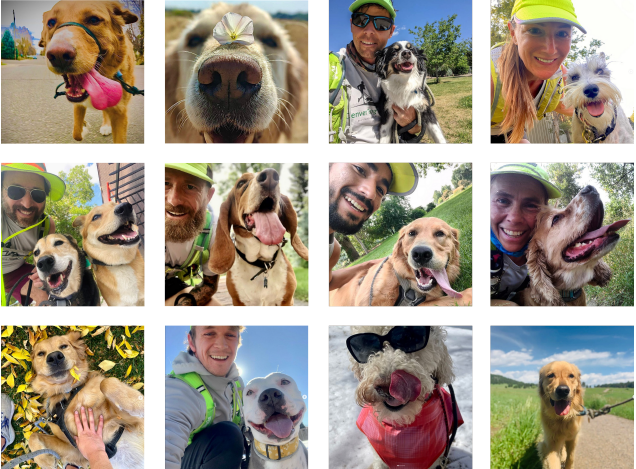
You're heading out from your Denver home for what should be a simple dog walk. Your dog has a leash, a collar, and plenty of energy, but the route may still bring traffic, hot pavement, wildlife, changing air quality, or a transport risk before the outing ends. The safest routine doesn't depend on whether your dog looks calm at the door. It depends on a series of small checks before, during, and after exercise.
These pet safety tips cover the full outing lifecycle, from health readiness and identification to equipment, car transport, leash control, trail behavior, weather monitoring, emergency response, and recovery. The same habits work for a neighborhood walk in Denver, a run through Lakewood, or a Front Range hike near Golden. Denver Dog applies an on-leash, safety-first approach across Arvada, Denver, Englewood, Golden, Lakewood, Littleton, and Wheat Ridge, matching activities and handling to each dog's needs.
1. Proper Leash and Collar Techniques for Safe Dog Walking in Denver Metro Areas
A secure leash setup is your first line of control near roads, cyclists, playgrounds, and unfamiliar dogs. Choose a collar or harness that fits without restricting breathing or allowing your dog to back out. You should be able to place two fingers beneath the collar, while a harness should sit securely around the chest without rubbing behind the front legs.
Measure your dog's neck and chest before buying equipment, then test it on short walks before using it for a run or longer outing. Inspect the leash, clips, stitching, and attachment points weekly. Frayed webbing, a weakened snap, or a cracked buckle can turn a routine distraction into a loose-dog emergency.
Match equipment to the activity
A standard leash may work for a calm neighborhood walk but provide less control when a strong dog accelerates after a squirrel. A well-fitted front-clip or no-pull harness can help redirect force, but it won't replace training or attentive handling. For running, use equipment designed for the dog's size, strength, and movement, and avoid attaching a running line to a collar if your dog pulls heavily.
Denver Dog's complete guide to walking a dog on leash explains how fit, attachment position, and handler technique work together. Keep visible ID tags on the collar, and treat microchipping as backup identification rather than a substitute for a secure leash.
Practical rule: Test every new piece of equipment close to home before trusting it on a busy street or remote trail.
2. Exercise Management, Heat Safety, Hydration, and Nutrition During Denver's Seasons
A dog can begin an outing comfortable and become unsafe as pavement, exertion, sun, and humidity build. Air temperature alone doesn't tell you whether a run or hike is appropriate. Consider your dog's age, breed, coat, body condition, health, acclimatization, pace, terrain, shade, and recovery after the session.
When air temperature reaches 86°F (30°C) , asphalt can reach approximately 135°F (57°C) , according to veterinary guidance summarized by the American Kennel Club. Use a conservative field check before crossing pavement. If you can't comfortably keep your hand on the surface for about 10 seconds , choose grass, dirt, or shade instead. This hand test complements, rather than replaces, attention to humidity, weather, and the dog's condition.
Adjust effort instead of chasing a fixed distance
Schedule demanding exercise during cooler periods, shorten the route when conditions worsen, and carry water with a collapsible bowl. The National Park Service recommends frequent water breaks, a leash no longer than 6 feet , and monitoring for overheating while hiking with pets ( National Park Service trail guidance). Excessive panting, drooling, weakness, confusion, vomiting, or refusal to continue means the outing should stop.
Offer water regularly rather than waiting until your dog is distressed. Don't assume cooling vests, booties, or electrolytes make unsafe exertion safe. Dogs with short muzzles, obesity, dense coats, heart disease, or previous heat injury need a more cautious plan, and the American Veterinary Medical Association's warm-weather guidance recommends veterinary advice before starting an exercise program for higher-risk dogs.
For more practical planning, use Denver Dog's guide to hydration during exercise. After exercise, observe your dog for 15–20 minutes , because overheating can continue after the route ends.
3. Microchipping and ID Tags for Permanent Pet Identification
A collar can break, slip off, or be removed during transport. A microchip provides a more permanent way to connect a found dog with an owner, but it only works well when the registry contains current contact information. Keep both systems active. Use a visible ID tag for immediate contact and a registered microchip as the backup.
A study of 7,704 animals from 53 U.S. shelters across 23 states found owners for 72.7% of microchipped animals. The median return-to-owner rate for microchipped dogs was 52.2% , compared with 21.9% for all stray dogs, a 2.4-fold improvement ( Ohio State University microchip information). The same study found that incorrect or disconnected phone numbers caused 35.4% of unsuccessful searches, while nonresponsive owners accounted for 24.3% .
Make identification operational
Ask your veterinarian to scan the chip at a routine visit, record the number with your pet's medical information, and confirm which registry holds the record. Update your phone number, email, and address whenever they change. A microchip isn't a GPS tracker, so it can't show your dog's location in real time.
Keep the collar on during outdoor activity, photograph your dog's face and distinguishing markings, and give authorized handlers current pickup information. Denver Dog can use these records as part of a safer intake process, but owners still need to verify the data themselves.
4. Paw Pad Protection on Colorado Trails and Urban Pavements
Paw pads absorb a surprising amount of punishment on Denver sidewalks, gravel paths, icy streets, and rocky Front Range trails. Heat can burn them, rough surfaces can split them, and winter salt can irritate them. A dog may continue walking despite a painful injury, especially when excitement or prey interest is high.
Check each paw before and after exercise. Look between the toes for stones, thorns, packed snow, and debris, then inspect the pads for redness, peeling, blisters, cuts, or unusual tenderness. Rinse paws after walks when salt, grit, or de-icers may be present, and dry them thoroughly.
Build tolerance gradually
Paw conditioning comes from controlled exposure, not from sending an unprepared dog onto a technical trail. Increase rough-terrain time gradually and choose softer routes when the pads look sensitive. Paw balm can support the skin, but it won't prevent every injury. Booties offer better protection on sharp, hot, or chemically treated surfaces, provided your dog has practiced wearing them and they fit without rubbing.
A dog that licks one paw, limps, slows unexpectedly, or refuses a familiar surface needs a break and an inspection. Denver Dog's dog paw protection guide provides additional advice for hot and cold conditions. Handlers should check paws after every session, especially when a route combines pavement, gravel, and trail surfaces.
5. Vaccination and Preventative Health Care for Active Dogs
Outdoor exercise increases the number of environments your dog encounters. Trails, sidewalks, transport vehicles, shared water sources, and contact with other dogs all make current veterinary care part of responsible outing preparation. Core vaccination decisions should come from your veterinarian, who can consider age, health, travel, and exposure.
Ask about lifestyle-appropriate protection for activities that involve other dogs, wildlife, standing water, or group settings. Keep vaccination and medical records accessible when using professional services, boarding, or emergency clinics. Year-round parasite prevention may also be appropriate for dogs that spend substantial time outdoors, depending on veterinary advice and local exposure.
Health screening should change the plan
A dog that seems eager may still be unfit for a hard run after illness, injury, or a long break. Schedule wellness examinations and tell the veterinarian what your dog does, whether that means weekday runs, steep hikes, social walks, or occasional neighborhood outings. Discuss any history of coughing, fainting, orthopedic pain, gastrointestinal illness, or heat intolerance.
After vaccination, monitor for unusual lethargy, appetite changes, swelling, breathing difficulty, or other concerning reactions, and contact your veterinarian when symptoms are severe or persistent. Don't delay care because a dog still wants to play. Fitness planning works best when it accounts for recovery, not only enthusiasm.
6. Traffic Safety and Urban Navigation for Denver Area Dogs
Busy intersections in Denver, Arvada, Englewood, and Littleton demand active handling. Dogs don't reliably judge vehicle speed or distance, and a quiet residential street can become dangerous when a driver is distracted or approaching faster than expected.
Use a secure harness and leash, cross at marked crossings, and wait for traffic to stop before entering the street. Teach your dog to pause at curbs, but don't treat a reliable “sit” or “stay” as a substitute for your own visual check. Keep your phone away during crossings and scan driveways, bike lanes, turning vehicles, and parked cars.
Choose the route before the dog chooses it
Route planning reduces exposure to difficult crossings and gives you options when construction, crowds, or loose dogs appear. Select calmer streets, use traffic signals when available, and position yourself between your dog and moving traffic. Reflective vests, bright colors, and LED collars improve visibility, but they don't make an inattentive driver safe to approach.
Transport requires the same discipline. Secure your dog in a crate, carrier, or properly fitted vehicle restraint before driving, and keep doors closed before unclipping the leash. Denver Dog's professional drivers are monitored by in-vehicle camera technology during transport, while handlers maintain on-leash control during the outing itself. The principle is simple: prevent escape before it becomes a recovery problem.
7. Wildlife Awareness and Safe Interaction on Colorado Trails
A trail near Golden or Lakewood can move from suburban scenery to wildlife habitat quickly. Coyotes, mountain lions, bears, elk, and rattlesnakes can react to a dog as prey, a threat, or an unwanted disturbance. An off-leash dog may chase wildlife before recall has any chance to work.
The National Park Service advises keeping dogs on a 6-foot leash , staying on marked trails, and avoiding feeding, touching, or disturbing wildlife ( National Park Service wildlife guidance). Visitors may need to remain 25–50 yards from most wildlife and 100 yards from predators such as bears and wolves. Check park rules and wildlife alerts before leaving.
Respond without escalating the encounter
Don't run toward an animal, release your dog, or allow barking to pull you closer. Create distance slowly, keep the leash short without jerking, and move away while watching the animal. If an encounter becomes threatening, make yourself appear larger and follow local wildlife guidance. Turn around when the route contains a recent sighting or an animal that won't yield space.
Keep your dog close, talk as you walk, and avoid silent approaches around blind corners. If an animal injures your dog or another person, move to safety, contact emergency veterinary care, and document what happened. Information about recovering from animal attack injuries can be useful after immediate medical needs are addressed.
8. Socialization and Behavioral Screening for Safe Group Activities
A dog doesn't need to greet every dog, person, or cyclist to have a successful outing. Safe socialization means learning to remain composed around those distractions, with distance and reinforcement adjusted to the dog's comfort level.
Tell the handler about fear, reactivity, guarding, prey drive, previous bites, escape behavior, and situations that trigger lunging. A dog that reacts to large dogs may be comfortable with small dogs, while a dog that struggles on sidewalks may do well on a quiet trail. Those details determine whether a walk, run, solo outing, or modified route is appropriate.
Progress should remain below the reaction threshold
Start in controlled environments and increase difficulty gradually. Use treats, praise, and play to reinforce calm observation, then create more distance before the dog erupts. Forcing contact can intensify fear, so don't use crowded dog parks or close greetings as a shortcut to social confidence.
Practice “wait,” “down,” and impulse-control exercises at home, then apply them near low-level distractions. Professional training may be appropriate for aggression or severe fear. Denver Dog screens dogs before service and matches exercise and handling to temperament, energy, and the demands of group or individual activities. That screening protects the dog, the handler, and other trail and neighborhood users.
9. Environmental Hazards from Toxic Plants, Ice, and Seasonal Dangers
A safe Denver route changes with the season. Spring puddles can contain contaminated water, summer lawns may be freshly treated, autumn trails collect damp organic debris, and winter surfaces bring ice, salt, and de-icers. Keep dogs from drinking unknown water, and avoid treated grass until the product label confirms it is safe.
At home, secure antifreeze, pesticides, fertilizers, compost, and garden products. On walks, prevent your dog from investigating discarded food, sugar-free products, or unfamiliar plants. Xylitol-containing products and plants such as lilies, yew, foxglove, oleander, and sago palm can poison dogs. Follow the ASPCA emergency care guidance and contact a veterinarian promptly after suspected exposure.
Treat suspected poisoning as urgent
Vomiting, lethargy, weakness, seizures, breathing difficulty, or unusual behavior after possible exposure needs immediate veterinary advice. Do not induce vomiting unless a veterinarian or poison-control professional instructs you to. If safe, keep the packaging, plant sample, or product label for identification.
Pale gums, rapid breathing, difficulty standing, loss of consciousness, severe trauma, insect stings, and heatstroke also warrant emergency care. Store your veterinarian's after-hours plan and the nearest emergency clinic in your phone and at home.
Denver Dog's on-leash standards help handlers keep dogs away from trail debris, icy edges, treated lawns, and plants. Check the route before departure, then turn around when weather or surface conditions create more risk than exercise value.
10. Post-Exercise Care and Injury Prevention for Active Dogs
The walk ends when you reach home, but your dog's recovery starts there. Reduce intensity before stopping after a hard run or climb, offer water during the cool-down, and give your dog a quiet place to settle. A gradual return to normal breathing tells you more than excitement at the trailhead.
Check paws, gait, breathing, gums, and behavior. A dog that is stiff, reluctant to climb stairs, unusually withdrawn, or repeatedly licking a joint may need rest and veterinary assessment. Don't continue exercise just because your dog is willing to chase a toy.
Monitor the period after activity
Temperature can continue rising for 15 minutes after exercise , according to a 2025 military canine clinical guideline summarized in the provided safety research. Stop activity immediately for uncontrolled panting, weakness, confusion, vomiting, collapse, or refusal to continue, and treat suspected heatstroke as an emergency.
Keep a short session record for dogs following a structured fitness plan. Note route, terrain, weather, water intake, paw condition, energy, and recovery. Over time, this helps you identify whether a dog needs shorter runs, more rest, slower climbs, or veterinary evaluation. Denver Dog handlers communicate changes after sessions so owners can adjust the next outing rather than repeating a problem.
Denver Pet Safety: 10-Point Comparison
| Item | Implementation Complexity 🔄 | Resource Requirements ⚡ | Expected Outcomes ⭐📊 | Ideal Use Cases 📊 | Key Advantages 💡 |
|---|---|---|---|---|---|
| Proper Leash and Collar Techniques for Safe Dog Walking in Denver Metro Areas | Low, basic fitting & handling | Harnesses, 6-ft leashes, martingale collars, reflective gear | Improved control; fewer escapes & traffic incidents | Urban walks/runs in busy Denver neighborhoods | Immediate handler control; visibility; tailored fit |
| Exercise Management, Heat Safety, Hydration, and Nutrition During Denver's Seasons | Medium, scheduling & monitoring | Water, electrolytes, timing tools, weather checks | Prevents heat-related illness; sustained fitness | High-altitude runs/hikes; summer months | Reduces heat risk; maintains endurance |
| Microchipping and ID Tags: Permanent Pet Identification for Denver Pets | Low, one-time veterinary procedure | Microchip, ID tags, registry access | Higher recovery rates for lost pets; permanent ID | All outdoor/active dogs; community living | Durable identification; minimal upkeep |
| Paw Pad Protection on Colorado Trails and Urban Pavements | Medium, gradual conditioning & fitting | Booties, paw balm/wax, grooming tools | Fewer pad injuries; year-round trail access | Hot pavement, rocky trails, winter salt/ice | Prevents cuts/burns; reduces infections |
| Vaccination and Preventative Health Care for Active Dogs | Medium, routine vet management | Vet visits, vaccines, parasite preventatives | Prevents serious disease; protects community health | Group programs, boarding, frequent outdoor dogs | Disease prevention; required for services |
| Traffic Safety and Urban Navigation for Denver Area Dogs | High, constant vigilance & planning | Trained handlers, route planning, high-vis gear | Lower accident risk; improved dog responsiveness | Busy streets, intersections, urban neighborhoods | Professional route selection; defensive techniques |
| Wildlife Awareness and Safe Interaction on Colorado Trails | High, situational training & protocols | Leashed control, trail intel, deterrents (bear spray) | Reduced wildlife encounters; safer hikes | Front Range trails; wildlife-prone areas | Protects dogs & wildlife; emergency response plans |
| Socialization and Behavioral Screening for Safe Group Activities | Medium, assessments & gradual exposure | Behavioral assessors, training time, controlled setups | Fewer aggressive incidents; safe group participation | Group walks, daycare, multi-dog programs | Matches temperament; prevents injuries |
| Environmental Hazards: Toxic Plants, Ice, and Seasonal Dangers | Medium, seasonal planning & avoidance | Knowledge resources, route adapts, paw care | Reduced poisoning/injury risk; consistent exercise | Year-round urban and trail outings | Seasonal mitigation; faster emergency response |
| Post-Exercise Care and Injury Prevention for Active Dogs | Medium, routine recovery protocols | Time for cool-down, ice packs, massage, rest days | Lower injury rates; improved recovery & performance | After intense runs/hikes; canine athletes | Extends athletic lifespan; early issue detection |
Turn Safety Checks Into a Routine
The most useful pet safety tips are the ones you can repeat without adding confusion to a busy weekday. Before leaving, confirm that your dog is well enough for the planned activity, wearing current identification, and equipped with a fitted collar or harness and secure leash. Check paws for tenderness, review the route, and consider traffic, weather, surface temperature, shade, air quality, humidity, terrain, and wildlife alerts.
Pack water, a collapsible bowl, waste bags, identification details, and any medication or emergency supplies your dog may need. If you're driving, secure your dog before the vehicle moves. Keep the leash attached before opening doors at home, at the trailhead, and after returning to the car. A dog that normally waits calmly may bolt when startled by a cyclist, wildlife, or another dog.
During the outing, keep your dog on leash and stay engaged with the environment. Watch for excessive panting, drooling, weakness, stumbling, vomiting, confusion, limping, paw licking, or refusal to continue. Move away from wildlife rather than approaching for a closer look, cross roads only when traffic has stopped, and shorten the session when heat, smoke, altitude, exertion, or terrain creates more risk than benefit.
Afterward, allow a gradual cool-down and observe recovery for at least 15–20 minutes . Inspect paws, offer water, and report changes in gait, appetite, breathing, behavior, or energy. Emergency signs such as pale gums, seizures, loss of consciousness, severe trauma, poisoning, choking, or heatstroke require immediate veterinary care. Call ahead to the emergency clinic while someone transports the dog when possible, following the ASPCA emergency-care recommendations.
Keep a labeled emergency kit near an exit. The ASPCA recommends storing 7–10 days of food and water , two weeks of medications , a bowl, a manual can opener when needed, and a spare collar and leash for disaster preparedness ( ASPCA disaster preparedness guidance). These supplies won't prevent every emergency, but they reduce the delay between a problem and a safe response.
For weekday exercise in Arvada, Denver, Englewood, Golden, Lakewood, Littleton, and Wheat Ridge , Denver-area owners can explore Denver Dog's on-leash Joggers and Hikers services. The right service should fit the dog's temperament, fitness, route, and recovery needs, not just add distance to the calendar.
Denver Dog provides on-leash running, walking, and hiking through its Joggers and Hikers programs, with sessions matched to each dog's energy level and temperament. If you want structured exercise that applies these safety principles across Denver-area neighborhoods and Front Range trails, visit Denver Dog to review the available services and coverage.
The Run Down