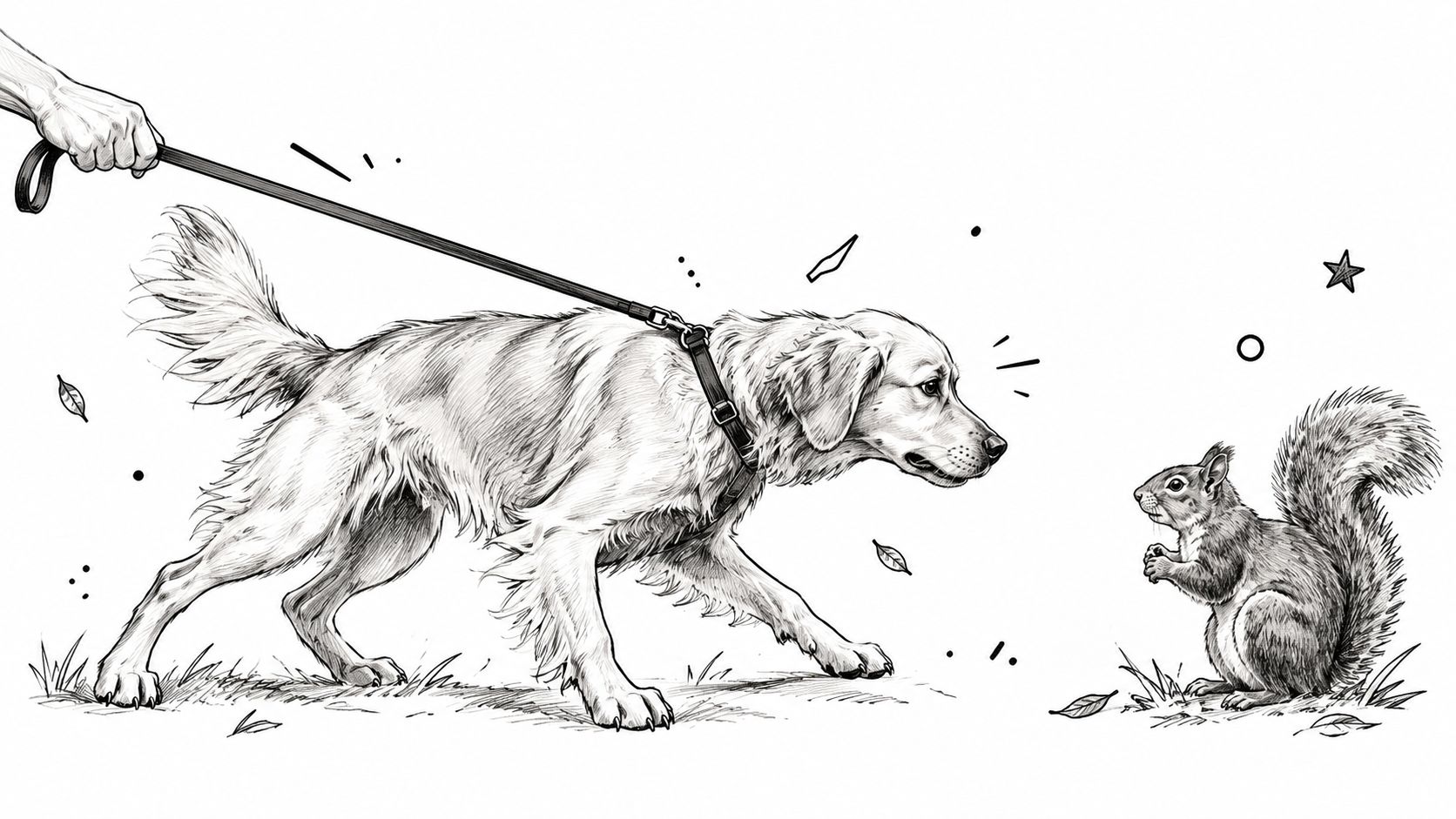
You're halfway down the block, coffee in one hand and leash in the other, when your dog spots a squirrel. The leash snaps tight, your shoulder follows, and the peaceful morning walk turns into a negotiation. This is the reality of walking a dog on leash for many Denver owners, especially around busy sidewalks, cyclists, other dogs, and sudden wildlife.
Good leash manners don't come from overpowering a dog. They come from understanding what the dog learns from each step, each tug, and each opportunity to move forward. The right equipment, clear timing, and consistent handling can turn a tense outing into a controlled, useful walk.
Why Your Dog Pulls and How to Stop It
A dog that pulls usually isn't being stubborn. The dog wants to investigate a scent, reach another dog, follow movement, or travel faster. Forward motion is rewarding by itself. If pulling gets the dog closer to something interesting, the dog learns that tension works.
That learning can happen quickly. The handler tightens the leash, the dog leans harder, and both sides feel resistance. Many owners respond by pulling back, but that often creates a physical contest rather than teaching a different behavior. A tight leash can also signal uncertainty or overstimulation, particularly when the dog sees a squirrel, cyclist, unfamiliar person, or another dog.
Replace the pulling payoff
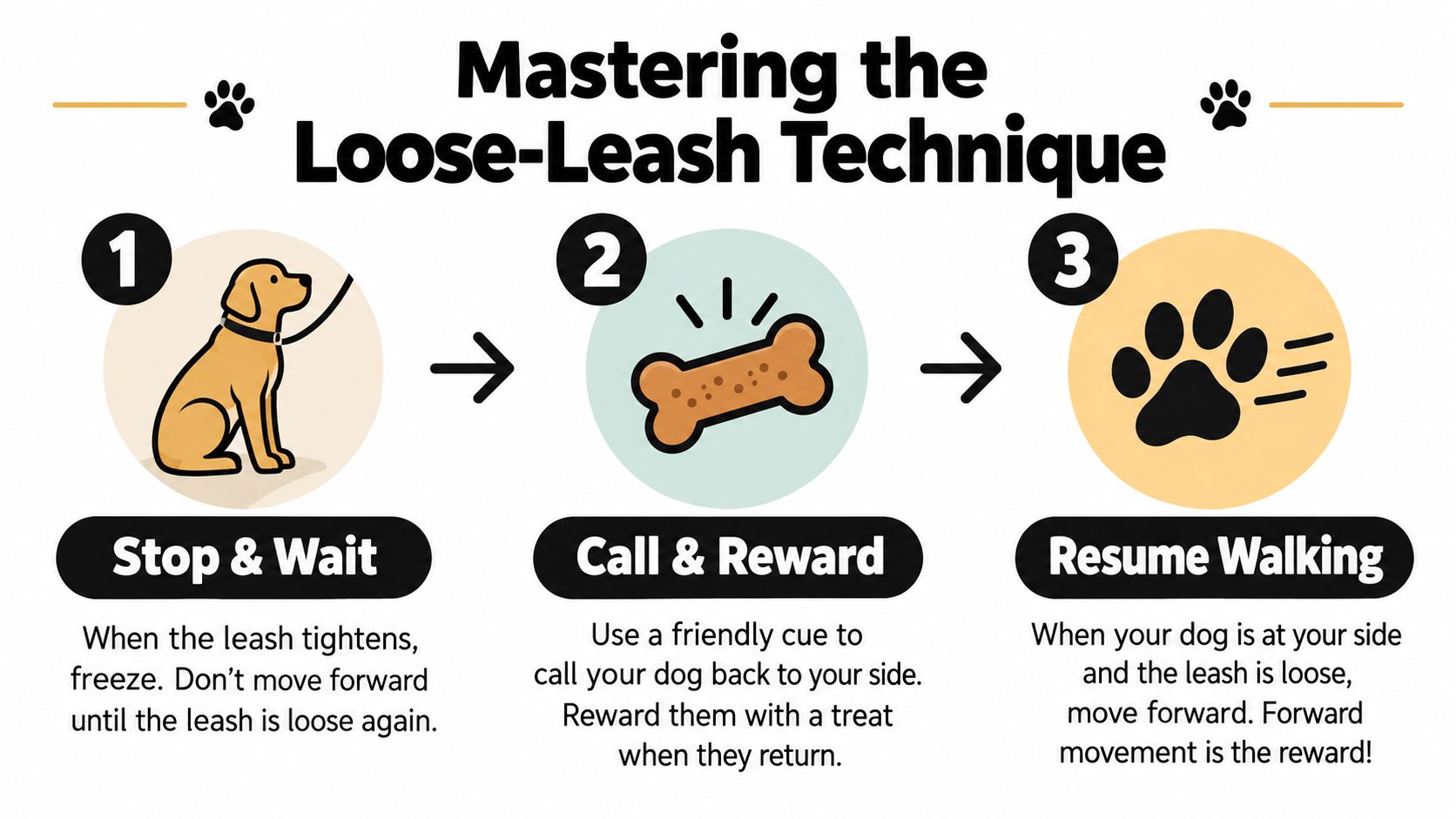
The most useful rule is simple: pulling stops forward movement, while slack makes movement possible . The instant your dog reaches the end of the leash, stop your feet. Don't jerk the leash, lecture the dog, or continue inching toward the distraction. Wait for even a small release of tension, then move again.
That consequence changes the dog's calculation. Pulling no longer delivers the smell, tree, person, or patch of grass. Relaxing the leash gives the dog access to the walk. The dog isn't being punished for wanting something. The dog is learning which behavior opens the path.
Practical rule: If the leash is tight, your feet should be still.
In Denver, this matters on ordinary neighborhood routes as much as on trails. A dog that surges toward a scent near a curb can move the handler into traffic or cause a fall. A Johns Hopkins analysis estimated 422,659 U.S. emergency department visits for leash-dependent dog-walking injuries from 2001 to 2020 , with annual cases rising from about 7,282 in 2001 to 32,306 in 2020 , more than a fourfold increase. The analysis reported that 75% of injured patients were women, 47% were ages 40–64, and falling after being pulled or tripped by the leash accounted for 55% of injury mechanisms, as reported by PBS NewsHour's coverage of the analysis.
A calm walk is built through many small repetitions, not one dramatic correction. For a realistic training timeline and progression, see this guide to how long leash training can take.
The method has a long history. Archaeological and written records from the Proto-cuneiform and Jemdet Nasr period, roughly 3100–2900 BC , depict a figure guiding two dogs on leashes. Leash-based control is therefore at least about 5,000 years old , a practical method for managing dogs during work, travel, hunting, herding, and public activity, as summarized in the history of the dog leash.
Choosing the Right Gear for Control
Equipment can't teach loose-leash walking by itself, but poor equipment can make good handling much harder. Choose gear by asking one mechanical question: does this setup give you clear feedback without creating unnecessary pressure or allowing the dog to build momentum?
For routine walks, a fixed leash gives the cleanest answer. VCA recommends a leash between 6 and 10 feet and advises avoiding retractable leashes, while VCA safety guidance and Los Angeles County commonly specify 4 to 6 feet for better control, according to VCA's guidance on controlling pulling. A fixed leash keeps the distance predictable and makes the stop-and-go consequence easier for the dog to understand.
A retractable leash has a place in carefully managed settings, but it's a poor default for teaching. The line is often under continuous tension, the handle can be difficult to control, and the dog can gain speed before the handler has time to respond. It also makes it harder to tell whether the dog is walking beside you or just reaching the end of an expanding boundary.
Match the tool to the dog
| Gear Type | Best For | Pros | Cons |
|---|---|---|---|
| Flat collar | Dogs with reliable leash manners and mild distractions | Simple, lightweight, easy to put on | Can concentrate pressure around the neck if the dog pulls |
| Front-clip harness | Dogs that pull or need more steering support | Changes the pulling angle and can improve handler control | Requires careful fitting and may shift if poorly adjusted |
| Head halter | Strong pullers managed by experienced handlers | Gives precise directional control | Needs gradual acclimation and careful handling |
| Fixed leash | Routine neighborhood walking and training | Predictable distance and immediate feedback | Offers less roaming freedom than a long line |
| Retractable leash | Select open, low-risk environments | Allows more exploration when properly managed | Poor feedback for training and harder control near hazards |
A front-clip harness can reduce the dog's mechanical advantage, but it doesn't remove the need for training. A flat collar may work well for a dog that already walks comfortably, while a head halter requires a patient introduction because sudden pressure around the face can create resistance or distress. Whatever you choose, inspect the fit before leaving the house. This guide to fitting a dog collar covers the basic checks.
Water planning also belongs in the gear decision, particularly during longer outings or dry Colorado weather. A collapsible bottle can be easier to carry than a rigid bowl, and the HYDAWAY guide to dog hydration offers practical ideas for making water stops manageable.
Mastering the Loose-Leash Technique
Loose-leash walking starts in a quiet place, not on the busiest sidewalk in the neighborhood. Begin where your dog can notice you, take food, and respond without competing with every scent and movement. The first objective isn't a long, flawless walk. It's teaching the dog that slack creates access to movement and rewards.
A leash is loose when it forms a clear U or J shape . Don't wait for the dog to drag you before responding. The moment the leash reaches its limit, freeze. The instant slack returns, reinforce it and move forward.
Build the behavior in small pieces
-
Start with one or two steps. Stand beside your dog, invite movement, and reward just 1–2 successful steps beside you. Deliver the treat while the leash is slack, not after the dog has already pulled.
-
Vary the requirement. Once those steps are easy, change the pattern unpredictably. Ask for 1 step, then 3, then 2, then 4. This keeps the dog engaged without teaching that a reward arrives only after a fixed distance.
-
Add the walking cue later. Introduce a cue such as “let's go” after the dog is already offering the behavior. The word should predict movement, not replace the training.
-
Stop at tension. If the dog reaches the end of the leash, become still. Avoid dragging the dog back to position. Wait for the dog to release pressure, turn toward you, or return to your side.
-
Reward voluntary check-ins. A glance, a softened body, or a step back toward you is useful information. Mark it with food, praise, or access to the next sniff. Dogs repeat behaviors that reliably produce outcomes they value.
The technical standard is slack, not partial pulling . Trainers note that allowing a little tension blurs the learning signal and slows acquisition. A dog that pulls only lightly is still rehearsing the same pattern, and the leash is still communicating that pressure can produce forward progress, according to PetMD's loose-leash training guidance.
Hold the leash for control
Keep your hands quiet and your body predictable. The ASPCA Pro guide recommends a thumb lock and maintaining a U-shape in the leash as much as possible. VCA advises wrapping the leash around your palm so it won't slip from your hand, though you should never wrap the leash tightly around your wrist or attach yourself to a dog you can't safely control.
Reward frequently during the early stages. The Wisconsin Humane Society recommends reinforcing every few steps or every 2–3 seconds early in training, because frequent correct repetitions teach faster than waiting for a rare perfect stretch, as explained in its loose-leash walking guidance.
Handling Distractions and Reactivity
A squirrel, cyclist, barking dog, or sudden truck can push a dog past the point where learning is possible. Before that threshold, the dog may still eat, turn toward you, or follow a change in direction. After it, the dog may lunge, vocalize, stare, or pull with enough force that food and familiar cues no longer matter.
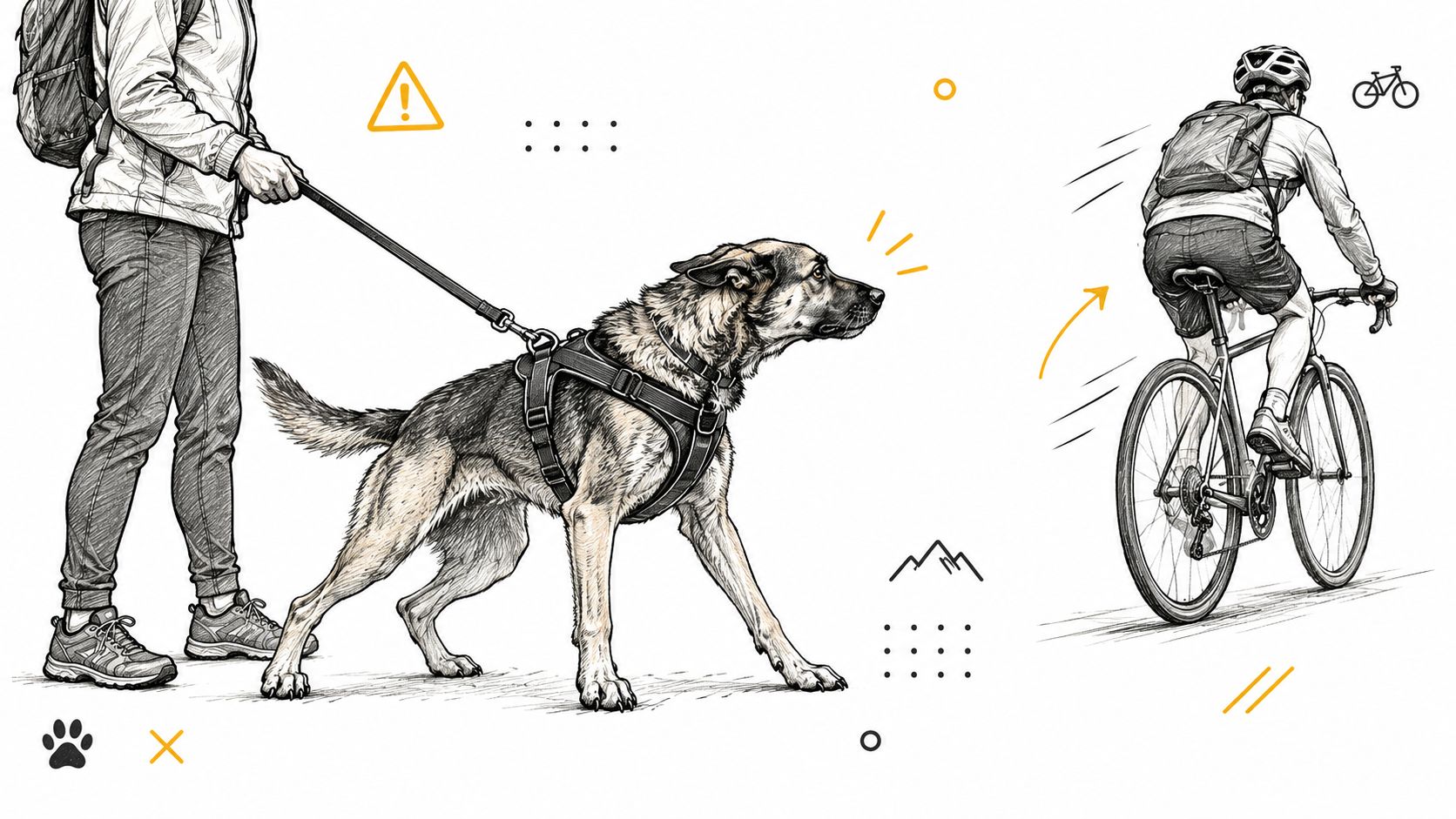
Watch for the early signs. Your dog may close its mouth, stiffen, lean forward, stop sniffing, raise its head, or lock its eyes onto the trigger. Those changes are your cue to create distance, not to demand a perfect heel. Cross the street, step behind a parked vehicle, turn into a driveway, or make a calm U-turn before the reaction builds.
Change the environment before changing the dog
Distance is a training tool. It lowers the intensity of the trigger and gives your dog enough mental space to make a different choice. A dog that can look at a cyclist and then look back at you is practicing recovery. A dog already lunging at the cyclist is practicing the reaction.
Use food before the dog is overwhelmed. Feed for noticing the trigger, orienting back to you, walking with you, or taking a few steps on a loose leash. The reward doesn't bribe the dog to ignore the world. It changes the dog's expectation about what happens when something challenging appears.
Distance is not avoidance when you use it to create successful repetitions.
Keep the leash loose where possible, but don't sacrifice safety to preserve a training picture. If you need to shorten the leash near traffic or move your dog behind you while a runner passes, do it smoothly. Avoid repeated leash corrections, which can add discomfort to an already difficult sight and make the trigger more emotionally significant.
The stop-and-go rule still applies, but the trigger plan comes first. Humane and veterinary guidance recommends stopping immediately when the dog pulls and resuming only when slack returns. The RSPCA's leash equipment and walking advice describes standing still like a tree, while American Humane and other welfare sources recommend pausing until the dog releases tension.
For dogs that react frequently, a structured plan is more useful than improvising at every encounter. These reactive dog training tips can help you organize trigger distance, rewards, and escape routes.
When video is useful, watch the timing rather than the dog's appearance. Notice the moment the handler spots the trigger, changes direction, and reinforces the first calm response.
Safety Tips for Urban and Traffic Areas
Urban walking requires two kinds of attention. You need to read your dog's body language, but you also need to track vehicles, bikes, doors, intersections, uneven pavement, and people approaching from behind. A dog that walks beautifully in a quiet park may still need a different plan beside a busy road.
Choose routes that give you room to move away from triggers. Wide sidewalks, quieter residential streets, and open areas near parks make it easier to create distance. Avoid stopping at curb edges while your dog is pulling. Step back from the street, establish slack, and cross only when you can keep your dog beside you.
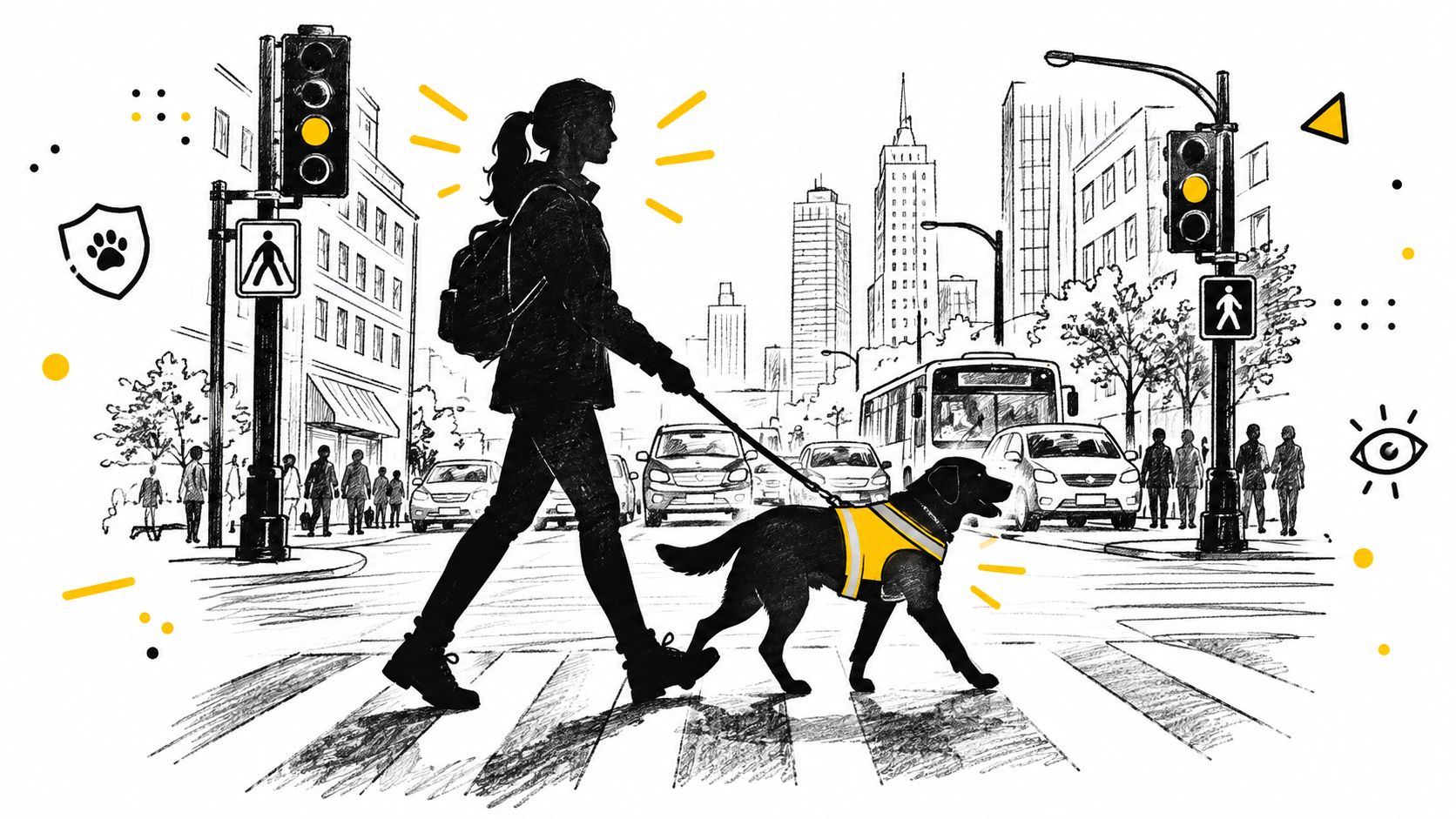
Use a repeatable crossing routine
Before crossing, shorten the leash without wrapping it around your hand or wrist. Ask for a pause at the curb, look for traffic in every direction, and keep your dog on the side away from the roadway when practical. Move at a steady pace rather than allowing the dog to zigzag across the crosswalk.
Visibility matters during early mornings, evenings, snow, and storms. Reflective gear, a light on the handler, or a visible light on the dog can help drivers and cyclists notice you. Keep your phone away while crossing and leave one hand available for leash control.
Interactions with other dogs should be deliberate. Don't allow greetings because two dogs are close enough to meet. Ask the other handler first, keep the leash loose if both dogs are comfortable, and end the interaction before either dog becomes tense. If a dog approaches without control, put your dog behind you, create space, and use a firm verbal boundary.
Denver-area routes can shift from urban pavement to open foothills quickly. On trails, scan ahead for wildlife and keep your dog close enough to redirect. If you spend time in mountain areas, review this resource on how to stay safe on trails with mountain lions before heading out.
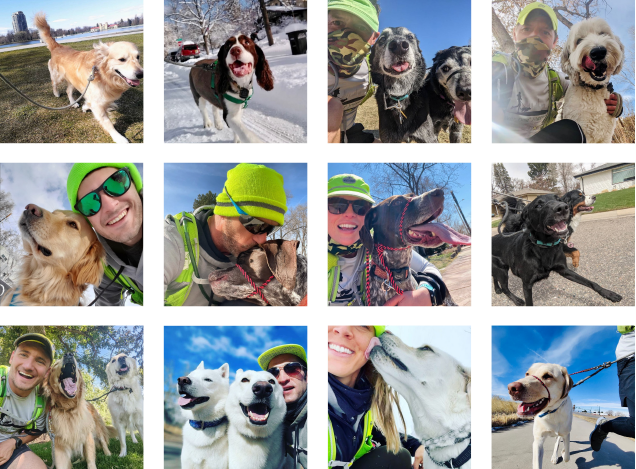
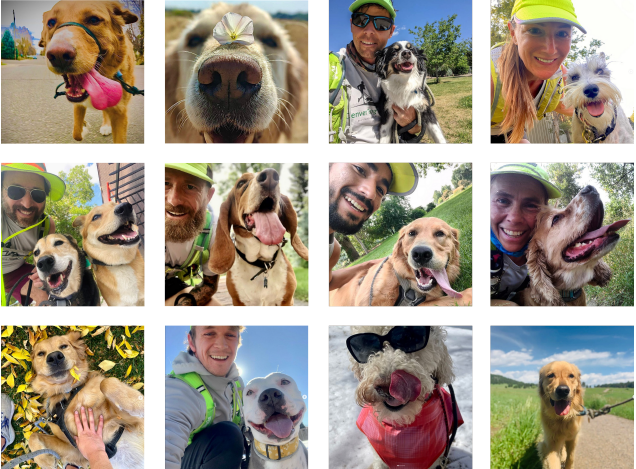
Professional help can also make busy weekday routines more manageable. Denver Dog provides on-leash walking, running, and hiking services through the Denver Dog Joggers and Denver Dog Hikers programs. Service areas include Arvada, Denver, Englewood, Golden, Lakewood, Littleton, and Wheat Ridge , with outings matched to a dog's energy level and temperament. You can review the Denver Dog service areas when you need regular support.
Quick Routines for Busy Owners
You don't need to turn every walk into a formal training session. A short, focused routine can teach more than a long outing where the dog rehearses pulling from start to finish. Use the beginning of the walk for skill practice, then let the remainder include appropriate sniffing and exploration.
A compact weekday routine
Start at the front door or in a quiet area. Wait for a moment of leash slack, take a few steps, reward, and pause before your dog has a chance to surge. Change direction occasionally, but don't turn the walk into a constant obstacle course. The dog should learn to follow your movement while still having opportunities to investigate.
A useful checklist looks like this:
- Prepare the equipment: Check the collar or harness, fixed leash, treat supply, and visibility gear before leaving.
- Set the first target: Begin with 1–2 loose-leash steps , then increase the distance gradually and unpredictably.
- Watch the leash shape: Look for a U or J shape rather than waiting for a hard pull.
- Reward check-ins: Pay attention when your dog looks toward you, softens the body, or returns beside you.
- Protect the threshold: Cross the street or turn away before a distraction triggers a full reaction.
- Finish with decompression: Give your dog time to sniff safely after the focused portion of the outing.
The handler's grip deserves the same attention as the dog's behavior. Use the ASPCA Pro thumb-lock recommendation and keep the leash in a position that won't slip. VCA's advice to wrap the leash around the palm can add security, but don't tether yourself to a dog through a loop around your wrist.
Busy owners can also use ordinary transitions as practice. Walk calmly from the car to the sidewalk, pause before a doorway, reinforce slack near the building entrance, and repeat the same crossing routine on every errand. Consistency makes the environment more predictable for both ends of the leash.
The lasting improvement comes from matching the difficulty to the dog's current skill. Quiet streets build the behavior. Busier routes test it. If the dog struggles, reduce the challenge rather than adding force.
Denver Dog offers weekday on-leash walks, runs, and guided hikes through Denver Dog Joggers and Denver Dog Hikers, with service for dogs that need structured exercise, enrichment, and safe handling. If your schedule is tight or your dog needs more consistent practice walking calmly in real-world settings, visit Denver Dog to explore the available programs.
The Run Down