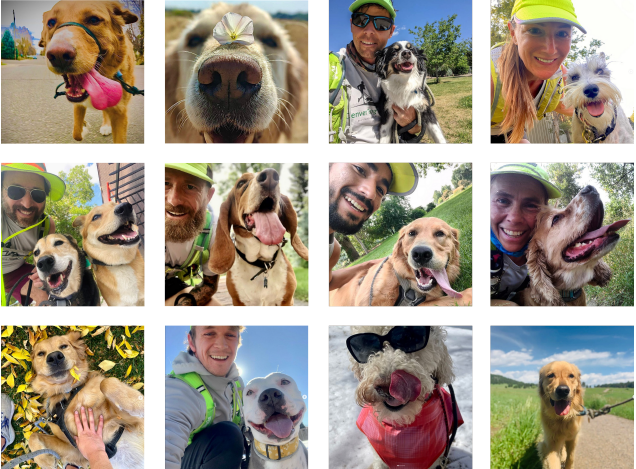
You're in a conference call, your lunch break is disappearing, and your dog has been pacing between the window and the front door since morning. A quick backyard release may solve the immediate bathroom problem, but it won't necessarily address stored energy, boredom, or the need for purposeful movement. For busy professionals, a midday dog walker should provide a dependable exercise and safety system, not merely a key exchange and a rushed drop-in.
The right service creates a predictable break in the workday, with a plan for intensity, equipment, home access, route safety, and visit reporting. That structure helps you protect your dog's routine without repeatedly leaving meetings, cutting errands short, or wondering whether anyone arrived.
Why Midday Exercise Matters for Working Professionals
At noon, many owners are managing two competing realities. Their calendars demand uninterrupted attention, while their dogs have spent the morning waiting for movement, company, and a chance to explore. A dog that starts pacing, barking at hallway sounds, chewing furniture, or pestering the household may not be “acting out” so much as responding to an incomplete daily routine.
Dog walking can represent meaningful physical activity rather than casual pet care. A 2019 study found that participants walked with their dogs a median 7.0 times per week for a median 220.0 minutes weekly , and 64% of dog owners met physical activity guidelines through dog walking alone . Among dog walkers, that figure reached 71% , while total physical activity with a dog reached a median 248 minutes per week . These findings come from the Scientific Reports study on dog walking and physical activity.
A midday visit also changes the dog's mental state. A short release into a yard may provide bathroom relief, but a structured walk adds new scents, controlled movement, environmental observation, and contact with a handler. The walker can use the outing to lower restlessness before the afternoon rather than leaving the dog to carry that energy into the evening.
Practical rule: Pay for the outcome your dog needs, not the label on the visit. Relief, fitness, enrichment, and behavior support are different services.
The habit is mainstream, too. A Gallup survey reported that 70% of dog owners took their dog for at least one walk per day , with an average walk lasting about 17 minutes , while 85% described daily dog walking as pleasant rather than a chore . Earlier research found a median 160 minutes of dog walking per week and a median frequency of four times per week among owners who walked their dogs. The historical pattern supports treating the midday outing as a routine part of care, not an occasional indulgence. You can also apply the same logic to your own workday habits by exploring ways to boost productivity with SleepHabits.
Matching Walk Length and Intensity to Your Dog
A good midday dog walker doesn't begin with a generic duration. The walker starts with the dog's age, physical condition, breed tendencies, behavior, weather tolerance, and response to exercise. A young working breed and an older small dog may both need a midday visit, but they shouldn't receive the same session.
Start with the dog's baseline. Watch how quickly your dog settles after the morning walk, whether they rest comfortably or continue searching for activity, and how they respond to stairs, hills, heat, and unfamiliar dogs. Look for useful signals during and after exercise, including heavy panting, reluctance to continue, limping, or unusually rapid fatigue. Those signs call for a shorter outing and, when appropriate, veterinary advice.
A structured session should separate fitness work from enrichment :
- Warm up gradually. Begin with an easy pace and allow the dog to settle into the environment.
- Add controlled brisk movement. For an athletic dog, build toward one or more 15-minute periods of brisk walking , rather than starting at full speed.
- Use sniffing deliberately. Sniff breaks are valuable, but keep them within the plan so the visit doesn't become an uncontrolled roam.
- Cool down. Reduce the pace, offer water when needed, and check paws and gait before returning home.
- Record the response. The next visit should reflect whether the dog recovered comfortably or showed signs of overexertion.
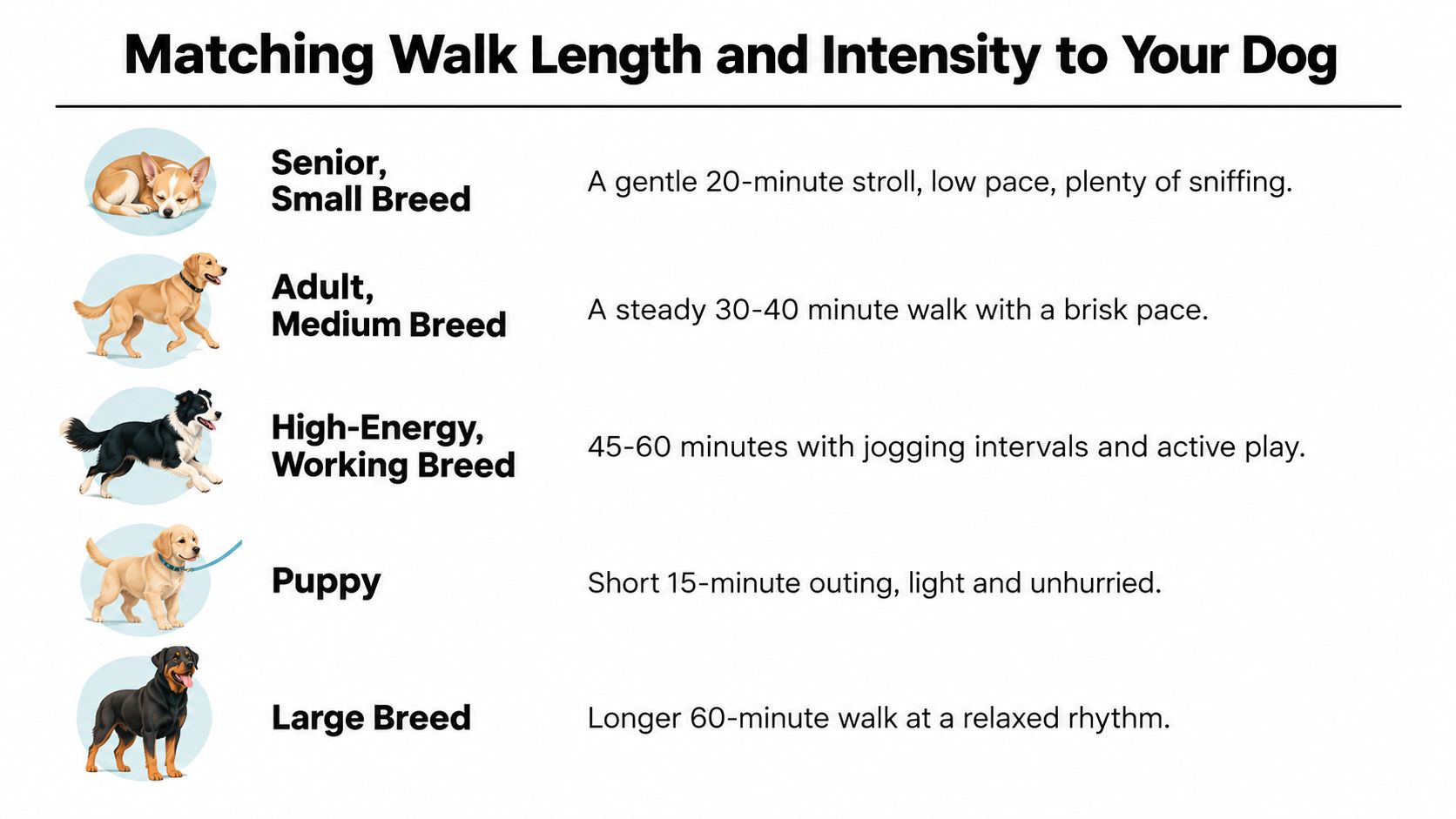
For a dog that needs a simple bathroom break and gentle movement, a short, unhurried outing may be enough. An energetic or athletic dog may need brisk pacing, jogging intervals, or active play, provided the handler can control the dog and the environment supports it. Puppies, seniors, dogs recovering from illness, and dogs with orthopedic concerns require a more conservative plan.
Give the walker written priorities: “fitness first,” “sniffing and decompression,” “avoid other dogs,” or “return early if the dog shows fatigue.” For additional planning, use this guide to how many times you should walk your dog each day. The important point is consistency. The visit should produce the same intended result on a recurring weekday, not vary according to whichever handler happens to arrive.
Managing Home Access and Key Logistics
Home access is where many otherwise good pet-care arrangements become unreliable. If the walker can't enter quickly, locate the equipment, or secure the property on departure, your dog's exercise plan is already compromised. Treat access as an operating procedure with clear ownership, backup steps, and minimal ambiguity.
A lockbox is straightforward and useful when it's mounted securely and the code can be changed. A smart lock offers better control when you want to create or revoke access remotely, but it depends on charged devices, working connectivity, and a service provider that manages permissions carefully. A hidden key is the weakest option because it can be discovered, copied, or left exposed. If you use one, don't rely on secrecy as your only protection.
Build a repeatable arrival routine
The walker should know exactly where to find the leash, harness, waste bags, towels, treats, and water bowl. Store those items together near the exit, not in separate rooms. A labeled container prevents a rushed handler from searching through drawers while the dog becomes more excited.
Your instructions should also cover the parts of the home that matter operationally:
- Entry and alarm: State how to open the door, disarm an alarm, and relock the property.
- Dog location: Identify where the dog usually rests and whether gates or interior doors must stay closed.
- Equipment choice: Specify whether the dog uses a collar, harness, or both.
- Departure check: Require the walker to confirm that the door is secured, appliances are untouched, and the dog is safely back inside.
- Emergency contact: Provide your veterinarian's details, a backup person, and authorization instructions for urgent care.
Professional providers should have a consistent key-tagging and access policy. Keys shouldn't carry an address or identifying label, and access information should be restricted to the people assigned to the visit. Ask how the company handles staff changes, lost keys, canceled visits, and emergency entry.
Security standard: A reliable service should be able to explain who has access, how access is recorded, and what happens when the regular walker is unavailable.
Set up the routine before the first workday visit. Do a supervised handoff, watch the dog's response to the handler, and confirm the walker can complete the full lockup process without reminders. That small test eliminates most midday friction.
Evaluating Safety and Handler Qualifications
A midday route can be calmer than an evening route. Public guidance notes that anxious or excitable dogs may benefit from walking when fewer people are outside, including midday when neighbors are at work. Quieter streets help, but they don't replace attentive handling. A calm window still includes traffic, loose dogs, broken glass, hot pavement, ice, uneven ground, and unexpected people.
Compare a casual neighborhood walker with a professional service by looking at the operating system behind the walk.
| Evaluation point | Casual neighborhood walker | Professional service |
|---|---|---|
| Leash handling | May depend on personal experience | Should follow a defined handling standard |
| Route planning | Often selected informally | Should account for footing, distractions, and dog behavior |
| Emergency response | Usually relies on personal judgment | Should include documented contacts and escalation steps |
| Visit visibility | May be limited to a text message | May include scheduled updates, photos, or route records |
| Backup coverage | Often unavailable if the walker is sick | May provide another trained handler |
A sturdy 4 to 6 foot leash and a properly fitting collar or harness are foundational. The walker should stop when the dog pulls and resume only after the leash loosens, rather than allowing constant tension to become the default. They should also recognize lameness, heavy panting, panic, freezing, or rapid fatigue and know when to end the outing.
Dog-walking injuries deserve serious attention. U.S. emergency-department visits associated with dog walking rose from about 7,200 in 2001 to about 32,000 in 2020 , and the average injured adult was around 53 years old , according to AVMA walking guidance. Another VCA safety guide reports that leash-related injuries climbed more than fourfold over two decades and emphasizes stopping when a dog pulls, maintaining control, and watching for fatigue.
Ask direct questions before booking: How do you handle a loose dog? What happens during extreme weather? Do you provide GPS-supported visit records or route visibility? Who enters the home if the assigned walker is delayed? For a focused checklist, review what pet owners should verify about dog-handler qualifications.
Understanding Pricing and Service Packaging
The price of a midday visit reflects more than minutes on the clock. You're paying for travel coordination, access management, leash handling, scheduling reliability, communication, and the provider's ability to deliver the same standard when a regular handler is unavailable.
Daytime pet-service listings show visits packaged in 20-minute, 30-minute, and 60-minute durations . That structure gives owners a practical starting point, but duration alone doesn't tell you whether the session matches the dog's needs. A short visit may suit relief and light movement. A longer session may be more appropriate for a dog that needs sustained exercise and enrichment.
Midday Dog Walking Service Tiers
| Visit Duration | Best For | Primary Focus |
|---|---|---|
| 20 minutes | Dogs needing relief and a brief reset | Bathroom break, fresh water, gentle movement |
| 30 minutes | Most routine weekday walks | Consistent exercise, basic enrichment, and handling |
| 60 minutes | High-energy or athletic dogs | Extended movement, structured pacing, and deeper enrichment |
Use the Denver Dog walking rates and pricing guide to evaluate the provider's current package structure rather than comparing isolated hourly figures. Pricing details can change, and the cheapest listed visit may cost more in practical terms if the walker arrives inconsistently, provides little communication, or cannot manage your dog safely.
Technology can justify a higher service tier when it solves a real trust problem. GPS tracking, digital route maps, photo updates, automated scheduling, and recurring subscriptions make the workday easier to monitor. They also create accountability around arrival, route completion, and care notes. Choose visibility that helps you make decisions, not a collection of features you'll never check.
An independent sitter may offer personal continuity and flexible arrangements. A professional agency may offer dispatch support, backup handlers, standardized onboarding, and more formal records. Neither model is automatically right. Match the package to your risk tolerance, your dog's exercise requirements, and how damaging a missed visit would be to your workday.
Integrating Midday Walks into a Long-Term Care Plan
A midday dog walker works best as a fixed part of the weekly routine. Morning exercise should prepare the dog for the day without exhausting them, the midday visit should address the dog's specific physical and mental needs, and the evening should provide connection, training, or lower-pressure enrichment. Weekend walks, runs, and hikes can add variety without forcing every weekday visit to become an endurance session.
Keep a simple care record. Note the dog's appetite, stool, gait, recovery, behavior after the visit, and response to weather. Share changes promptly. A dog that suddenly struggles with a familiar route may need a medical assessment, a revised intensity plan, or a different surface.
Consistency also helps working professionals protect their own time. A recurring appointment removes the daily decision about whether to leave a meeting, rush home, or ask a neighbor for help. The same principle applies to planning for executive function, because a care routine is easier to maintain when the decision has already been made and placed on the calendar.
Denver-area owners should choose a provider that confirms the exact service zone rather than promising vague metro coverage. Denver Dog lists Arvada, Denver, Englewood, Golden, Lakewood, Littleton, and Wheat Ridge on its dog-walking service area page. That neighborhood-level clarity matters when weekday reliability depends on realistic travel routes and dependable scheduling.
Treat the midday walk as a core pillar of care, alongside feeding, veterinary oversight, sleep, training, and exercise variation. When the routine is designed around the individual dog and supported by clear access and safety procedures, your dog gets a calmer afternoon and you get a workday with fewer interruptions.
Denver Dog provides weekday on-leash walking, running, and hiking sessions for dogs that need structured daytime exercise, with trained handlers and safety-focused procedures. Visit Denver Dog to review the service options, confirm coverage for your neighborhood, and arrange a midday routine that fits your dog and your work schedule.
The Run Down