You're halfway through a workday, the group chat is still going, and the dog at home has been staring at the door since breakfast. You know a walk is due. You also know a neighbor with a spare hour is not the same thing as someone who plans the outing, watches the dog the whole time, and tells you what happened.
That gap is the job. A good walker treats every outing as mobile risk management : exercise on purpose, a leash under control, and a decision to stop before a small problem becomes an injury.
What a Dog Walker Does on Every Outing
A dog walker plans the exercise, controls the leash, watches for hazards, and reports back on every outing. The visit is a checklist, not a casual stroll that happens to include a dog.
| Stage | Typical Tasks | Why It Matters |
|---|---|---|
| Before the walk | Health check, equipment fit, route choice, weather check | Catches fatigue, injury or unsafe conditions early |
| During the walk | Leash control, rest and water breaks, sniff time, monitoring | Keeps the dog safe, controlled and within its limits |
| After the walk | Paw and coat check, waste cleanup, water refill, update to owner | Confirms the dog recovered and documents what happened |
| Home visits | Feeding, medication, door security, litter or enrichment check | Keeps routines on schedule while owners are away |
Before anyone leaves the house
The health check is a look at the eyes, a watch of the gait from the door to the sidewalk, and a check that water is available. A collar or harness gets a fit check so it isn't loose enough to slip or tight enough to rub. The route is chosen for footing and traffic, and the weather gets a real look, not a glance at the icon on a phone. Catching a limp, a hot sidewalk, or a storm line before you leave is cheaper than discovering it six blocks from home.
During and after the walk
On the walk, low-tension leash control matters more than speed. Rest, water, and sniff time are part of the session, not interruptions. The walker keeps watching breathing, pace, and whether the dog still wants to go. That monitoring is what keeps the dog inside its limits instead of "finishing the loop" out of habit.
Back at the door, paws and coat get a check, waste is already bagged, the water bowl is refilled, and you get an update. That note is how you see recovery, not just that the dog went out. On a home visit, feeding, medication, a locked door, and a look at litter or enrichment keep the rest of the day on schedule while you're at work.
These duties repeat on weekdays, so a reliable walker uses the same checklist instead of improvising. Small changes, a shorter stride, a new hesitation at curbs, a slower cooldown, get reported while they're still small. People who walk other people's dogs also carry real responsibility if something goes wrong, which is why reading up on protecting your business while walking dogs is a practical part of doing the work well, not an extra.
The American Veterinary Medical Association says activity has to be adjusted to a dog's age, breed, health, fitness, behavior, and environment . It recommends starting with short, frequent walks and building toward one or more 15-minute periods of brisk walking, then cooling down. For weight management it cites advice of at least 30 minutes of activity a day, with the amount set for that animal. Stop if a dog limps, struggles to breathe, staggers, becomes disoriented, or doesn't want to continue. One long identical walk doesn't fit every dog on a route.
How Exercise Is Matched to Each Dog
One walk length can't fit a senior who tires on hills and a young dog who is still bouncing at the mailbox. Published plans give a walker a starting row, not a personality test.
| Plan or Guideline | Session Length | Frequency | Best Fit |
|---|---|---|---|
| AKC lower-intensity plan | At least 15 minutes per walk | 10 times weekly for three months | Seniors and dogs starting a routine |
| AKC standard plan | 30 minutes per walk | 5 times weekly for three months | Healthy, conditioned adult dogs |
| AVMA brisk-walking build-up | 15-minute brisk periods with cooldown | Progress gradually from short, frequent walks | Dogs returning to activity |
| AVMA activity target | At least 30 minutes total | Daily | Dogs managing their weight |
The AKC FIT DOG guidance sets the first two rows in plain numbers. A lower-intensity plan is at least 15 minutes per walk, 10 times weekly for three months . A standard plan is 30-minute walks five times weekly for three months . The build-up row is the gradual path toward those 15-minute brisk periods, with recovery built in. The daily row is the weight-management target, spread across the day rather than dumped into one hard outing.
Two dogs, two rows
Say a 12-year-old beagle is starting weekday walks after a quiet winter. That dog sits on the lower-intensity row: repeated 15-minute outings, plenty of sniffing, and a rest before anyone talks about going farther. A fit two-year-old border collie who already runs the fence line can sit on the standard row, a structured 30-minute walk or an on-leash run, as long as cooldown is quick and the next morning's gait is normal.
Matching the plan is three steps, and the order matters.
- Write down age, breed, health, and fitness. A breed reputation isn't a medical clearance. A border collie with a sore shoulder is not "the athletic one" this month.
- Pick the matching row. Seniors and dogs new to a routine start at 15 minutes, repeated often. Healthy, conditioned adults can use the 30-minute row.
- Start at the lower end. Add time only when recovery is quick. If the dog is still panting hard at the water bowl, the next outing stays short.
Practical rule: Lagging behind, refusing to continue, or heavy breathing that doesn't settle means the plan is too hard. Shorten the next outing. Don't "make up" the missed distance tomorrow.
Owners around Arvada, Denver, Englewood, Golden, Lakewood, Littleton, and Wheat Ridge can check coverage on the Denver metro service area page and then look at how a structured exercise plan turns those rows into weekday visits. A leisurely stroll suits a puppy learning the block or a senior who wants to sniff. A fast-paced walk gives younger and older dogs a lower-impact option when a full run isn't reasonable.
On-Leash Handling and Unsafe Conditions
A dog can seem ready to go, then show a limp or unusual breathing once the walk begins. The handler's job is to notice early signs, adjust the outing, and keep small hazards from becoming injuries.
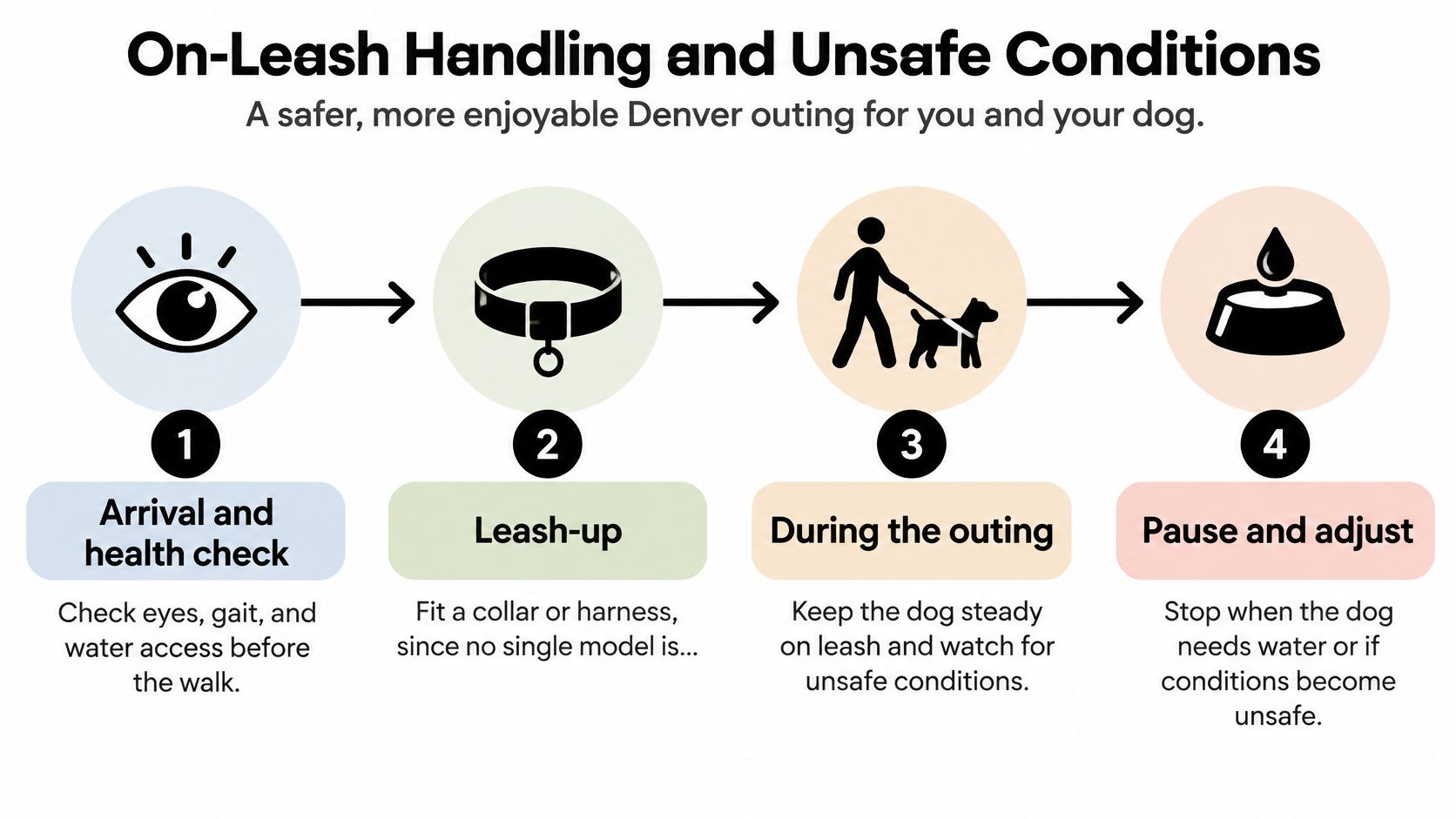
Before leaving , check the dog's gait, eyes, and water. A new limp or unusual behavior can call for a shorter outing or a call to the owner. Starting with a quick check is like checking a seat belt before driving: it can catch a problem before the route adds risk.
At leash-up , check that the collar or harness fits and that the leash can stay slack. A 2024 study in JAVMA found no clear overall welfare advantage among the leash-equipment types it tested and called for more real-world research. The practical lesson is to focus on fit and calm handling rather than assuming one type works best for every dog.
Choose the route for the dog in front of you. Watch for traffic, broken glass, uneven footing, and wildlife that might trigger a lunge. A quiet street or clear path gives the handler more room to respond than a busy curb or a route with tempting distractions.
Keep a manageable pace. Allow time for water, rest, and sniffing. A walk is not a race to cover distance; a dog pulling hard at the end of the leash may need more space or a slower route, not a faster pace.
On return , look over the paws and note any new scratch or change in gait. An update that describes how the dog moved during the outing gives the owner more useful information than a simple “all went fine.”
Why the leash stays loose
Pulling on the leash can strain a dog's neck and airway, so the handler keeps tension low. Avoid jerking the leash or letting the dog hit its full length at a corner. If an off-leash dog approaches, stop, create distance, and use a car, fence, or tree as a barrier when possible.
The same 2024 analysis found that dog-walking accidents increased about 2.6-fold from 2004 to 2017, while the chance of injury on any one walk remained low. Traffic awareness, leash control, and space from other dogs help reduce avoidable risks. This guide to dog-walking safety covers the handling decisions that help protect dogs on routine outings.
When the conditions turn
Heat, slippery footing, and sudden changes in a dog's movement can call for ending or changing the outing. Use the signs below to decide when to stop and what to do next.
| Hazard | Warning Signs | Response |
|---|---|---|
| Heat | Heavy panting, drooling, weakness, staggering | Stop, move to shade, offer water, and contact the owner or vet |
| Hot pavement | Lifting paws, reluctance to walk, burned pads | Test the ground with the back of a hand, choose grass, and shorten the route |
| Cold weather | Shivering, lifting paws, lagging behind | Shorten the walk, dry the dog, and limit exposure |
| Post-meal activity | Swollen belly, unproductive retching | Avoid vigorous exercise after a large meal; contact a vet if signs appear |
| Limping or collapse | Limping, struggling to breathe, staggering, disorientation | Stop walking and contact the owner or vet |
| Loose or aggressive dog | Approaching off-leash dog, raised hackles | Change direction, create distance, and use a barrier if needed |
If the pavement is too hot to hold the back of your hand against, choose another surface or shorten the route. Stop before the dog is exhausted, and treat limping, collapse, or difficulty breathing as a reason to end the walk and contact the owner or a vet. Light rain or a light dusting of snow can still be manageable when the footing is safe for the dog and handler.
Casual Help Versus a Professional Dog Walker
Most owners are choosing between a neighbor who likes the dog and a walker who does this on a schedule. The difference shows up on the days something goes wrong, not on the easy Tuesdays.
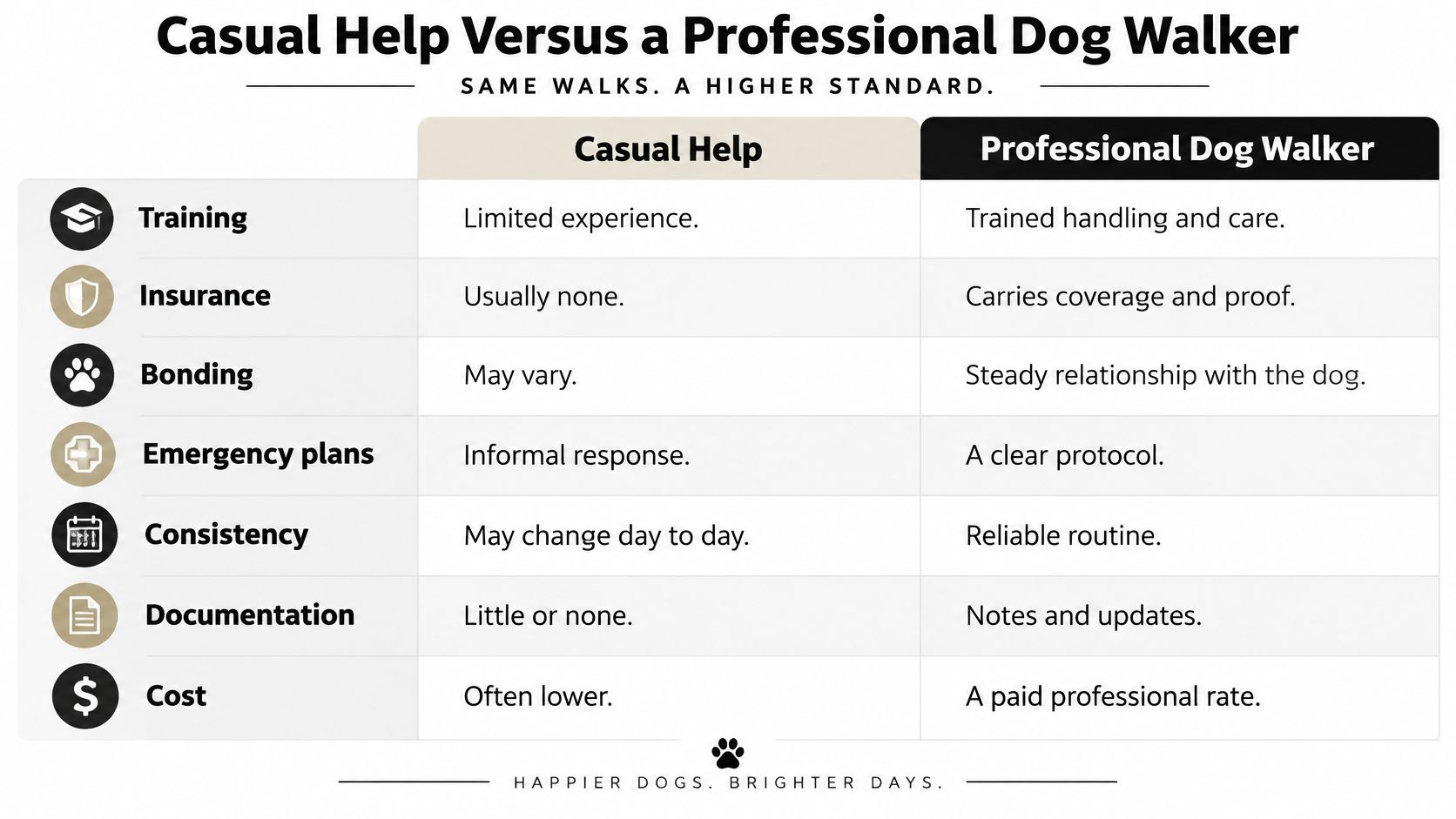
| Criteria | Casual Neighbor or Friend | Professional Walker |
|---|---|---|
| Training in canine handling | Varies, often none | Usually formal training with ongoing refreshers |
| Insurance and bonding | Often absent | Commonly carried; ask to confirm |
| Emergency plan | Owner contact only | Written protocol with vet and owner contacts |
| Consistency | Depends on availability | Scheduled, recurring visits |
| Documentation | Rarely recorded | Notes, photos or GPS check-ins |
| Best for | Occasional one-off outing | Daily, multi-dog or high-energy routines |
| Cost | Often lower | Higher, reflecting training, insurance and records |
Training is the first split. A friend may be kind and still not know when to end a walk. A professional is usually trained up front and refreshed when a problem shows up on a route.
Insurance and a written emergency plan answer a blunt question: who is responsible if the dog is hurt? "I'll call you" is a start. A protocol with your vet and a backup number is a plan. If that answer stays fuzzy, the professional option is the one with clearer accountability.
Consistency and notes matter once the need is every weekday. A neighbor's schedule slips when their own week gets busy. A booked route does not. Photos or a GPS check-in also tell you the walk happened where you expected.
When each option fits
Casual help fits a one-off outing , a quick midday check, or a calm dog who mostly wants company in the yard. It can work well for an occasional need, and it often costs less.
A professional is worth it for daily or multi-dog routines , high-energy dogs who need a structured run, dogs with health limits, and owners who work long days. You pay more. That cost is training, records, and someone who is supposed to show up. Service businesses that last put that scope in writing. The same habit shows up in a clear cleaning service proposal: what happens, when, and who you call. A dog walk deserves the same plain terms.
If you can't say who acts when the dog is injured, you don't have a plan yet. You have a favor.
Questions to Ask and Red Flags to Avoid
Run this list on the phone before you book. A specific answer is a good sign. A vague one is the warning.
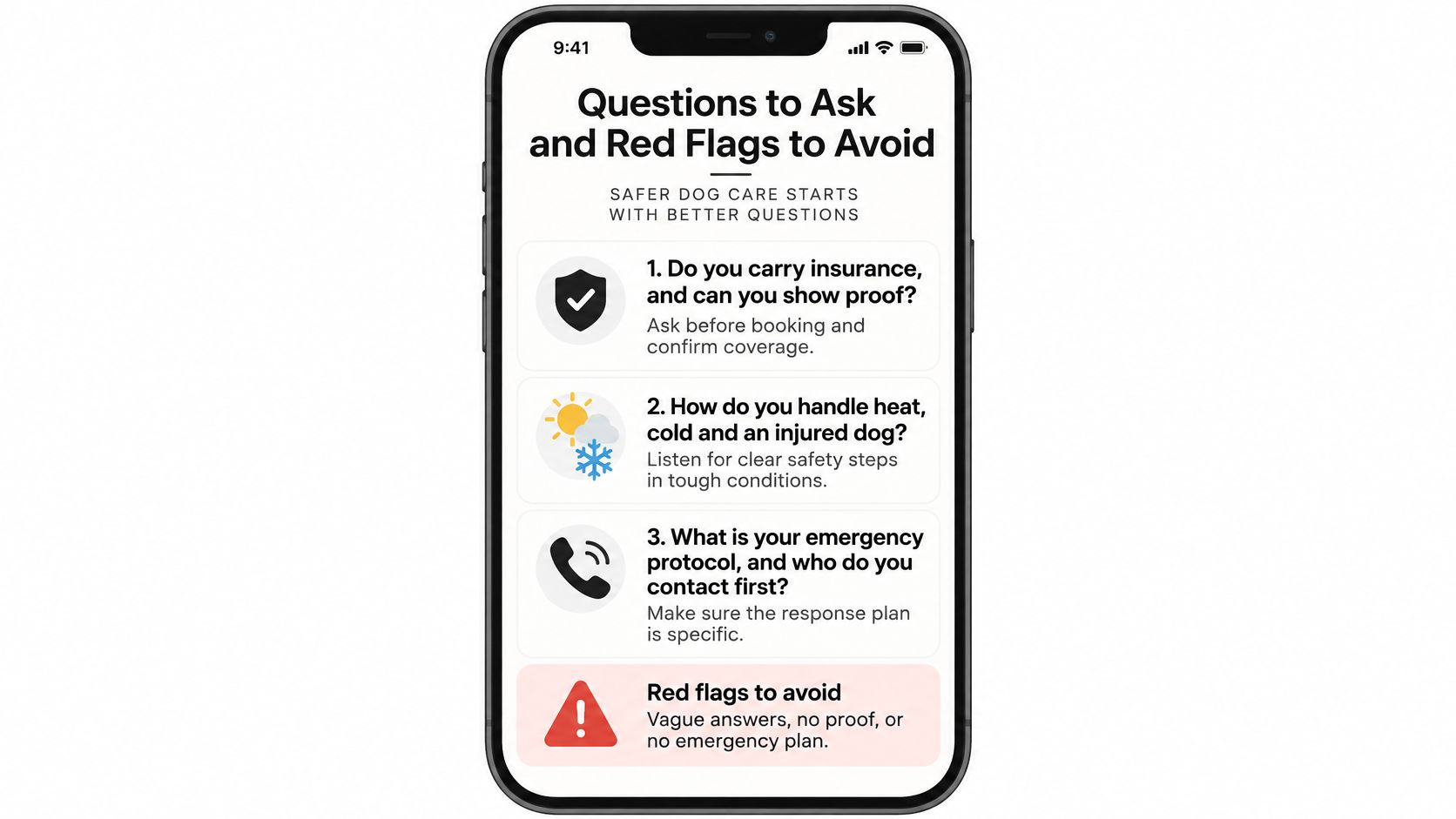
- Do you carry insurance, and can you show proof? Ask before the first walk, not after a scare. Coverage you can't see isn't something you can count on.
- How do you handle heat, cold, and an injured dog? Listen for shade, water, a shorter route, and a stop. "We play it by ear" isn't a method.
- What's your emergency protocol, and who do you call first? You want your number, a backup, and the vet, in an order the walker can say out loud.
- How do you keep dogs leashed where the rules require it? In Denver, the city code makes it unlawful for an owner or keeper to let a dog run at large, and police or animal-protection officers may take a loose dog to the Denver Animal Shelter without a complaint filed first. Park rules generally keep dogs from being loose, unleashed, unattended, or poorly controlled, with off-leash time only in designated dog parks under posted rules. The same control applies on ordinary walks and hikes through Arvada, Englewood, Golden, Lakewood, Littleton, and Wheat Ridge.
- How many dogs do you walk at once, and how do you handle a conflict? If the walker can't describe space, a stop, and a barrier, the group is too big for that person.
- How do you report back after each walk? Notes, photos, or a GPS check-in. Silence until you text is not a report.
Red flags you can spot quickly
Safety flags
- No written emergency plan: They can't name the vet or the first call.
- Yanking or dragging: Leash corrections that look like a tow.
- A group they can't watch: More dogs than two free hands and one brain can separate.
Trust flags
- Reluctance on proof: Insurance, training, or references stay "on file" somewhere you can't see.
- Vague routes: "We just go around" with no street, park, or time.
- No update: The walk ends and you hear nothing unless you ask.
Ask how conflicts between dogs get handled before you need the answer on a sidewalk. A walker who describes creating distance is safer than one who says the dogs "usually work it out."
Choose a Walker Who Passes These Checks
Use the phone list as the test. Specific, written answers on insurance, heat and cold, emergencies, and how you'll hear about the walk are the signal to book. If the answers stay general, keep looking.
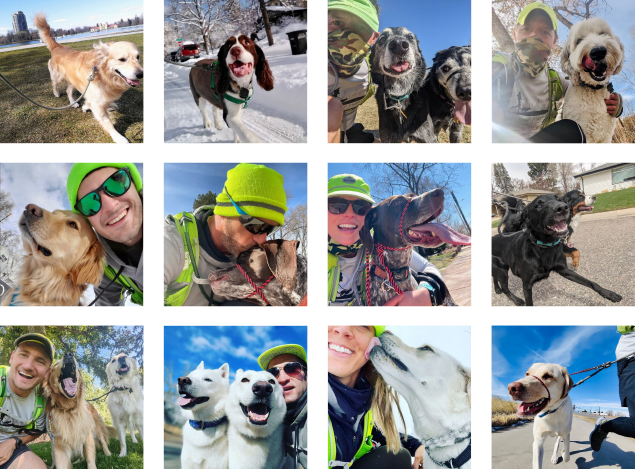
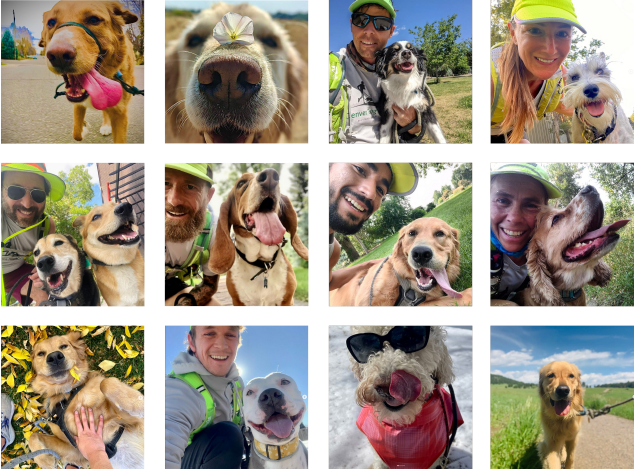
New walkers and runners at Denver Dog get training from the business, and we keep training and support going when someone hits a problem on a route. Each session is recorded with a GPS-enabled device . Photos, details, and comments from the walker or runner go online, so you're not guessing whether the outing matched the dog. Once you're in the system, you schedule walks, runs, and hikes on our online platform.
We work with pet parents across the Denver metro, including Arvada, Denver, Englewood, Golden, Lakewood, Littleton, and Wheat Ridge . Confirm your address on the service area page, then compare what you hear with this handler qualifications checklist.
Three steps finish the decision.
- Confirm your address is inside the service area.
- Ask the checklist questions and keep the answers that name a person, a protocol, and a way you'll see the walk.
- Book a first walk and read the update the same day. The notes tell you whether the match is right.
Denver Dog plans on-leash walks, runs, and hikes around your dog's limits, with trained handlers, GPS check-ins, and a photo update after the session. If you've been covering weekday exercise yourself and the routine keeps slipping, that's the gap a set schedule is meant to close. Visit Denver Dog to see how a first walk gets booked.
The Run Down