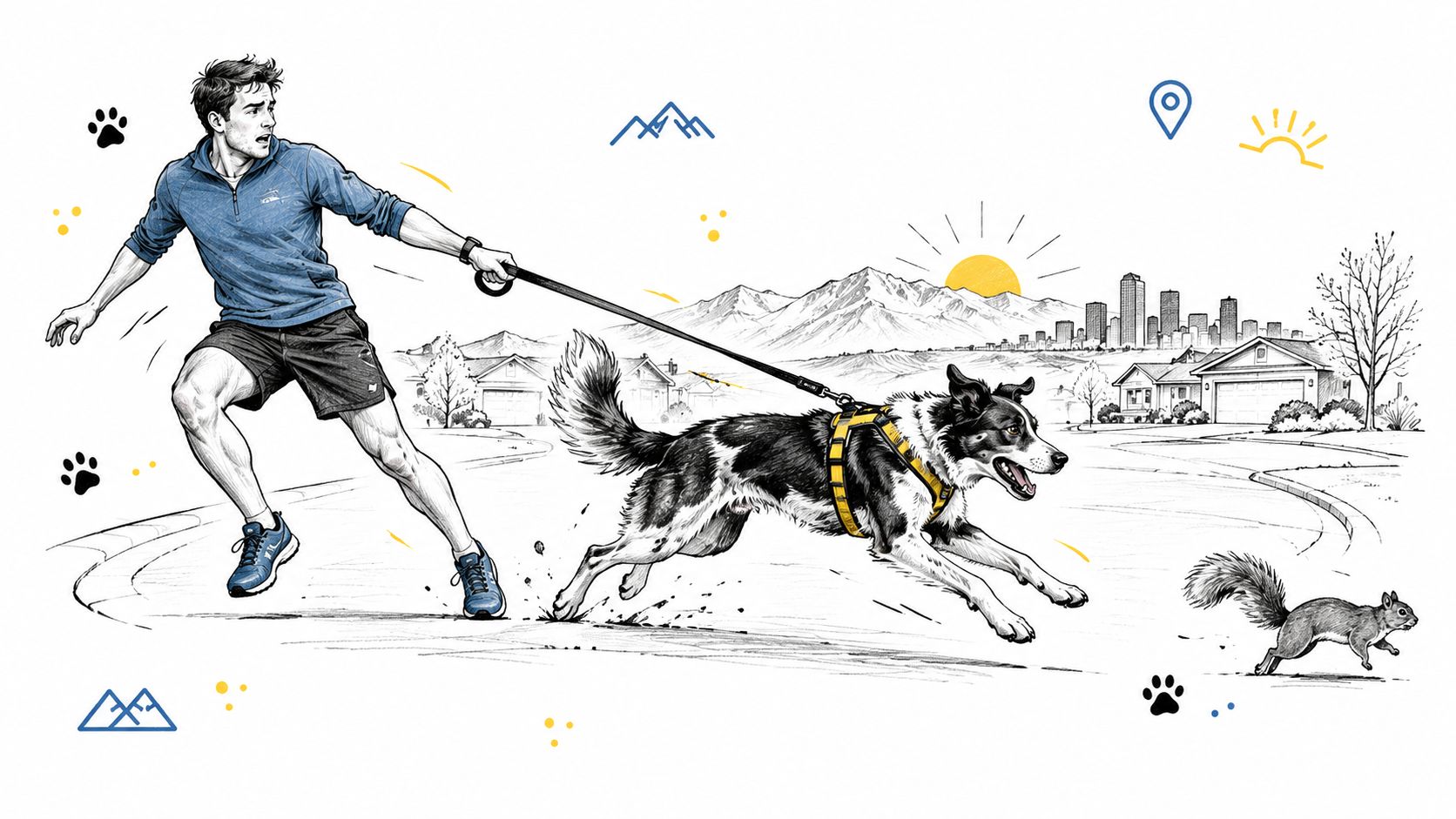
You lace up before sunrise, the air still sharp over a Denver cul-de-sac, and your dog is already treating the run like a race. A squirrel crosses the sidewalk. Your Border mix lunges, the leash burns through your hand, and your carefully planned workout dissolves before you reach the first block. If you're learning how to run with your dog on a leash, that scene is common, but it isn't inevitable.
Running together isn't walking with more speed. It's a coordinated effort between two athletes sharing one narrow piece of equipment. Your dog has to learn a steady position, you have to manage cadence and hazards, and the leash has to transmit information without becoming a source of jolts, tangles, or falls.
Why Most First Runs with a Dog Go Sideways
The first mistake usually happens before the front door opens. A person clips on whatever leash is already hanging by the entryway, assumes the dog will match their pace, and heads out with the enthusiasm of a runner starting a new training block. The dog, meanwhile, has a completely different agenda. It wants to investigate the fire hydrant, chase movement, greet a dog across the street, and sprint toward the first interesting smell.
The week-one problems
A mismatched pace creates the first breakdown. An excited dog surges ahead, settles for a moment, then fades because it never learned to distribute effort. The runner compensates by shortening the stride, braking with the arm, or letting the dog tow them. None of those responses produces a comfortable rhythm.
Skipping the warm-up creates another avoidable problem. Cold joints, paws, and muscles meet concrete immediately, and the dog has no chance to empty its bladder or settle into the route. The American Kennel Club's running guidance recommends several minutes of walking before a run and the same approach afterward, along with carrying water and offering it regularly during exercise.
A standard retractable leash makes the shared-equipment problem worse. Its changing length creates inconsistent tension, and the locking mechanism can encourage sudden stops. A fixed leash gives both athletes a clearer boundary and makes cadence changes more predictable.
Practical rule: If the leash keeps tightening and releasing, fix the equipment and the pace before trying to fix the dog.
What a professional sees first
When a Denver Dog runner introduces a new trail dog around Wash Park or along the Platte, the first observation isn't how fast the dog can move. It's whether the dog can stay on one side, respond to a pace change, pass a distraction without crossing the runner, and recover during a walking break. Those details reveal whether the team is ready to jog or needs more walking practice.
The mindset shift is simple. The leash is shared equipment, not a rope attached to a passenger. Both ends need a plan for starting, turning, stopping, passing, and recovering. Once you treat the run as a partnership, the first session becomes a skills assessment rather than a test of distance.
Choosing the Right Leash, Harness, and Collar for Running
Gear should solve a specific problem. On sidewalks, that usually means maintaining a predictable line between your hand and your dog. On a rocky foothills route, it also means preventing sudden shocks when the surface changes or the dog steps around an obstacle.
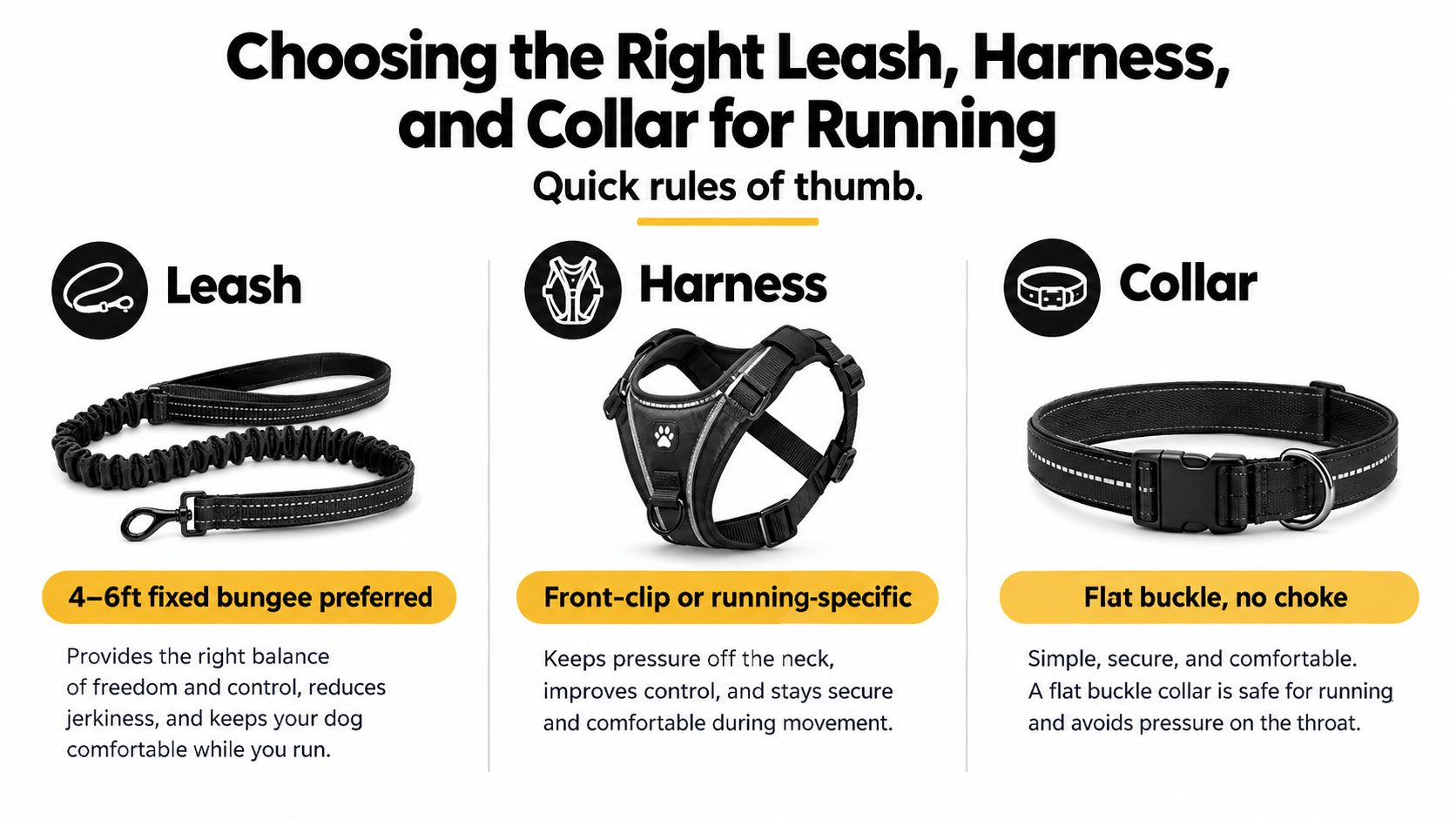
Start with a fixed-length leash between 4 and 6 feet . Veterinary guidance from VCA recommends that range, with the dog running beside you and its nose roughly even with your knees. A fixed bungee leash can soften sudden tension, while a traffic handle gives you a shorter control point near crossings or crowded trail sections. A retractable leash doesn't belong in a running setup because its variable length invites tangles and inconsistent pressure.
A waist belt with a stretch segment can free your hands and reduce shoulder strain, but it changes the consequences of a stumble. Use one only after your dog can hold a reliable position and you can release the belt quickly. For a strong puller or a dog that changes direction abruptly, keep a hand-held option during early training.
Match the harness to the body
A well-fitted Y-front harness allows shoulder movement without placing the leash pressure directly on the throat. A front-clip or no-pull design can help redirect a dog that drives forward, though it isn't a substitute for training. Flat-faced breeds and heavy pullers need especially careful equipment selection because pressure around the neck can interfere with comfortable breathing.
A properly fitted martingale may suit a sight hound with a narrow head, particularly when slipping out of a regular collar is a concern. It should never function as a choke device. A flat buckle collar can carry identification, but treat a running collar as an ID tag carrier, not a steering tool .
Use a quick fit check
- Straps: You should fit two fingers beneath each strap without leaving enough room for the harness to rotate.
- Front legs: Run your fingers behind the elbows and check for rubbing before and after the session.
- Clip position: Use the chest attachment on a front-clip harness and the mid-back attachment on a back-clip model.
- Hands: On cold Front Range mornings, gloves with a textured palm protect against leash burn without sacrificing grip.
For a closer look at choosing equipment, use this guide to finding a running harness for dogs. The right setup for a smooth neighborhood sidewalk may not be ideal on loose gravel or rocky foothills trails, so inspect the connection before every route.
Building Your Dog's Running Fitness the Smart Way
A dog that can walk enthusiastically for an hour may still lack the conditioning for continuous running. Walking builds movement tolerance and teaches leash mechanics, but jogging adds repeated impact, sustained effort, and a stronger demand for temperature regulation. Treat the transition like bringing an athlete off the couch.
Start with movement, not mileage
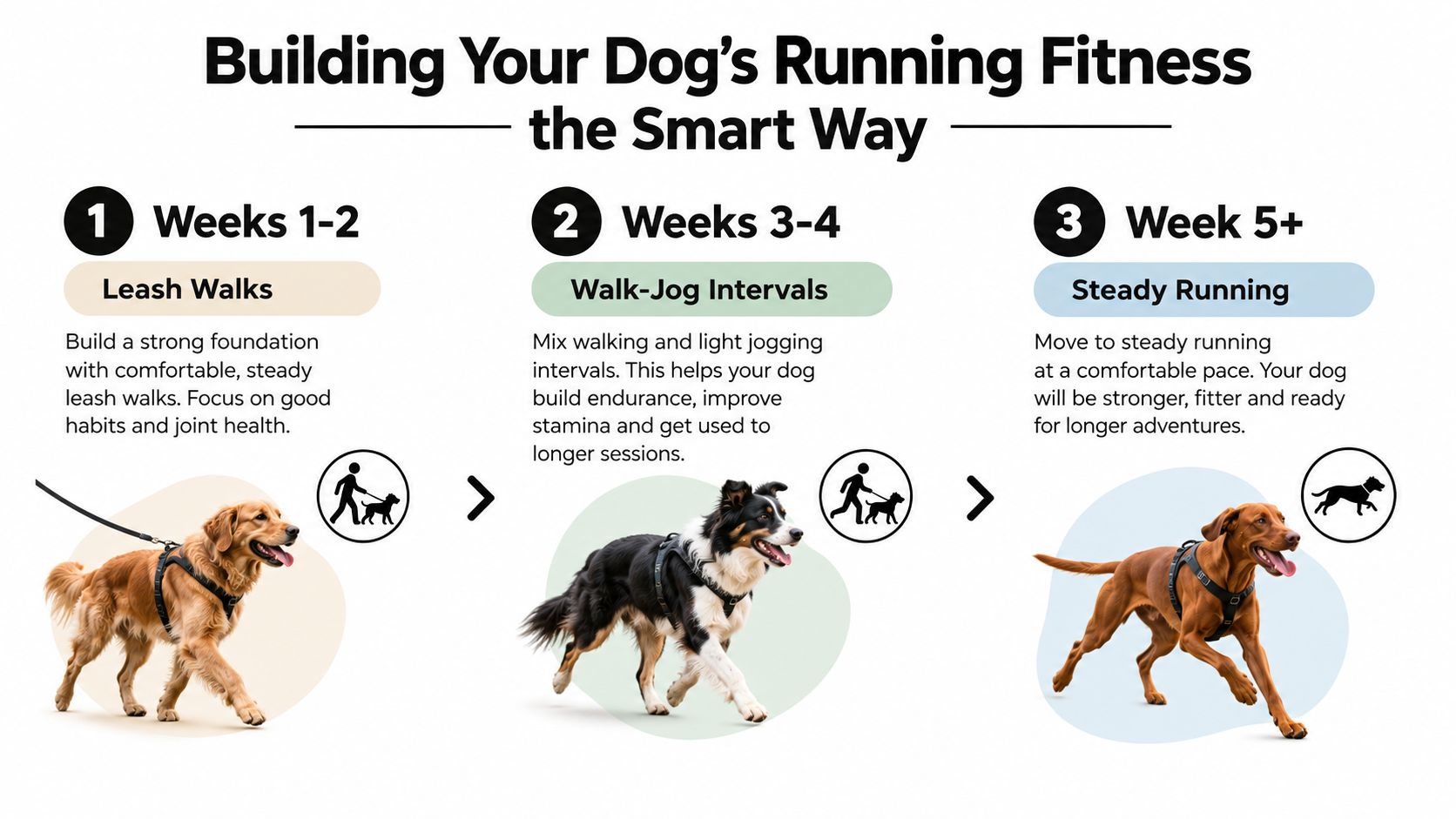
Begin with two weeks of sniff-focused leash walks . Let the dog explore appropriate smells while you reinforce a consistent side and a soft leash. These walks build paw-pad tolerance, body awareness, and the core control needed to move beside a runner. If your dog is young, elderly, overweight, brachycephalic, or has a history of joint trouble, get veterinary clearance before introducing a running program.
After the walking phase, introduce intervals on forgiving ground. At City Park, a grass-heavy route can be more comfortable than immediately repeating miles of concrete. Start with one minute of running followed by two minutes of walking , repeating the pattern across a short session. Add running time before adding distance, and keep the pace easy enough that the dog can remain organized rather than charging ahead.
The American Kennel Club recommends a walking warm-up and cool-down. Denver Dog runners use a five-minute loose-leash walk before jogging, insert dynamic sniffing breaks during the outing, and finish with a slow walk home. Those pauses aren't wasted time. They give the dog a chance to lower arousal, process the environment, and show you how it is coping.
Progress by response
Breed and energy level matter, but individual response matters more. A healthy, high-drive herding or sporting dog may settle into intervals quickly, while a brachycephalic dog, giant breed, or senior may need shorter efforts and more recovery. Don't use enthusiasm as proof of readiness. Some dogs will keep moving because they want to please you.
Stop before the dog has to ask. Lagging, limping, distress, or unusually heavy panting means the session is over, not that you should encourage one more stretch.
Drop back to the previous stage when those signs appear, and contact a veterinarian if a problem persists. The Denver Dog endurance training guide can also help you think through a structured approach that respects energy level, route demands, and recovery.
The field still has unanswered questions about the safety of common equipment and real-world training loads, as discussed in this overview of leashes for runners. That uncertainty is another reason to favor gradual progression, frequent breaks, and immediate stops over rigid mileage goals.
A Sample Progressive Running Schedule by Energy Level
A useful schedule controls effort, not just distance. The table below uses the run-walk-run method, with a novice dog beginning at one minute of jogging for every five minutes of brisk walking. Each week adds a minute of jogging to the interval, and the fourth week deliberately remains conservative rather than forcing a faster pace.
These are planning targets, not promises. Low-energy dogs may need less work, while a fit working dog may tolerate more only after it has demonstrated calm mechanics and clean recovery. Keep at least one complete rest day, use sniff walks as low-pressure cross-training, and take a deload week before increasing pace or route difficulty.
| Energy Level | Week 1 Ratio (run:walk) | Week 2 Ratio | Week 3 Ratio | Week 4 Ratio | Weekly Total Minutes |
|---|---|---|---|---|---|
| Low-energy small breeds | 1:5, repeated gently | 2:5, with longer walking recovery | 3:5, only if movement stays easy | 4:5, with a conservative finish | Keep sessions short and recovery-led |
| Mid-energy adults | 1:5 across easy routes | 2:5 with steady leash position | 3:5 and controlled turns | 4:5 before considering continuous jogging | Build gradually around recovery |
| High-drive working or sport breeds | 1:5 despite visible enthusiasm | 2:5 with structured pauses | 3:5 on familiar terrain | 4:5 before adding route demands | Resist the urge to chase speed |
The ratios matter because a dog can appear eager while its body is accumulating fatigue. Watch the final part of the outing and the recovery afterward. Limping, heavy panting that continues well after the run, or stopping in the middle of the route are clear reasons to back off.
A rest day isn't a punishment and a sniff walk isn't a failed workout. Loose exploration gives the dog mental activity without asking it to repeat the same impact pattern. Keep pace and distance stable until the dog looks comfortable, then change one training variable at a time.
Handling Pulling, Lunging, and Other On-Leash Behavior
Leash behavior becomes more complicated at running speed because the line carries momentum. A dog that merely leans during a walk can pull you off balance while jogging, and a dog that crosses in front can take both athletes down. Diagnose the reason before choosing the response.
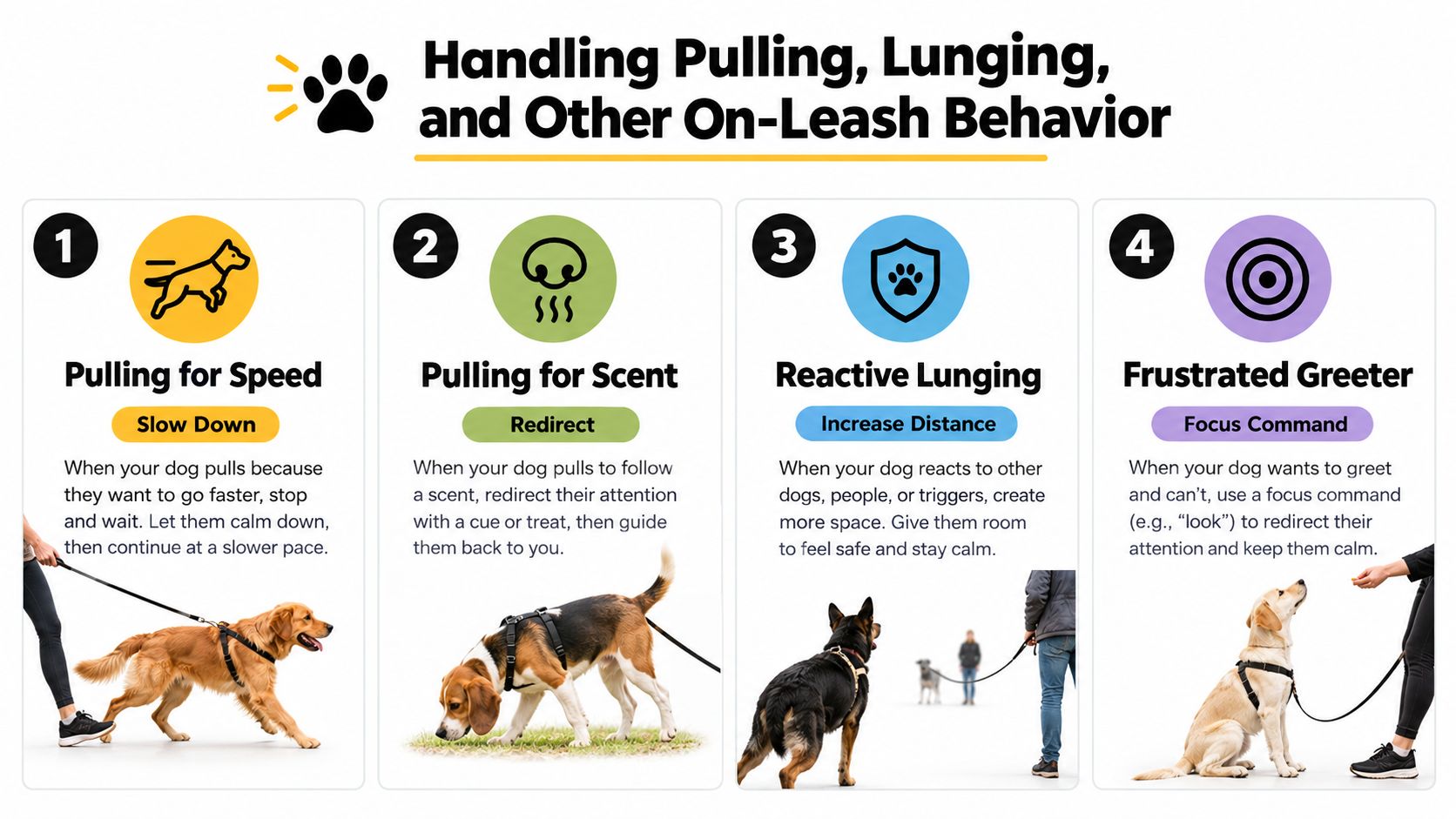
Speed pulling usually means the dog has learned that tension creates forward movement. Slow down, bring the dog back to your hip with a treat lure, and reward the instant the shoulder returns to position. A front-clip harness can help redirect the chest, but the release cue still has to come from your timing and consistency.
A scent hound presents a different problem. The dog may not want to run faster, it may want to reach the smell. Build decompression sniff breaks into the route every 5 to 7 minutes , then resume only when the leash is soft. Those pauses prevent the dog from storing frustration until it explodes into a sudden sideways pull.
Change the route before correcting the dog
Reactive lunging requires distance, not confrontation. If a dog, cyclist, or other trigger appears, move toward a wider section, cross the street, or make a calm U-turn before your dog reaches its threshold. Reward eye contact after the pass, then continue only when the body has softened.
A frustrated greeter needs a different lesson. The dog may want access to every person or dog, and restraint increases the urgency. Keep moving, use a practiced focus cue, and avoid turning the run into a series of forced greetings.
Treat the leash as a communication line rather than a restraint . Your hand should make small adjustments, not constant corrections. Shock, prong, and choke tools have no place in this work. They can increase stress and undermine the calm running state you're trying to build, especially when the dog already feels conflicted about a trigger.
If the dog can't pass ordinary distractions without lunging, substitute structured walks for running until the behavior is more reliable. Speed magnifies errors, so there's no advantage in practicing a problem at a pace where neither of you can respond safely.
Street, Trail, and Weather Safety for Denver Runs
Denver routes change quickly. A quiet residential sidewalk, a busy Wash Park loop, and a Front Range trailhead each require different decisions about visibility, footing, traffic, and leash length. Run the same short checklist before every departure.
- Paws: Check for cracks, irritation, and ice balls, especially after salted winter walks.
- Visibility: Add reflective gear when light is low, and make sure identification tags are current.
- Communication: Carry a fully charged phone and keep the leash connection easy to access.
- Emergency planning: Keep a card with your veterinarian, the nearest 24-hour clinic, and the poison control line.
On city streets, approach every crosswalk as though a vehicle may enter it. Keep your dog on the curb side when practical, shorten the leash near driveways, and remove slack that could allow a sudden dash into the sidewalk or street. On Front Range trails, scan for rattlesnake areas during warmer weather, watch footing on slick rock around Dakota Hogback sections, and yield to uphill hikers.
Heat deserves a conservative policy. Existing veterinary advice emphasizes avoiding the hottest part of the day, taking breaks, and stopping when a dog lags or shows distress. The practical question is whether the dog should skip the run altogether, particularly during warmer or more extreme conditions. If the surface or air feels unsafe, choose a shorter walk, an indoor activity, or a cooler time instead of testing the dog's limit.
Winter brings a different set of hazards. Salt can irritate paw pads, ice can hide uneven footing, and a stiff leash can make handling harder. Use paw wax or musher's wax where appropriate, inspect the feet afterward, and select a route that lets you see the surface.
For hydration planning, use this complete guide to hydration during exercise for dogs. Denver Dog serves Arvada, Denver, Englewood, Golden, Lakewood, Littleton, and Wheat Ridge , where route selection has to account for sidewalks, parks, trail access, and changing weather.
Bringing It All Together on the Leash
Many people overcomplicate running with a dog. The habits that matter are straightforward: fit the gear, progress the mileage, keep leash mechanics consistent, and read the situation ahead of time .
Start with ten-minute sniff-walk intervals before asking for real pace work. Keep the dog on one side, reward a soft line, and stop chasing mileage goals until the dog can warm up, jog, recover, and cool down without showing distress. A calm, short session teaches more than a long outing that ends with pulling and fatigue.
The leash is the thinnest and most important piece of shared equipment between two athletes. It carries every change in speed, every turn, and every warning about the environment, so handle it with intention rather than gripping harder when something goes wrong.
Busy owners, travelers, and people living with reactive dogs may benefit from a structured running program. Denver Dog covers central neighborhoods and Front Range trailheads with vetted handlers who use progressive, on-leash exercise plans. Log your first intentional session this week, keep it easy, and let consistency build the partnership.
Denver Dog offers structured on-leash runs, walks, and hikes for dogs whose owners need reliable weekday exercise, with sessions shaped around the dog's energy level, temperament, route, and weather. Visit Denver Dog to arrange a practical running routine for your dog and take the guesswork out of safe leash miles.
The Run Down