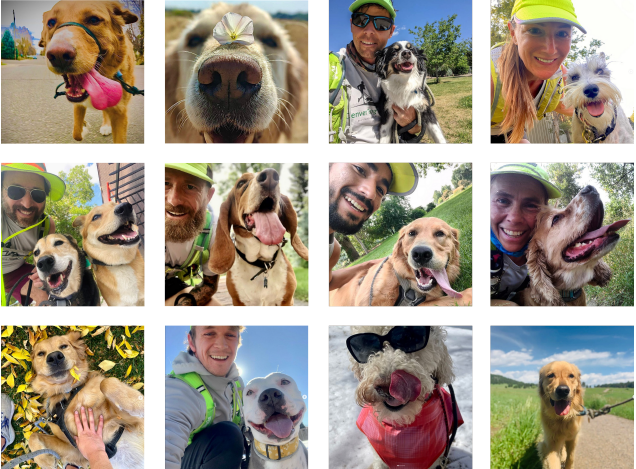
The Best Exercise Is Not Always the Fastest One
A dog doesn't have to run farther or faster to come home satisfied. Distance can help an athletic dog, but it won't necessarily meet the need to sniff, solve problems, learn, search, choose, or interact thoughtfully with other dogs. A physically tired dog may still be restless if every outing repeats the same high-speed routine.
These dog mental stimulation exercises combine food puzzles, scent activities, training, controlled play, novelty, searching, and supervised social experiences. The right choice depends on your dog's motivation, physical capacity, arousal level, and supervision needs. A senior dog may benefit more from calm scent exploration than chasing a toy, while a high-drive young dog may need a controlled outlet for movement before settling into a puzzle.
Denver Dog Joggers and Denver Dog Hikers can complement at-home enrichment through structured walks, runs, and hikes in Denver, Lakewood, Arvada, Englewood, Golden, Littleton, and Wheat Ridge . You can review the Denver Dog service areas when your dog's routine needs reliable exercise outside the home. For broader planning around secure outdoor access, this FenceScape dog fence guide is also useful.
1. Puzzle Feeders and Interactive Food Dispensers
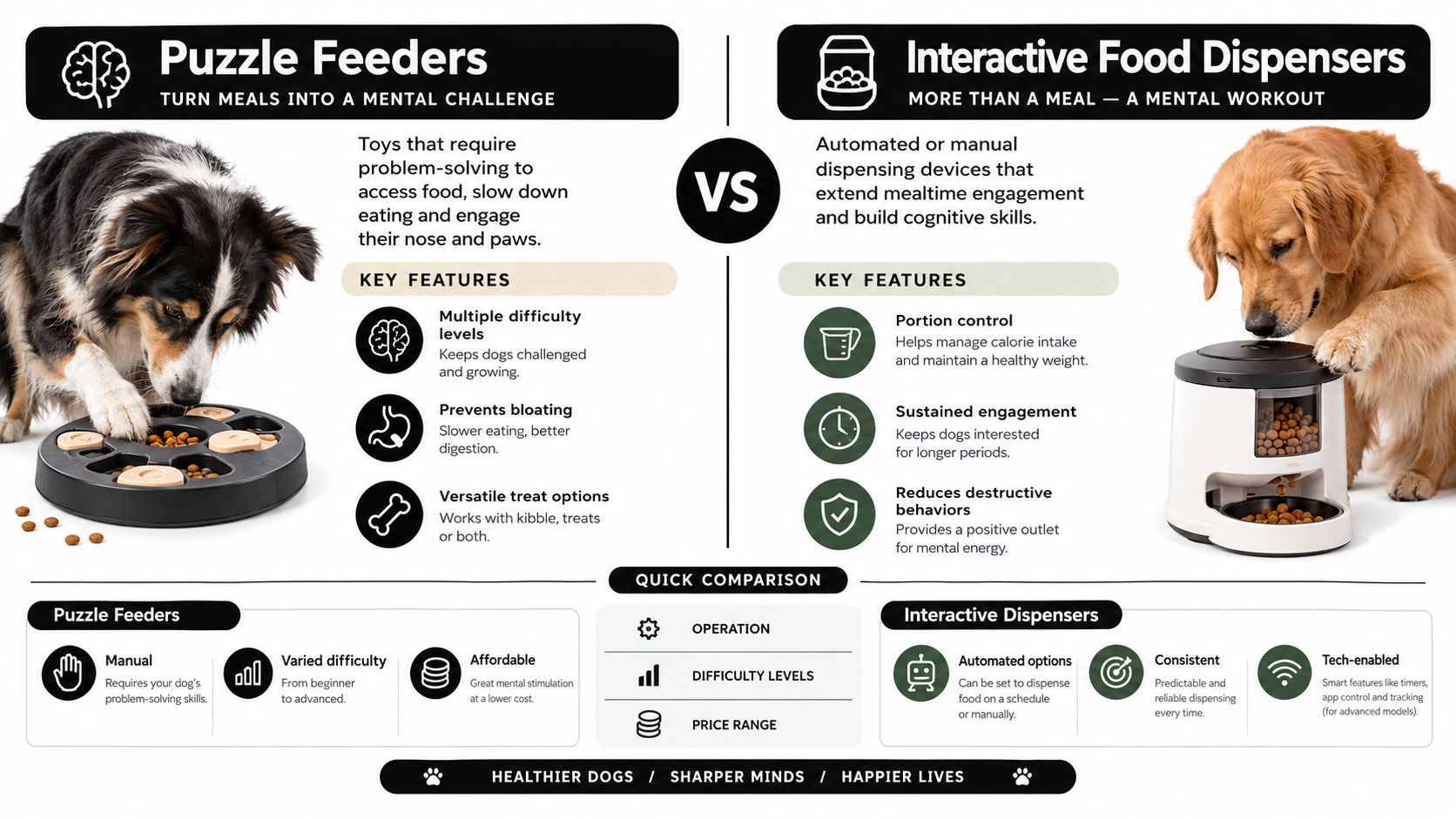
Food-solving activities turn part of a dog's meal into a problem to work through. A dog might roll a Kong Wobbler , slide compartments in an Outward Hound Hide N' Slide , manipulate a Nina Ottosson IQ Puzzle , or work kibble through a West Paw Zogoflex Qwizl . The mental task comes from figuring out which movement releases the food, rather than just from chewing or licking.
A 2024 study found that domestic dogs didn't show a preference for working to obtain food over freely available food, but they were still willing to work for it. That supports the practical use of puzzle feeders without suggesting that every dog prefers them to a bowl. Some dogs enjoy the challenge, while others need a simpler design, better rewards, or a different type of enrichment. Read the PubMed study on dogs and effort-based feeding.
Start with success, not frustration
Choose the easiest version first. Let your dog watch you place a treat inside, then allow plenty of time to investigate. If the dog flips, bites, or abandons the toy, the puzzle may be too difficult, the reward may be unappealing, or the dog may already be too tired or excited to think clearly.
- Use food thoughtfully: Account for treats as part of the daily diet, and choose rewards your dog can safely eat.
- Supervise the introduction: Check that the dog isn't breaking off pieces, swallowing parts, or becoming distressed.
- Rotate the challenge: Move between simple rolling toys, lickable fillings, and more complex compartments instead of increasing difficulty every time.
- Clean after use: Wash food-contact surfaces thoroughly, especially when using moist fillings.
A 2014 shelter study found that dogs receiving a complex enrichment protocol showed more desirable behavioral changes than control dogs. The enriched group had greater increases in sitting or lying down, becoming quiet, and reduced jumping, with the study reporting 65% versus 22% , 35% versus 13% , and 57% versus 9% for those outcomes respectively. Review the shelter enrichment findings in the Journal of the American Veterinary Medical Association. For a practical explanation of why this matters at home, see what mental stimulation means for dogs.
2. Scent Work and Nose Games
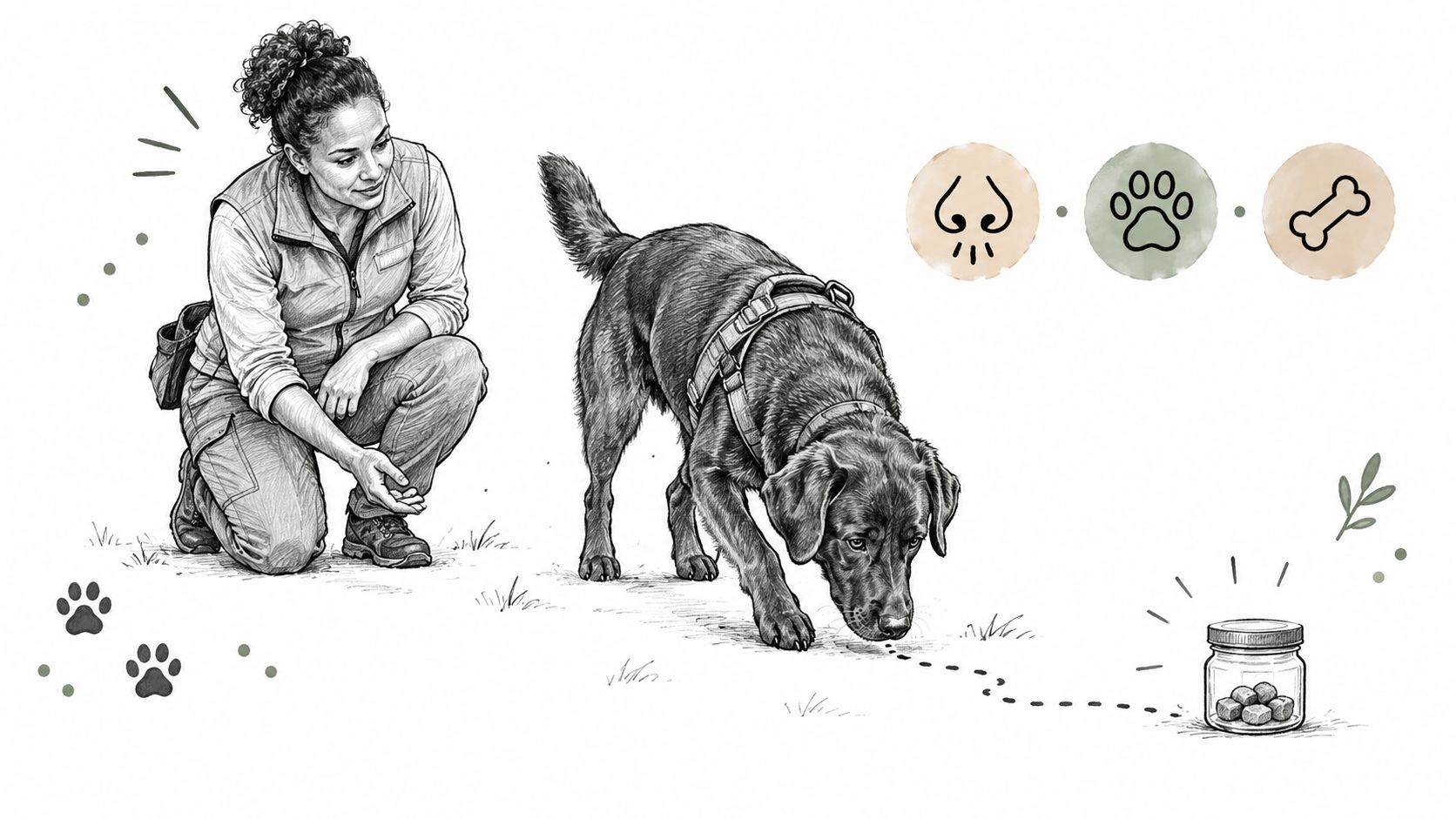
Scent work gives a dog a job that matches the way they naturally investigate the world. Hide a treat behind a chair leg, place a toy in an open box, or create a short trail across a safe room. The dog must locate the target, decide where to search next, and persist when the first guess doesn't work.
Start indoors with an obvious hide. Say “search” as you release the dog, then let the dog investigate without pointing repeatedly or steering their nose toward the reward. Once the dog understands the game, hide the reward behind furniture, under a lightweight towel, or in another safe area. Don't make the hide so difficult that the dog gives up.
A review of canine enrichment highlights cognitive and scent-based activities as practical ways to support engagement and mental stimulation. The same review discusses evidence that play and social interaction can increase oxytocin while lowering cortisol, a hormone commonly used as a stress marker. A 2022 pilot study involving 10 training dogs found that seven environmental enrichment activities increased relaxation behaviors and reduced alert and stress behaviors, with the strongest reported effects reaching p<0.01 for relaxation and p=0.02 for stress reduction . Read the review of environmental enrichment for dogs.
Make the search calm and safe
Use strong-smelling, dog-safe food if your dog needs help understanding the task. Chicken or cheese may work better than dry kibble for a beginner, but the reward should still fit the dog's diet. Let the dog work at their own pace. Scent work can be calming, but turning it into a frantic race can raise arousal rather than lower it.
Try hide-and-seek with toys, scatter feeding, a snuffle mat, or a short trail in grass. Avoid placing food near chemicals, unsafe plants, small objects, or locations where the dog may climb and fall. If you're considering essential-oil scent work, use professional guidance and prevent ingestion or skin contact. For many dogs, food and toys provide a simpler and safer starting point.
3. Sniff Walks and Nosing Exploration
A sniff walk isn't a failed power walk. It has a different purpose. Instead of asking the dog to maintain a brisk pace and follow a fixed route, you allow time for the dog to gather information from tree bases, grass edges, walls, and other safe surfaces.
The best route may be an ordinary Denver neighborhood rather than a dramatic trail. A dog can investigate familiar fire hydrants, tree trunks, and fence lines, then experience a different scent environment on a rotating route. Park exploration, a quiet trail, or a sensory garden can add novelty without requiring intense running.
Allow your dog to choose the pace within safe limits. A longer flexible leash can provide room to investigate, but keep the dog under control and away from traffic, wildlife, toxic substances, and unfamiliar dogs. A standard leash in the 4 to 6 foot range is a practical option for many public settings, but the correct length depends on local rules, surroundings, and your handling skills.
Read the dog, not the stopwatch
A meaningful sniff walk may take 20 to 30 minutes , but duration should remain flexible. An older dog, a dog recovering from injury, or an anxious dog may need a shorter outing with more rest. A physically fit dog may still become mentally satisfied by a slower route if the dog can explore rather than being hurried.
- Change the environment: Rotate neighborhood streets, parks, and quiet paths when safe.
- Keep check-ins gentle: Call the dog back periodically without interrupting every investigation.
- Mix movement styles: Add brief stretches of structured walking to maintain leash skills.
- Watch for overload: Panting, scanning, pulling, freezing, or repeated avoidance can signal that the setting is too intense.
Sniffing should support engagement, not force it. If your dog stops investigating and wants to leave, respect that information. You can find more practical ideas in this guide to dog enrichment activities for busy Denver pet parents.
4. Training Games and Command Practice
Training is one of the most portable forms of mental exercise. You can practice in a hallway, on a mat, beside the front door, or during a quiet walk. The dog has to listen, remember the cue, control an impulse, and choose the behavior that earns reinforcement.
Begin with a simple chain such as sit, down, stay, and release. Once the dog understands each part, connect two behaviors and reward smooth transitions. Name recognition games add another layer. Place several familiar toys nearby, name one, and reward the dog for touching or retrieving the correct item. You can also capture behaviors the dog offers naturally, such as turning toward you, backing up, or placing their paws on a mat.
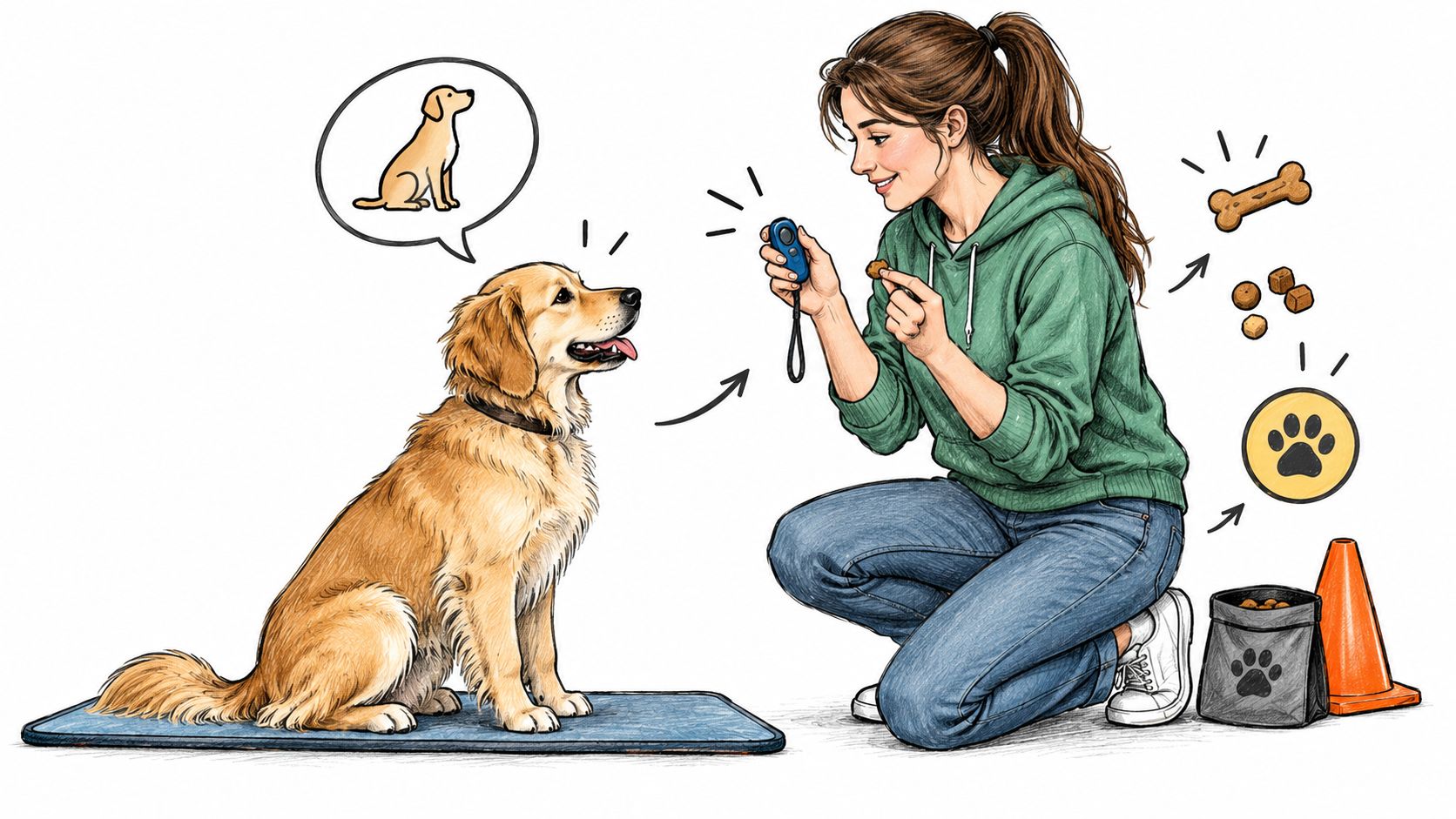
Keep sessions brief enough that the dog can think clearly. Use small rewards, break complex skills into achievable steps, and practice first in a low-distraction environment. A dog that knows “stay” in the kitchen may not understand it beside a busy trail, so increase distractions gradually.
Practical rule: End with a behavior your dog already knows well. The final repetition should leave the dog successful, not confused.
Training can also prepare a dog for other enrichment. A release cue helps begin a search game. “Drop it” makes tug safer. “Place” gives the dog a way to settle after a run or hike. The PetMD guide to exercising with your dog includes training exercises, new walking routes, puzzle games, scent training, and agility as complementary ways to engage dogs.
Here's a short demonstration of reward-based training in practice:
Training should remain cooperative. Avoid drilling a cue after the dog has stopped responding, and don't use increasingly exciting rewards to push through signs of fatigue. A few clear repetitions can provide more useful mental work than a long, frustrating session.
5. Flirt Poles and Tug Toys
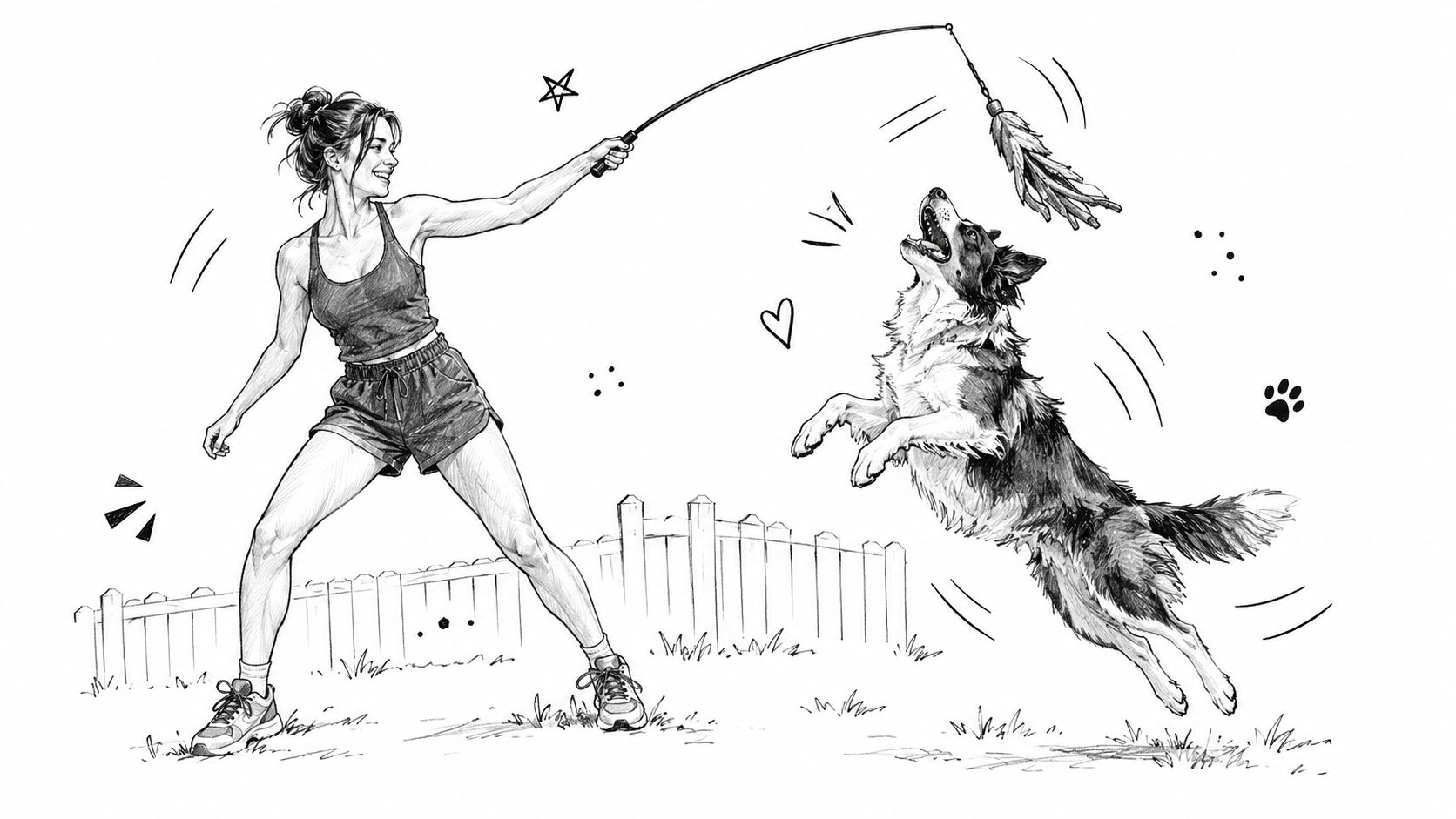
Flirt poles and tug toys engage instinctive play, particularly chasing, grabbing, carrying, and releasing. A flirt pole places a toy on the end of a flexible pole, allowing the handler to direct movement without asking the dog to sprint after a ball. Tug offers a closer human-dog interaction and can reinforce communication through start, stop, and release cues.
These games suit dogs who enjoy movement and controlled pursuit, but they aren't ideal for every dog. A dog with joint pain, poor impulse control, a history of redirecting onto people, or a tendency to become frantic may need a different outlet. Consult a veterinary professional about physical limitations, and stop if movement becomes awkward or painful.
Put rules around the excitement
Play should start because you invite it and stop because you end it. Teach “drop it” or “release” before introducing rapid movement. Reward the release, pause, and restart only when the dog's body is loose and attention is available.
- Use a secure area: A fenced space prevents a chase game from becoming a loose-dog incident.
- Keep movement low: Avoid sharp pivots, repeated jumping, slippery surfaces, and sudden stops.
- Watch the mouth and hands: Use toys long enough to keep hands away from the dog's teeth.
- Manage resources: If the dog stiffens, guards the toy, or refuses to release, end the game safely and seek qualified behavior support.
- Stop while the dog is composed: The goal is controlled engagement, not total exhaustion.
A spring-loaded tug toy, a two-handled rope, or a lure-style toy can offer variety, but no toy should be left with a dog that may shred and swallow it. Unsupervised rope tugging is not a safe default. Inspect toys after each session and replace them when fibers, seams, or components become damaged.
For an athletic dog, structured play can pair well with a calm activity afterward. A short tug session followed by a food puzzle or mat settle may teach the dog to move from excitement into recovery. A run with Denver Dog Joggers can provide physical work, while a slower walk or hike with Denver Dog Hikers may offer a more exploratory finish.
6. Enrichment Toys and Rotating Novelty
Buying more toys is rarely the best way to add novelty. A familiar toy can become interesting again after time out of sight, especially when it returns with a different reward or setting. Keep a small selection available, store the rest, and rotate items gradually. This preserves choice without leaving every squeaky, plush, rope, ball, and chew on the floor all day.
Match the toy to the dog's preferred kind of play. A carrier or cuddler may choose plush toys, while a persistent chewer needs a durable product suited to its size and chewing intensity. Dogs drawn to sound may investigate squeaky or crinkle toys. Food-motivated dogs often work longer with a Kong Classic or another treat-dispensing option.
A useful rotation changes the type of mental work, not only the object. Alternate chewing, carrying, sound, and food manipulation. Bring back a stored toy during a short training game, or add a safe food reward. Keep food portions within the dog's daily feeding plan, using these dog nutrition and exercise tips when adjusting treat-based enrichment.
Safety determines whether novelty helps or creates a hazard. Check each item before use and remove loose squeakers, torn fabric, split rubber, or frayed rope. Supervise any toy that can break apart, since a product's durability depends on the individual dog's bite, persistence, and habits.
Use this quick check before adding a toy:
- Size and construction: Choose both for the dog's body and chewing style, rather than relying on breed labels.
- Condition: Replace damaged toys promptly, before pieces can be swallowed.
- Access: Store most toys out of sight so reintroduction has meaning.
- Supervision: End the session if the dog starts shredding, guarding, or swallowing parts.
Toy rotation belongs alongside movement, rest, training, scent work, and suitable social contact. Denver Dog's guide to enrichment activities for dog owners provides further ways to combine physical, sensory, and cognitive activities. On a high-energy day, a Denver Dog Joggers outing can provide exercise before a quiet food toy at home. A slower Denver Dog Hikers outing may supply exploration and novelty, followed by rest rather than more intense play.
7. Hide and Seek Games for Toys and Treats
A successful hide-and-seek game should end while the dog can still solve it. Making the search harder for longer does not automatically provide better enrichment. The exercise develops searching, scent tracking, movement, and problem-solving, while its low-impact format suits dogs that need mental work without more running.
Begin with a visible toy or treat. Say “find it,” let the dog reach the item, and praise the discovery. This teaches the cue clearly: it signals a search, not random movement around the room. Repeat the pattern until the dog responds with confidence.
Then add difficulty in small steps. Partly hide the reward behind a cushion, beneath a lightweight blanket, or beside furniture. Hide it while the dog watches before placing it out of sight. A short treat trail can finish at a toy, and a room-by-room search keeps the area controlled. Use one distinctive toy or food reward so the dog knows what to find.
Adjust the task to the dog in front of you:
- Easy: Keep the item visible or barely covered for puppies, beginners, and dogs that give up quickly.
- Moderate: Use one safe room, several hiding places, or different floor surfaces for a dog that searches steadily.
- Harder: Add distance, a second room, or an outdoor search only when the dog remains focused rather than frantic.
- Lower energy: Use food searches and short rounds for older dogs or dogs recovering from strenuous activity.
- Higher energy: Combine several searches with a calm walk, or schedule them before a Denver Dog Joggers outing rather than replacing all physical exercise.
Watch the dog's response. A dog that loses interest may need a more valuable reward or an easier hiding place. A frantic dog needs fewer hides, shorter rounds, and a clear finish cue. The goal is a solvable task, not a persistence test.
Safety checks come first. Remove medications, small objects, children's toys, and anything the dog could swallow. Avoid heavy covers, unstable furniture, tight gaps, climbing routes, and objects that can splinter or break apart. Supervise food searches and collect leftovers afterward. Outdoors, choose a secure yard, enclosed patio, or calm patch of grass free from toxic substances.
A sturdy cup game can add a simple choice between hiding places, provided the cups cannot be chewed into fragments. Use hide-and-seek before a work call, after a short walk, or while preparing dinner. On days when a Denver Dog Hikers outing supplies exploration and novelty, a brief home search can provide focused mental work before rest.
8. Controlled Socialization and Multi-Dog Play
Social contact is a decision-making exercise. Dogs read posture, adjust movement, respond to signals, and decide whether to approach, pause, or disengage. A compatible playdate with one calm dog often provides clearer mental work than a crowded dog park, where noise and pressure can overwhelm a sensitive dog.
Choose a partner by play style, energy, size, and communication skills. Wrestling suits some dogs; others gain more from parallel walking, brief greetings, or shared exploration. A Denver Dog Joggers outing can give a social dog structured movement near other dogs without requiring constant play. A guided Denver Dog Hikers outing may suit a dog that prefers distance, sniffing, and gradual interaction.
Watch the whole body. Loose movement, flexible posture, voluntary reengagement, and regular pauses suggest that both dogs are comfortable. Stiffness, a tucked tail, lip curling, repeated avoidance, or frantic escape attempts call for space or an end to the session. Tail movement alone does not show that play is safe or enjoyable.
Set the conditions before the dogs meet. Begin with one partner and use a controlled introduction that is easy to read. Remove valuable resources such as toys, food, and chews during early sessions. Build in pauses so each dog can drink, recover, and choose whether to resume. Interrupt early when arousal rises, rather than waiting for a growl, snap, or collision. Respect refusal because turning away or declining contact provides useful information.
Match the activity to the dog's energy. Short, calm interactions work for older, anxious, inexperienced, or recovering dogs. Confident, energetic dogs may handle a longer play session, followed by a quiet walk or rest. A supervised play class, professional group session, or guided hike with known, friendly dogs offers more control than unmanaged group play. Handlers should account for temperament, leash skills, physical condition, and behavior history.
Finish while the dogs remain responsive. Give them a quiet decompression period afterward, with water, rest, or a calm sniff walk. Social enrichment should leave the dog able to settle, not frantic or depleted.
8-Point Comparison of Dog Mental Stimulation Exercises
| Activity | Implementation Complexity 🔄 | Resource Requirements ⚡ | Expected Outcomes 📊 | Ideal Use Cases 💡 | Key Advantages ⭐ |
|---|---|---|---|---|---|
| Puzzle Feeders and Interactive Food Dispensers | Low–Moderate 🔄, choose difficulty; brief introduction | Low ⚡, toys, kibble/treats, cleaning | Moderate–High 📊, slower eating, cognitive engagement, reduced boredom | Meal enrichment, bored or high-energy dogs, solo play | Sustained mental work; prevents fast eating; affordable |
| Scent Work and Nose Games | Moderate–High 🔄, basic play easy; advanced training needed | Low–Moderate ⚡, treats/scents, containers, training time | High 📊, deep mental fatigue, confidence, problem-solving | Indoor/outdoor scent enrichment, anxious or apartment dogs | Taps natural olfaction; scalable; weather-independent |
| Sniff Walks and Nosing Exploration | Low 🔄, handler patience and leash management | Low ⚡, time, longer leash, safe routes | High 📊, mental stimulation comparable to exercise; stress relief | Seniors, recovering dogs, anxious dogs, daily walks | Dog-directed exploration; low impact; builds confidence |
| Training Games and Command Practice | Moderate 🔄, consistency and trainer skill required | Low ⚡, treats, clicker/markers, short sessions | High 📊, improved obedience, impulse control, focus | Obedience shaping, bonding, behavior modification | Teaches useful skills; measurable progress; strengthens bond |
| Flirt Poles and Tug Toys | Moderate 🔄, handler control, safety, release training | Low–Moderate ⚡, toys, enclosed space, supervision | High 📊, intense outlet for prey drive; physical & mental exertion | High-drive breeds, redirecting reactive/obsessive behaviors | Channels chase instinct safely; builds drive control and strength |
| Enrichment Toys and Rotating Novelty | Low 🔄, selection and rotation planning | Low–Moderate ⚡, variety of toys, storage, replacement budget | Moderate–High 📊, reduced boredom, varied sensory stimulation | All dogs for solo play, separation management, home enrichment | Versatile, scalable, encourages independent play |
| Hide and Seek Games (Toys and Treats) | Low–Moderate 🔄, start simple, increase difficulty | Very Low ⚡, existing toys/treats, brief setup time | High 📊, problem-solving, scent use, confidence gains | Indoor enrichment, short sessions, confidence building | Inexpensive, adaptable, highly engaging |
| Controlled Socialization and Multi-Dog Play | High 🔄, careful matching, active supervision | Moderate ⚡, vetted partners, trained supervisors, space | High 📊, social skills, emotional fulfillment, reduced isolation | Social dogs, behavioral rehab, structured group activities | Deep social enrichment; practices communication; reduces reactivity |
Build a Rotation Your Dog Can Sustain
The most useful routine is varied, repeatable, and easy to adjust. Rotate food-solving puzzles, scent exploration, brief training, instinctive play, toy novelty, hide-and-seek searches, and carefully managed social experiences rather than repeating the same high-arousal activity every day.
One day might begin with breakfast in a puzzle feeder, followed by a quiet sniff walk. Another might pair a short training session with a hide-and-seek game while the dog is indoors. A physically active dog could have a structured run, then decompress with a lickable enrichment toy or a calm scent search. A senior dog or a dog recovering from injury may need more searching, learning, and gentle exploration, with less jumping, chasing, and abrupt turning.
Use the dog's behavior to adjust the plan. Frustration may mean the puzzle is too difficult or the hide is too obscure. Fatigue may show up as slower responses, poor coordination, or a sudden loss of interest. Overstimulation can look like frantic movement, grabbing, barking, inability to release a toy, or difficulty settling afterward. Disinterest may mean the reward, environment, activity, or timing isn't right.
The right dose leaves your dog engaged and able to recover, not frantic and unable to settle.
Supervise toys, treats, leash work, and dog-to-dog interactions. Inspect enrichment equipment, keep food rewards appropriate for the dog's overall diet, and avoid asking for physically demanding movements when pain, age, heat, or injury could affect safety. Mental stimulation supports physical exercise, but it doesn't replace veterinary care, behavior treatment, rest, or a properly designed fitness plan.
A 2022 enrichment review describes cognitive and scent activities as practical ways to promote engagement, while guidance for dog exercise also lists new routes, training, puzzle games, feeders, scent training, and agility as complementary activities. That combination matters. Dogs need opportunities to use their bodies, but they also need opportunities to make choices and solve manageable problems.
A practical target from a canine exercise guide is at least one mental exercise session daily , with many dogs benefiting from 10 to 20 minutes per session . Examples include puzzle feeding, a short training session, nose work, frozen Kongs, and lick mats. See the guide to mental exercise versus physical exercise for dogs. Treat that duration as a starting point, not a rule. A dog's age, health, motivation, and arousal level should determine what happens next.
When your dog needs more structured physical and mental support during the week, Denver Dog Joggers can provide on-leash running, while Denver Dog Hikers can add guided trail adventures. These options can complement home enrichment for families in Arvada, Denver, Englewood, Golden, Lakewood, Littleton, and Wheat Ridge . Review the Denver Dog service area page and choose the type of outing that fits your dog's energy, temperament, and recovery needs.
Denver Dog offers on-leash running, walking, and hiking through Denver Dog Joggers and Denver Dog Hikers, giving busy pet parents a structured way to pair physical exercise with the sniffing and exploration dogs need. Visit Denver Dog to explore weekday adventure options and build a safer, more sustainable enrichment routine for your dog.
The Run Down