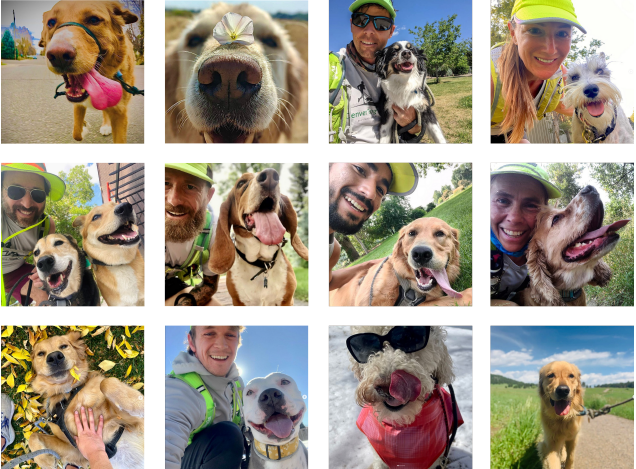
You've just walked through the door after a long Denver workday, and your dog is already circling the room with a toy, nudging your hand, and looking for the next thing to do. A quick bathroom break may not be enough for a Labrador, Border Collie, Australian Shepherd, or energetic mixed breed. Dog enrichment activities work best when they give your dog an appropriate outlet for a real instinct, whether that's sniffing, running, solving problems, exploring, socializing, or chasing.
The right choice depends on your dog's fitness, age, temperament, health, available space, weather, and supervision. A senior dog may benefit from foraging and swimming, while a confident young athlete may need structured running or agility. The 10 options below are organized by the kind of energy they channel, with practical notes for weekday routines. For busy owners in Arvada, Denver, Englewood, Golden, Lakewood, Littleton, and Wheat Ridge, Denver Dog's local running, walking, and hiking services can add structured exercise when your schedule can't.
1. Structured Running and Jogging Sessions
Running is a strong match for healthy, high-energy dogs that enjoy steady movement and can remain comfortable on leash. A structured session provides cardiovascular exercise while new routes add changing scents, surfaces, sounds, and visual information. Denver Dog Joggers can tailor a weekday run to a dog's fitness level, age, and temperament instead of treating every dog like it needs the same pace.
A Labrador may settle into a consistent morning run, while an athletic mixed breed may need customized pacing and careful recovery. Working professionals in Denver, Lakewood, and Arvada can use a regular morning appointment to create a dependable outlet without trying to fit a full workout into the workday.
Practical rule: Build fitness gradually. A dog that looks eager may still be developing the conditioning needed for sustained running.
Start with shorter distances and watch how your dog moves later that day and the following morning. Schedule summer sessions during cooler parts of the day, provide access to water, and allow rest between runs. Tell the handler about limping, stiffness, breathing concerns, previous injuries, or any veterinary restrictions before the session begins. A professional can adjust intensity over time, but they can't safely compensate for undisclosed health problems.

For safe planning before your first run, review this guide to starting running with your dog in Denver. Running suits dogs that enjoy forward movement, but it isn't the best first choice for puppies, dogs with orthopedic limitations, or dogs that become frantic on leash.
2. Guided Trail Hiking Adventures
A trail hike channels exploration rather than speed. Varied terrain, elevation changes, natural scents, wildlife sounds, and water features give dogs more information to process than a repetitive route around the block. Guided, on-leash hiking on Front Range trails can combine physical work with environmental enrichment while keeping the outing controlled.
Denver Dog Hikers can be a practical fit for Australian Shepherds, Border Collies, and other working dogs that need more than a short neighborhood walk. A rescue dog may also benefit from carefully selected confidence-building adventures around Golden, Littleton, or Wheat Ridge, provided the terrain and social demands match the dog's comfort level.
Before trail exposure, confirm that vaccinations are current and discuss terrain difficulty with the handler. Rocky surfaces may call for paw protection, and a dog that's new to leash hiking should begin with an easier outing rather than a demanding adventure.
- Match the route: Choose terrain based on fitness, age, confidence, and previous hiking experience.
- Pack for conditions: Bring water, a leash that fits securely, and paw protection when rocky ground is likely.
- Watch adaptation: A dog that becomes overwhelmed by wildlife sounds, bikes, or unfamiliar footing needs more gradual exposure.
- Use shorter starts: Build trail confidence and endurance before attempting longer or more technical routes.
The hiking experience should leave your dog engaged, not depleted or anxious. A handler who understands canine body language can adjust the pace, route, and distance when the dog's behavior shows that the environment has become too demanding.

3. Scent Work and Nose Games
Some dogs need less running and more time to investigate. Scent work gives them a chance to use the olfactory system intensely through searching, tracking, and identifying interesting smells. A sniff walk through a Denver or Lakewood park can be simple, while a planned hide-and-seek game during an Arvada neighborhood walk adds a clear problem-solving task.
Start with an obvious food reward or familiar toy placed in an easy location. Use one consistent cue, allow your dog to investigate, and celebrate the find without rushing the search. As the dog understands the game, hide the item more carefully, add distance, or introduce a controlled trail during a Golden hike.
Olfactory enrichment deserves a place in a balanced routine because the desired outcome may be calm investigation rather than physical exhaustion. Recent work summarized in the enrichment literature indicates that food enrichment can increase foraging and activity without improving positive social interactions, while olfactory enrichment has been associated with less jumping and vocalization and calmer behavior. A practical guide to dog boredom solutions can help you add these games to an existing walk.
Let your dog lead occasionally on a safe, appropriate stretch of walk. The pause to investigate is part of the enrichment, not wasted time.
Avoid placing food near hazards, private property, or areas with discarded items. Dogs that swallow objects, guard food, or become frantic around rewards need closer supervision and simpler setups. Scent games suit apartment dogs, busy households, older dogs, and high-energy dogs that need mental work layered onto ordinary walking.

4. Interactive Puzzle Toys and Treat Dispensers
Puzzle toys turn feeding into a problem-solving session. A Kong Wobbler can distribute dry kibble as a dog nudges it, while Nina Ottosson toys create more deliberate challenges through compartments, sliding pieces, or lifting actions. A muffin tin covered with tennis balls can provide a simple DIY introduction, but every homemade setup needs supervision for loose parts and destructive chewing.
The right difficulty matters. If the dog can't make progress, frustration replaces enrichment. If the dog empties the toy immediately, the activity may need more complexity or a different format. Introduce the toy after a Denver Dog exercise session when your dog is ready for quieter independent engagement, rather than expecting a puzzle to replace all physical activity.
- Begin: Show your dog how food comes out before increasing the challenge.
- Use familiar food: Reserve part of the regular meal for the toy when appropriate, rather than adding unlimited treats.
- Rotate options: Store puzzles between sessions and change them regularly so they don't become background clutter.
- Supervise first: Watch for chewing, paw injuries, swallowed pieces, or guarding behavior.
The Ohio State University Indoor Pet Initiative guidance describes puzzle toys as a combination of feeding, physical stimulation, and mental stimulation. It also notes that puzzle toys have been shown to increase exercise and reduce barking. Those outcomes still depend on choosing a safe toy and matching the task to the individual dog.
For food rewards, you can explore Bandana Rx dog treats, while keeping portions appropriate for your dog's overall diet.
5. Swimming and Water-Based Activities
Swimming channels energy through resistance while reducing the impact associated with repeated land movement. That can make water-based exercise useful for dogs that need controlled intensity, dogs with joint concerns when approved by a veterinarian, and dogs recovering from injury through a professionally managed rehabilitation plan. Water also adds a different sensory environment, with new textures, sounds, and movement demands.
Denver-metro dog swimming pools and hydrotherapy centers offer controlled introductions. Natural water crossings may appear during hikes around Littleton and Golden, and some accessible lakes or reservoirs can provide another option where dogs are permitted. Don't assume a dog that loves splashing can safely swim in deep or moving water.
Introduce water gradually. Let a water-shy dog investigate shallow water, reward calm behavior, and avoid dragging or forcing the dog into a pool. Inexperienced swimmers and senior dogs may need a properly fitted life jacket, and every water session requires close supervision.
Water can hide steep drop-offs, currents, unstable footing, and hazards that aren't visible from shore.
Rinse your dog with fresh water after chlorinated swimming, dry the coat thoroughly, and check paws and ears for irritation. Stop if your dog is shivering, panicked, excessively tired, or struggling to keep the head above water. Read this Denver guide to dog water safety before planning a lake outing, and consider artificial grass options for pets if you're designing a safer, cleaner area around a home water feature.
6. Socialization Walks and Dog Park Interactions
Social enrichment isn't the same as making every dog play with every other dog. Some dogs gain confidence from walking near calm dogs, while others prefer human interaction or need distance from unfamiliar animals. Controlled socialization gives the dog a chance to practice observation, movement, and communication without forcing a chaotic encounter.
A supervised group walk in a Denver park such as Cheesman Park may suit a socially comfortable dog. A small hiking group around Golden or Littleton can offer a quieter introduction, while a carefully selected dog park session may work for compatible dogs in Arvada, Englewood, or Wheat Ridge. New rescues often need one-on-one meetings before they're ready for larger groups.
Start with current vaccinations and a compatible partner. Watch for stiff posture, avoidance, tucked tails, hard staring, frantic pacing, repeated mounting, escalating vocalization, or attempts to hide. These signals mean the setup needs more distance, shorter exposure, or a different activity.
- Choose compatibility: Match dogs by play style, confidence, size, and arousal level.
- Keep introductions brief: End while the interaction remains positive.
- Use skilled supervision: A handler experienced in behavior assessment can interrupt unsafe patterns early.
- Increase complexity slowly: Add group size, location challenges, or closer interaction only when the dog remains comfortable.
A successful socialization walk may involve parallel walking with little direct play. That still provides useful emotional and environmental enrichment, especially for a dog learning that unfamiliar dogs can be present without demanding interaction.
7. Agility Training and Obstacle Courses
Agility combines movement, body awareness, attention, and communication. A dog must notice the handler's cue, decide how to approach an obstacle, and manage the physical action. That combination can build confidence and provide intense engagement for athletic dogs, particularly Border Collies and Australian Shepherds.
Begin with low, simple obstacles. A ground-level pole, a short tunnel, or stepping onto a stable platform can teach the basic pattern without immediately adding jumps or tight turns. Warm up first, use positive reinforcement, and stop when the dog becomes tired, frustrated, or less coordinated.

A certified agility instructor can help with spacing, progression, and safe handling technique. Keep high-impact work separate from other demanding exercise when possible, especially for dogs with joint concerns or limited conditioning. Online instruction can supplement practice, but it shouldn't replace professional feedback when the dog is repeatedly landing awkwardly or losing confidence.
Progression matters: The dog should learn the behavior before you raise the obstacle, increase speed, or add a complicated sequence.
Small obstacle work can also fit into a professional hiking session when the environment allows it, but improvised logs, unstable rocks, and slippery surfaces can create unnecessary injury risk. The best setup is predictable, stable, and easy to stop. Agility suits dogs that enjoy learning with a person, but it's a poor fit when the dog is fearful of equipment or physically unable to handle jumping and rapid changes of direction.
8. Flirt Poles and Prey Drive Outlets
A flirt pole uses a moving lure to imitate prey, making it a powerful outlet for dogs that love chasing, grabbing, and changing direction. Border Collies, other herding breeds, and high-energy mixed breeds may engage quickly because the activity connects with an instinctive sequence. Used carefully, it can also become a training exercise for impulse control, release cues, and re-engagement.
This isn't a toy to leave on the floor. Use it only under supervision and keep the lure low enough to limit awkward twisting, sudden vertical leaps, and hard stops. A partially tired dog may be easier to regulate than a dog starting at maximum arousal, but don't use fatigue to mask unsafe movement.
Plan short sessions, with the activity notes recommending 10 to 15 minutes as an upper session range for avoiding overexertion. Because that duration is a quantitative safety guideline, treat it as a practical ceiling rather than a target, and stop earlier when the dog's coordination or responsiveness declines. Use “drop,” “leave it,” or another release cue, then offer a calmer activity.
- Control the surface: Choose ground with good traction and enough room to turn safely.
- Control the pattern: Move the lure in broad, predictable arcs rather than abrupt, high leaps.
- Control arousal: Pause for a sit, hand target, or calm eye contact before restarting.
- Control repetition: Rotate with sniffing, foraging, or rest instead of repeating chase games throughout the day.
Dogs that fixate on the lure, guard it, or struggle to disengage need professional guidance. A Denver Dog handler can help introduce drive outlets alongside running or hiking, but the pole should complement a balanced routine, not become the dog's only way to exercise.
9. Snuffle Mats and Foraging Games
Snuffle mats provide low-impact work through scent, paw use, and deliberate searching. Hide kibble or small treats among the fabric layers, begin with rewards placed visibly near the surface, and let the dog discover the pattern without pushing its nose into the mat. This makes the activity accessible for puppies, seniors, recovery days, and dogs that need a quieter option after an intense outing.
A snuffle mat works well during work hours in a Denver home because it doesn't require constant human movement. Lakewood and Arvada owners can prepare a mat for a dog settling after a professional hike, while a frozen setup can extend engagement when the material and food are appropriate for freezing. Use part of the regular meal if you're concerned about excess calories.
Clean the mat regularly and inspect it for loose threads, damaged fabric, or trapped food. Mold, odor, and swallowed material turn a useful activity into a health risk. Supervise the first sessions, especially with dogs that chew fabric or become possessive around food.
- Make the first search easy: Place food where the dog can find it immediately.
- Change the depth: Hide rewards more as the dog becomes skilled.
- Vary the reward: Rotate suitable foods while keeping dietary sensitivities in mind.
- Pair with recovery: Offer the mat after exercise when the dog needs focused, lower-impact engagement.
Snuffle mats can support a workday routine, but they shouldn't be used as an unattended solution for a dog with separation distress. A dog that panics when alone needs a broader behavior plan and, when appropriate, veterinary or qualified behavior support.
10. Tracking and Detection Training
Tracking adds structure to a dog's natural interest in scent. Instead of allowing an unplanned search, you lay a short trail and teach the dog to follow it toward a clear reward. The activity combines movement, concentration, confidence, and purposeful problem-solving, which can suit dogs that become restless when ordinary walks lack a task.
Begin with a short, simple track using consistent human scent. Walk in a straight, low-distraction area, place a reward at the end, and give the dog time to understand the pattern. Celebrate the find enthusiastically, then increase complexity gradually by adding turns, length, or a more challenging environment.
Denver Dog hiking sessions around Golden and Littleton can offer natural settings for basic trail-following games when the terrain and safety conditions allow. Certified instructors can guide progressive tracking work, while service dog candidates may use foundational detection exercises as part of a much broader training program. Tracking is not automatically detection training, and a fun home game shouldn't be presented as professional service preparation.
Document what your dog can do comfortably. Note the type of surface, distractions, weather, reward, and whether the dog stayed engaged or became frustrated. Regular practice helps maintain the skill, but short, successful sessions are more useful than making every attempt longer.
End while your dog still wants to search. Motivation is easier to preserve than to rebuild.
A tracking dog may not need a fast workout to feel satisfied. This option is especially useful for dogs that enjoy purpose-driven tasks, cautious rescues building confidence, and busy owners who can create a meaningful session in a small outdoor area.
10-Activity Dog Enrichment Comparison
| Activity | 🔄 Implementation Complexity | ⚡ Resource Requirements | 📊 Expected Outcomes | 💡 Ideal Use Cases | ⭐ Key Advantages |
|---|---|---|---|---|---|
| Structured Running and Jogging Sessions | Moderate, initial assessment, tailored pacing, handler coordination | High, trained handlers, vehicle monitoring, scheduled slots | High 📊, improved endurance, reduced energy-driven behavior ⭐⭐⭐ | High-energy breeds; busy owners needing weekday exercise | Professional oversight, routine building, measurable progress |
| Guided Trail Hiking Adventures | Moderate–High, trail matching, terrain management, small-group safety | High, experienced handlers, travel to trails, safety gear | High 📊, strength, balance, rich sensory enrichment ⭐⭐⭐ | Dogs needing natural exposure, confidence-building, varied terrain training | Varied terrain, problem-solving, strong physical challenge |
| Scent Work and Nose Games | Low–Moderate, needs handler know-how to structure scent tasks | Low, minimal gear, treats, time for setup | High (mental) 📊, intense cognitive fatigue, reduced anxiety ⭐⭐⭐ | All ages including seniors or mobility-limited dogs; indoor/outdoor enrichment | High mental engagement; adaptable; tires dogs without heavy exercise |
| Interactive Puzzle Toys and Treat Dispensers | Low, purchase and initial introduction; rotate for novelty | Low, one-time purchase, occasional supervision | Moderate 📊, prolonged independent engagement, slows eating ⭐⭐ | Home-alone enrichment; post-exercise engagement; busy households | Independent use; affordable; long-lasting engagement |
| Swimming and Water-Based Activities | Moderate, facility access, water-intro training, supervision | High, pool/hydrotherapy, trained staff, transport | High 📊, low-impact full-body conditioning, rehab benefits ⭐⭐⭐ | Dogs with joint issues, injury rehab, cooling summer exercise | Low-impact cardio; muscle strengthening; rehab- and senior-friendly |
| Socialization Walks and Dog Park Interactions | Moderate, careful matching, behavior monitoring, staged exposure | Moderate, handler supervision, scheduling, safe locations | Moderate–High 📊, improved social skills, reduced fearfulness ⭐⭐ | Puppies, rescues, dogs needing supervised peer exposure | Emotional enrichment; supervised play; confidence building |
| Agility Training and Obstacle Courses | High, structured progression, certified instruction to prevent injury | High, equipment, facility, certified trainers | High 📊, athletic conditioning, handler-dog communication ⭐⭐⭐ | Athletic breeds, competitive training, advanced mental/physical work | Structured goals; intense physical+mental engagement; measurable skill gains |
| Flirt Poles and Prey Drive Outlets | Low–Moderate, teach release/impulse control, safe introduction | Low, inexpensive tool, open safe space, supervision | High (short bursts) 📊, rapid energy expenditure, confidence boost ⭐⭐ | High prey-drive dogs needing short, intense outlets; post-hike energy burn | Fast energy burn; low cost; channels chase instinct safely |
| Snuffle Mats and Foraging Games | Low, simple setup, incremental introduction for some dogs | Low, inexpensive, washable mat, treats | Moderate 📊, mental stimulation, slower eating, low physical demand ⭐⭐ | Indoor enrichment, seniors, alone-time, recovery days | Easy to use; safe; affordable; maintains novelty when rotated |
| Tracking and Detection Training | High, progressive training, professional instruction and planning | High, trainer time, varied environments, ongoing practice | High 📊, deep cognitive+physical engagement, transferable skills ⭐⭐⭐ | Dogs with strong noses; service/detection foundations; advanced enrichment | Purpose-driven tasks; builds confidence; competitive or practical outcomes |
Build a Weekly Enrichment Mix That Fits Your Dog
A useful weekly plan doesn't repeat the same outlet every day. Combine one physical activity , one scent or problem-solving activity , and one lower-impact option , then adjust the mix according to your dog's response. For example, a healthy high-energy dog might receive a structured run, a short tracking game, and a snuffle mat across the week. A senior dog may do better with swimming approved by a veterinarian, gentle scent searches, and food enrichment.
Variety matters because enrichment types don't produce identical effects. A 2022 review found that enrichment significantly increased relaxation behaviors, with p < 0.01, and reduced alert behaviors, with p < 0.01, as well as stress behaviors, with p = 0.02. The same review found that food-based activities such as interactive toys and stuffed food toys produced the least behavioral change compared with other enrichment types, which supports combining food games with physical, social, exploratory, or sensory activities rather than relying on one stuffed toy. The review of environmental enrichment in dogs provides useful context for building that broader routine.
Owner experience can help you choose a starting point, but it isn't the same as proof that one activity caused a long-term behavior change. A 2024 study of enrichment feeding reported that owners perceived benefits for behavioral problems and reduced food-seeking, while the authors called for experimental research to establish causality. A separate 2023 trial found that short-term toy provision didn't significantly change activity level, food consumption, or cognitive bias, so a single new toy shouldn't carry the entire burden of your dog's enrichment plan. The enrichment-feeding study supports a consistent, varied, needs-based approach.
Adjust the plan from real observations
Watch your dog during the activity and after it ends. A good session may produce calm investigation, relaxed rest, normal appetite, and easier settling. A poorly matched session may produce frantic pacing, excessive vocalization, stiffness, avoidance, guarding, or difficulty disengaging. Those responses tell you to reduce intensity, increase distance, change the equipment, shorten the session, or choose a different instinct to channel.
Weather deserves special attention in Denver. Move running and hiking to cooler periods during hot conditions, protect paws on rough or extreme surfaces, and replace outdoor exercise with scent work, puzzles, training, or foraging when conditions make a route unsafe. Provide hydration, allow recovery, and ask your veterinarian about limitations related to age, weight, breathing, joints, injury, or chronic disease.
A professional weekday session can make the physical part more reliable. Denver Dog reports that its staff are trained and retrained several times a year in canine handling, fitness, and welfare, and that its drivers must maintain a seven-year clean driving record while advanced in-vehicle camera technology monitors driving behaviors. The company says it has delivered more than 135,000 sessions since 2010. Those are service details, not a substitute for evaluating whether your individual dog is ready for a run or hike.
Review your week and identify the gap. If your dog needs a safe, on-leash physical outlet while you're working, assess whether a Denver Dog Joggers or Denver Dog Hikers session fits your routine in Arvada, Denver, Englewood, Golden, Lakewood, Littleton, or Wheat Ridge. At home, keep the remaining days balanced with sniffing, puzzles, tracking, foraging, or another dog-safe outdoor space idea, and change the plan when your dog's health, confidence, or energy changes.
Denver Dog offers structured, on-leash running, walking, and hiking through its Denver Dog Joggers and Denver Dog Hikers programs, with sessions matched to a dog's energy level and temperament. If your weekday schedule leaves your dog under-exercised or under-stimulated, visit Denver Dog to explore a practical enrichment-focused routine.
The Run Down