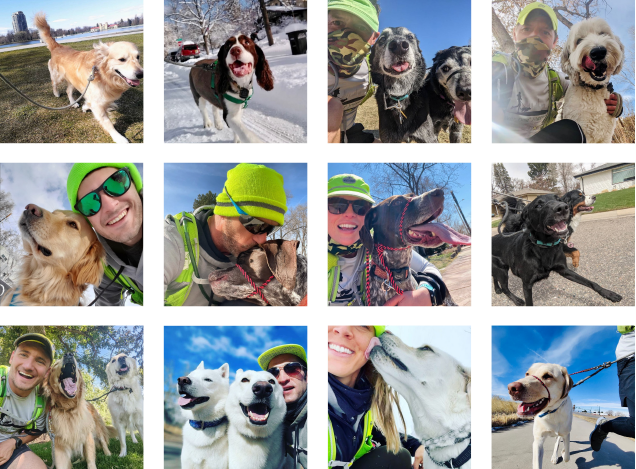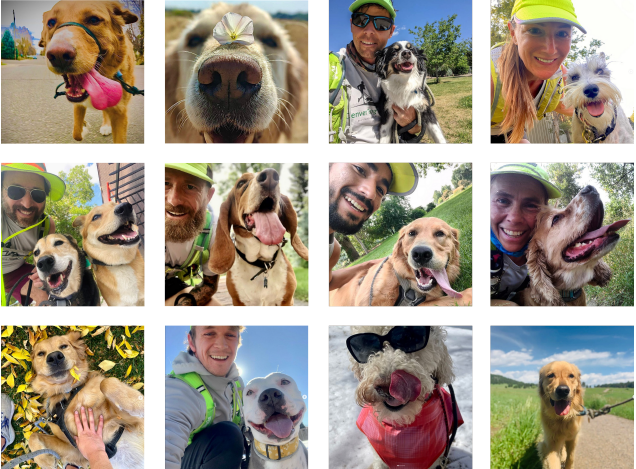
By 10 a.m., your dog may have already finished the morning walk, emptied the puzzle feeder, and started pacing beside your desk. For many Denver owners, the problem isn't a lack of love or effort. It's a calendar that leaves a high-energy dog waiting through meetings, commutes, storms, and long winter evenings.
Pet walking services can solve that gap, but the useful question isn't, “How do I book a walk?” It's, “What kind of outing does my dog need?” A senior dog, a nervous puppy, and a healthy working breed may all need exercise, but they shouldn't receive the same route, pace, or handling.
A Denver Weekday With a High-Energy Dog
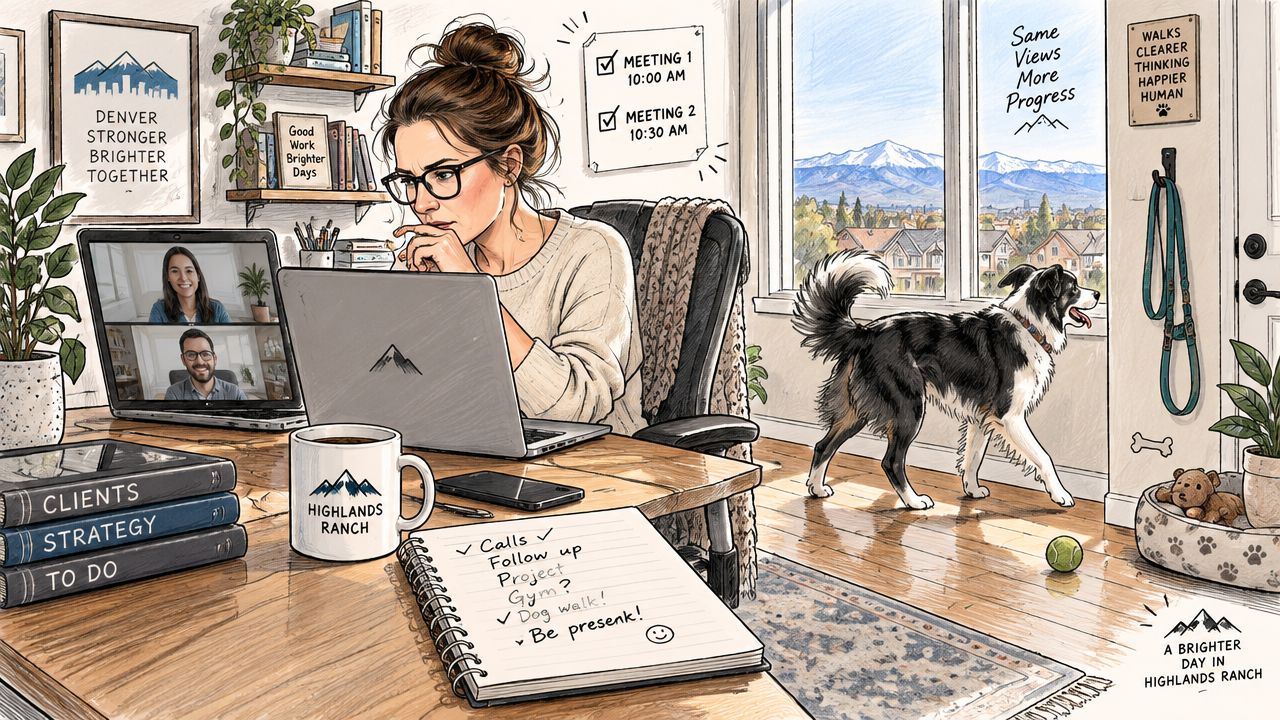
A Highlands homeowner starts the workday with back-to-back remote meetings. By midmorning, their two-year-old border collie is pacing across the hardwood, dropping a tennis ball beside the laptop, and watching the door. Lunch disappears from the schedule. Then an afternoon storm makes the City Park trail muddy just when the owner can finally step outside.
By evening, the dog still has energy. The owner has none.
A neighbor's teenager might handle a quick potty break, but availability and leash skills can vary. A late-night loop provides movement, yet it may not meet the needs of a dog that has waited through the entire workday. A planned daytime visit offers a steadier option, with an outing shaped around the dog's pace, attention span, and temperament.
Why the service exists
A professional walk helps maintain a dog's routine when a household cannot provide reliable midday activity. Most healthy adult dogs generally need about 30 minutes to 2 hours of exercise daily , although breed, age, size, and health change the appropriate target, according to The Dog Clinic's dog exercise guidance.
Denver conditions also affect the choice. Heat, sudden storms, icy sidewalks, muddy trails, and busy public paths can turn the same scheduled outing into a very different experience. A walker may need to shorten a route, choose pavement over a trail, or replace a fast run with controlled sniffing.
The local market includes providers with different levels of reliability, safety practices, and specialization. The U.S. dog walking services industry reached an estimated $1.5 billion in 2026 , with 59,279 businesses operating nationwide and revenue growing at a 6.3% compound annual growth rate between 2021 and 2026 , according to IBISWorld's industry snapshot.
The right service matches the outing to the dog. One pet may settle after a short, sniff-focused walk. Another may need a structured jog, while a reactive dog may do better with a quiet solo route and careful distance from triggers.
What Pet Walking Services Actually Do
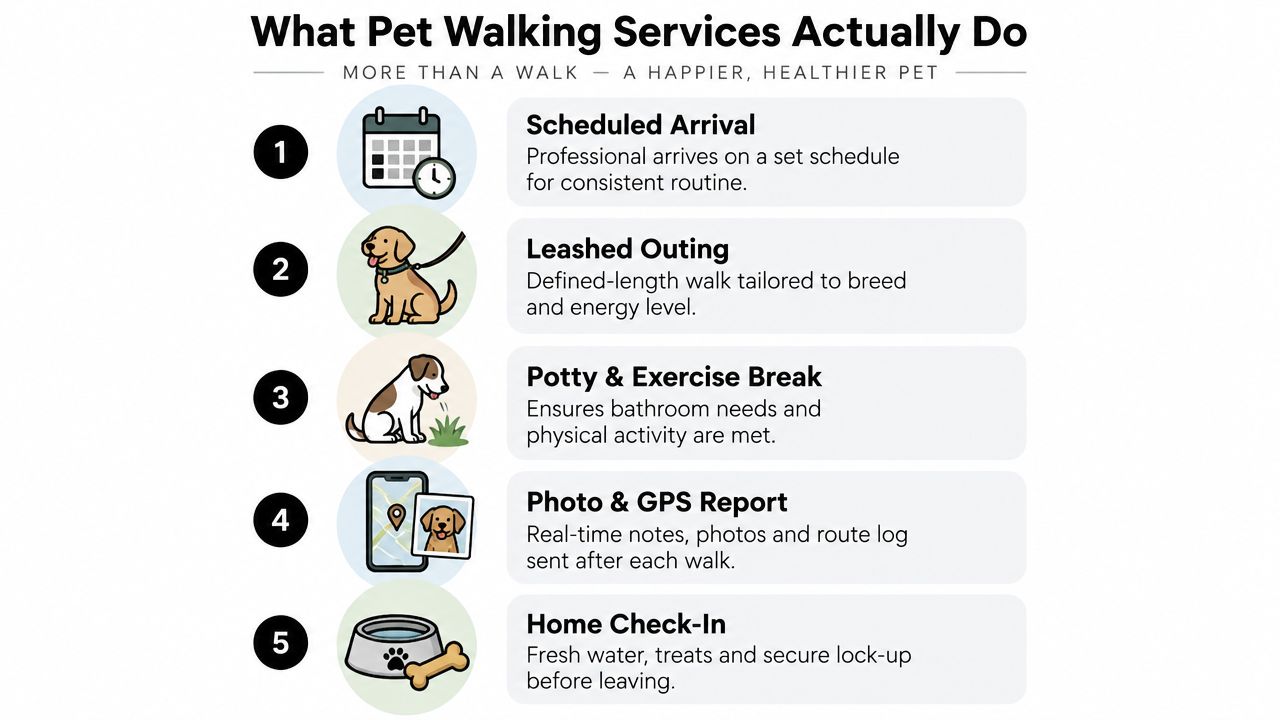
A professional walker arrives at an agreed time, meets the dog at home or picks the dog up, completes an outing with a defined duration, and returns the pet safely. Depending on the provider, the owner may receive notes, photos, waste removal, water checks, and a route record after the visit.
The simplest analogy is personal trainer, not babysitter . A capable walker manages pace, route choice, leash control, and basic behavior during the outing. Feeding, medication administration, overnight care, and extended in-home companionship usually belong to pet sitting, unless the provider has specifically included those tasks in the service agreement.
Formats change the experience
Owners should distinguish among several service models:
- Solo walks: One handler works with one dog or one household, which can suit reactive, anxious, elderly, or highly distractible dogs.
- Group walks: Multiple compatible dogs travel together, often at a lower cost, but the arrangement requires careful screening and dependable leash manners.
- Leash-only outings: The dog remains attached to the handler throughout the route, which is especially relevant on Denver public sidewalks, paths, and parks.
- Permitted off-leash adventures: These require a legal location, reliable recall, and a dog that can safely disengage from distractions.
- In-home drop-ins: A provider enters the home, handles a potty break or short walk, and may refresh water or secure the property.
Technology can support the operational side. Scheduling platforms help providers coordinate visits, client instructions, walker assignments, and updates. Owners comparing software or provider workflows may find SkipCalls for pet businesses useful for understanding how specialized tools support dog-walking operations.
A professional dog handler's actual responsibilities also extend beyond holding a leash. The handler must read the dog's body language, anticipate distractions, adjust the route, and end the outing safely when weather or behavior makes the original plan unsuitable.
Denver conditions make that judgment important. Altitude, icy pavement, summer heat, sudden storms, and trail surfaces can all change whether a planned walk remains useful. The best service isn't the longest outing on paper. It's the one the dog can complete safely and comfortably.
Walk, Jog, or Hike Matching the Right Format to Your Dog
A Denver dog may finish a sidewalk walk relaxed, strain through a jog, or become overwhelmed on a busy trail. These formats are different services, with different demands on joints, cardiovascular fitness, attention, and leash behavior. The right choice starts with the individual dog, not the distance listed on a booking page.
A neighborhood walk follows a sidewalk pace and leaves time for sniffing, bathroom breaks, and leash-manners practice. It can suit puppies building confidence, senior dogs, brachycephalic breeds, and reactive dogs that need predictable space. A familiar route also gives the handler room to shorten the outing if pavement, heat, traffic, or anxiety becomes a concern.
A jogging session requires sustained movement and a steady rhythm. It generally fits a healthy adult sport or working breed with an established fitness base. Puppies under twelve months and seniors with joint problems are poor matches, and even an athletic dog needs gradual conditioning before running continuously. A dog that pulls, stops often, or loses focus may need walking practice before jogging.
A trail hike adds varied footing, scents, and mental stimulation. Denver-area choices may include Bear Creek, Green Mountain, and South Platte foothill routes. Trail difficulty, heat, altitude, surface conditions, wildlife, and leash rules can change the suitability of the same route from one day to the next. A high-drive herder, hound, or retriever may enjoy a hike if the dog remains controlled and the route matches its fitness and temperament.
Rule of thumb: Start with age, health, and temperament. Add intensity only after the dog consistently handles the easier format.
| Format | Typical Duration & Pace | Best Suited For | Key Cautions |
|---|---|---|---|
| Neighborhood walk | 20 to 45 minutes, sidewalk pace | Puppies, seniors, brachycephalic breeds, reactive dogs, lower-energy pets | Watch heat, ice, pavement, traffic, and overstimulation |
| Jog | 3 to 6 miles at a runner's pace | Healthy adult sport and working breeds with an established fitness base | Avoid puppies under 12 months and seniors with joint issues |
| Trail hike | 60 to 120 minutes, varied terrain | High-drive herders, hounds, and retrievers | Check weather, altitude, footing, recall, and leash-law compliance |
Breed labels provide context, but they do not choose the service. A young retriever may need more structured movement than an older retriever. A reactive dog may be exhausted by urban triggers without covering much distance. Review this guide to Denver dog running services for more detail on conditioning, route selection, and running suitability.
Puppies need conservative pacing. A commonly used guideline allows five minutes of exercise per month of age, often twice daily . Under that approach, a four-month-old puppy would receive about twenty minutes per session, as outlined by PawScale's puppy exercise chart. Treat that as a starting point, not a replacement for veterinary advice.
Safety, Training, and Leash Handling Standards
A trained walker does more than arrive on time with a leash. They prepare for equipment failure, traffic, weather, canine conflict, and the specific ways a dog reacts under pressure.
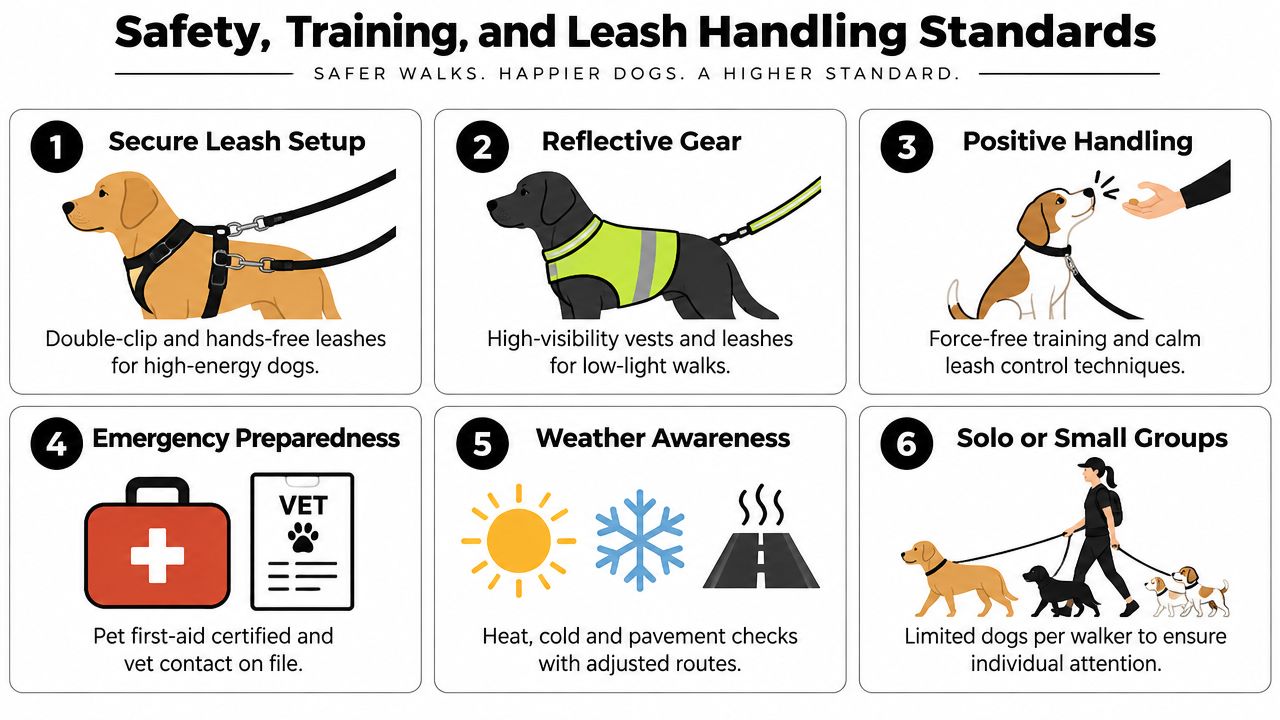
Start with the setup. High-energy dogs may need a secure double-clip arrangement or a hands-free system selected for safe control. Reflective clothing and visible leash gear help during early or late outings, while a charged phone and visible identification support a fast response if a dog slips equipment or becomes separated.
The injury risk is not theoretical. A review of U.S. emergency department data estimated 422,659 adult injuries from 2001 through 2020 associated with leash-dependent dog walking. The annual incidence rose from 7,282 to 32,306 cases , 51% involved the upper extremity, and being pulled or tripped by the leash accounted for 55% of injury mechanisms, according to the PubMed review of dog-walking injuries.
What capable handling looks like
A provider should be able to explain how they greet unfamiliar dogs, create distance from triggers, redirect pulling without panic, and respond when another dog approaches off leash. They shouldn't solve every behavior problem by yanking the leash or forcing a dog through a stressful encounter.
Canine first-aid training matters because a handler may be the only person present when a dog begins overheating, cuts a paw on salted pavement, or tears a pad on rocky ground. First aid doesn't replace veterinary care, but it can help the walker recognize an emergency, stabilize the situation, and contact the right clinic.
Denver's public routes also require legal awareness. Denver's leash law requires dogs to be leashed in public unless they're in a designated off-leash area such as a dog park. Reported Denver Animal Protection enforcement lists $80 for a first offense, $150 for a second, and $300 thereafter , as reported by The Colorado Sun's coverage of Denver off-leash enforcement.
Questions worth asking before giving over a key
- What equipment do you use? Ask how the walker secures strong pullers and whether they carry backup gear.
- How do you limit group risk? One handler shouldn't strap several unfamiliar, poorly matched dogs together.
- What training do you have? Ask about canine first aid, CPR, leash handling, and behavior education.
- What paperwork can you show? Look for pet-care liability insurance, bonding where applicable, contracts, and background checks.
- How do you document the visit? Photos, notes, route information, and incident reporting make the service accountable.
A provider should also explain waste removal and home lock-up procedures. Those small details reveal whether the business treats the visit as a professional service or as an informal favor.
Pricing, Session Lengths, and Booking Expectations
Denver providers commonly organize services around the time and intensity of the visit. A 15-minute potty break may fit a dog that mainly needs bathroom relief. A 30-minute standard walk gives many dogs room for toileting, sniffing, and moderate movement. A 60-minute adventure hike suits a dog that benefits from a longer, more stimulating outing, although travel time and route conditions can affect availability.
Market pricing varies by provider, service area, group size, experience, and specialization. Rates may sit from the high teens to the mid-thirties per walk, but owners should compare what the fee includes rather than choosing by price alone.
| Session Type | Typical Duration | Average Per-Walk Cost | Common Add-Ons |
|---|---|---|---|
| Quick potty break | 15 minutes | High teens to low range | Additional household dog, urgent booking |
| Standard walk | 30 minutes | Low to mid range | Recurring schedule, holiday timing |
| Adventure hike | 60 minutes | Mid to high range | Drive time, trail minimum, weather-related adjustment |
These ranges are planning guidance, not a quote. For a current local framework, compare the details in this Denver dog-walking rates guide.
The charges that surprise first-time clients
Additional dogs from the same household may carry a fee because the handler must manage more equipment, attention, and safety decisions. Same-day requests, holiday visits, and extreme-weather scheduling can also cost more. Trail services may include a minimum because the provider spends time driving to locations such as Waterton Canyon or Bear Creek Lake, not only walking on the path.
Recurring packages often cost less per visit than isolated bookings, but they usually require dependable scheduling and a cancellation policy. Ask how much notice the provider needs, whether the same walker is normally assigned, and what happens during illness, vehicle trouble, or severe weather.
For a working owner who books a 30-minute midday walk five days a week, the monthly plan is simple: multiply the quoted per-walk price by the number of weekday visits in the billing period, then add any household-dog, holiday, or urgent-service fees. Request a written estimate before starting so the routine fits both the dog's needs and the household budget.
Questions to Ask Any Provider and How Denver Dog Fits
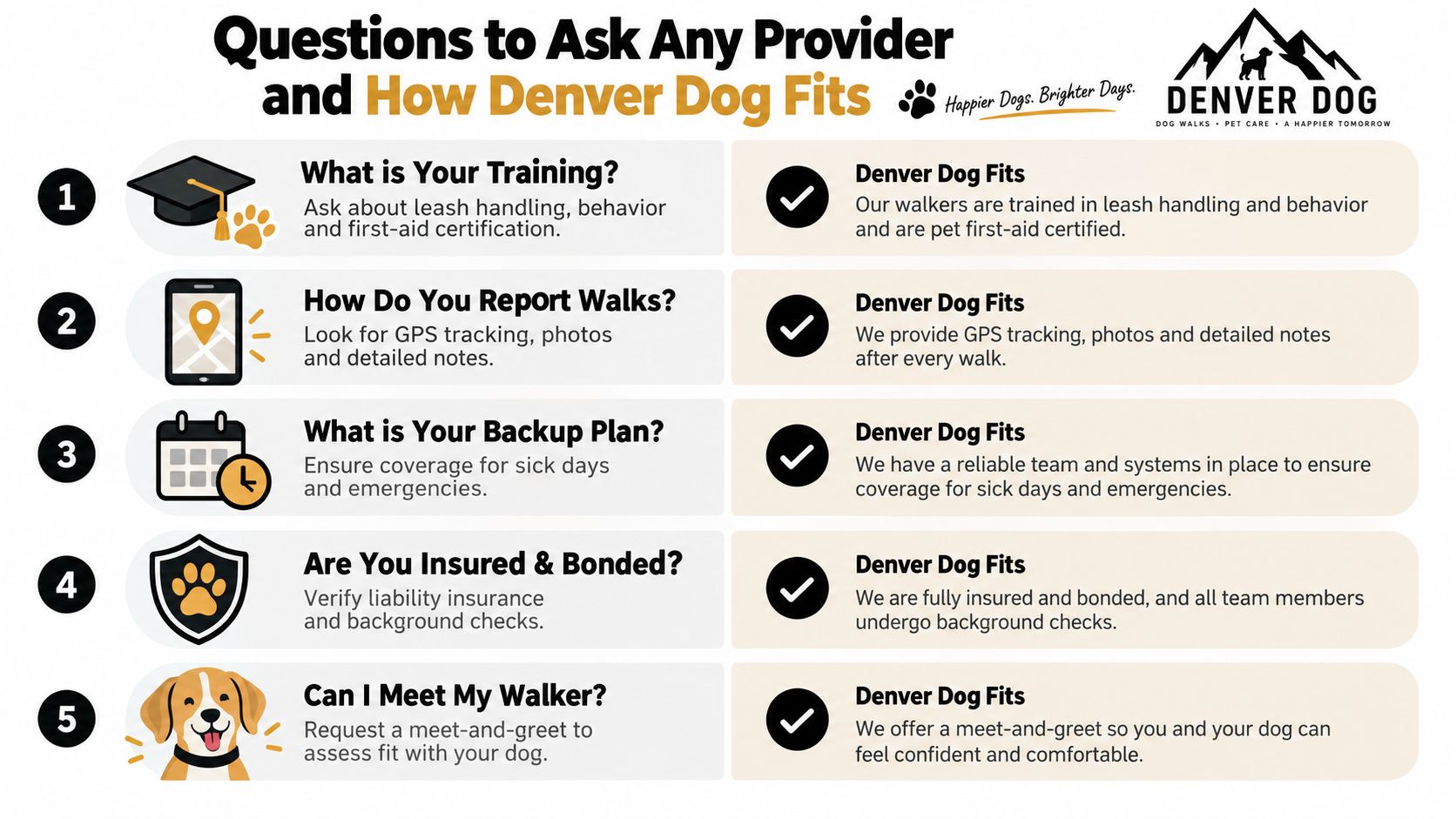
A polished website can't answer the practical questions that determine whether a service suits your dog. Ask these directly during the initial call or meet-and-greet:
- Who handles my dog, and how many dogs are assigned to one walker?
- What equipment and leash techniques do you use with pullers or reactive dogs?
- Do you hold canine first-aid or CPR training?
- Are you insured and bonded, and do you conduct background checks?
- How do you adapt routes for heat, ice, cyclists, wildlife, and crowded paths?
- What happens if my dog refuses the route, reacts to another dog, or the weather changes?
Denver-specific knowledge should be part of the answer. A handler needs to understand leash requirements on public paths and parks, recognize hazards along busy routes such as the Cherry Creek path, and know that a dog-park setting isn't automatically appropriate for every social dog. Summer altitude heat and icy winter sidewalks can turn a standard route into a poor choice.
How Denver Dog approaches the match
Denver Dog presents structured options rather than treating every dog as a generic walk. Its service areas include Arvada, Denver, Englewood, Golden, Lakewood, Littleton, and Wheat Ridge .
The programs use a tiered matching approach: neighborhood strolls for lower-energy dogs, structured on-leash jogs for working breeds, and trail adventures in off-leash-permitted areas for social dogs with reliable recall. The company describes trained handlers, route familiarity with Denver parks, weather-aware scheduling, and transparent booking as parts of its operating approach.
That makes Denver Dog one local option to evaluate using the same standards applied to any provider. Ask for the meet-and-greet, confirm the exact service format, review the safety policies, and decide whether the proposed pace matches your dog's age, health, and temperament.
Quick Answers Denver Pet Parents Ask First
How much exercise does a working dog need?
There is no universal schedule. A healthy adult dog may need roughly 30 minutes to 2 hours of exercise daily, depending on breed, fitness, and health. High-energy dogs often need the longer end, but the better test is whether your dog can settle afterward. A walk should fit the dog, not just fill a time slot.
What changes in extreme heat or cold?
A responsible provider shortens, moves, or reschedules an outing when conditions make the planned route unsafe. Icy sidewalks call for paw checks, slower pacing, and reliable traction. On hot summer afternoons, shade, water, cooler surfaces, and lower intensity matter more than distance.
Can puppies and seniors join structured walks?
Yes, with a different format. Puppies need age-appropriate pacing and confidence-building. Seniors may do better with shorter routes, softer surfaces, and regular rest.
What should a legitimate provider show?
Ask about pet-care liability insurance, bonding where applicable, background checks, a written service agreement, and relevant canine first-aid or behavior training. Clear answers show that safety is part of the service, not an interruption.
Denver Dog offers neighborhood walks, structured runs, and local trail adventures for dogs whose needs do not fit a generic visit. Denver-area pet parents can review options at Denver Dog and discuss which pace and format suit their dog.
The Run Down