You need a weekday dog walk, but your calendar is already full. Your dog has energy to burn, your preferred walker isn't available, and a search for local providers produces more profiles than you can sensibly compare. The first available booking may solve today's scheduling problem, but it won't necessarily tell you who will handle your dog, how quickly they'll respond, or what proof you'll receive afterward.
The best dog walker sites do more than display profiles and collect payments. They make trust visible through service-area details, screening information, communication tools, visit records, and clear booking policies. If you're caring for an anxious dog, an athletic breed, or a pet that needs consistent handling, those details matter as much as the walk itself.
Why Finding the Right Dog Walker Sites Matters
A busy owner might open a marketplace during a lunch break, enter a ZIP code, and choose the first walker with an open weekday slot. That approach feels efficient until the profile turns out to be incomplete, the handler doesn't understand the dog's triggers, or the post-walk update consists of a vague message that says the visit went well.
The online dog-walking market is no longer a collection of occasional neighborhood arrangements. IBISWorld industry data describes the rise of app-mediated dog care through platforms such as Rover and Wag. Rover was founded in December 2011 in Seattle, while Wag launched in January 2015 in Los Angeles. By 2018, Rover reportedly had more than 200,000 workers in 14,000 cities , and Wag had 50,000 workers in 110 cities . Those figures show why dog walker sites became important infrastructure for a dispersed service market.
Availability isn't the same as reliability
A platform can match you with someone quickly without proving that the person is a good fit for your dog. High-energy dogs may need a runner rather than a casual stroller. Nervous dogs may need the same handler consistently, a quiet entry routine, and clear notes about triggers. A trail dog needs a provider who understands terrain, weather, leash control, and transport procedures.
The sector itself has reached a durable small-business scale. Industry tracking summarized by World Metrics estimates roughly 59,279 U.S. dog-walking businesses in 2026 and industry revenue around $1.5 billion that year . A large, fragmented market gives owners more choice, but it also makes basic vetting essential.
Practical rule: Treat the first available booking as a lead, not a recommendation.
Look for a complete profile, precise service boundaries, clear communication expectations, and evidence that the provider can handle your dog's specific needs. The right dog walker sites reduce uncertainty before you hand over keys, access codes, and responsibility for your pet.
How to Search and Filter Local Services
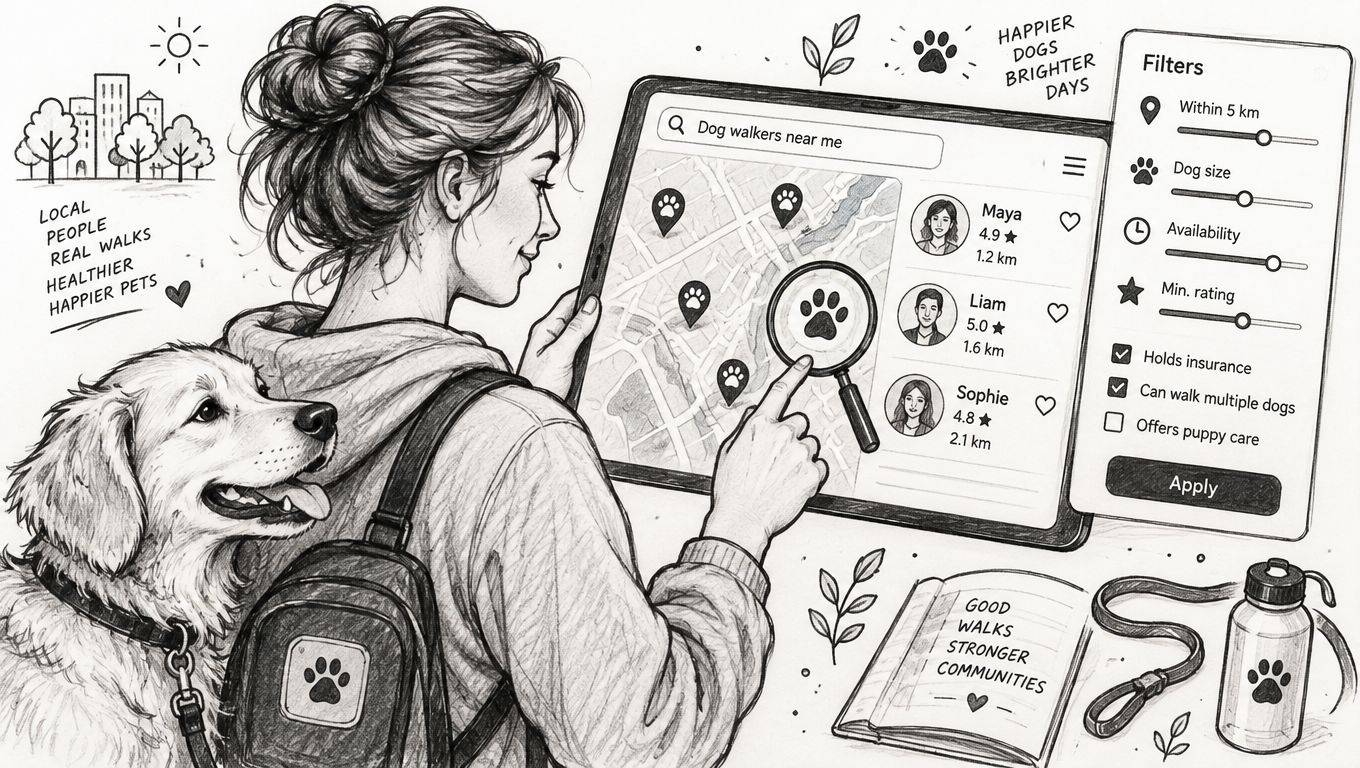
Start with geography, not star ratings. Enter your exact neighborhood, then check whether the provider serves your street or only advertises a broad metropolitan area. A site that lists Denver may not cover Arvada, Golden, or Wheat Ridge, and a profile that appears nearby may still require a long drive between appointments.
Use filters that reveal operating fit
Work through the search in this order:
-
Set the exact location. Use your neighborhood and, where possible, your address. Confirm that the provider's stated territory includes your home rather than assuming that a metro label is precise.
-
Choose the service type. Separate standard walks from runs, hikes, drop-ins, group outings, or adventure sessions. The right category matters because the equipment, handling style, and time commitment can differ substantially.
-
Filter for schedule compatibility. Check weekday availability, recurring bookings, arrival windows, and blackout periods. A provider who can accept one visit but can't maintain your routine may not be a practical choice.
-
Review the profile before contacting anyone. Look for handling experience, access instructions, emergency procedures, communication methods, and a clear description of what happens during the visit.
Rover lists Denver, Colorado among its major U.S. city markets, while Wag advertises availability in 5,300+ cities across all 50 states , according to Rover's dog-walking directory. Broad coverage helps you discover options, but it doesn't replace local verification. A marketplace can serve a city in principle while offering limited coverage in your particular neighborhood.
For a local provider, compare the platform profile with the company's own territory page. Denver Dog's Denver service-area information names Arvada, Denver, Englewood, Golden, Lakewood, Littleton, and Wheat Ridge . Named areas are more useful than a generic claim to serve the Denver metro.
Look for local clarity
Precise boundaries are a meaningful quality signal. Swifto publishes specific neighborhood and street-level coverage in several markets, while Society Pet Sitter publishes territory and operating details for Dallas and Plano, including hours from 7:00 am to 10:00 pm every day . These examples show how dog walker sites can make availability easy to verify.
If you're building or evaluating a local service website, the same principle supports winning your service area market. A strong page should tell customers where service is available, when visits occur, and what happens after they submit a request. For Denver-specific information, you can also review the Denver dog-walking service page before contacting a provider.
Comparing Safety Features and Certifications
A dog walker can pass a background check and still mishandle a nervous dog, leave a door unsecured, or respond slowly when a route changes. Evaluate safety features as a connected system. Look for proof of identity, clear handling procedures, visit records, and a reliable way to reach someone during an appointment.
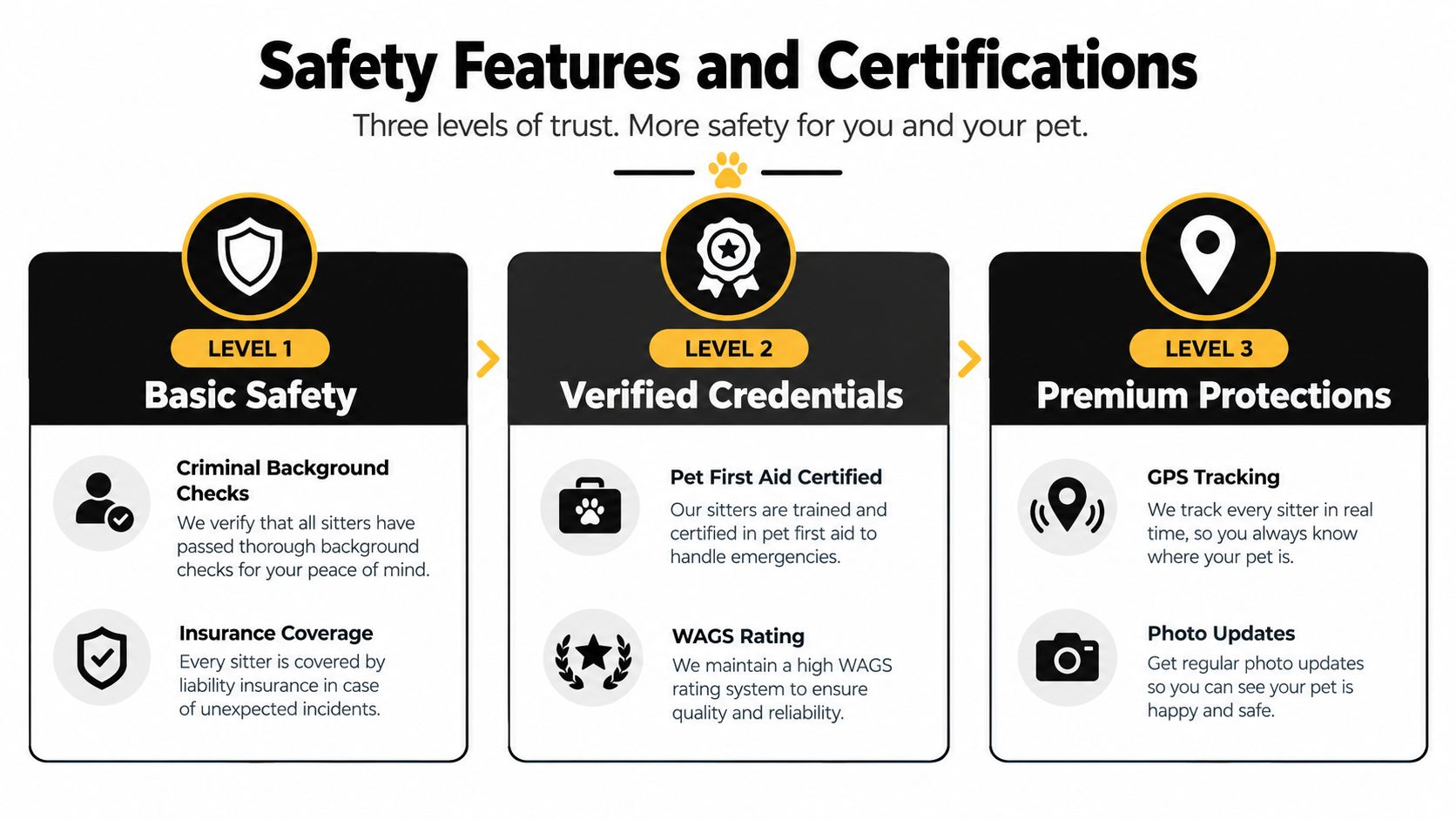
Independent pet-care marketplace guidance from Xgenious groups identity verification, criminal background checks, GPS tracking, photo and video updates, in-platform messaging, emergency-vet integration, and insurance into one trust flow. These features matter when they support a real process, not when a site displays them as isolated badges.
Compare the evidence behind the badge
Identity verification and background screening provide a starting point. Check whether the provider verifies legal identity, reviews criminal history, and refreshes records. Vague wording such as “trusted walkers” does not explain who performed the check, when it occurred, or what the platform actually verifies. Ask for those details before sharing home access information.
Insurance and bonding address financial risk rather than personal screening. Coverage may apply to property damage, an incident involving the dog, or another specified event, but terms differ between marketplaces and independent handlers. Read the policy explanation and ask who handles a claim. Denver Dog's plain-language guide to what a bonded dog walker means illustrates the level of explanation owners should expect.
Credentials and handling competence deserve closer attention when a dog has medical, behavioral, or fitness needs. Ask about canine first aid, leash handling, introductions, medication procedures, and responses to pulling, freezing, barking, or reactivity. A certificate without practical procedures gives you little evidence of how the handler will act.
GPS is evidence, not the whole answer
GPS can confirm movement, but it cannot prove that the dog received an attentive, complete visit. Coverage of dog-walking software for 2026 reports that all eight shortlisted platforms offered some form of GPS check-in or check-out. Its coverage also discusses automated visit reports, client-portal proof, and route replay, which provide more context than a location line alone. It reports GPS adoption at about 58% of leading platforms , roughly 21% better customer trust metrics , and digital payment adoption above 74% in 2025 .
Ask for a post-visit record containing arrival and departure times, route replay, photos, handler notes, behavior observations, and unusual events. Confirm that you can review those records later. A platform that deletes them after the walk offers weaker accountability.
Response speed is another hidden trust layer. Test the contact channel before booking. A provider that cannot explain who answers urgent messages, how quickly they respond, or what happens after a missed check-in has left a serious gap in its safety process.
Communication also supports retention. Practitioner benchmark data in Agiled's dog-walking CRM guidance connects consistent photos, GPS, and notes with lower client churn. Treat missing updates, generic visit summaries, unexplained route gaps, and slow replies as warning signs, even when the site displays several certifications.
Understanding Pricing and Booking Systems
A low headline rate can become expensive when the visit is shorter than expected, the arrival window is vague, or the booking system adds fees at checkout. Compare the visit length , travel area, one-on-one or group format, handler qualifications, recurring schedule, cancellation window, holiday rules, and communication included in the price.
Historical marketplace pricing helped standardize the idea of paying by visit duration, but those old reference points are not current quotes for every city. Use them only to compare what the advertised time covers. A 30-minute booking may mean active walking, total time at the home, or an arrival-to-departure window. The difference matters for anxious dogs and owners who need dependable coverage.
Read the booking flow before paying
A reliable interface answers practical questions before you enter payment details:
- Duration: Does the advertised time cover active walking, the complete visit, or a flexible arrival window?
- Visit format: Is the walk private, paired, or part of a larger group?
- Schedule: Can you request recurring weekday care, or must you rebook each visit?
- Cancellation: How much notice is required, and what happens after illness, severe weather, or a delayed handoff?
- Fees: Are travel charges, holiday pricing, deposits, or platform fees shown before checkout?
- Records: Will the service provide photos, notes, route information, or a structured visit report?
- Escalation: Can you reach a person quickly if the handler cannot access your home or your dog behaves unusually?
Booking friction can reveal how the provider operates. If the site accepts payment before showing the handler, visit window, cancellation outcome, or contact route, pause before committing. A clear confirmation should identify the assigned person, service time, price, and what happens if the appointment changes.
Price should reflect usable care, not just minutes on a clock. A higher rate can make sense when it includes specialized exercise, consistent handling, detailed updates, and a defined response process. A lower rate offers poor value when it comes with generic summaries, uncertain timing, or no practical way to confirm what the visit included.
Practitioner benchmark data in the Agiled practitioner benchmarks suggests that providers bundling consistent photos, GPS, and notes into their pricing see roughly half the annual churn of providers offering no in-walk communication. Treat that as directional guidance, not a guarantee. The customer is paying for confidence as well as labor, and useful records make that value visible.
Before booking, open the rate explanation and cancellation policy. Denver Dog's Denver dog-walking rates guide shows how a local pricing page can explain what a service includes. A transparent provider should disclose important conditions before the first payment.
Identifying Red Flags and Verification Steps
The most concerning profiles often look polished at first glance. A logo, attractive dog photos, and a convenient booking button don't confirm that the service has reliable procedures. Pay attention to what the provider refuses to specify.
Watch for these warning signs
- Incomplete profiles: The handler's experience, screening status, service format, or emergency process is missing.
- Unclear territory: The site claims to serve the entire metro area but doesn't name neighborhoods or explain travel limits.
- Weak response speed: Messages sit unanswered, or the provider can't give a clear time for confirming a booking.
- Missing access instructions: The system has no secure place for entry details, alarm information, leash location, or backup contact instructions.
- No continuity plan: The provider can't explain who will cover the visit if the assigned handler is sick or delayed.
- GPS-only proof: The site advertises location dots but doesn't offer notes, photographs, route replay, or a visit summary.
- Vague cancellation terms: You can't tell whether a late cancellation creates a fee, a credit, or no recovery at all.
- Pressure to move off-platform: A handler insists on using personal payment or messaging before you understand the service's protections.
These problems don't prove that a provider is unsafe, but they increase uncertainty. A dependable service should answer direct questions without defensiveness and should document the details that affect your dog's care.
Verify before handing over access
Send a short test message with the essential facts: your dog's size and temperament, the requested weekday window, medication or mobility concerns, leash requirements, and your neighborhood. Evaluate both the answer and the speed. A thoughtful response should acknowledge the dog's needs, explain the next step, and identify anything the provider needs before accepting the booking.
Then ask for a meet-and-greet or introductory visit. Confirm who will arrive, how identification is handled, where the dog will be walked, and what happens if your dog refuses to move or reacts to another animal. Ask to see a sample visit report if the site promises one.
Finally, verify the business details independently. Check the named service area, hours, contact method, insurance explanation, and cancellation policy. Save the booking confirmation and make sure the person arriving matches the profile you reviewed. These small checks catch operational gaps before they become access problems, missed walks, or confusing handoffs.
Taking the Next Steps for Pet Safety
Research becomes useful when it produces a controlled first booking. Don't begin with a long recurring commitment just because a profile has attractive photos or an open calendar. Start with a visit that lets you evaluate the handler's preparation, communication, timing, and treatment of your dog.
Use this sequence:
-
Match the service to the dog. Decide whether your dog needs a neighborhood walk, structured run, trail hike, or calmer one-on-one outing. Energy level and temperament should shape the selection.
-
Confirm the operating details. Recheck the address, service boundary, weekday window, duration, arrival process, and cancellation rule. Ask who handles the visit if the primary provider becomes unavailable.
-
Prepare a concise care brief. Include leash and harness instructions, triggers, recall limitations, door and gate details, feeding or medication information, emergency contacts, and the behavior that signals stress.
-
Request proof of service. Agree in advance on the expected update. A useful report may include arrival and departure confirmation, photos, route replay, distance or activity notes where relevant, and observations about mood, gait, hydration, or unusual behavior.
GPS can support accountability, but it has practical trade-offs involving device placement, signal quality, battery life, privacy, and how accurately a route represents the dog's experience. For a balanced explanation, review these real-world dog GPS trade-offs, then ask the provider what its tracking system can and can't show.
Judge the first visit by the details
A good first visit leaves you with specific information. You should know when the handler arrived, how your dog behaved, whether the planned route was completed, and whether anything requires attention before the next appointment. A generic message and a map dot aren't enough for an anxious owner who needs confidence in the care routine.
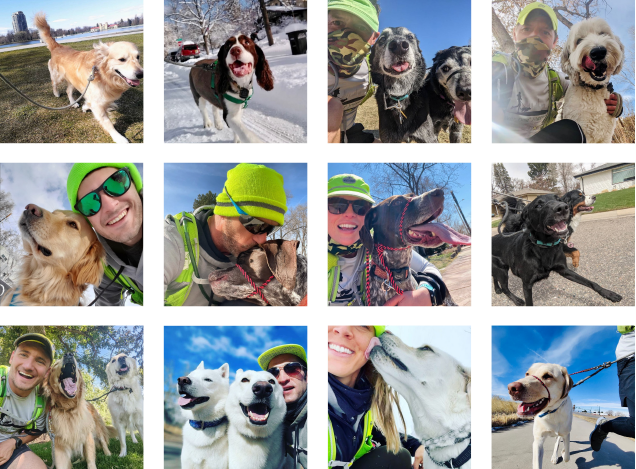
Denver Dog offers on-leash walking, running, and hiking programs through Denver Dog Joggers and Denver Dog Hikers, with service designed around a dog's energy level and temperament. The company states that drivers maintain a seven-year clean driving record, use in-vehicle camera monitoring, and receive recurring training in canine handling, fitness, and welfare. Those are the kinds of operating details to compare with any provider's claims, especially when your dog needs structured weekday exercise.
Your final choice should balance local coverage, handler fit, transparent terms, responsive communication, and proof that the service occurred as promised. If a provider can't explain those layers before booking, keep searching. Convenience matters, but dependable evidence and clear accountability protect your dog when you aren't there to supervise.
For structured weekday walks, runs, and hikes across Arvada, Denver, Englewood, Golden, Lakewood, Littleton, and Wheat Ridge, visit Denver Dog to review the available programs and request care that matches your dog's energy level and temperament. Ask about a first visit with clear handling instructions and detailed post-service communication, so you can evaluate the experience with real evidence.
The Run Down