You're loading dogs before sunrise, checking leashes, juggling route notes, and trying to get out the door while the roads are still waking up. In that kind of morning, the trip itself matters as much as the trail or park, because one distracted glance, one hard brake, or one bad decision can turn a routine run into a serious problem.
Real time safety monitoring gives pet transport a live layer of accountability. It helps handlers catch risky driving while the vehicle is still moving, instead of learning about it later from a complaint, a close call, or worse.
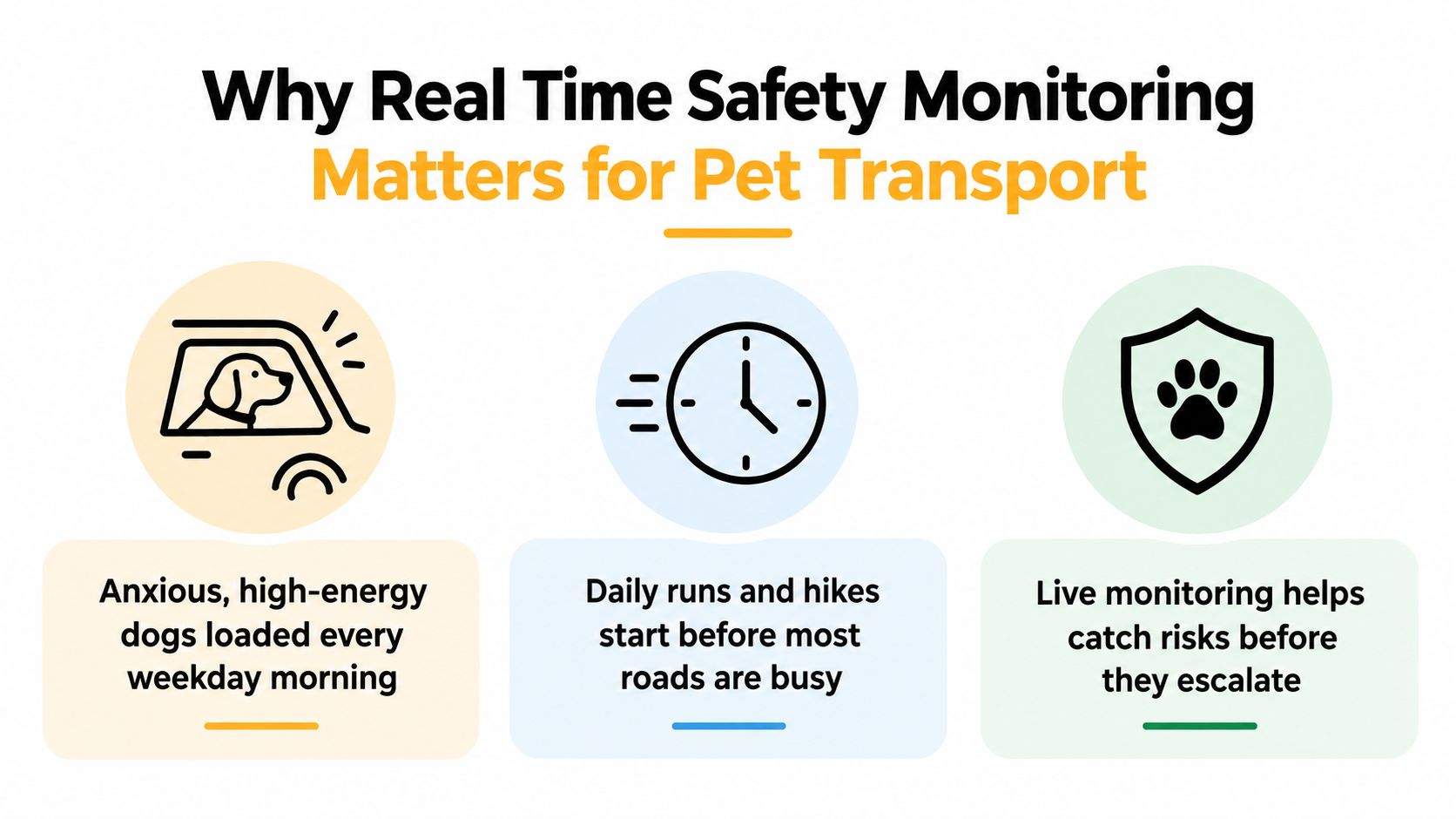
Why Real Time Safety Monitoring Matters for Pet Transport
A weekday dog run in Denver usually starts with a full vehicle, a schedule to keep, and dogs that are excited before the engine even starts. Some are bouncing in their harnesses, some are nervous, and some are already scanning every turn because they know the destination. That's exactly when real time safety monitoring becomes practical, not theoretical.
The road is where the risk lives. In 2024 , NHTSA reported that distraction was involved in 8% of fatal crashes , an estimated 13% of injury crashes , and an estimated 12% of all police-reported crashes , with 3,208 people killed and an estimated 315,167 injured in distracted-driving crashes NHTSA 2024. The year before, NHTSA reported 3,275 deaths and an estimated 324,819 injuries in distracted-driver crashes, which shows why this is still a live operational problem, not a background statistic NHTSA 2023. For an operator carrying dogs, that matters because the animal can't notice the road risk, speak up, or brace for what's coming.
A safer program doesn't wait for a crash report. It watches for the behaviors that precede one, then gives the business a way to act before the trip goes off track. That's the genuine shift from old fleet habits to modern monitoring, from reviewing what happened to intervening while there's still time to correct it.
Practical rule: if the vehicle is moving, the safety system has to be live too.
Teams already familiar with broader security operations will recognize the logic behind CCTV and alarm monitoring from PeakFriend Security, because the value comes from the response, not just the recording. The same principle applies here, but the target is different. For pet transport, the question isn't only whether something was captured, it's whether the driver was coached before the next turn, merge, or stop.
How In-Vehicle Monitoring Tracks Driver Behavior
A useful monitoring system doesn't fixate on one signal and call that safety. It reads the situation from multiple angles, because a driver can look fine for a moment and still be building risk through speed, spacing, or fatigue. Federal Motor Carrier Safety Administration research describes a multimodal approach that combines driver-state indicators such as PERCLOS , eye-closure speed, yawning, and body gestures with vehicle-behavior signals like lane departures, erratic speed variation, and yaw-rate or CAN-bus data FMCSA.
What the system watches
For dog transport, four behaviors matter most: speeding , following distance , distraction , and drowsiness . Each one changes the margin for error in a different way. Speeding reduces the time available to stop, short following distance leaves no room for sudden braking, distraction pulls attention away from the road, and drowsiness dulls reaction quality before the driver even realizes it.
A good system doesn't treat those as abstract flags. It turns them into event triggers, then routes the event based on seriousness. That's why a brief glance away from the road shouldn't get the same response as repeated handheld-device use or sustained eye closure.
| Key Monitoring Metrics | What It Tracks | Safety Impact |
|---|---|---|
| Speeding | Vehicle speed relative to road conditions and route expectations | Shortens stopping margin and increases the likelihood of abrupt correction |
| Following distance | Gap to the vehicle ahead | Reduces room to respond to sudden braking or merging |
| Distraction | Visual attention loss, handheld phone use, or off-road focus | Removes the driver's eyes and mind from traffic conditions |
| Drowsiness | Eye closure, yawning, posture changes, and related fatigue signals | Weakens decision-making and slows reaction time |
The point of combining signals is reliability. A single camera frame can be misleading, but a repeated pattern across the driver and the vehicle tells a much clearer story. That's why the best systems create a threshold for action, then separate immediate coaching from later review.
For operators comparing broader route controls with live vehicle oversight, how geofencing improves fleet operations is a useful reference point because it shows how location controls and event-based logic work together. The same mindset fits pet transport, although the most important part is still what happens inside the vehicle when a risky event starts.
Denver Dog's own in-vehicle camera monitoring system guide is a relevant internal resource for understanding how these layers fit into a working transport process.
A camera alone records behavior. A monitoring system interprets it, escalates it, and closes the loop.
The Difference Between Detection and Actual Safety
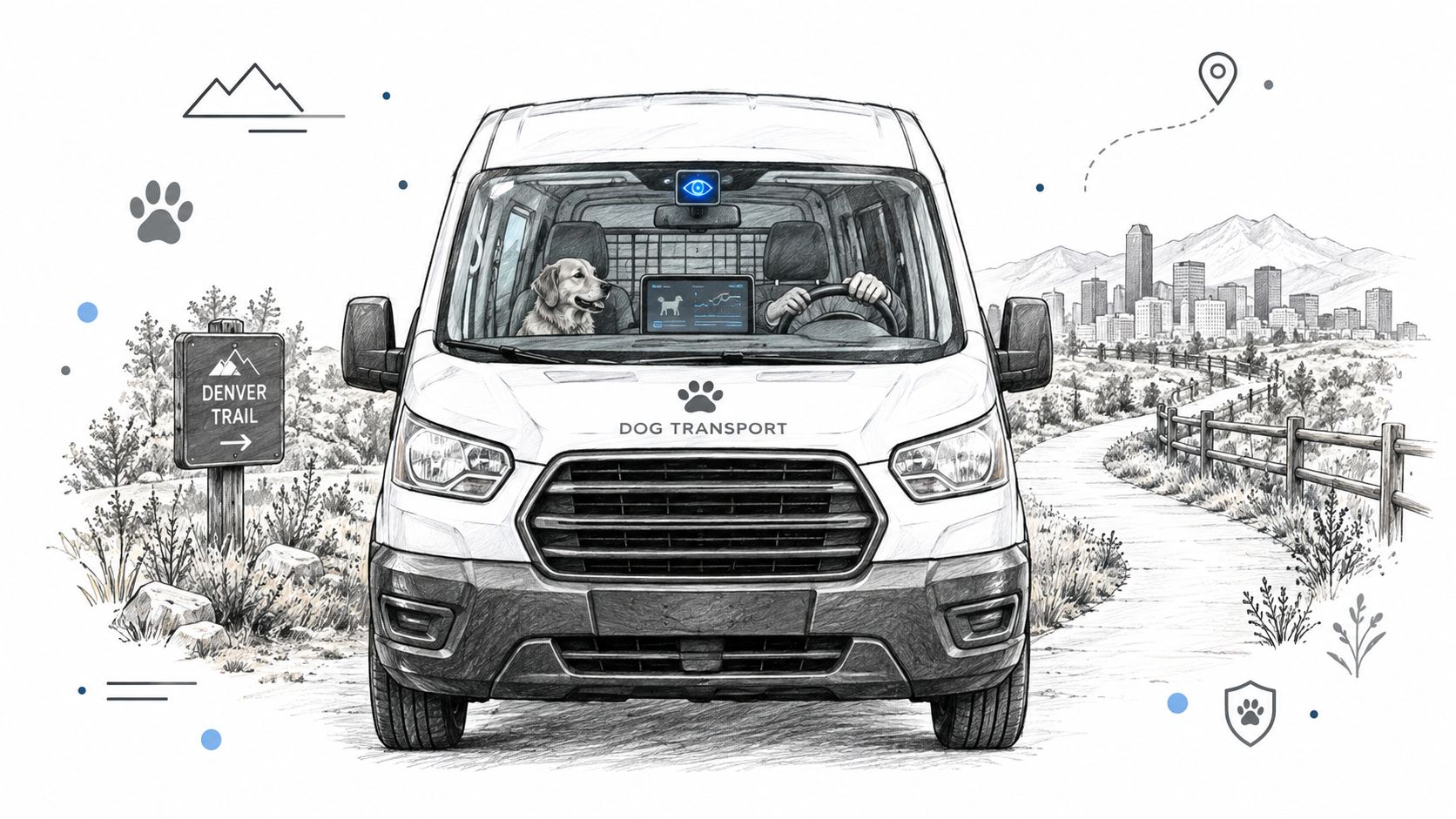
A camera feed can show a problem and still leave the dog exposed. If the footage is only archived, the trip continues unchanged while the risk is still active. NIOSH describes a setup where driver- and outward-facing video , real-time feedback , and supplemental supervisory coaching reduced risky driving and unbelted driving, while real-time feedback without supervisory coaching did not reduce overall risky behavior NIOSH.
What the safety loop looks like
Detection has to lead to a response. A live alert should trigger review, someone should classify the severity, and the team should decide whether to coach in the vehicle, adjust the route, stop the trip, or document retraining. Without that step, the system stays a recorder and never becomes a control.
That review step turns detection into protection, and it mirrors the principles in what active safety systems do in a vehicle. The point is to move from noticing a risk to changing what happens next.
A harsh corner, a hand on a phone, or repeated lane drift should not vanish into a dashboard after the shift ends. It should become a documented action that changes future behavior.
Operational standard: every meaningful alert should have an owner, a response, and a follow-up.
For pet parents, that creates a cleaner trust model. If the system flags unsafe driving, the business is not just saying it noticed. It can show that someone reviewed the event and acted on it. That matters when you are carrying a dog that cannot self-advocate, and the gap between “we saw it” and “we corrected it” is the gap between passive data and actual protection.
Repeated behavior deserves the same discipline. One isolated event may call for coaching. A pattern should lead to retraining or reassignment. That is what turns monitoring into a real safety program instead of a compliance prop.
Protecting Dogs from Environmental and Physical Risks
A smooth drive does not guarantee a safe outing for a dog. Heat, cold, rough footing, and exertion can all create problems once the trip begins. The American Veterinary Medical Association advises scheduling walks to avoid the hottest part of warm-weather days and the coldest periods of cold-weather days, and it warns that hot sidewalks and roads can burn paw pads AVMA.
Monitoring has to include the dog's environment
Welfare monitoring needs to sit beside driver monitoring. A route can stay inside a geofence and still be a poor choice if the surface is too hot, the pace is too intense, or the dog starts showing weakness or unusual anxiety. Safety for pet transport includes both arriving without a traffic incident and deciding whether the outing should continue once the dog's condition changes.
A practical protocol starts with a few basics:
- Check surface and weather conditions: hot pavement, cold snaps, and poor footing should change the plan before the dog loads up.
- Watch for stress signals: weakness, staggering, vomiting, diarrhea, and unusual distress should trigger immediate action.
- Use route adjustments early: shade, shorter loops, and rest breaks are part of safe handling, not signs of failure.
- Escalate quickly when needed: if the dog looks unwell, end the session and notify the owner instead of pushing through.
The AVMA also warns that heat stress can progress quickly into heat exhaustion, heat stroke, and death without immediate veterinary care. That is why heat stroke prevention guidance for Denver dog owners is useful here. Real time safety monitoring has to turn what it sees into the right call, because more data on its own does not keep a dog safer.
For a Denver-specific view of those thresholds, that guide keeps the focus on action, not on alert volume.
Privacy, Ethics, and Transparent Accountability
A lot of pet parents worry that monitoring can cross a line. That concern is fair. The difference between protective oversight and intrusive surveillance comes down to purpose, access, and use. In a pet transport setting, the point is to protect a vulnerable passenger, not to pry into a driver's private life.
What responsible monitoring should look like
The system should be clear about what it collects, who can see it, and how long it stays in use. It should also limit review to safety events, repeated coaching needs, and documented exceptions. If the technology is being used for general employee surveillance instead of safety improvement, the trust model breaks down quickly.
Accuracy matters too. A camera can flag something that deserves review, but false positives do happen, and fair handling requires human judgment. That's why event review should include context, not just a clip. A good policy doesn't ask customers to blindly trust the system, it explains the process that keeps the system accountable.
Transparency isn't a marketing line. It's the reason the monitoring feels protective instead of invasive.
Drivers deserve clarity as well. They should know what behavior is monitored, how alerts are handled, and what happens after a false alarm. That's the only way to keep the process fair while still putting the dog's safety first.
How Denver Dog Uses Monitoring to Keep Dogs Safe
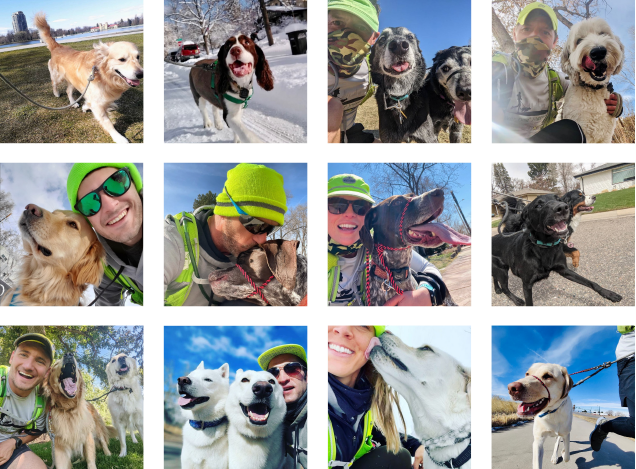
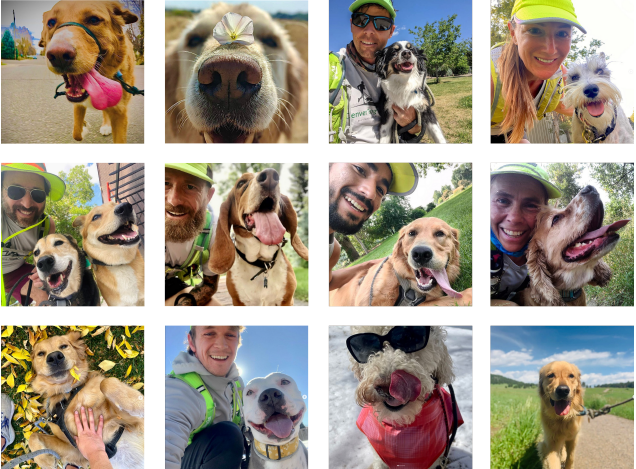
Denver Dog combines transport routines with live vehicle oversight, and that matches the realities of moving dogs safely. Drivers are required to maintain a seven-year clean driving record , and in-vehicle camera technology tracks speeding, following distance, distraction, and drowsiness in real time. When risky behavior appears, coaching follows. That matters because screening alone cannot catch what happens once the vehicle is on the road.
The service area includes Arvada, Denver, Englewood, Golden, Lakewood, Littleton, and Wheat Ridge, so the monitoring has to hold up across different roads, traffic patterns, and pickup routines. A dog may be calm on one trip and anxious on the next. Routes change. Traffic changes. The standard has to stay steady even when the day does not.
The broader operation matters too. Since 2010, Denver Dog has delivered more than 135,000 sessions , and that kind of scale depends on human handling and vehicle oversight working together. The monitoring supports trained staff, and trained staff make the monitoring useful by acting on what it flags. That is the operational difference between collecting data and using it to protect a passenger.
For pet parents, the takeaway is straightforward. You want a provider that treats the drive as part of the service rather than an invisible gap between pickup and exercise. If you are comparing weekday runs, hikes, or structured dog transport in the Denver area, visit Denver Dog to see how live monitoring, trained handlers, and route-aware care work together in a real operating environment.
The Run Down