You open the front door at 6:30 in the morning, leash in one hand, coffee in the other. Rain is sheeting off the porch, your dog is already spinning, and you've got a meeting in ninety minutes. Skip the walk, shorten it, or gear up and go?
Knowing how to walk dog in rain conditions without turning a routine outing into a vet visit comes down to three decisions, not one. You assess temperature and footing first , you read the water on the ground , and you treat the ten minutes after you return as part of the walk. The coat is the least important part of that sequence.
Why Rain Walks a Different Kind of Risk
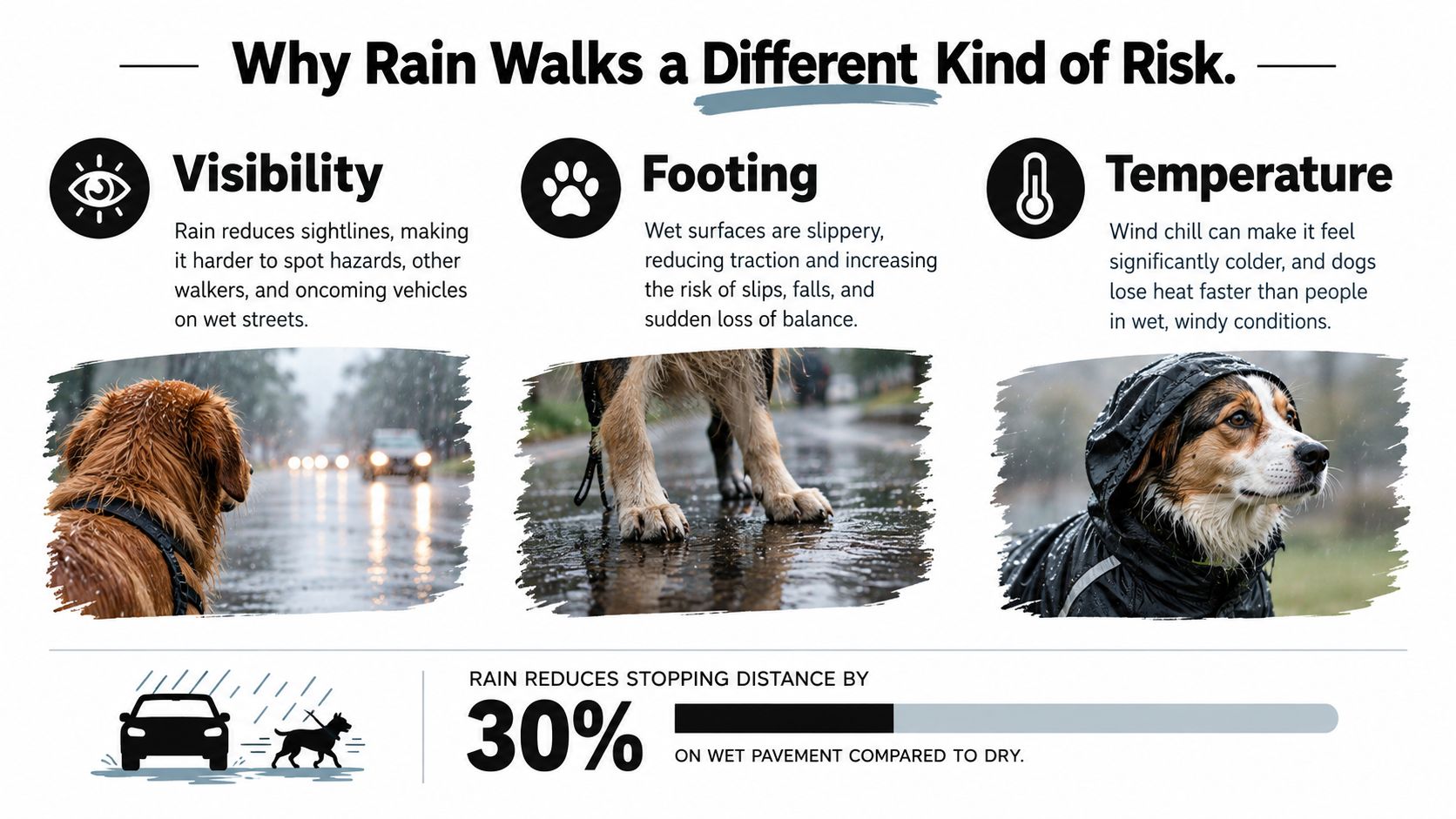
A dry neighborhood loop in Lakewood can change character in one wet morning. The sidewalk that was fine yesterday is slick at the painted crosswalk, a gutter you normally step over is running fast and brown, and your dog lunges toward a puddle next to a parked truck. The rain itself isn't the hazard. Slippery footing, pooled contaminated water, and wind-driven heat loss are.
That's why the useful question isn't whether your dog will get wet. It's which surfaces are safe to cross, how cold your dog will feel once saturated, and whether visibility gives you enough reaction time at intersections.
Rain as a Routine Denver Variable
Denver owners don't get to treat this as a rare problem. Denver's annual normal precipitation is about 14.48 inches , with precipitation of at least 0.01 inch occurring on approximately 79.7 days per year under the 1991 to 2020 climate baseline. Those days aren't all equal, which is exactly why a flat rain or no rain rule fails. A light drizzle on clean, well-drained pavement is a manageable short walk. A heavier storm that fills drainage channels and soaks trails calls for a different route, or no recreational walk at all.
Prolonged dampness also sets up skin trouble after the walk ends, especially in dense coats that look dry on top while staying wet at the skin. If you ever find crusted, tufted patches along the back or neck a day after a wet outing, this guide to rain rot in dogs treatment explains what that bacterial infection looks like and when it needs veterinary attention. Thorough drying, covered later in this article, is your main prevention.
A wet dog is rarely an emergency. A wet dog who slips, drinks from a roadside puddle, or stays chilled for an hour is a different story.
Running a Pre-Walk Risk Check
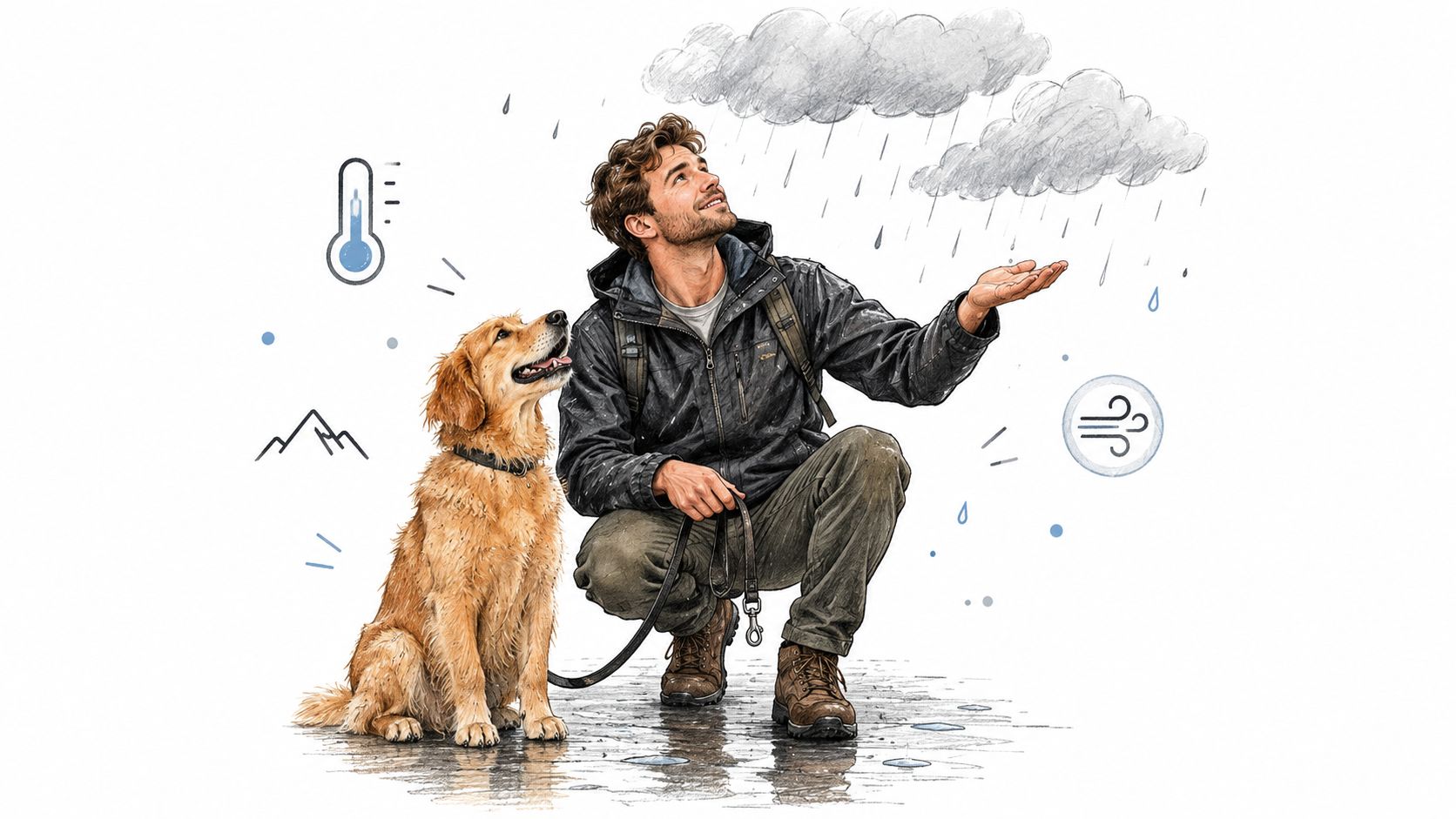
Before you clip the leash, run a thirty-second check in a fixed order. Start with air temperature plus wind , then rain intensity , then the dog in front of you . Temperature comes first because wet fur loses its insulating value, and wind strips heat from a saturated coat far faster than still air does.
Small, lean, short-haired, elderly, and medically vulnerable dogs lose heat fastest and need the shortest outings. Puppies and senior dogs with stiff joints belong in that cautious group too. A fit adult retriever in a mild drizzle is a different case, and under-walking that dog all week creates its own behavior problems at home.
A Go, Shorten, or Skip Decision
- Go with adjustments: Mild temperatures, light rain, and a healthy dog who's comfortable. Keep the route structured and familiar, and watch behavior continuously.
- Shorten: Rain combined with cold or wind, or a vulnerable dog. Cut distance, slow the pace, add a coat, and turn back at the first sign of discomfort.
- Skip the recreational walk: Heavy rain, high wind, or a dog already reluctant at the door. Use a brief toilet break and indoor enrichment instead.
There's no universal minute limit that replaces observation. The AVMA identifies shivering, weakness, reduced alertness, muscle stiffness, slow shallow breathing, and collapse as warning signs during cold exposure and recommends shortening walks in very cold conditions. Shivering, paw lifting, or slowing down means you end the outing, not that you push to the usual turnaround point. Severe signs like collapse or breathing changes warrant immediate veterinary care.
The most common failure here is trusting a coat while ignoring everything else. A jacket doesn't warm wet paws, doesn't cancel wind chill on the head and legs, and doesn't fix reduced temperature regulation in an older dog. Our broader guide to safe dog walking in all conditions covers the same risk-first logic for heat, snow, and ice.
Choosing the Right Rain Gear for Your Dog
Gear earns its place by solving a specific problem on a specific dog. A waterproof coat helps a short-coated dog retain warmth in cold rain. It does little for a double-coated husky in a warm summer shower, and a poorly fitted one that binds the shoulders will change your dog's gait on already slick pavement. Check that the coat covers the chest and abdomen, allows full shoulder movement, and stays put without dangling straps near the legs.
Your connection to the dog matters more than the coat. A properly fitted harness with a secure clip won't loosen when webbing gets wet and heavy, and it distributes pressure if your dog startles at thunder or slips. Test fit with two fingers of room at the neck and chest straps, snug enough that a wet dog can't back out of it at an intersection.
Booties and Visibility Gear
Booties protect paws from grit, chemical residue, and cold standing water, but only if the dog will walk in them. Introduce them indoors over several short sessions, reward calm movement, and check for rubbing after each use. A dog doing a high-stepping panic dance on wet concrete is a fall risk, so a tolerant dog in booties beats a stressed dog in perfect gear.
Visibility gear protects both ends of the leash. Reflective vests, a hands-free headlamp, and a clip-on light on the harness make you readable to drivers whose sightlines are already degraded by rain and spray. For a deeper fit-by-fit breakdown, see our rain gear guide for active Denver dogs.
| Gear Item | Best For | Skip If | Fit Check |
|---|---|---|---|
| Waterproof coat | Cold rain, short coats, lean dogs | Warm rain, thick double coats | Covers chest, free shoulder movement |
| Fitted harness | Every rainy walk | Never, use a secure option | Two fingers at neck, no backing out |
| Booties | Grit, chemicals, sensitive pads | Dog panics or gait changes | Snug, no rubbing after indoor trials |
| Reflective vest and lights | Dawn, dusk, heavy rain | Bright midday drizzle | Visible from front, side, and rear |
| Fixed-length leash | Slick, crowded, or trail routes | Retractable use in rain | Secure grip when webbing is wet |
One trade-off owners miss is drying the gear itself. A harness left damp overnight starts the next walk already irritating the skin underneath. Hang everything to dry fully, and rotate to a backup set during multi-day wet stretches.
Picking the Route and Staying on a Short Leash
Route selection does more for safety than any jacket. Favor well-lit streets with good drainage where water moves off the walking surface instead of pooling across it. Cross at intersections where you can see and be seen, and slow down on painted lines, metal covers, and smooth concrete, which lose traction first.
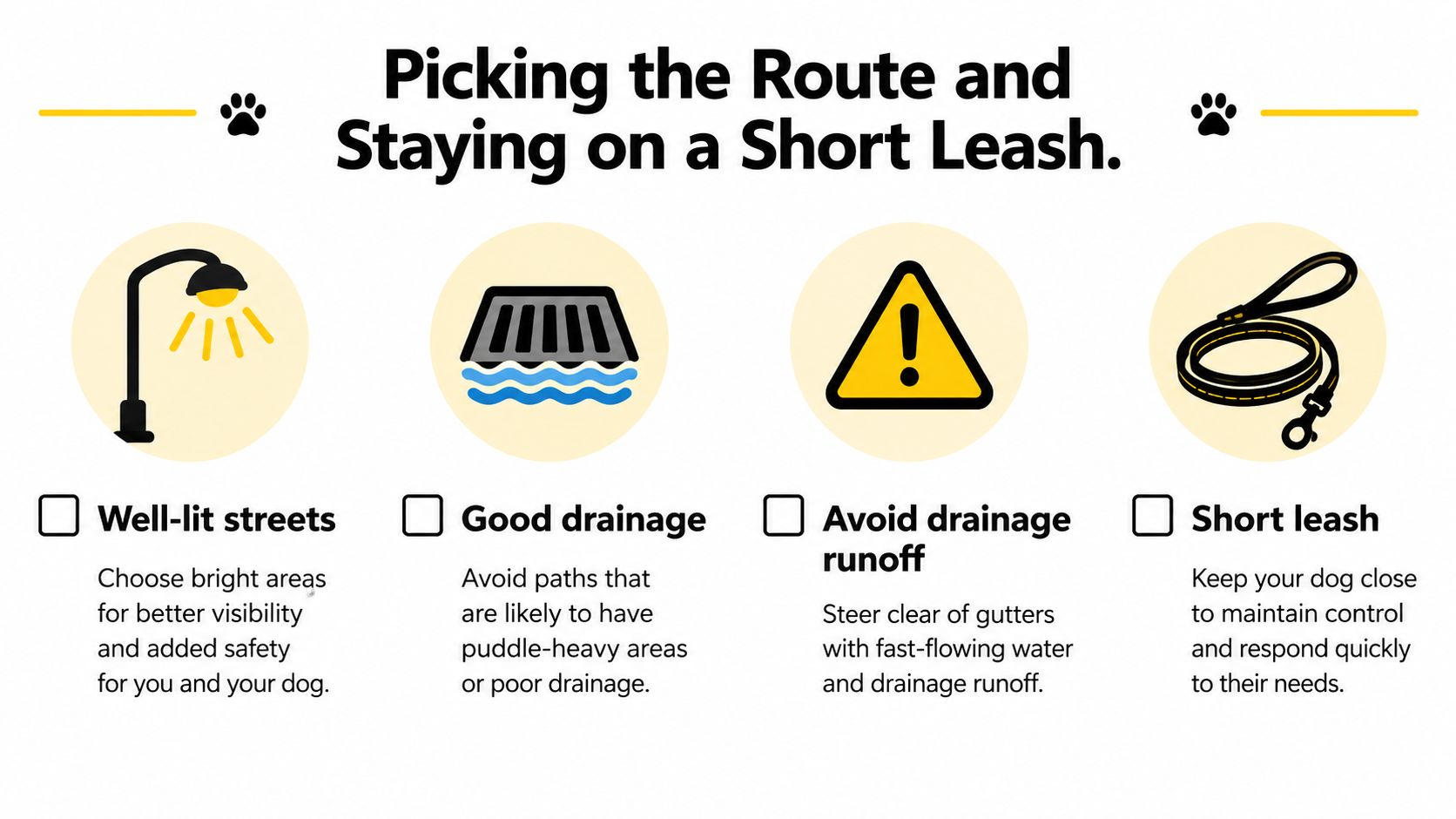
Reroute around drainage channels, fast-running gutters, and park areas with standing water. Pooled water hides broken glass, sharp debris, and uneven ground, and muddy trail edges collapse underfoot after sustained rain. A shorter loop on sound pavement beats your normal trail distance on an unstable surface.
Leash Mechanics in Wet Conditions
Denver trail rules require dogs on trails to be restrained by a leash no longer than six feet , with broader park policy requiring dogs to be on leash and under physical control at all times. In rain, that limit is a safety tool, not just a regulation. Six feet gives your dog room to sniff while keeping them out of bike lanes, roadway edges, and runoff.
- Use a fixed-length leash: A secure grip on wet webbing prevents the slide you get with a retractable handle.
- Shorten up at crossings: Hoods, umbrellas, and reduced visibility delay everyone's reactions, including drivers.
- Keep slack managed: A loose line dragging through puddles tangles around legs, which is how handlers trip on slick ground.
Field rule: If you can't stop your dog within one step on a wet surface, your leash is too long for the conditions.
Wear weather-appropriate footwear with real tread yourself. A handler who goes down on wet pavement can't control the dog, and a sudden lunge on a slick slope is exactly the scenario that injures people. Walk the pace the surface allows, not the pace your schedule wants.
The First 10 Minutes After You Get Home
Most rain guidance stops at the front door. That's where the preventable problems start. Work through the same sequence every time, in order, before your dog settles on the rug. Dry, rinse, inspect, then check the gear.
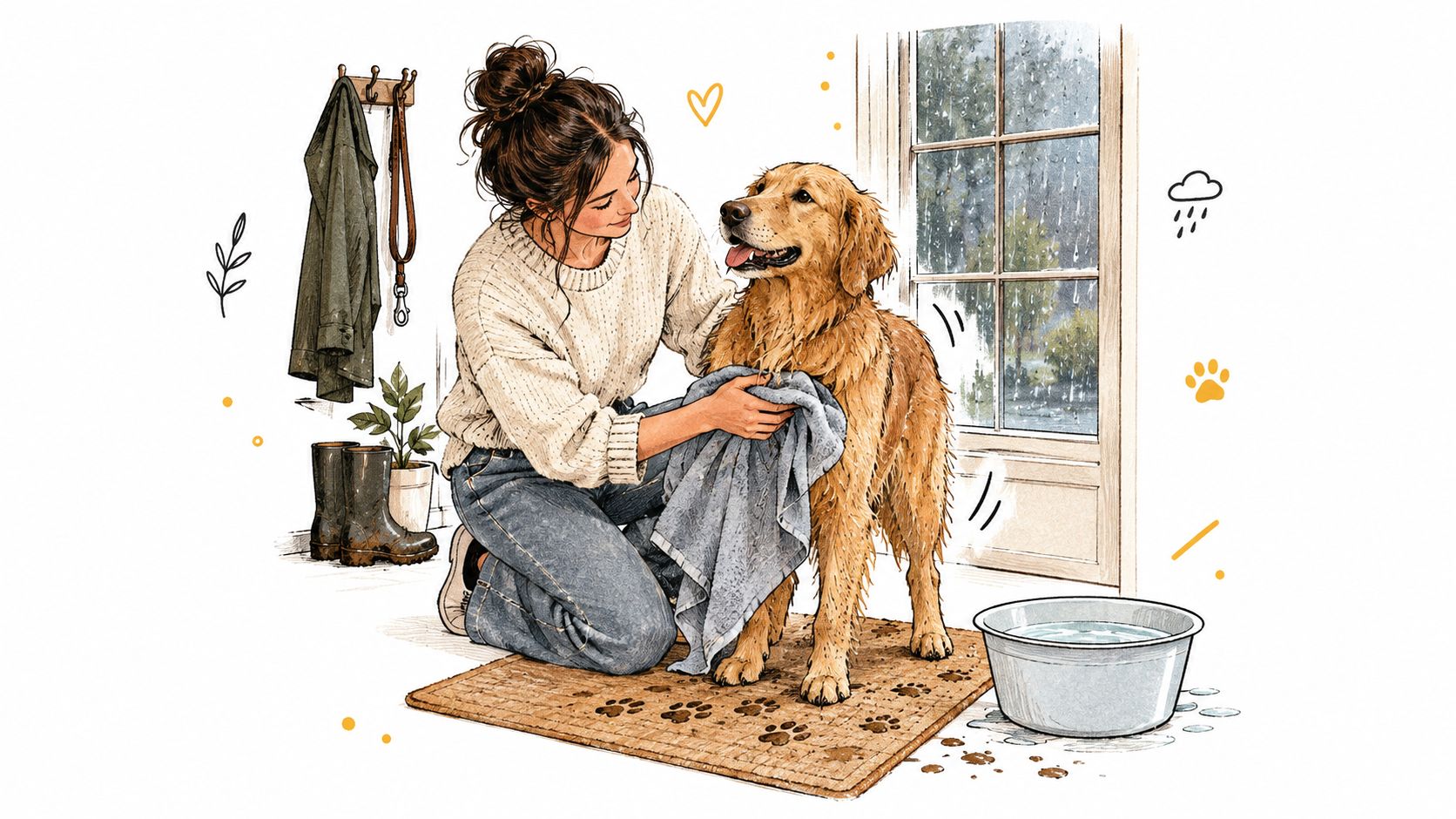
Towel-dry the chest, abdomen, legs, and paws first, since those areas collect the most water and road spray. Work between the toes and around the pads, where mud and grit pack in and surface wiping misses them. Dense coats need you to dry down to the skin in sections, because an outer coat that feels dry can hide a damp undercoat for hours.
Rinsing and Inspecting Paws
If the route involved mud, road salt, de-icing residue, or gutter runoff, rinse paws and lower legs with clean lukewarm water , then dry again. Don't use very hot water or direct heat on a chilled dog, since gradual warming is safer. Prevent licking until paws are clean and dry, because dogs ingest whatever came home on their feet. If doorway rinsing is your bottleneck, these practical paw cleaning solutions cover portable options that make the routine fast enough to happen daily.
The ASPCA advises checking for cracks in paw pads or redness between the toes after walks where dogs may have stepped in salt, ice, or chemicals, and recommends booties when appropriate. Run the same inspection after rainy urban walks. You're looking for cuts, swelling, embedded grit, and persistent licking once the dog settles.
Ears, Skin, and Wet Equipment
Check ears for moisture, odor, or discharge, especially on long-eared dogs, since retained moisture contributes to ear infections. Run your hands under the harness and collar line and part any mats, because damp equipment left against skin creates irritation you'd otherwise blame on the rain. Take the harness and coat off, and hang them to dry completely.
Call your veterinarian when you find sudden lameness, bleeding or cracked pads, breathing difficulty, unusual fatigue, or redness that's spreading rather than fading. A veterinarian-approved paw balm can help sensitive or cracked pads, but it's a follow-up to cleaning and drying, not a substitute. Note what you found, even briefly, so a pattern across wet weeks becomes visible.
Reading the Water Your Dog Wants to Drink
Rain landing on your dog doesn't make them sick. The water sitting on the ground afterward is the exposure, and it isn't all equal. Sorting it into three tiers gives you a decision you can make mid-walk without stopping to deliberate.
Tier one is fresh rainwater on clean pavement. Water that's actively falling or just landed on a clean residential sidewalk is the lowest concern, though you still shouldn't encourage drinking from the ground. Tier two is stagnant roadside puddles. These sit long enough to collect runoff, roadway chemicals, and urine from rodents and urban wildlife, and they're the puddles most dogs target. Tier three is a hard no. Floodwater, backed-up drainage, and slow-moving natural water after heavy rain can carry contamination washed in from a wide area.
Why Leptospirosis Drives the Rule
CDC guidance states that nearly every dog, urban, suburban, or rural, can be at risk of leptospirosis , with exposure occurring through contaminated water or soil, particularly after heavy rain or flooding. Animal urine washes into standing and flood water during heavy rain, which is why city dogs aren't exempt just because they never leave the sidewalk. This is the hazard most rain-walk advice skips while debating coats.
Carry clean drinking water on every wet walk. A dog who just drank from your bottle has far less reason to dive for a puddle.
The practical protocol is simple. Offer your own water at regular stops, steer around pooled water and drainage edges rather than through them, and shorten or cancel trail outings after unusually heavy rainfall when creeks and low ground are still holding runoff. Our Denver guide to dog water safety extends the same tiered thinking to lakes, reservoirs, and creek access in dry weather.
After a suspected exposure, watch for fever, lethargy, appetite loss, vomiting, urinary changes, or jaundice . Any of those signs after heavy-rain contact with standing water justify a prompt veterinary call rather than a wait-and-see weekend. Mention the water exposure specifically when you call, since it changes what the clinic will consider first.
Building a Rainy-Weekday Plan That Actually Works
A working plan fits a packed weekday without requiring fresh judgment at 6 in the morning. Check the forecast the night before, run the pre-walk risk check at the door, default to one short well-drained neighborhood route you already know, and keep towels, a paw rinse, and dry backup gear staged where you'll walk in. Decide your indoor fallback in advance too, whether that's a sniffing game, a food puzzle, or a short training session.
Storms override the whole plan. The Royal Kennel Club advises checking the weather before walking, staying indoors during dangerous wind or rain , and using only a nearby, controlled toilet break if necessary. If a storm catches you outside, keep the dog leashed and head home, because falling branches and flying debris are genuine hazards. When you know a storm is coming, walk well before it arrives, since an anxious dog may refuse to go out again for a while.
For dogs who still need to burn serious energy across a wet week, a professional outing is one option owners in our service areas across Arvada, Denver, Englewood, Golden, Lakewood, Littleton, and Wheat Ridge use to keep the routine intact. Denver Dog runs on-leash walks, runs, and hikes where handlers shorten or reroute sessions based on conditions rather than forcing a scheduled distance. Whatever you choose, consistency beats heroics. A shorter, safer walk today keeps the routine alive tomorrow.
Rainy weeks don't have to mean a restless dog and a wrecked routine. Denver Dog offers on-leash weekday walks, runs, and hikes with handlers who adjust routes, pace, and post-walk care to the weather your dog faces. Book a session and let your dog come home exercised, dried off, and ready to settle.
The Run Down