You're halfway up the trail, your dog's tongue is hanging long, and the water you packed turns out to be the wrong kind of useful. The bottle cap trick looked fine at the parking lot, but on hot rock and loose dirt it turns into a slow, awkward mess, and your dog starts hunting for shade instead of staying with the pace. That's the moment a dog hiking water bowl stops being an accessory and becomes the thing that keeps the hike on track.
| Bowl type | Best use | Main strength | Main weakness |
|---|---|---|---|
| Collapsible fabric bowl | Short hikes, light packs | Packs tiny | Can tip and hold odors |
| Bottle-and-bowl combo | Fast stops, easy sipping | Convenient on the move | Harder to clean |
| Stainless bowl | Basecamp, car-side use | Stable and easy to sanitize | Heavy and bulky |
| Silicone folding cup | Most day hikes | Light, quick-drying, low hassle | Less rigid than steel |
The Trail Moment That Changes How You Pack Water
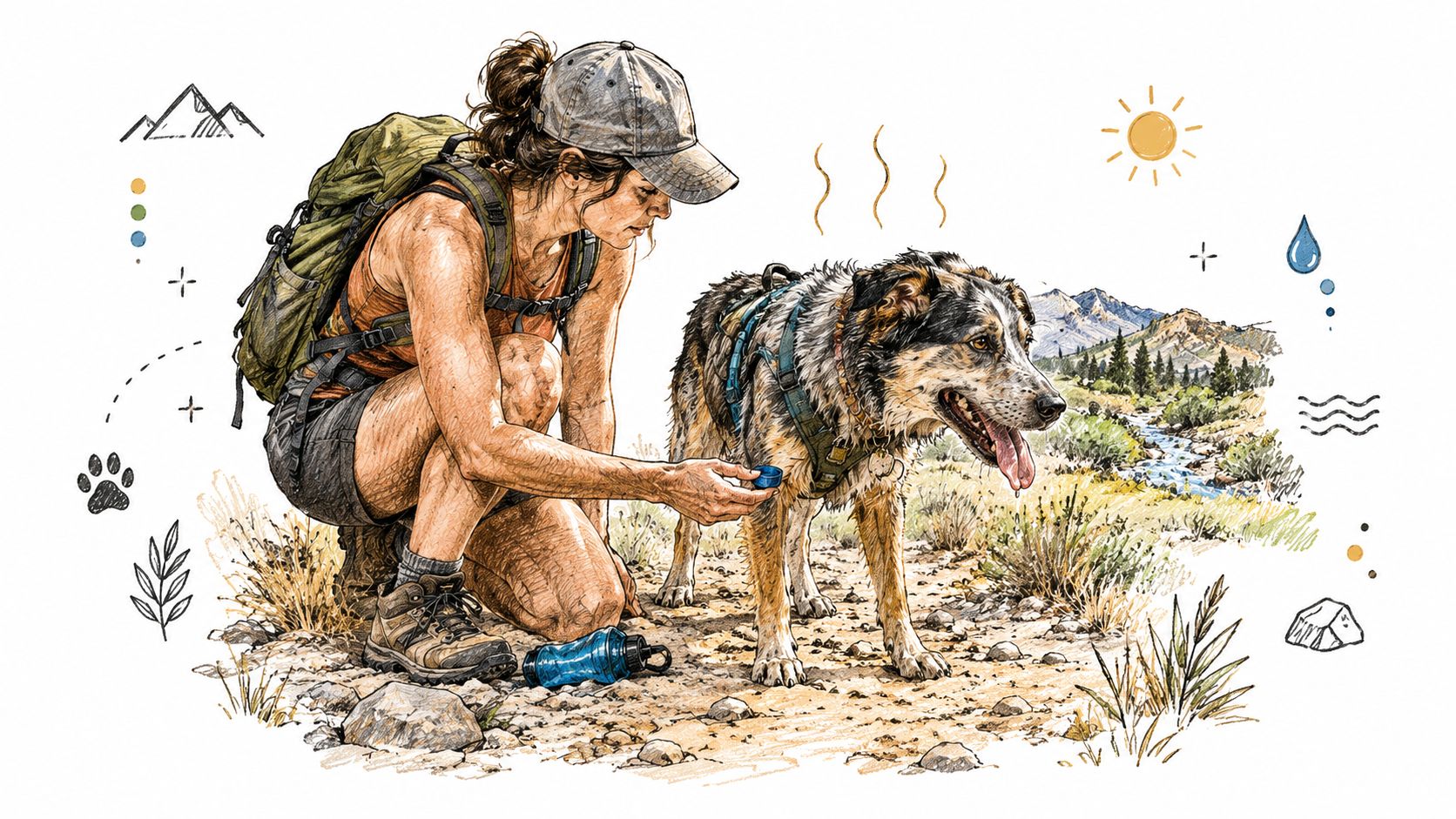
The dry Front Range foothills don't forgive sloppy water planning. A mid-sized dog can look fine at the trailhead, then slow down hard by mile three when the sun reflects off rock, the tongue gets thick, and every pause feels longer than it should. If the only thing in your hand is a flimsy bottle lid, you've already learned the hard way that a lid is not a bowl .
What went wrong on that hike
The mistake usually isn't forgetting water altogether. It's packing water without packing a way for the dog to drink from it cleanly, quickly, and repeatedly. A smart setup gives you control at every stop, which matters because hiking guidance often starts at 8 ounces of water per dog per hour of hiking and can jump sharply in heat, with activity pushing needs to 3 to 4 times normal in some conditions, according to field-tested trail guidance from Everyday Hound's gear breakdown.
Practical rule: if the hike is long enough that you'd want a drink more than once, your dog needs a real bowl, not a workaround.
That's why this gear choice matters more than many admit. A decent bowl keeps your dog drinking in small, frequent rounds instead of making them gulp once and pant through the next mile. It also keeps you from turning every water stop into a clumsy production that eats time and momentum.
The rest is simple: choose the bowl by trail condition, dog behavior, and how much water you can realistically carry. If your dog drinks like a polite sipper, you've got options. If your dog gulps, splashes, or refuses strange gear, the wrong bowl will show you immediately.
Four Main Types of Hiking Water Bowls Explained
The trail bowls that matter fall into four buckets. Each one solves a different problem, and each one creates its own annoyance if you pick it for the wrong hike.
Collapsible fabric bowls
These are the ultralight, soft-sided bowls that flatten into almost nothing. They're easy to clip outside a pack, and they're the obvious pick if you care most about space and minimal weight. Field-tested hiking guidance and retailer listings commonly put compact bowls in the 12 to 16 oz range, which makes them fine for short outings and quick drinks, but not something I'd trust for a long, hot push.
The downside is obvious after a few trail days. Fabric can sag on uneven ground, tip if your dog drinks hard, and hang onto odor if you don't rinse and dry it properly. They're useful, but they're not elegant.
Integrated bottle-and-bowl combos
This is the all-in-one setup, a bottle with a trough, cap, or attached drinking surface built in. It's the fastest option when you want to hand water to a dog and keep moving, which is why trail testers keep returning to it for hiking and road trips. Later gear coverage also reflects that shift toward trail-ready hydration gear sized around 16 ounces to 34 ounces as outdoor use became the point, not an afterthought, according to Rover's gear review.
The trade-off is cleaning and fit. A narrow trough can be awkward for broader snouts, and the integrated shape usually takes more effort to rinse fully. If your dog is patient and you value convenience over a perfect drinking surface, it works.
Rigid stainless bowls
This is the no-nonsense option. Stainless is stable, nonporous, and easy to clean, which is exactly why it stays popular for dogs that drink hard or dislike odd textures. For hygiene, that matters, since expert guidance favors stainless because it's easier to sanitize and less likely to hold grime than scratched plastic, as noted in Rover's dish guide.
The problem is carrying it. Steel is durable, but it's bulky in a pack and not the bowl I'd choose for a minimalist hike. Use it when stability matters more than packability.
Silicone folding cups
Silicone is the practical middle ground. It folds flat, holds structure better than fabric, and dries quickly after rinsing. That's why it shows up so often in current trail gear testing and in compact hiking bowl designs like the ones meant to disappear inside a pack until you need them.
It's not perfect. Silicone can still feel a little soft on rocky ground, and on very hot days it won't feel as crisp or stable as steel. Still, for most day hikes, this is the version I'd start with.
If you want one bowl that handles most trail conditions without turning your pack into a junk drawer, start with silicone and only go heavier or lighter when your dog proves you need to.
Collapsible vs Bottle vs Stainless vs Silicone
Your purchase decision comes down to how your dog drinks and how you hike. Ignore marketing language. Look at the trade-offs that show up on trail.
| Bowl Type | Weight | Capacity Range | Drinking Ease | Cleaning | Packability |
|---|---|---|---|---|---|
| Collapsible fabric | Very light | About 12 to 16 oz | Good for calm sippers | Fair | Excellent |
| Integrated bottle-and-bowl combo | Moderate | About 16 to 34 oz | Fast, but can be awkward for large muzzles | Fair to poor | Very good |
| Stainless | Heavyest of the four | Varies by model | Excellent for gulpers | Excellent | Poor |
| Silicone folding cup | Light | Usually trail-sized, often 16 oz and up | Very good | Very good | Excellent |
Collapsible fabric wins on pack size, but it wobbles when the trail surface isn't flat. That's fine on dirt or at a rest stop, less fine on tilted rock where a thirsty dog can shove the bowl sideways. Bottle combos are the quickest mid-trail, yet a big dog can get frustrated if the drinking opening is small or if the reservoir empties too slowly.
Stainless does the best job of staying put and cleaning up cleanly afterward, but it's the one I leave at camp or in the car. Silicone usually gives you the best blend of structure, quick drying, and real trail convenience. It's the safest default if you don't know your dog's drinking style yet.
Decision shortcut: choose silicone if you want one do-it-all trail bowl, bottle-and-bowl if you need speed, stainless if hygiene and stability matter most, and fabric only if you care more about pack weight than everything else.
How Much Water Your Dog Actually Needs on the Trail
Start with the baseline rule, then scale up without getting cute about it. A widely cited guideline is about 1 ounce of water per pound of body weight per day under normal conditions, and that's already just a baseline, not a hiking plan. Trail use raises the number fast, which is why advice from Ruffwear's bowl guidance and other hiking-focused sources pushes owners to think in checkpoints instead of daily totals.
Use checkpoints, not guesswork
For a normal trail day, I like to think in stops, not in one big pour. Offer water at the trailhead, at the midpoint, at the summit or turnaround, and again on the descent. If it's warm, offer it every 15 to 20 minutes according to the hydration guidance in the earlier section, because waiting for obvious thirst is too late.
A 20-pound dog starts at 20 ounces as a daily baseline, but a two-hour Front Range hike in warm weather can push planning much higher. A 70-pound Lab on a long summer outing may need a lot more than the baseline spread across the day, and carrying that water matters more than any bowl style. For dogs on hikes where stream water isn't reliable, carry enough in advance instead of counting on a refill that might not be there.
What changes the math
Heat is the obvious one, but it's not the only one. Exposed rock, panting intensity, and altitude all increase the load on your pack. So does a dog carrying its own gear, since a pack adds work even when the dog looks eager.
If you're unsure about water quality at home before a long trip, the process matters there too. A practical starting point is how to test home water quality, especially if you're filling bottles from a source your dog drinks from regularly.
For local owners who want a structured look at exercise hydration, Denver Dog's hydration guide is useful context. The point stays the same either way, a hiking bowl should match the water you need, not the water you hope you'll get away with carrying.
Matching the Right Bowl to Your Dog and Hike
A bowl should fit the dog first, the trail second, and your pack only after that. That's the order that keeps people from buying one clever-looking product and then hating it by the second outing.
Small, medium, and big dogs need different setups
Small dogs under 25 pounds on short urban paths or Front Range outings under two hours usually do fine with a light silicone bowl and a small bottle. They sip in bursts, they don't need huge capacity, and you can top off often without dragging extra bulk through every mile. A compact bottle in the 17-ounce range is a sensible companion for that setup.
Medium dogs in the 25 to 50 pound range are where bottle-integrated bowls start making sense. A 25 to 32 ounce target is a practical middle ground for three-to-five-hour hikes, especially for herding and sporting breeds that like to keep moving. They drink more than tiny dogs, but they still benefit from frequent, controlled stops.
Large dogs and high-drive dogs are different. They often gulp, splash, and demand water fast, which means a wide-rim stainless dish or a heavier-duty silicone bowl paired with a separate reservoir makes more sense than a narrow integrated mouth. The bowl has to match the dog's drinking style, or the bowl becomes the bottleneck.
If you're also dialing in fit for the rest of the kit, your guide to a good dog harness for hiking pairs naturally with this decision. A bowl that works with a calm hiker and a stable harness is easier to manage than a fancy setup that fights the dog every stop.
| Dog Size | Hike Length | Recommended Bowl | Capacity Target | Key Reason |
|---|---|---|---|---|
| Small, under 25 lb | Under 2 hours | Silicone folding cup | Around 16 to 17 oz paired with a small bottle | Light, quick, easy to top off |
| Medium, 25 to 50 lb | 3 to 5 hours | Bottle-integrated bowl | About 25 to 32 oz | Reduces refill stops |
| Large, over 50 lb | Half-day or longer | Wide-rim stainless or heavy-duty silicone | Larger reservoir, plan for more total water | Handles gulps and heavy drinking |
| Multi-dog hike | Any longer outing | Separate bowls or large stable dish | Bigger shared capacity or individual bowls | Prevents crowding and waiting |
Packing, Cleaning, and Trail-Day Routine
A reliable routine prevents rushed stops and dirty gear. Set up the same way before every hike, then adjust water timing to the trail's heat and your dog's drinking style.
Before the hike
Rinse the bowl, fill the bottle for the planned route, and test the closure. Clip the bowl outside your pack so you can reach it without digging through food, leashes, or rain gear. For training days or travel, bottle holders for training and travel keep the bottle accessible. Choose a setup that matches your dog's pace and heat tolerance, not one that only looks tidy.
On the trail
Offer water at every natural pause, especially before climbs, exposed stretches, and warm sections. A dog that drinks eagerly needs a wider, faster-access bowl. A dog that takes small drinks needs steady reminders and shorter intervals. Give small drinks more often in warm weather instead of waiting for one large gulp.
Heavy panting and lagging are late signs, not early ones. Review these dog dehydration signs to watch on the trail and check your dog at every stop.
Trail rule: if the dog is asking for shade, the water stop should have happened already.
After the hike
Rinse the bowl thoroughly and separate collapsible parts so seams do not retain residue. Air-dry every piece before storage. Once a week, wash with soap, then use a diluted vinegar soak if odor or residue builds up, especially on silicone or fabric surfaces.
Keep the bowl clean, the bottle filled, and the routine predictable. If your dog struggles with pacing or heat, a professional hiking service such as Denver Dog can make trail-day management easier than carrying more gear.
When the Gear Matters Less Than the Guide
A good bowl solves a real problem. It doesn't solve every problem on the trail.
Once you've got hydration math, packing, and a reliable bowl figured out, the bigger issue on many Front Range hikes is logistics. Permit rules, midday heat, off-leash chaos, and unpredictable access to water matter more than whether your bowl folds flatter or rinses faster. That's where a guided hike starts to make more sense than another gear purchase.
Multi-dog households feel this first, because one dog drinks faster and one dog acts nervous around other dogs. Reactive dogs need a controlled pack. Owners recovering from injury need someone else to manage pace and stops. Summer routes above 8,000 feet add altitude stress on top of heat, and that's not the place to test whether your new setup is enough.
Denver Dog runs on-leash walking, running, and hiking sessions for Denver Metro dogs, including Arvada, Denver, Englewood, Golden, Lakewood, Littleton, and Wheat Ridge . For a lot of owners, that's the easiest way to see how a dog drinks, paces, and settles on real trail terrain before buying a full kit of their own. It's a cleaner test than guessing at home and hoping the first hot hike goes smoothly.
If you want the lowest-drama route for summer trail days, use the service, watch how the dog handles hydration and pacing, then build your own setup from what you learn.
If you want a practical way to match gear to your dog's actual trail behavior, visit Denver Dog and book a hiking session that gives you a real-world read on pacing, hydration stops, and trail comfort. It's the fastest way to see whether your current bowl setup is enough or whether your dog needs a different approach on Front Range hikes.
The Run Down