A good dog harness for hiking isn't just about control; it's about giving your dog the freedom to move naturally while keeping them safe on the trail. It all starts with an ergonomic Y-shaped design that won't restrict their shoulders, combined with tough, weather-resistant materials built for the backcountry. Must-have features like a sturdy back clip, padded straps, and a lift-assist handle are non-negotiable for serious adventures.
Finding the Perfect Hiking Harness for Your Dog
Taking your dog on a hike is an incredible bonding experience, but having the right gear is what makes it truly safe and fun. A standard, around-the-block walking harness just can't handle the demands of a rugged trail.
Think of a hiking harness the way you think about your own hiking boots. You wouldn't wear flip-flops to climb a mountain, right? A proper hiking harness is technical gear—designed for performance, comfort, and safety over long, unpredictable miles.
This isn't just a niche trend. More and more dog owners are investing in specialized equipment. The global dog harness market was valued at a whopping USD 2.74 billion in 2023 and is expected to more than double by 2031. This surge shows a real shift in how we view our dogs' needs, treating them as true adventure partners. You can dig into the numbers and what they mean for pet safety in this market analysis from TechSci Research.
Core Pillars of a Quality Hiking Harness
So, what separates a basic harness from one that’s genuinely ready for the trail? It boils down to three core pillars that work in tandem to protect your dog. Getting these right is the first step to choosing gear you can trust.
These pillars are:
- Ergonomic Design: The harness must allow for a full, natural range of motion. It should never pull on the throat or restrict shoulder movement, which is critical for climbing and navigating obstacles.
- Trail-Ready Materials: Look for materials that can take a beating, like ripstop nylon. The padding should be soft and breathable to prevent painful chafing and hot spots on a long day out.
- Critical Safety Features: Things like a strong lift-assist handle for helping your dog over logs, secure leash attachments, and reflective trim for low-light visibility are absolutely essential.
To help you shop smart, here’s a quick-reference table breaking down the most important features.
Essential Features of a Good Hiking Harness
This table provides a quick summary of the essential components to look for in a hiking harness, outlining what makes each feature important for trail safety and canine comfort.
| Feature | Why It Is Critical for Hiking |
|---|---|
| Y-Shaped Chest Piece | Allows for unrestricted shoulder movement and avoids putting pressure on the dog’s delicate throat and neck areas. |
| Padded Straps | Prevents chafing, rubbing, and hot spots during long hikes, ensuring your dog stays comfortable mile after mile. |
| Lift-Assist Handle | A non-negotiable safety feature for helping your dog over obstacles like large rocks, logs, or steep scrambles. |
| Durable Materials | Ripstop nylon or similar rugged fabrics resist tears from branches and rocks, ensuring the harness holds up. |
| Secure Leash Clips | A strong, reliable D-ring (usually on the back) is crucial for keeping your dog securely attached to the leash. |
| Reflective Trim | Increases visibility in low-light conditions, such as early morning starts, late finishes, or foggy weather. |
| Adjustable Fit | Multiple adjustment points ensure a snug, secure fit that prevents the dog from slipping out or getting tangled. |
Think of this table as your checklist. If a harness ticks all these boxes, you’re on the right track to finding a piece of gear that will keep your best friend safe and happy on your next adventure.
What Makes a Great Dog Hiking Harness?
Think of a hiking harness not as a simple accessory, but as a critical piece of technical gear. Just like you wouldn't hit the trail with a poorly fitting backpack, your dog needs equipment designed for comfort, safety, and performance. A good harness works with your dog, not against them, and understanding its anatomy is the first step to choosing the right one.
When you look closely at a top-tier hiking harness, you'll see every element has a purpose. It's engineered to spread out pressure, allow your dog to move freely, and hold up to whatever the wilderness throws at it. Let's break down what really matters.
The Y-Shaped Design: The Foundation of Freedom
If there's one thing you should look for, it's the Y-front design . This is the single most important feature of a true hiking harness.
Picture a harness that goes straight across your dog's chest, like a horizontal bar. Every time they stretch their legs to climb a rock or bound down the trail, that strap restricts their shoulder movement. It’s like trying to run with a tight band across your chest.
Now, imagine a Y-shape instead. The straps come down from the shoulders and meet at the breastbone, forming a "Y" that cradles the chest. This clever design completely frees up the shoulder joints and upper legs, allowing for a full, natural range of motion.
This freedom isn't just a nice-to-have; it's essential on the trail. A dog's gait depends on full shoulder extension. A harness that gets in the way of that will not only cause discomfort but can lead to muscle fatigue and even strain over a long day of hiking.
The Y-front also keeps all pressure off your dog’s throat. This is a huge deal, especially on steep terrain where they might be pulling a bit. It ensures they can breathe easily without any risk of choking.
Trail-Ready Materials: Built to Endure
The materials are what separate a casual walking harness from real backcountry gear. The outer shell has a tough job. It needs to withstand scrapes against granite, snags on thorny bushes, and constant exposure to sun, dirt, and water.
Look for hardy fabrics like:
- Ripstop Nylon: You'll notice a special grid pattern woven into this fabric. Those thicker threads stop small punctures from turning into massive tears. It’s the same stuff used in parachutes and high-end tents for a reason—it’s built to last.
- Cordura Fabric: This stuff is legendary for its ability to resist abrasion. If your dog loves plowing through underbrush, a Cordura harness will come back looking no worse for wear.
What's on the inside is just as crucial. The lining and padding sit right against your dog's skin. A moisture-wicking lining is key for pulling sweat and water away from their body, preventing the dampness that can lead to painful chafing. Good padding should be lightweight and breathable, providing cushion without trapping heat.
Hardware and Attachment Points: The Unsung Heroes
Finally, let's talk about the hardware—the buckles, D-rings, and adjustment slides. This is where a harness's true reliability is put to the test. A plastic buckle might seem fine for a walk around the block, but out on a remote trail, cold weather can make it brittle and a sudden lunge can cause it to crack.
This is why you should always look for harnesses with anodized aluminum or stainless steel D-rings for your leash attachment. These materials are incredibly strong and won't rust, even after a swim in a muddy creek. The buckles need to feel solid, closing with a confident "click" that tells you they won't pop open when a squirrel makes a sudden appearance.
More and more dog owners are seeking out this kind of specialized gear. The market for dog collars, leashes, and harnesses is projected to jump from USD 6.3 billion in 2025 to USD 9.2 billion by 2035 . This growth is fueled by people like us who demand better designs and tougher materials for our four-legged partners. You can find more insights on this trend toward specialized dog gear at Profshare Market Research.
From the Y-shape that allows for free movement to the durable fabrics and bomber hardware, every piece plays a part. A well-made harness almost becomes an extension of your dog, giving them the security and comfort they need to fully enjoy the adventure.
How to Achieve the Perfect Harness Fit
A perfectly fitted harness is the difference between a great day on the trail and a frustrating, even dangerous, one. If it’s too loose, your dog could slip out and become a four-legged escape artist. If it’s too tight, you’re looking at painful chafing and restricted movement. Nailing the fit isn’t just a nice-to-have; it’s an absolute must for a safe and happy adventure.
Think of it like getting a custom-fitted hiking pack for yourself. You wouldn't just grab one off the shelf and hope it works. You’d measure your torso and adjust every strap for a snug, supportive fit. Your dog's harness deserves that exact same level of care.
Taking Accurate Measurements
Before you even start browsing for harnesses, grab a soft measuring tape. Don't guess—get the real numbers. If you don't have a flexible tape, a simple piece of string and a ruler will do the trick.
- Chest Girth: This is the most important measurement. Wrap the tape around the widest part of your dog's rib cage, just behind their front legs.
- Neck Measurement: Measure around the base of your dog's neck, right where a collar would naturally sit. Keep it snug, but not choking tight.
With these numbers in hand, you can confidently check any brand's sizing chart. Never assume a "medium" from one company is the same as another. Always, always go by your dog's specific measurements, not a generic size label.
This diagram shows how the key components of a harness—its shape, materials, and hardware—all come together.
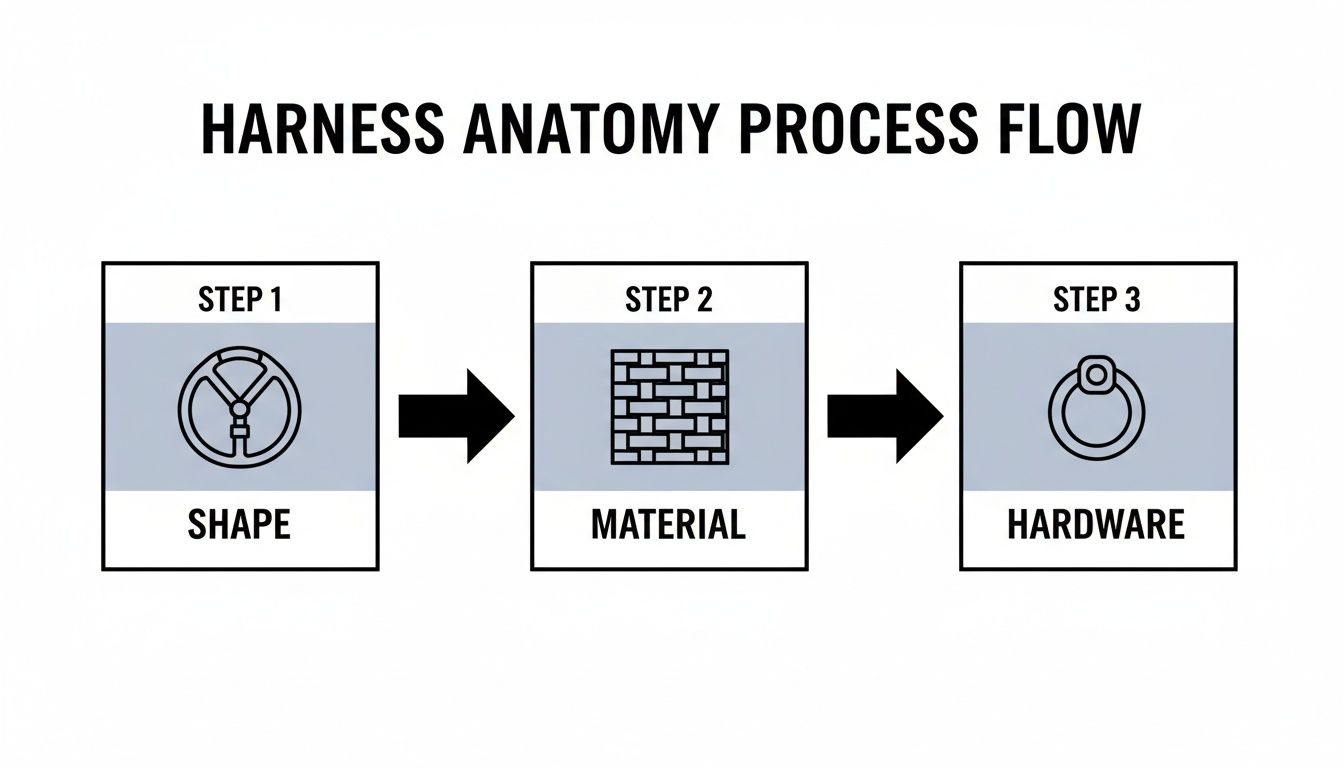
As you can see, a great harness isn't just about one feature. It’s a complete system where an ergonomic shape, tough materials, and reliable hardware work in harmony for both safety and comfort.
The Two-Finger Rule and Final Adjustments
Once you have the harness on your dog, it's time for the final check. This is where the tried-and-true "two-finger rule" comes in. It’s a simple, foolproof way to see if the straps are dialed in perfectly.
You should be able to slide two fingers flat (not sideways) between any strap and your dog's body. Can't fit them in? It’s too tight and will rub. Can you fit your whole hand? It's way too loose, and your dog could back right out of it.
A well-fitted harness will feel secure but won't dig into their skin. Pay close attention to the area behind the front legs (the "armpits"), as this is a common spot for chafing if the fit is off.
Make sure all the straps are adjusted evenly so the harness sits centered on your dog's back, not tilting to one side. A lopsided harness throws off pressure distribution and can become really uncomfortable over a few miles. It also helps to watch your dog as you make these adjustments; learning how to read their subtle cues will tell you more about their comfort level than anything else.
Recognizing the Signs of a Poor Fit
Even with the best measurements, you need to keep an eye out for red flags. Spotting these issues early can prevent a lot of discomfort down the road.
Signs a Harness Is Too Tight:
- You notice patches of hair loss under the straps.
- Their skin looks red, raw, or has sores.
- You hear them coughing or notice their breathing seems restricted.
- Your dog seems hesitant to move or walks with a funny gait.
Signs a Harness Is Too Loose:
- The harness spins or shifts dramatically side-to-side as they walk.
- The straps are visibly gapping or hanging off their body.
- Your dog can easily back out of the harness (the ultimate test!).
Taking a few extra minutes to get the fit just right is one of the best things you can do for your trail companion. A secure, comfortable harness lets them focus on what really matters: all the exciting sights, sounds, and smells of the hike.
Essential Features for Trail Safety and Control
A solid design and tough materials are the starting point, but a few key features are what really turn a standard harness into an essential piece of trail safety gear. These are the little details that give you confident control on tricky terrain, make your dog visible in low light, and offer peace of mind when you're miles from anywhere.
Think of it like a multi-tool. You might not use every feature on every single hike, but when you need one, it can be a genuine lifesaver. A harness built with these components is ready for the beautiful unpredictability of the trail.
Strategic Leash Attachment Points
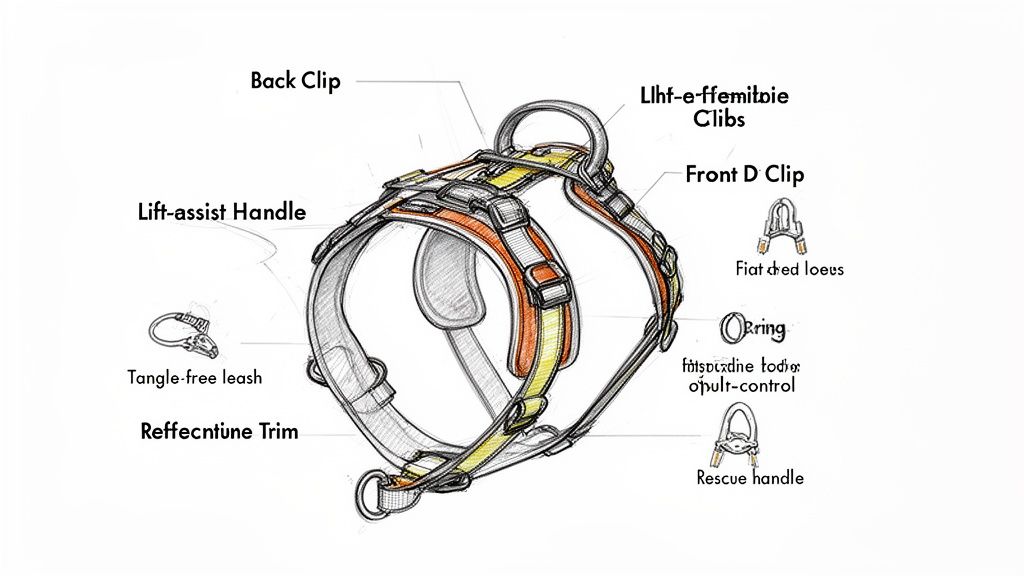
Where you clip your leash matters—a lot. The placement of the D-ring completely changes how the harness functions on the trail. Most good hiking harnesses have at least one of these two options, and the best ones have both.
-
Back-Clip (Rear Attachment): This is your go-to for most hiking. The D-ring sits on your dog's back, keeping the leash up and out of the way so it doesn't get snagged on rocks, roots, or brush. It allows your dog to move naturally and is perfect for well-trained pups on open trails.
-
Front-Clip (Chest Attachment): Located right in the center of your dog's chest, this clip is a fantastic tool for pullers. When your dog lunges forward, the leash gently turns them back toward you, discouraging the pull without yanking on their neck. The only downside is the leash can get tangled in their legs, so it's best for trail sections where you need that extra bit of control.
There's a good reason the back-clip design has become so popular—it’s now the fastest-growing segment in the global market. It avoids putting any pressure on the sensitive tracheal area, which is a major plus for any dog, but especially during strenuous activity where easy breathing is critical.
The Non-Negotiable Lift-Assist Handle
If a harness is marketed for hiking but doesn't have a handle, walk away. This sturdy, reinforced loop on the back is arguably one of the most critical safety features you can have. It lets you give your dog a secure boost without awkwardly grabbing the straps, which can cause the harness to shift or loosen at the worst possible moment.
Just picture these all-too-common trail scenarios:
- A fallen log or boulder is just a little too high for your dog to clear on their own. The handle lets you give them a gentle, balanced lift over the obstacle.
- You’re crossing a swift-moving creek and need to keep your dog steady. The handle gives you a firm grip to guide them safely across.
- You meet another hiker on a narrow ridge and need to hold your dog tight against your leg to let them pass.
In moments like these, that handle provides immediate, reliable control that a leash just can't offer. It's the difference between navigating a tough spot with confidence and fumbling around in a potentially dangerous situation.
Visibility and Extra Features
Not every hike happens between 10 a.m. and 2 p.m. Early morning starts and adventures that run a bit later than planned are part of the fun, which is why visibility is so important. Look for a harness with reflective trim or webbing woven into the straps. These small additions light up like a beacon in your headlamp's beam, making your dog easy to spot at dawn or dusk.
Finally, it’s the little things that count. Some of the best harnesses come with extra gear loops or small pockets. They're perfect for clipping on a GPS tracker, a collapsible water bowl, or a spare poop bag. These thoughtful extras help you stay organized and prepared, which is just as important as any of the other dog's hiking clothes and gear.
Choosing the Right Harness for Your Dog's Needs
A great hiking harness isn’t a one-size-fits-all solution. Think of it like a good pair of hiking boots—what works for one person might be a blister-fest for another. The same goes for our dogs. The best gear is always tailored to your dog’s unique age, energy level, and body shape.
Choosing the right model means getting specific. A lanky, growing puppy has completely different needs than a wise old trail veteran. And a powerful, high-energy breed requires a harness built to a much higher standard than one for a dog with a unique build, like a deep-chested Weimaraner. This is about making sure they're not just safe, but genuinely comfortable enough to love every minute of the adventure.
For the Growing Puppy
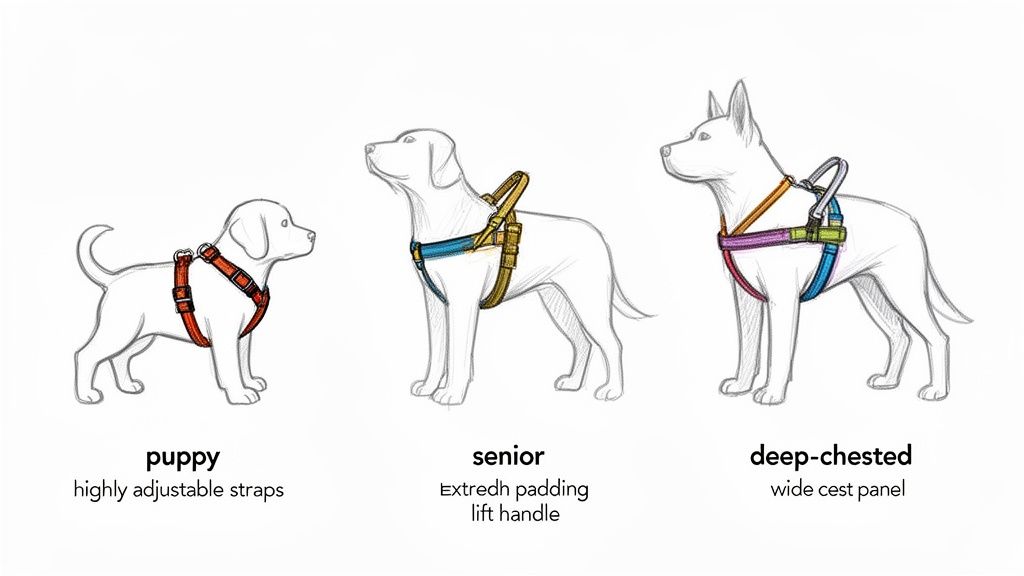
Getting a puppy ready for the trail is an investment in their future adventures. Their bodies are changing so fast that a harness that fits this month might be way too snug by the next. The trick is to find a model that can grow right along with them.
You’ll want a harness with multiple adjustment points —not just on the chest, but also around the neck and torso. This lets you dial in the fit perfectly as they hit those inevitable growth spurts, saving you from having to buy a new harness every few weeks. Also, stick to lightweight materials to avoid putting any extra strain on their still-developing joints.
For the Senior Trail Companion
Our older dogs make some of the best hiking partners, but they often need a little extra support to handle the trail safely and comfortably. For them, a harness is all about cushion, support, and ease of use.
- Extra Padding: Look for generous padding across the chest and back. This helps distribute pressure more gently, which is a big relief for sensitive spots and aging joints.
- Robust Lift-Assist Handle: This is a non-negotiable feature for a senior dog. A strong, easy-to-grab handle lets you help them over big rocks, into the car, or up a steep scramble without causing them any discomfort.
- Easy On and Off: Find harnesses with simple side-release buckles. This minimizes the fuss and prevents your senior from having to step into awkward loops or bend in uncomfortable ways.
For the High-Energy Powerhouse
For those breeds with endless enthusiasm and pure muscle—think German Shepherds, Huskies, or Belgian Malinois—durability is everything. A standard, off-the-shelf harness can fail pretty quickly under the strain of a powerful dog who lives for the trail.
A good dog harness for hiking, especially for a high-energy breed, must be over-engineered for strength. Look for features like reinforced stitching at all stress points, load-rated hardware, and sturdy, secure buckles that won't pop open under sudden tension.
These dogs need gear that can match their drive. A robustly built harness gives you peace of mind that it will hold up, hike after hike, keeping your powerful companion secure no matter how excited they get when a squirrel darts across the path.
For Dogs with Unique Body Shapes
Dogs come in all shapes and sizes, and a standard harness design can cause real problems for certain body types. Finding a specialized fit isn't just about comfort; it's about their safety.
Deep-Chested Breeds: Dogs like Boxers, Weimaraners, and Greyhounds have deep, narrow chests. A typical harness often rides up into their "armpit" area, which can lead to painful chafing and sores. The solution is a harness with a longer chest plate and an extra strap that fastens further back on their ribcage. This secures the harness without rubbing.
Brachycephalic Breeds: For our flat-faced friends like French Bulldogs, Pugs, and Boston Terriers, breathing is already a challenge. It's absolutely critical that their harness puts zero pressure on their throat . A Y-shaped design that sits low on the breastbone is the only way to go. It keeps their airway completely clear, allowing them to breathe as easily as possible, especially when they're working hard on the trail.
Harness Care and Responsible Trail Practices
Finding the right harness is just the first step. Your responsibility as a trail partner really kicks in with every hike you take together. A well-maintained harness is a safe harness, and good trail etiquette keeps these wild places enjoyable for everyone.
Think of proper care as transforming your gear from a simple purchase into a long-term investment in your dog’s safety and comfort.
After a muddy adventure, a few minutes of cleaning can make a world of difference. Most harnesses are machine washable, but I've found that hand-washing with a mild, pet-safe soap and lukewarm water really helps preserve the fabric's life. Gently scrub away any caked-on dirt, rinse thoroughly, and let it air dry completely. Pro-tip: keep it out of direct sunlight, which can break down the materials over time.
Regular Gear Inspection
Before you even lock the car and head for the trailhead, get into the habit of giving your dog’s harness a quick once-over. It's like a pilot's pre-flight check—a simple routine that catches small problems before they become big ones miles from civilization.
Here's what to look for:
- Check the Stitching: Pull gently on the seams, especially around high-stress points like the D-rings and that trusty grab handle. Look for any threads that are coming loose or fraying.
- Examine the Straps: Run your fingers along the webbing. You're looking for any signs of thinning, tearing, or—as many of us know—chew marks that could weaken the harness.
- Test the Buckles: Snap and unsnap each buckle a few times. Make sure they click into place securely and aren't cracked or clogged with sand or grit that could cause them to fail.
This isn't just about making your gear last. It’s about preventing a disaster. A frayed strap or a sticky buckle could mean your dog gets loose in a dangerous situation, turning a great day into an emergency.
Practicing Responsible Trail Etiquette
A good dog harness for hiking is your number one tool for being a responsible trail user. It gives you the secure control you need to respect wildlife, other hikers, and the delicate environment around you. Unless you're in a designated off-leash area and your dog has a flawless recall, keeping them leashed is non-negotiable.
Your harness is also key to practicing Leave No Trace principles. It helps you keep your dog on the trail, preventing them from trampling fragile plants or disturbing animal habitats. And of course, always pack out what you pack in—and that includes every bit of dog waste.
Being a good steward of the outdoors means leaving the trail a little better than you found it. It’s a commitment that ensures these amazing places are here for future generations to enjoy. For some great ideas on where to put these skills to use, check out our guide to the top dog-friendly Denver trails and get exploring with your trail-ready partner.
Common Questions About Hiking Harnesses
Even after you've done your research, a few questions tend to pop up right when you're about to make a decision. Let's tackle some of the most common ones I hear from fellow dog owners, so you can feel totally confident in your choice.
Can I Just Use My Dog’s Regular Walking Harness for a Hike?
You could , but I wouldn't recommend it for anything more than a quick stroll on a flat, paved path. A good dog harness for hiking is built differently from the ground up. It’s made with tough, weather-resistant materials designed to handle mud, branches, and whatever else the trail throws at you.
These harnesses also have way more padding to prevent sores and chafing over long miles, and they often include features like a handle for helping your dog over obstacles. Your everyday walking harness just isn't built for that kind of abuse and can lead to discomfort for your dog or, worse, a gear failure miles from your car.
Think of it like this: you can wear running shoes on a rocky trail, but proper hiking boots give you the specific support and protection you really need. It's the same idea for your dog's harness—it's all about having the right tool for the job.
How Can I Tell If My Dog's Harness Is Chafing?
The best way to deal with chafing is to catch it before it becomes a real problem. Make it a habit to check your dog's skin after every hike. Take the harness off and run your hands over their chest, stomach, and especially behind their front legs (the "armpits"). You're looking for any redness, irritation, or patches of missing fur.
While you're on the trail, keep an eye on your dog's body language. If they're constantly stopping to scratch at the straps, trying to chew on the harness, or walking funny, something is probably bothering them. A well-fitted harness made from breathable material is your best bet for avoiding painful rubbing in the first place.
Is a Front-Clip or Back-Clip Harness Better for Hiking?
For hiking, a back-clip harness is almost always the way to go . Attaching the leash to your dog's back keeps it clear of their legs, which is a huge safety advantage on a trail full of roots, rocks, and brush. This setup lets them move naturally and freely without getting tangled.
Front-clip harnesses are fantastic training tools for teaching dogs not to pull, but that front leash position can be a real hazard on a technical trail. The leash can easily snag on an obstacle or trip up your dog. Many of the best hiking harnesses actually have both front and back clips, giving you the best of both worlds—use the back clip for the majority of the hike and the front one if you need a little more control in a tricky spot.
Nothing is more important than your dog's safety and happiness on the trail. For busy Denver owners who want to give their dogs an amazing outdoor experience, Denver Dog offers professional, on-leash hiking adventures. Our handlers know the trails and know dogs, ensuring your pup gets a safe, structured, and fun workout in nature. Let us give your dog the adventure they've been dreaming of at https://www.denverdog.co.
The Run Down