Learning to read a dog's body language means looking at the whole picture —from the tail and ears to their posture and eyes—to truly understand what they're feeling. A wagging tail isn't always a happy sign, and catching the complete message is the key to preventing bad situations and keeping everyone safe.
Why Reading Dog Body Language Is Not an Optional Skill
Picture this: you're out on a beautiful Front Range trail with your dog. What separates a fantastic day from a stressful, chaotic encounter often boils down to one simple thing—understanding what your dog and other dogs are trying to tell you. This guide is your rosetta stone for decoding those silent conversations.
Learning to interpret these signals takes you from guessing to knowing. Mistaking a stiff, high-held tail for a friendly wag can spark a conflict, and missing a subtle stress signal like a quick lip lick can turn a fun hike into a seriously overwhelming ordeal for your dog. It's about learning to see the world through their eyes, not just our own.
Building Trust Through Observation
Every time you interact with your dog, you're having a conversation. When you start to pick up on their subtle cues and respond appropriately, you're building a massive foundation of trust.
Your dog learns that you get them. They see that you'll be their advocate, whether that means creating space from an approaching dog or stepping in to end a play session before it gets out of hand. That kind of trust is the bedrock of a solid, healthy bond.
A dog's body language is their primary way of saying, "I'm happy," "I'm scared," or "I need some space." Listening to these signals before they feel the need to growl or snap is one of the kindest and most responsible things we can do for them.
Proactive Safety and Management
Frankly, understanding canine communication is a critical safety skill. It gives you the ability to see a negative situation brewing and step in before it escalates.
Knowing the difference between a playful bow and a stiff, defensive posture empowers you to make smart, real-time decisions. This is especially vital for anyone who spends a lot of time outdoors with their dog or uses professional services. If you're curious how pros handle different dog personalities, you might want to check out this guide to dog walking services in Denver.
Recognizing those early signs of anxiety or over-excitement helps you manage your dog’s environment much more effectively. You’ll know exactly when to:
- Create distance: See another dog up ahead? If you spot stiffness in your dog's posture, a quick U-turn can completely avoid a tense, frustrating on-leash encounter.
- Provide comfort: Notice your dog yawning or showing the whites of their eyes ("whale eye") in a busy area? That's your cue to find a quieter spot and let them decompress.
- End an interaction: Is that game at the park getting a little too wild? Frantic movements or a tucked tail are clear signs it's time for a break.
Ultimately, getting good at reading dog body language transforms you from just an owner into a truly confident and informed handler. You’ll be equipped to make every outing safer, less stressful, and way more enjoyable for both you and your best friend.
Decoding Your Dog's Language, From Head to Tail
To really get what your dog is trying to tell you, you have to learn their language. It's not spoken with words, but with the flick of an ear, the softness of their eyes, or the position of their tail. Every little movement is a piece of the puzzle. Once you start recognizing these individual signals, you can piece together the whole story of how your dog is feeling.
This isn't about guessing. It's about paying attention. A dog’s body is an open book if you know how to read it, and this guide is your translation key.
The Eyes: Windows to Their Feelings
A dog's eyes are incredibly expressive and give you a direct line into their emotional state. One of the most important skills you can develop is telling the difference between a soft, relaxed gaze and a hard, intense stare.
A soft eye is exactly what it sounds like—the eyes are relaxed, maybe a little squinty, with no tension around them. This is the look you get when your dog is content, lounging on the couch, or feeling affectionate. It's a clear signal that they're calm and comfortable.
On the other hand, a hard eye is piercing and direct. The eyes might look bigger, rounder, and more focused than usual. This intense stare often means a high state of arousal, assertiveness, or even a potential threat. If you see a dog giving a hard stare to another dog or a person, it's time to step in and create some space.
Another crucial signal to watch for is "whale eye." This is when a dog turns its head away but keeps its eyes locked on something, showing the whites of its eyes (the sclera). This is a classic sign of anxiety or stress. A dog showing whale eye is uncomfortable and is trying to signal that they feel threatened, whether it's by a person leaning over them or another dog getting too close to their favorite toy.
This infographic gives you a great visual for how these signals build confidence, ensure safety, and strengthen your bond.
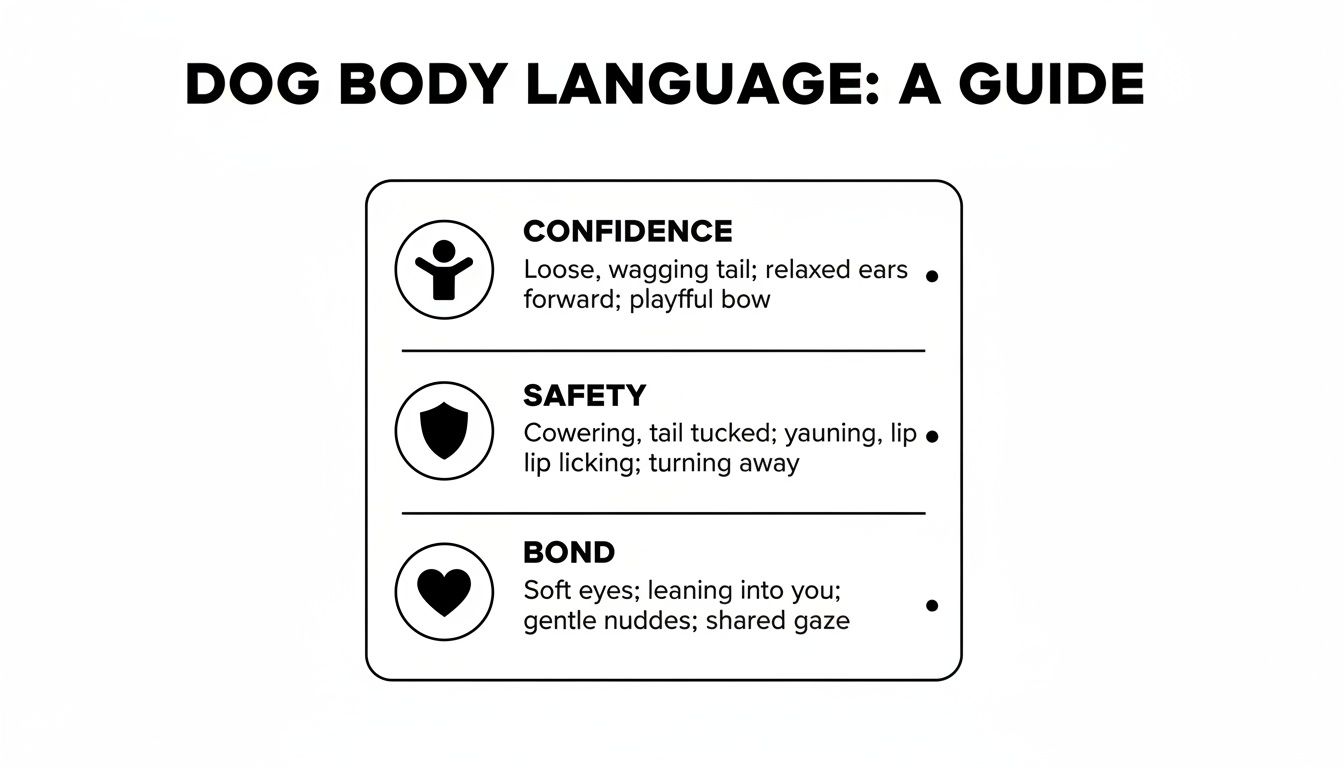
As you can see, understanding canine communication isn't just a neat trick; it's a practical skill that makes your life with your dog safer and more enjoyable for everyone involved.
The Mouth and Vocalizations: More Than Just Barks
A dog’s mouth is a key communication tool. From subtle lip licks to toothy grins, learning to interpret these signals can prevent some serious misunderstandings.
- Panting: A relaxed, open mouth with gentle panting is usually a sign of a happy, comfortable dog. But watch out for rapid, shallow panting paired with a tense body—that can signal stress, fear, or overheating.
- Closed Mouth: If your dog’s mouth was relaxed and open and then suddenly closes tightly, their mood just shifted. They’ve become more alert, focused, or concerned about something in their environment.
- Lip Licking and Yawning: When it's not about food or being tired, quick lip licks and big yawns are common calming signals . Dogs do this to soothe themselves when they feel anxious or to show others they mean no harm. You might see this during a tense dog park encounter or a stressful vet visit.
The scary part is that these subtle cues are often the first ones people miss. It’s no surprise, then, that over 4.5 million dog bites happen every year in the US alone. A 2019 study showed just how much a little education helps. After a brief video training, children’s accuracy in spotting high-risk cues like growling jumped from 55% to 72% , and parents got much better at recognizing behaviors that could lead to conflict. You can discover more insights from this study on dog behavior interpretation and see the difference training makes.
The Ears Tell a Story
Think of a dog's ears as satellite dishes—they're always adjusting to pick up information and broadcast feelings. Their position can change in a split second, giving you real-time updates.
A dog with neutral, relaxed ears holds them in their natural position. This looks different for every breed, from a Basset Hound’s floppy ears to a German Shepherd’s upright ones. When their ears are just hanging out, the dog is generally calm.
Pricked-forward ears mean something has their full attention. They're alert and interested. This is a state of high focus that can quickly turn into excitement or concern, depending on what's happening.
Ears that are pinned back and flat against the head are a classic sign of fear, anxiety, or appeasement. The dog is trying to look smaller and less threatening. Be careful, though, because ears pulled slightly back can also appear during friendly greetings. You have to look at the rest of the body to get the full story.
A dog’s ears often move independently, scanning the environment. Watching where their ears are pointed can tell you exactly what has their attention, sometimes before you even see it yourself.
The Truth About the Tail
The tail is probably the most misunderstood part of a dog. We've all been taught that a wagging tail means a happy dog, but that's not the whole story. A wagging tail simply means emotional arousal. The real message is in the height, speed, and direction of the wag.
-
Height of the Tail: A tail held in a neutral or low position usually means the dog is relaxed. As the tail gets higher, so does the dog's level of arousal or confidence. A high, stiff tail is like a flag, signaling assertiveness or a potential challenge. A tail tucked tightly between the legs is a clear sign of fear.
-
Speed of the Wag: The speed tells you about the intensity of the emotion. A slow, sweeping wag often means a calm, friendly dog. In contrast, a fast, tight wag—almost like a vibration—signals a very high level of arousal. That could be intense excitement, but it could also be agitation.
-
Direction and Motion: You know that big, "full-body" wag that makes the dog's hips wiggle? That's pure joy. Some studies even suggest a wag that goes more to the dog's right side is linked to positive feelings, while a wag to the left can indicate negative ones. And the "helicopter wag," where the tail spins in a full circle, is an unmistakable sign of a thrilled dog.
To help you put all these pieces together, here is a quick reference table breaking down some of the most common signals.
Common Dog Communication Signals and Their Meanings
| Body Part | Signal (What you see) | Potential Meaning (Happy/Relaxed) | Potential Meaning (Stressed/Anxious/Aroused) |
|---|---|---|---|
| Eyes | Soft, squinty, averted gaze | Relaxed, content, friendly | N/A |
| Hard, direct stare, whale eye | N/A | Aroused, assertive, threatened, anxious | |
| Mouth | Loose, open, gentle panting | Happy, relaxed | N/A |
| Closed tight, lip licking, yawning | N/A | Stressed, alert, anxious, appeasing | |
| Ears | Neutral, relaxed position | Calm, comfortable | N/A |
| Pricked forward, pinned back | Alert, interested | Fearful, anxious, submissive | |
| Tail | Neutral position, broad wag | Relaxed, friendly, happy | N/A |
| High & stiff, low & tucked, fast wag | Aroused, assertive, confident | Fearful, anxious, highly aroused, agitated |
Remember, context is everything. No single signal tells the whole story, but by watching these parts of the body together, you can move from just seeing your dog to truly understanding them.
Reading the Full Picture: Posture and Context
A single cue, like a wagging tail, is just one word in a much longer, more complex sentence. To really get what a dog is trying to say, you have to step back and look at the entire picture. Their overall posture, how they carry their weight, and what’s happening around them all come together to tell the full story.
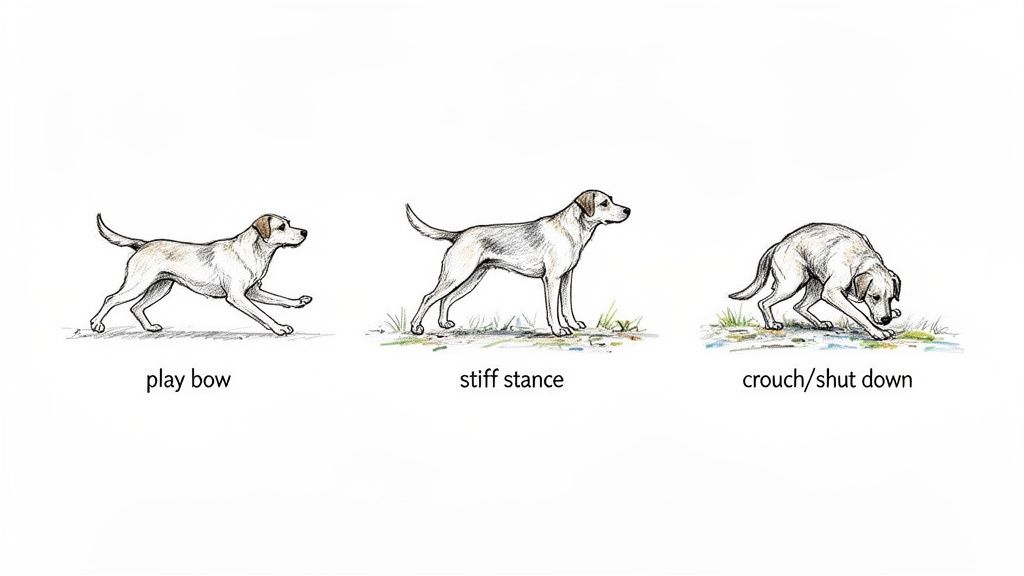
Isolating one signal is a classic mistake. A high tail on its own might mean confidence, or it could just be high arousal. But pair that high tail with a stiff body, a hard stare, and a closed mouth? The message suddenly becomes much clearer—and more concerning.
The Confident and Forward-Leaning Stance
When a dog feels confident, curious, or ready for action, their posture usually reflects it. You'll see them shift their weight forward, standing tall and trying to make themselves look bigger. Their body might seem tense, but it's the tension of readiness, not fear.
Picture this: you're out on a brisk run with your energetic dog through a local neighborhood, maybe with a service like Denver Dog's Joggers . Suddenly, your dog's ears shoot up, their eyes lock on something, their mouth closes tight, and their tail lifts high with quick, short wags. This specific cluster of cues—especially the alert ears, focused eyes, and tight mouth—is a dead giveaway that a dog is locked in and highly attentive. In fact, some research on dog learning behaviors has shown that dogs displaying these very signals during training often end up being high achievers.
This forward-leaning posture is your dog telling you they're engaged and processing what's in front of them. Whether it’s a squirrel or waiting for your next cue, their body language screams, "I'm ready."
The Crouched and Fearful Position
On the flip side, a dog feeling anxious or fearful will do the opposite and try to make themselves smaller. Their posture becomes low and compressed in a clear attempt to look non-threatening or simply disappear from whatever is scaring them.
This is way more than just tucking their tail. A truly fearful dog will often:
- Crouch low to the ground , keeping their center of gravity down.
- Shift their weight backward , as if they’re getting ready to bolt.
- Pin their ears flat against their head to protect them and shrink their profile.
- Show "whale eye," where you can see the whites of their eyes as they turn their head away from the threat but keep their eyes on it.
Think about a dog on a narrow hiking trail who suddenly crouches as a mountain bike zooms past. That’s an unmistakable signal of fear. They aren't being stubborn; they're completely overwhelmed. Recognizing this posture is your cue to step in, create space, and advocate for your dog's sense of safety.
A dog that is "shutting down" from stress can look deceptively calm. Watch for a frozen posture, a tightly closed mouth, and a refusal to make eye contact. This is a dog that has gone past active coping and is now in a state of learned helplessness.
Loose and Wiggly vs. Tense and Staccato Movements
The quality of a dog's movement adds another crucial layer to the story. A relaxed, happy dog moves with a loose, fluid, almost wiggly gait. Their whole body, from ears to tail, seems to flow together. It’s that classic full-body wag of a friendly dog—a motion that just radiates joy.
In sharp contrast, a stressed or highly aroused dog moves with stiff, jerky, or staccato motions. Their movements are tense and economical, lacking the graceful curve of a relaxed dog. This stiffness is a red flag that their muscles are coiled and ready for a "fight or flight" response.
Imagine two dogs approaching at the park. Dog number one has a loose, wiggly body and offers a play bow—chest down, butt in the air. This is an open, friendly invitation to play. Dog number two approaches with a stiff, high-tailed walk, its movements short and deliberate. This dog is communicating tension and uncertainty, a signal that you need to take seriously.
By learning to observe these complete postural and movement patterns, you can move beyond simple translation and into true conversational fluency with your dog. You’ll be reading the full sentence, not just a single word, giving you the insight to build trust and keep every interaction a positive one.
Putting Your Skills to the Test in the Real World
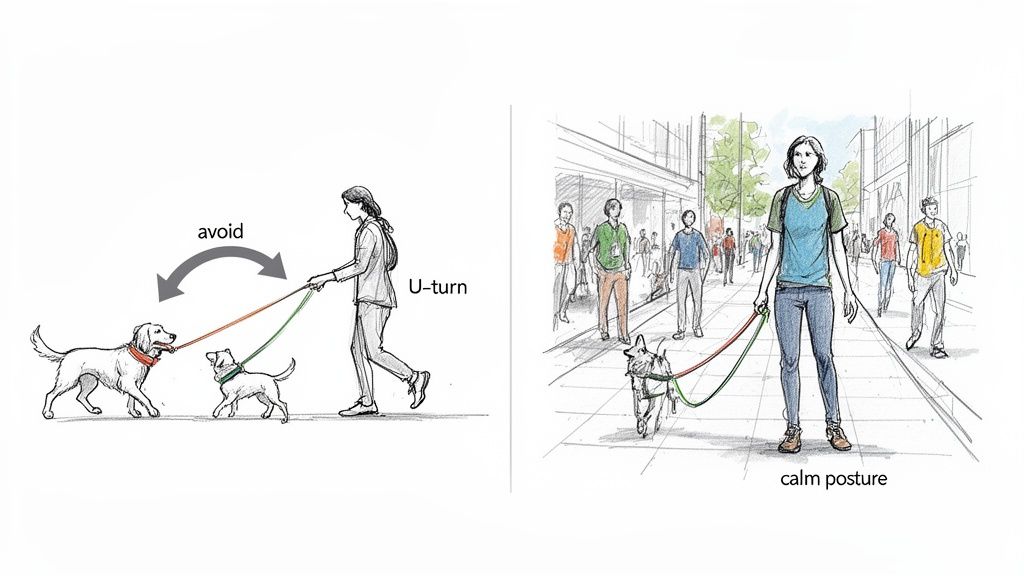
Knowing the individual signals is one thing, but putting it all together when things are moving fast is a whole different ballgame. This is where we move from theory to practice. It’s the moment your ability to read dog body language becomes a live, active skill that keeps everyone safe and builds a better partnership with your dog.
Think of every walk, hike, or trip to the pet store as a new conversation. When you apply what you've learned, you can see problems coming, sidestep conflict, and show your dog you're a trustworthy leader who understands them.
Navigating Busy Sidewalks and Urban Environments
City streets can be a sensory nightmare for dogs. The mix of weird sounds, strange people, and other dogs popping up unexpectedly can be incredibly stressful. Your job is to be your dog's lookout, spotting the early signs of discomfort before they get overwhelmed.
As you walk, make a habit of constantly scanning your dog. Was their mouth loosely open a minute ago, and now it’s clamped shut? Are their ears swiveling all over the place or pinned flat against their head? These are your first clues that stress is creeping in. A dog that suddenly starts pulling way ahead or dragging their feet might be trying to either rush past or avoid a trigger up ahead.
Your best friend in a busy environment is distance . Seeing a potential problem—like a kid zipping by on a scooter or another dog staring intently from across the street—is your cue to act. Proactively crossing the street or doing a quick U-turn isn't giving up; it’s a smart move that teaches your dog you’ve got their back.
This skill is crucial in any new environment, and you’ll notice that most pet travel safety tips are built around reading your dog's comfort level to keep things positive.
Handling On-Leash Greetings The Right Way
On-leash greetings are where things go wrong most often. Leashes take away a dog's natural ability to create space, which can crank up the tension in seconds. From a dog's perspective, a face-to-face approach is often seen as a challenge.
Never just let a greeting happen. Always get a clear "yes" from the other owner and, more importantly, do your own assessment of both dogs' body language. Even if the other owner insists their dog is "friendly," trust what you see, not what you hear. Your dog is your priority.
Here’s a quick checklist before letting dogs meet on leash:
- Observe from afar: Before you even get close, look for loose, wiggly bodies and soft eyes that aren't locked on.
- Watch for red flags: A stiff body, a hard stare, a high and rigid tail, or a tightly closed mouth are all clear signs to call it off. Just keep walking.
- Keep it short and sweet: If the initial signals look good, allow a quick "three-second sniff." Literally count to three, then cheerfully call your dog away with a treat. Letting them linger is often what leads to trouble.
This approach is all about minimizing risk. For dogs that find these situations especially tough, getting some specialized guidance is a game-changer. Our article with powerful tips for reactive dogs can be a huge help: https://www.denverdog.co/8-powerful-reactive-dog-training-tips-that-work-in-2026.
Practicing Trail Etiquette on Hikes
Hiking our beautiful Front Range trails is fantastic, but it comes with its own set of challenges. You’ll run into other dogs, mountain bikers, and even wildlife, all of which demand you stay tuned in to your dog’s communication.
On the trail, the trick is knowing the difference between a dog who is happily tired and one who is stressed out. A content dog might slow down, but their body will stay relatively loose. A dog becoming overstimulated or anxious will look very different.
Watch for frantic panting that seems way out of proportion to how hard they've been working. Is your dog suddenly sniffing the ground like their life depends on it, or scratching when there's nothing there? These are displacement behaviors —little tells that your dog is stressed and trying to cope. A dog that starts lagging way behind or just freezes up might be "shutting down," a clear signal that they are over their limit.
On narrow trails, always be ready to step aside. If you see another dog and hiker coming, find a wide spot to move off the trail and ask your dog to sit behind you. This simple maneuver removes the confrontational head-on approach and shows your dog that you are in control. Your ability to read dog body language in these moments is what keeps the trails a fun and safe place for everyone.
Remembering Your Dog Is Reading You Too
While you're focused on decoding your dog's every twitch and tail wag, don't forget it's a two-way street. Your dog is a master at reading your body language, constantly glancing at you for hints on how to feel about what's happening. That tension you feel? It travels right down the leash.
Dogs are hardwired to watch us. It’s not just a cute theory; research has shown that puppies as young as eight weeks old can follow a human’s pointing finger with more than two-thirds accuracy . They’ll even hold a person's gaze for an average of six seconds . That's some serious social skill for a baby animal. Your subtle cues aren't just being noticed; they're being analyzed. You can read more about these findings on puppy communication here.
The good news is, once you realize you're sending signals, you can start sending the right ones.
Projecting Calm Confidence
Your posture and even your breathing can make or break a tricky situation. Picture this: you see another dog approaching, and you immediately stiffen up, choke the leash, and hold your breath. To your dog, you just screamed, "Red alert! Danger ahead!" without making a sound.
Instead, let’s flip the script. Try making these small adjustments to signal that you've got everything under control:
- Loosen Up: A white-knuckle grip sends instant tension down the leash. Keep your hands relaxed and your arms loose.
- Just Breathe: The moment you see a potential trigger, take a slow, deep breath. A calm exhale can settle your own nervous system, which has a ripple effect on your dog.
- Stand Tall, Stay Loose: Keep your shoulders relaxed, not hunched up by your ears. A rigid, defensive stance screams anxiety. A confident, fluid posture tells your dog you’re in charge and it’s all okay.
Think of the leash as a direct line of communication. Every bit of tension in your shoulders, your jaw, and your hands is transmitted straight to your dog. By managing your own physical state, you become the calm, reliable leader they need you to be.
The Power of Your Voice
It’s not just what you say; it’s how you say it. A high-pitched, frantic voice ("Fluffy, no, no, NO!") is just going to pour gasoline on an already anxious fire. On the other hand, a calm, low-pitched tone can be incredibly grounding for a worried dog.
When you need to redirect your dog—say, with a cheerful "Let's go!" to turn away from another dog—use an upbeat but firm voice. This projects confidence without injecting more frantic energy into the moment. When you consciously manage the signals you're sending, you're not just handling a situation; you're building a deeper trust that makes every walk better.
Got Questions About Dog Behavior? We’ve Got Answers.
Even after you've learned the basics, trying to decipher what your dog is saying in the heat of the moment can be tough. It’s all about spotting the subtle shifts in real time. Here are some of the most common questions and tricky scenarios we see, broken down into clear answers to help you make the right call.
Think of this as your quick-reference guide for those confusing canine conversations. Getting these right can be the difference between a great day and a really bad one.
Is That Growl Playful or a "Back Off" Warning?
This is all about the bigger picture. A playful growl is just one piece of a very loose, wiggly puzzle.
Look for a relaxed, bouncy body, maybe a classic play bow (front end down, butt in the air!), and even a few "play sneezes." A warning growl is the total opposite. The dog’s body will go rigid, their lip might curl, and you'll probably see a hard, direct stare. The vibe is tense, not fun.
Why Did My Dog Wag Its Tail and Then Snap?
This is one of the most dangerous myths in the dog world. A wagging tail doesn't always mean "I'm happy!" It just means the dog is emotionally aroused. The way it's wagging tells the real story.
A high, stiff, fast-twitching wag is a huge red flag—that dog is on high alert and potentially overstimulated. Now, compare that to a relaxed, full-body "helicopter" wag that makes their hips wiggle. That’s the friendly, happy-go-lucky tail we all love to see. If you want to dive deeper into how dogs communicate, you can find more in our extensive dog behavior blog posts.
What Are the Very First Signs of Stress I Should Look For?
A dog gives you plenty of subtle hints they're uncomfortable long before they growl or lunge. Learning to spot these "whispers" is the secret to great handling.
The smallest signs are often the most important. A dog that feels heard when they "whisper" their discomfort is less likely to feel the need to "shout" with a bite or a snap.
Here are some of the earliest stress signals to watch for:
- Lip licking when there’s no food around.
- Yawning when they aren't actually tired.
- Showing the whites of their eyes (often called "whale eye").
- A sudden freeze where their whole body goes completely still and tense.
Catching these moments gives you the chance to get your dog out of a situation before their anxiety boils over.
On a Hike, How Do I Know if My Dog Is Just Tired or Actually Sick?
Knowing when to head back to the car is critical for your dog’s safety on the trail. Normal, healthy fatigue is pretty obvious—they'll slow their pace, pant a bit harder, and look for a nice shady spot to plop down for a minute.
But signs of a real problem, like an injury or heatstroke, are much more urgent. Keep an eye out for excessive drooling , stumbling or disorientation , pale gums , or a flat-out refusal to move . If you see any of these, the hike is over. Immediately. When it comes to your dog's health, it’s always better to play it safe.
At Denver Dog , our experienced handlers are experts at reading these subtle cues to ensure every walk, run, and hike is safe, fun, and perfectly matched to your dog's needs. Learn more about our professional services at https://www.denverdog.co.
The Run Down