A happy, well-behaved Lab isn't just a matter of good luck or good training—it's a direct result of consistent daily exercise. We're talking a solid 1.5 to 2 hours of high-quality, varied activity. This isn't just a nice-to-have; it's a non-negotiable part of their DNA.
Why Exercise Is a Labrador's Most Important Job
Think of it this way: what would happen if you hired a world-class athlete for a desk job and told them to sit still all day? It wouldn't go well. That's exactly what we do to a Labrador Retriever when we don't give them enough exercise. Their entire history is built on endurance, purpose, and hard physical work.
To really get why this is so important, you have to look back at where they came from.
Labs weren't bred to be ornamental couch potatoes. They were developed as tough-as-nails working dogs, tasked with retrieving heavy fishing nets from the bone-chilling waters off Newfoundland. That job demanded incredible stamina and a relentless drive to work. That genetic blueprint for an energetic, purpose-driven athlete is still very much alive in your modern-day Lab.
The Modern Labrador's Dilemma
Fast forward to today, and that same dog often finds itself in a suburban backyard with nothing to do. When that powerful engine has no outlet, the energy doesn't just vanish—it gets rerouted. This is where you see some all-too-common behavior problems crop up:
- Destructive Chewing: A bored Lab will find its own "job," and that might just be remodeling your couch or baseboards.
- Nuisance Barking: All that pent-up energy often comes out as vocal frustration and anxiety.
- Hyperactivity: Are they constantly pacing, jumping on guests, or just unable to settle down? That's a classic sign of under-stimulation.
Meeting their exercise needs is the single most effective solution for these issues. It's not just about tiring them out; it's about giving them a healthy outlet for who they are. Fulfilling this responsibility is one of the quiet ways a pet reshapes your life, creating a deeper bond built on understanding and mutual respect.
The gap between what Labs need and what they often get is pretty shocking. While breed experts recommend 1.5 to 2 hours of daily activity, one analysis found the average 7-year-old Lab gets just 36 minutes . That's barely a quarter of the minimum. It’s no wonder obesity rates for Labs hover around 58% in the U.S.
Making sure your Lab gets enough activity is the most important job you have as their owner. For busy folks here in Denver, this is where professional services like Denver Dog's running and hiking adventures can be a lifesaver. We provide that structured, vigorous outlet your dog was literally born for, helping you raise a healthy, happy, and well-balanced companion.
How Much Exercise Does a Labrador Need? It All Depends on Their Age
You wouldn't expect a toddler and a seasoned marathon runner to follow the same workout plan, right? The same logic applies to your Labrador. Their exercise needs aren't a one-size-fits-all prescription; they change dramatically from the clumsy puppy stage to their dignified golden years.
Getting this right is one of the most important things you can do for your dog's long-term health. Pushing a puppy too hard can risk joint damage, while under-exercising an adult can lead to a host of behavioral problems. By tailoring the activity to their specific life stage, you're setting them up for a happy, healthy life.
This evolution is part of their DNA. Labs were originally bred as rugged working dogs, built for long days of swimming in icy waters. While their "job" today is more likely to involve retrieving a tennis ball than a fishing net, that high-octane engine is still there.
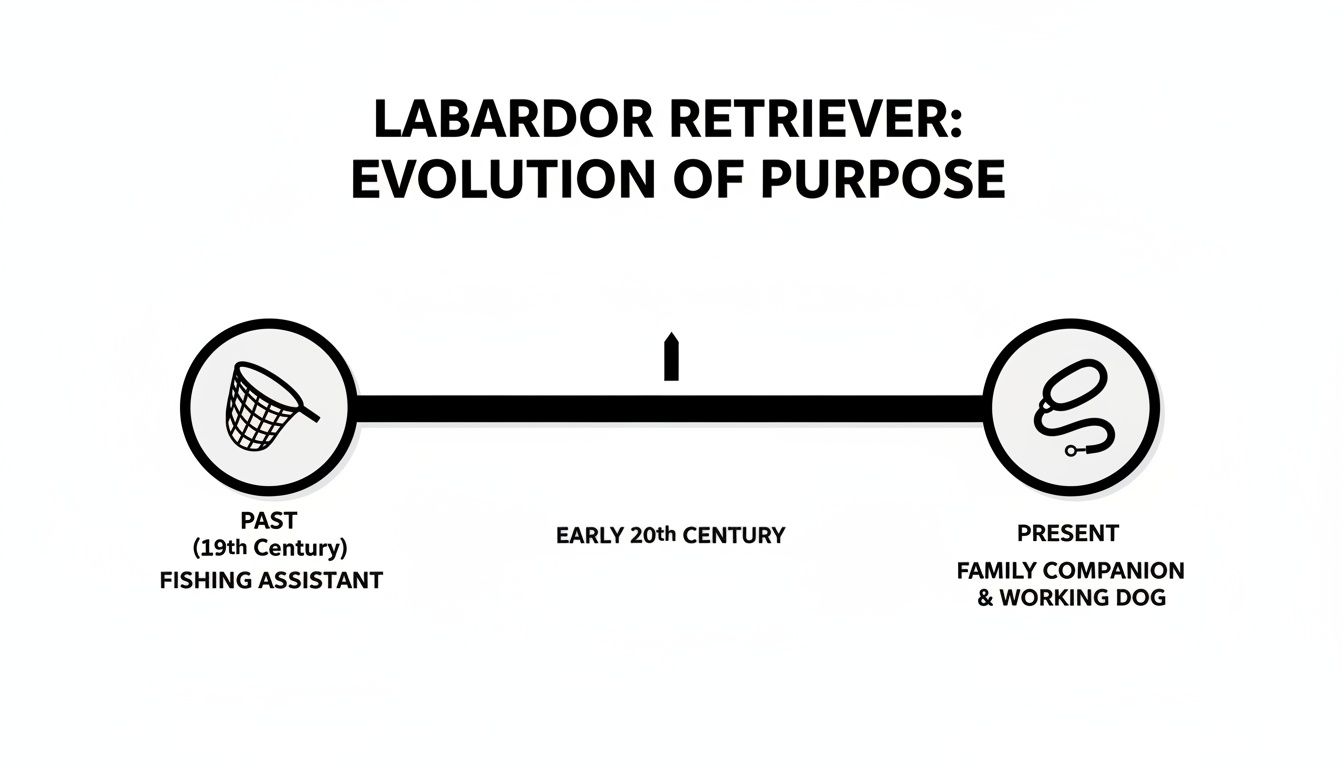
Understanding their history helps us appreciate just how deep their need for physical activity runs.
Here’s a quick-reference table to give you a snapshot of what your Lab needs at each stage of life. We'll dive into the details for each age group below.
Daily Labrador Exercise Recommendations by Age
| Life Stage | Age Range | Recommended Daily Exercise | Activity Focus |
|---|---|---|---|
| Puppy | Under 18 months | 5 mins per month of age (twice daily) | Low-impact play, basic training, socialization |
| Adolescent | 6 to 18 months | 45-60+ minutes | Building stamina, structured training, low-impact sports |
| Adult | 2 to 7 years | 1.5 to 2 hours | Vigorous activity, running, hiking, advanced training |
| Senior | 7+ years | 30-60 minutes (as tolerated) | Gentle walks, swimming, maintaining mobility |
This table provides a great starting point, but remember to always watch your individual dog for signs of fatigue or overexertion.
The Puppy Stage: Under 18 Months
When you bring that adorable, roly-poly Lab puppy home, it’s tempting to try and wear them out with long walks or endless games of fetch. But this is a classic mistake. A puppy's bones are still growing, and their growth plates—soft areas at the ends of the bones—are incredibly fragile. Too much high-impact, repetitive stress can cause serious, lasting damage.
This is where you need to get familiar with the "Five-Minute Rule."
This rule of thumb is your best friend: for every month of your puppy's age, give them five minutes of structured exercise, up to twice a day. So, a four-month-old pup only needs two 20-minute walks or focused training sessions each day.
This approach protects their developing joints while giving them the mental and physical stimulation they crave. Free-roaming play in a fenced yard is perfectly fine, but forced exercise like jogging or long, strenuous hikes should wait until they are physically mature, which is usually around 18 months .
The Adolescent Stage: 6 to 18 Months
Get ready for the teenage tornado phase! From about six months to a year and a half, your sweet puppy transforms into an adolescent—a bundle of boundless energy and questionable decision-making. They’re strong, lanky, and often seem to have forgotten every command you ever taught them.
During this time, their growth plates are starting to close, but they aren't fully fused yet. You can slowly start to dial up the intensity and duration of their workouts.
- Longer Walks: Gradually extend the length of your walks to build up their stamina.
- Swimming: This is the perfect time to introduce swimming. It's a fantastic, low-impact workout that builds muscle without putting stress on their joints.
- Intro to Jogging: Towards the end of this stage, and with your vet’s okay, you can start introducing short, controlled jogs on soft surfaces like grass or dirt trails.
Patience is the name of the game here. Pushing them too hard can still lead to orthopedic issues down the road. This is also a fantastic time to double down on puzzle toys and scent work to give their busy brain a job to do.
The Adult Labrador: 2 to 7 Years
Welcome to your Lab's prime. A healthy adult Labrador in this age range is a true athlete, fully equipped to handle the 1.5 to 2 hours of vigorous daily exercise their breeding demands. Their bodies are fully developed, and their energy levels are at an all-time high.
Now is the time for the really fun stuff:
- Running: Regular jogs or runs are perfect for keeping their heart and lungs in top condition.
- Hiking: Getting out on the trails is amazing for both physical conditioning and mental enrichment.
- Advanced Fetch: Games with a ball launcher allow them to really open up and get in those powerful sprints they love.
For an adult Lab, variety is the spice of life. Mixing up activities prevents boredom, works different muscle groups, and helps avoid overuse injuries. These high-energy needs are common among working breeds; for a great comparison, check out our guide to an Australian Shepherd's exercise needs.
The Senior Labrador: 7+ Years
As your loyal friend enters their golden years, you’ll notice them starting to slow down. That frantic energy gives way to a more dignified pace. Aches and pains from conditions like arthritis might appear, and their stamina will naturally decrease. The goal of exercise now shifts from burning off energy to maintaining mobility, managing weight, and keeping their mind sharp.
Focus on low-impact activities that are kind to their aging joints. Gentle walks, leisurely swims, and simple scent games are excellent choices. It's better to do shorter, more frequent sessions to prevent stiffness. Most importantly, listen to your dog. They’ll let you know when they’re ready to call it a day.
The Uncomfortable Truth About Your Lab's Exercise Routine
Let's be honest for a moment. Most well-meaning Labrador owners know their dog needs a lot of exercise, but life often gets in the way. There’s a huge gap between the activity our Labs were bred for and what our modern schedules allow. This isn't just about a little pent-up energy; this gap is directly fueling some of the most common health problems we see in the breed today.
We're not talking about a small difference, either. Vets and breed experts agree that Labs need 1.5 to 2 hours of real activity every single day. But the reality for most dogs? It's not even close. This disconnect has created a quiet but serious health crisis for these amazing companions.
Just How Big Is the Exercise Gap?
The numbers might shock you. One major study on dog activity levels revealed that a tiny 8% of Labrador owners are actually hitting that recommended daily exercise target.
That means an incredible 92% of Labradors aren't getting the physical stimulation their bodies crave. It's no coincidence, then, that up to 60% of pet Labs are obese—a rate that towers over the general dog population. You can dive deeper into these numbers by checking out the full Labrador lifestyle study.
This isn't just a matter of a dog being a few pounds overweight. This exercise deficit is a direct line to serious medical issues, turning what seems like a small daily shortfall into a major welfare problem.
The Domino Effect on a Lab's Health
When you take a natural athlete like a Labrador and confine them to a sedentary life, things start to break down. Their bodies are built for action, and the lack of it causes a cascade of negative effects.
Common Health Issues Tied to Inactivity:
- Obesity: This is the most obvious one. Extra pounds put a massive strain on a Lab's heart, lungs, and especially their joints.
- Joint Problems: Labs are already prone to issues like hip and elbow dysplasia. Add extra weight to the equation, and you're just accelerating pain and joint breakdown.
- Behavioral Problems: A bored Lab is a frustrated Lab. That frustration often comes out as chewing, excessive barking, anxiety, and other destructive behaviors when they don't have a healthy outlet.
Beyond these, a lack of consistent, proper exercise can be downright dangerous for Labs with specific genetic conditions. For instance, Exercise-Induced Collapse (EIC) is a scary neuromuscular disorder that can be triggered by sudden, intense activity in a dog that isn't properly conditioned. It sounds backward, but regular, appropriate exercise is exactly what builds the stamina to help prevent these episodes.
How to Realistically Bridge the Gap
Seeing these stats can feel like a gut punch, especially if you're a busy owner juggling life in a city like Denver. Who has an extra two hours every single day? The goal here isn't to make you feel guilty—it's to find a practical solution.
This is where professional dog services stop being a luxury and become a crucial part of your dog's wellness plan. Think of services like Denver Dog Joggers and Denver Dog Hikers as the perfect way to fill that reality gap. A structured, 60-minute power walk, run, or trail hike gives your Lab the exact kind of focused, high-intensity workout their genetics demand.
By weaving a professional service into your weekly routine, you're not just buying yourself time. You're guaranteeing your Lab gets the vigorous activity they need to stay physically healthy and mentally sound. It turns that overwhelming two-hour daily chore into a shared, manageable goal, giving your best friend the happy, healthy, and long life they deserve.
Balancing Physical Workouts with Brain Games
You’ve probably heard the old saying: a tired Labrador is a happy Labrador. But what does “tired” really mean? If your first thought is a dog panting on the floor after a marathon fetch session, you’re only getting half the story. To truly satisfy a Lab, you need to work their brain just as much as their body.
Think of it this way: you can take your Lab for a five-mile run, and their body will be spent. But their brilliant, problem-solving mind? It’s still firing on all cylinders, looking for a job to do. When that mental energy has nowhere to go, it often comes out sideways—as chewed-up shoes, endless barking, or other destructive habits. This is why brain games are every bit as important as a game of fetch.
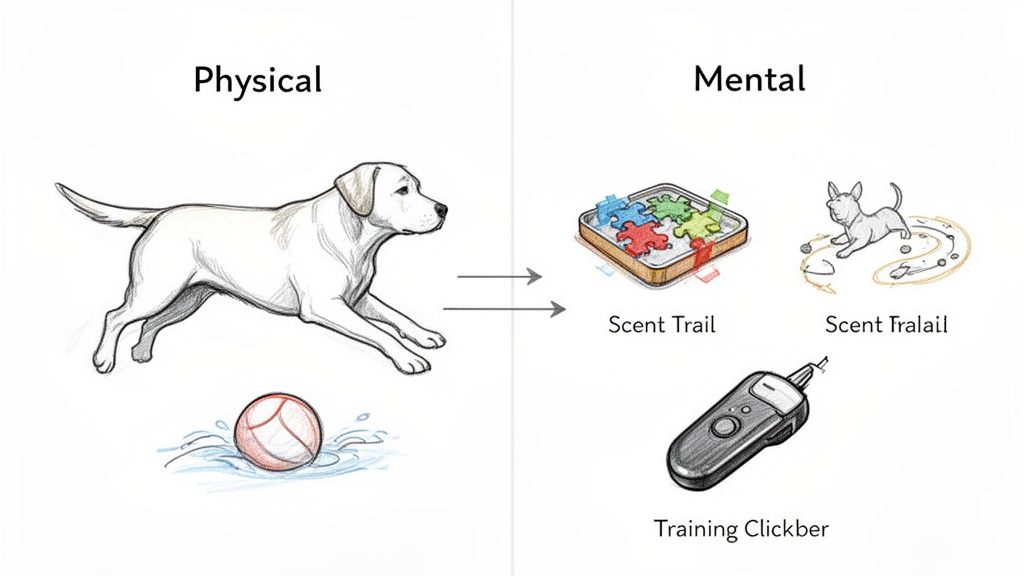
A genuinely fulfilling routine for a Lab works both their muscles and their mind, leading to a dog that's truly content and settled at the end of the day.
The Two Pillars of a Great Labrador Workout
The best way to think about your Lab's exercise needs is to break activities into two key categories. A healthy daily routine should always pull from both of these lists.
Physical Outlets: Working the Body
These are the big-energy activities that keep your Lab's athletic frame in peak condition. They’re absolutely vital for heart health, strong muscles, and burning off that boundless Labrador enthusiasm.
- Running and Jogging: The perfect outlet for satisfying their instinct to move and building up great stamina.
- Swimming: A fantastic, low-impact exercise that taps right into their water-loving, retrieving nature.
- A Good Game of Fetch: You can't beat the classics. Those explosive sprints after a ball or frisbee are what Labs live for.
Mental Challenges: Working the Brain
These activities engage your Lab’s incredible mind, forcing them to focus, solve problems, and think critically. You'd be surprised how a 15-minute brain game can tire a dog out as much as a 30-minute walk.
- Puzzle Toys: Make mealtime a fun challenge by swapping a bowl for a food-dispensing toy.
- Scent Work: Hide a few treats around the living room and let them use their powerful nose to "find it."
- Training Sessions: Five minutes of practicing old cues or teaching a new trick is a serious mental workout that also strengthens your bond.
A complete approach to Labrador exercise is about more than just logging miles. For a breed this smart, mental stimulation isn't an optional add-on; it's a core part of their well-being that directly shapes their health and behavior.
How to Weave Brain Games into Your Daily Life
The good news is that adding mental exercise to your routine doesn't have to be a huge production. It's all about finding small, simple opportunities to make your Lab think.
For example, while you're getting ready in the morning, ditch the food bowl and serve breakfast in a puzzle feeder. Before you leave, spend two minutes hiding a few smelly treats for a quick game of nose work. On your walk, stop at a quiet park bench to practice a "sit" and "stay" for a minute. These little moments add up fast, giving your Lab the mental engagement they crave.
This balanced approach is more than just good fun—it’s crucial for their health. Most experts recommend around two hours of mixed activity for a Lab each day, combining things like walks, runs, and plenty of sensory experiences like sniffing. This is especially important when you consider that 30-40% of Labradors carry the genes for Exercise-Induced Collapse (EIC), a condition where intense, sustained exercise can cause them to collapse. Proper conditioning and a balanced routine are key. You can dive deeper into the science behind canine genetics and exercise needs to see just how intertwined they are.
Ultimately, a routine that mixes body and brain work prevents burnout and keeps things exciting for both of you. For busy owners here in Denver, this is exactly where services like Denver Dog Runners shine. A run or hike isn't just about physical exertion; it’s a sensory feast of new smells, sights, and sounds that provides incredible mental enrichment at the same time.
Building the Perfect Weekly Exercise Plan for Your Lab
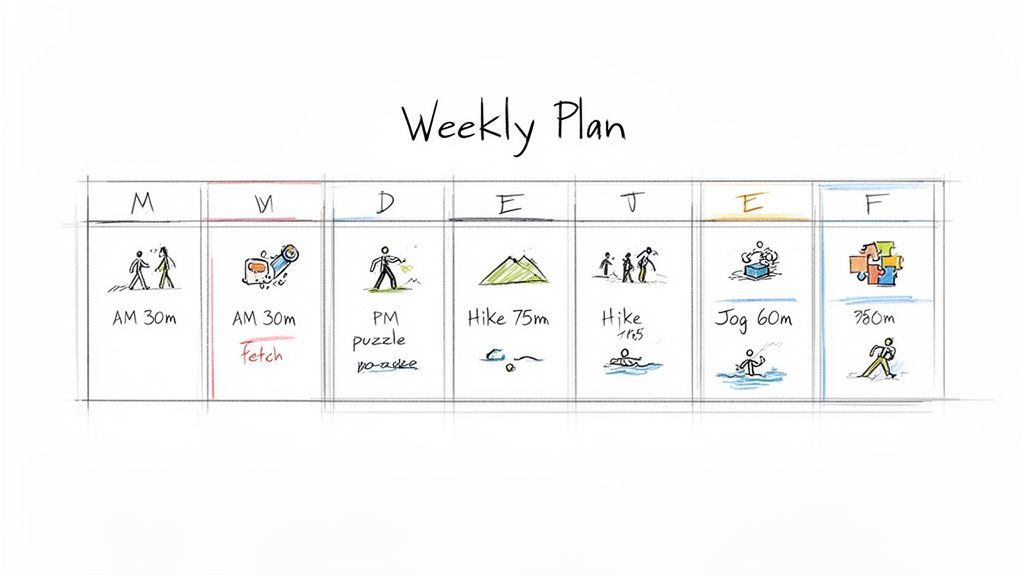
Knowing your Lab needs up to two hours of exercise every day is one thing. Figuring out how to actually squeeze that into a packed schedule is a whole other challenge.
The secret isn’t to magically find a giant two-hour block of free time. The real key is to build a consistent and varied weekly plan that breaks that time down into smaller, more manageable sessions. A good plan should always mix physical workouts with mental challenges to make sure your Lab is truly tired and happy.
Think of it this way: just as athletes know that fueling for peak performance is non-negotiable, a solid exercise plan is the bedrock of your dog's well-being. A little planning can make the formidable labrador exercise requirements feel totally doable.
The Busy Professional's Weekly Blueprint
For those of us juggling long workdays, the week requires a smart blend of personal time with our dogs and some professional backup. A schedule like this ensures your Lab gets everything they need, even when you’re stuck at the office.
- Monday & Wednesday (Vigorous Days): We’ll make these high-energy days to stave off any midweek restlessness. A quick morning session with you, a powerful midday workout from a pro, and a calm evening activity strikes the perfect balance.
- Tuesday & Thursday (Skill Days): These days can focus more on training and brain games. It keeps things from getting stale and really strengthens your bond.
- Friday (Fun Day): Let’s end the workweek on a high note with a favorite activity to burn off any leftover energy before the weekend.
- Weekend Adventures: This is your time to shine! Plan longer, more enriching activities together like a good hike or a trip to a dog-friendly lake.
This kind of structure gives your Lab the reliability they crave while offering enough variety to keep them engaged.
A predictable routine is a huge stress-reducer for dogs. It helps channel all that classic Lab energy constructively. When you create a weekly template, you stop scrambling every day and start proactively managing your dog’s happiness.
Sample Schedule In Action
So what does this blueprint look like in practice? For many busy Denver owners, combining their own efforts with professional dog walking or running services is the perfect solution. It turns what could be a stressful daily obligation into a seamless part of your routine.
Here’s an example of how you can map out the week to meet your Lab's needs, even with a demanding job.
Weekly Exercise Plan for a Busy Professional's Labrador
| Day | Morning Activity (Owner) | Midday Activity (Denver Dog) | Evening Activity (Owner) |
|---|---|---|---|
| Mon | 15-min fetch session | 60-min jog with Denver Dog Joggers | 20-min puzzle feeder dinner |
| Tue | 20-min neighborhood walk | 45-min power walk | 15-min training practice |
| Wed | 15-min fetch session | 75-min hike with Denver Dog Hikers | 20-min puzzle feeder dinner |
| Thu | 20-min neighborhood walk | 45-min power walk | 15-min "find it" scent game |
| Fri | 20-min flirt pole play | 60-min jog with Denver Dog Joggers | Relaxed evening cuddle time |
Once the weekend rolls around, you can take the reins for some quality time. A Saturday morning adventure exploring one of our amazing local trails can easily check the exercise box for the entire day. For some great ideas, check out our guide on the top Denver trails for hiking with dogs.
Remember, this schedule isn't set in stone—it's a flexible framework. Feel free to swap activities based on the weather, your dog's mood, or your own energy levels. The big takeaway here is that by combining your own efforts with a trusted service, meeting your Lab’s needs becomes a sustainable and genuinely stress-free part of your life.
How Professional Services Guarantee Your Lab's Needs Are Met
Knowing your Lab needs a ton of exercise is one thing. Actually providing it every single day? That’s a whole different ball game. Life gets in the way, and for busy Denver professionals, finding an extra 90 to 120 minutes for a proper workout can feel next to impossible. This is where professional help stops being a luxury and becomes a key part of your dog's health plan.
Services like ours—Denver Dog Joggers and Denver Dog Hikers—are built to fill that gap. We’re not talking about a quick walk around the block. These are structured, high-energy sessions designed specifically for athletic breeds like Labradors. A 60-minute jog or a 75-minute trail hike delivers exactly the kind of intense physical and mental challenge these dogs crave.
More Than Just a Walk in the Park
Handing the leash over to a professional gives you something priceless: peace of mind. It’s about knowing your best friend is with an expert who puts their safety and well-being first. At Denver Dog, we take that responsibility seriously.
- Custom-Fit Workouts: We don't do one-size-fits-all. Every run or hike is matched to your dog’s specific fitness level and personality, making sure it's challenging but always safe.
- Highly Trained Staff: Our team is constantly learning. We're trained in canine behavior, first aid, and proper handling techniques so your Lab is always in the most capable hands.
- Serious About Safety: We have strict on-leash rules and follow comprehensive safety protocols on every trail. We manage all the details to keep risks to an absolute minimum.
Entrusting your Labrador to a professional service is an investment in their health and your peace of mind. It guarantees their exercise needs are met with consistency and expert care, leading to a calmer, happier, and healthier companion at home.
Ultimately, working a professional service into your weekly routine makes caring for a high-energy Lab feel sustainable, not stressful. It takes away the guilt of a missed walk and gives you confidence that your dog is living their best life. For owners who want to give their pet an amazing quality of life, it’s the smartest solution.
You can learn more about finding the right fit in our complete guide to dog walking services in Denver.
Your Top Labrador Exercise Questions, Answered
Even the most dedicated Lab owner has questions. It's totally normal. Fine-tuning your dog's exercise routine can feel like a moving target, but don't worry—the answers are usually simpler than you think. Let's tackle some of the most common concerns that pop up.
Think of this as a quick-reference guide to help you build confidence and make sure you're doing everything right for your four-legged friend's health and happiness.
How Can I Tell if My Lab Is Getting Enough Exercise?
Your dog’s behavior at home is the biggest clue. A Labrador who has had a good outlet for their energy is a calm, happy companion. They’ll be content to nap at your feet or chew on a toy, not pacing the house looking for trouble.
If you’re seeing some frustrating habits emerge, it’s a huge sign that your Lab needs more activity. Keep an eye out for these classic tells:
- Destructive behavior , like chewing up shoes, furniture, or baseboards.
- Excessive barking or whining to get your attention.
- Restlessness and a general inability to settle down, especially in the evenings.
- Weight gain or a noticeable decrease in muscle definition.
If any of this sounds painfully familiar, it’s a good signal to start adding a bit more time or intensity to their daily adventures.
A settled Labrador isn't a lazy Labrador; they're a fulfilled one. Their quiet contentment at the end of the day is your best indicator that you're meeting their physical and mental needs.
Is It Possible to Over-Exercise a Labrador Puppy?
Absolutely. In fact, this is one of the biggest mistakes new Lab owners make, and it’s critical to get it right. A puppy’s joints and growth plates are still soft and developing, making them extremely vulnerable to injury. Too much high-impact or repetitive motion can lead to serious, lifelong problems.
The best guideline to follow is the "Five-Minute Rule." It’s simple: for every month of their age, give them five minutes of structured exercise (like a leashed walk), up to twice a day. For example, your four-month-old pup only needs two 20-minute walks. Save the long runs and big jumps for when they’re fully mature, which is usually around the 18-month mark.
What’s the Best Way to Exercise My Senior Lab?
As your best friend enters their golden years, your exercise strategy needs to shift. The focus moves away from high-energy romps and toward low-impact activities that keep them mobile and strong without putting stress on aging joints.
Swimming is hands-down the best exercise for a senior Lab. It’s an incredible cardio workout with zero impact, making it ideal for dogs with arthritis or stiffness. Gentle walks on soft surfaces, like grass or a well-maintained trail, are also fantastic. And don’t forget their brain! Scent games and puzzle toys are perfect for keeping their mind sharp when their body can't go as hard as it used to.
Making sure your Lab gets the right kind of exercise is one of the most important things you can do for them. It’s the foundation for a long, healthy, and happy life together. If your busy Denver lifestyle gets in the way, Denver Dog is ready to step in. Our professional dog running and hiking services are designed specifically for high-energy breeds like Labradors. We give your dog the adventure they crave and you the peace of mind you deserve. Find out more about our custom sessions at https://www.denverdog.co.
The Run Down