If you've brought an Australian Shepherd into your life, you've welcomed a four-legged bundle of intelligence and boundless energy. These dogs aren't couch potatoes; they were bred for demanding work. To keep them happy and healthy, you need to plan for 1 to 2 hours of vigorous, structured activity every single day.
This isn't just about a leisurely stroll around the neighborhood. We're talking about real, heart-pumping exercise that satisfies their deep-seated need for a "job." Anything less, and you'll likely start seeing some creative—and often destructive—behavioral issues pop up.
Your Aussie's Blueprint for a Balanced Life
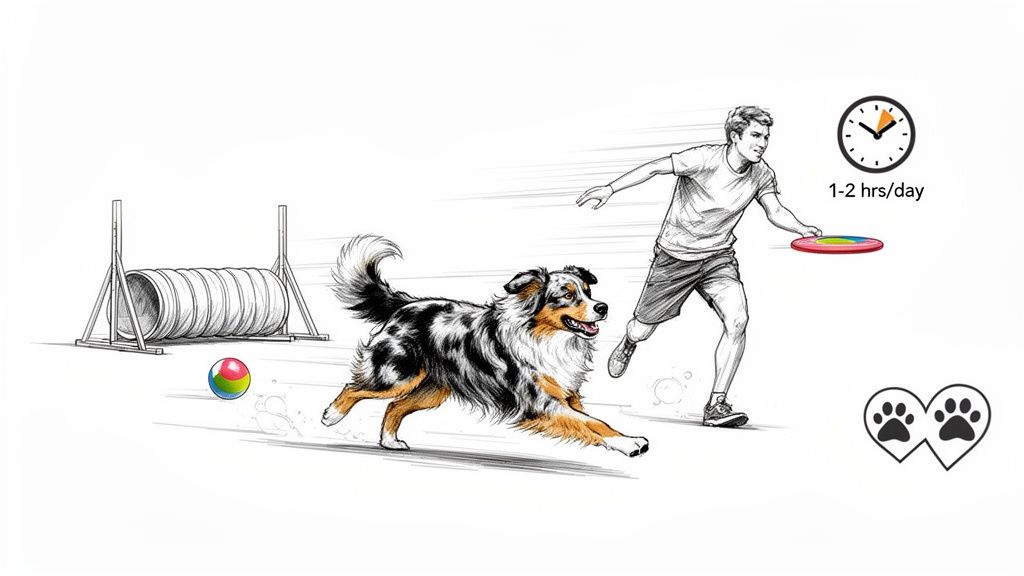
So, why are Aussies so intense? It all goes back to their roots as tireless herding dogs. Their DNA is coded for long days on the move, making quick decisions and solving complex problems on the fly. In a modern home without a flock of sheep, that incredible brain and athletic body are just itching for an outlet.
When an Aussie doesn't have a task to focus on, they get bored and anxious. That pent-up energy has to go somewhere. If you don't provide a positive channel for it, they'll invent their own "jobs," which might include re-landscaping your yard, redesigning your sofa cushions, or becoming the neighborhood's most persistent barker. It's not them being "bad"—it's them being under-stimulated.
Breed experts have seen it time and again: skimping on an Aussie's required 1 to 2 hours of daily activity can lead to a 70-80% increase in destructive behaviors . A tired Aussie is a happy Aussie; a restless one is an agent of chaos.
Australian Shepherd Daily Exercise at a Glance
Meeting your Aussie's needs means tailoring their activities to their age. A puppy's growing body requires a different approach than a prime adult's, and seniors need special care to stay active without overdoing it.
Here’s a quick breakdown of what to aim for at each stage of your Aussie's life.
| Life Stage | Recommended Daily Exercise | Activity Examples |
|---|---|---|
| Puppy (8 wks - 1 yr) | Multiple short bursts (15-20 min) | Gentle play, basic obedience, short "sniff" walks, puzzle toys. |
| Adult (1 - 7 yrs) | 1-2 hours of vigorous activity | Running, hiking, agility courses, intense fetch, swimming. |
| Senior (8+ yrs) | 30-60 minutes of low-impact activity | Leisurely walks, swimming, scent work, gentle retrieve games. |
Remember, this table is a guide. Always watch your individual dog for signs of fatigue or overexertion and adjust as needed to keep them safe and happy.
Exercise Needs by Life Stage
Let's dive a little deeper into what each life stage looks like.
-
Puppies (8 weeks - 1 year): Think short, sweet, and safe. The focus here is on controlled play and socialization. Long runs or high-impact jumping are a no-go, as their growth plates are still developing. Short training sessions, puzzle toys, and gentle exploration are perfect.
-
Adults (1 - 7 years): This is where your Aussie hits their stride. They are in their physical prime and can handle—and crave—high-intensity workouts. This is the time for running, advanced agility training, and tackling those challenging Colorado trails.
-
Seniors (8+ years): As they age, the goal shifts from intensity to consistency. We want to keep their minds sharp and their bodies mobile without stressing aging joints. Low-impact activities like swimming or leisurely "sniffari" walks (where they lead the way with their nose) are fantastic options.
For busy owners here in Denver, keeping up with an adult Aussie's daily demands can be a real challenge. That's where professional services like Denver Dog Joggers or Hikers can be a lifesaver. They provide the structured, high-energy outings your dog needs to stay balanced and calm at home, especially on days your schedule is slammed. If you're looking for new places to explore, check out our guide on the best dog-friendly hikes Colorado offers in 2026 for some great ideas.
Why Your Aussie Needs a Job, Not Just a Walk
Ever watch your Australian Shepherd zip around the living room and wonder if they have an "off" switch? That boundless energy isn't bad behavior—it's a direct line to their past. To really get a handle on australian shepherd exercise needs , we need to step back in time to the rugged, wide-open spaces where these dogs were born to work.
Aussies weren't bred to be lap dogs or casual companions. They were developed in the American West during the 19th century as the ultimate ranch hand. Their daily grind involved herding massive flocks of sheep across miles of tough terrain, a job that demanded serious stamina, sharp intelligence, and a motor that just wouldn't quit from dawn till dusk.
This work was their entire world. For generations, they were selectively bred for endurance and a problem-solving mind. Those genes didn't just disappear; they've been passed down, hard-wiring your Aussie with a deep-seated need for constant motion and a purpose. So, when you see your dog trying to "herd" the kids, nipping at heels, or intensely watching the world go by, you're witnessing that powerful instinct in action.
From the Range to the Rug
Today's suburban backyard is a far cry from the sprawling ranches their ancestors called home. That incredible energy, once essential for covering dozens of miles a day, is now bottled up with nowhere to go. This is exactly why a quick stroll around the block barely makes a dent. Their bodies and minds are primed for a much bigger challenge.
It's no wonder your Aussie seems to have endless energy—it's literally in their DNA. In fact, 90% of Aussies trace lineage to working herders from the 1800s , a heritage that modern life can't quite satisfy. Meeting their need for about two hours of varied physical and mental work each day is key to avoiding the frantic energy seen in 60% of understimulated pups under 2 years old . You can dive deeper into this breed's fascinating history and what makes them tick by exploring their heritage.
Without a proper channel for all that drive, their brilliant minds will find… other projects. Think of an Aussie as a super-smart, high-energy employee who's been left with nothing to do. If you don't assign them a task, they'll create one themselves, and you probably won't be thrilled with their destructive form of "innovation."
An under-stimulated Aussie is a master of invention. Their "projects" might include de-stuffing every cushion, excavating your garden, or developing a complex and very loud barking symphony. This isn't malice; it's a cry for a job.
The Brain Behind the Brawn
It’s easy to focus on their physical needs, but that’s only half the story. Herding wasn't just running; it was constant, high-stakes problem-solving. They had to assess the flock, anticipate where a stray might bolt, and react instantly to commands. Their brains are just as active as their bodies.
This is why mental exercise is absolutely non-negotiable. Tiring out their mind is just as important as tiring out their legs.
- Problem-Solving: Puzzle toys and "find the treat" games are fantastic because they simulate the challenge of outsmarting livestock.
- Obedience and Agility: Structured training provides clear rules and goals, satisfying their deep-seated need for direction and partnership.
- Scent Work: This is a powerhouse of an activity. It taps directly into their natural instincts and can leave them just as exhausted as a long run.
Once you understand that your Aussie's behavior is rooted in a history of hard work, everything clicks into place. Their restlessness isn't a bug; it's a feature. Meeting their needs with a smart mix of vigorous exercise and engaging mental challenges is the secret to a happy, well-behaved, and truly fulfilled companion.
Tailoring Exercise for Every Aussie Life Stage
An Australian Shepherd's exercise needs aren't set in stone; they change dramatically as your dog grows from a clumsy puppy into a dignified senior. A one-size-fits-all approach just doesn't work. It can lead to injuries in a young dog or leave an older one stiff and bored. The key is to match the activity to their stage of life, ensuring they get the right kind of exercise at the right time.
Think of it like a human athlete. You wouldn't have a toddler run a marathon, and you wouldn't push a grandparent into high-intensity training without some serious adjustments. The same logic applies to your Aussie. Managing their physical output is one of the most critical parts of being a responsible owner.
This breed was built for a job. Their DNA, work ethic, and need for motion all stack up to create a dog that needs an outlet for its energy.
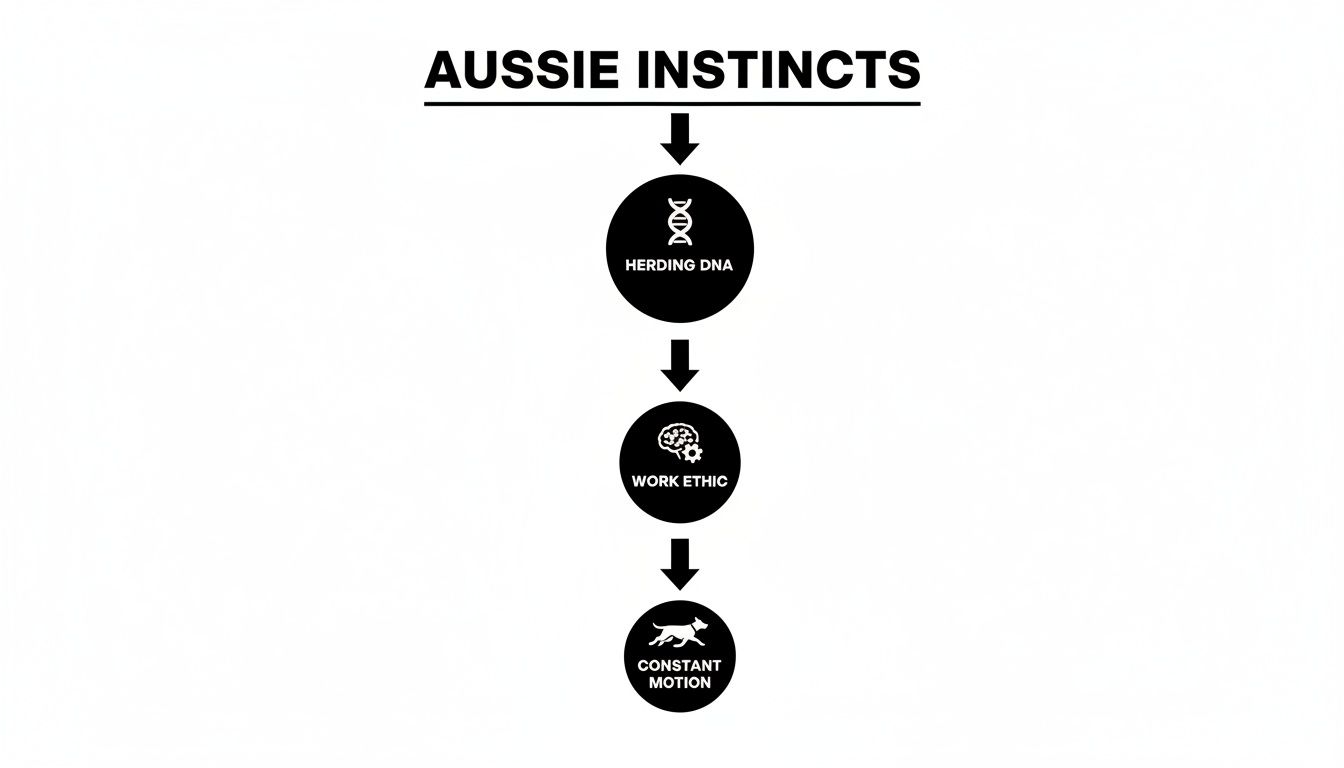
This drive is hardwired into them, starting with their herding genetics and culminating in that constant-motion behavior you see every day. It’s our job to channel it correctly.
The Puppy Phase: Protecting Growing Bodies
An Aussie puppy sees the world as one big, exciting playground, but their little bodies are still under construction. Their growth plates—the soft areas at the ends of their long bones—are incredibly delicate and can be damaged by too much high-impact exercise. This is where the "five-minute rule" becomes your best friend.
The rule is simple: provide five minutes of structured, on-leash exercise for every month of your puppy’s age, up to twice a day. So, a four-month-old pup would get a 20-minute walk or training session.
A puppy’s bones are like wet concrete; they need time to set properly. Too much pressure too soon can create tiny cracks that lead to lifelong joint problems. Keep it gentle and controlled.
During these formative months, focus your energy on:
- Positive Socialization: Gentle, short experiences meeting new people, hearing new sounds, and interacting with friendly dogs build a confident, well-adjusted adult.
- Foundational Training: Their brains are like sponges. Use short, fun obedience sessions to teach them the basics.
- Gentle Play: Stick to soft surfaces like grass and avoid repetitive jumping on hard ground.
The Adult Prime: Unleashing Their Full Potential
Once your Aussie hits their prime, usually between one and seven years old, they are a true force of nature. Their bodies are fully developed, their minds are sharp, and their energy reserves seem bottomless. This is the time to let them do what they were bred for!
At this stage, 1-2 hours of daily activity is the bare minimum. It’s crucial to mix it up, combining intense physical exercise with activities that make them think.
Great activities for adult Aussies include:
- Trail Running and Hiking: Living in Denver gives you the perfect backyard for these activities, which tire out their bodies and engage their minds.
- Agility Courses: This sport could have been invented for Aussies. It’s the perfect blend of physical challenge and problem-solving.
- Advanced Fetch or Frisbee: Move beyond a simple toss in the park and teach them complex retrieves that require focus.
The Senior Years: Focusing on Mobility and Joy
As your Aussie enters their golden years around age eight, the goal of exercise shifts. It's less about intensity and more about maintenance. The new focus is on keeping their joints moving, their minds sharp, and their quality of life high. Those long, hard runs should be swapped for gentler, more forgiving activities.
While Aussies became popular after WWII, a real understanding of their long-term health needs is more recent. We now know that puppies who overdo it face a 30% injury risk , which is why that five-minute rule is so important. In contrast, senior Aussies do best with about 30 minutes of low-impact activity to maintain muscle and fend off obesity, a condition that affects one in four sedentary senior dogs. You can find more details about how exercise needs evolve in this guide on Dogster.com.
Activities like swimming are fantastic for senior joints, and scent work provides incredible mental stimulation without any physical strain. By adapting their routine, you can help your old friend age with grace and comfort.
Beyond the Walk: Why Mental Stimulation Is Non-Negotiable
Tiring out your Australian Shepherd on a long hike is only half the job. If you ignore that incredibly sharp mind, you’re missing a huge piece of the puzzle and likely asking for trouble. An Aussie’s intelligence isn't just a party trick; it's a fundamental need that craves a daily outlet.
Think of it this way: you’ve got a genius-level engineer who’s been told to sit in an empty room and do nothing all day. How long before they get frustrated, antsy, or start taking the doorknob apart just to have a problem to solve? That’s your under-stimulated Aussie. Their brain was bred for complex, split-second decisions on the ranch, and it needs a job.
Without that mental enrichment, that brilliant mind will find its own work. Unfortunately, their idea of a "job" often looks a lot like chewing your baseboards, digging craters in the yard, or barking at every leaf that blows by. These aren't signs of a bad dog; they're classic symptoms of a bored one. Meeting their cognitive needs is absolutely non-negotiable for a calm, well-balanced companion.
Turning Playtime into Brain Time
The great news is that you don't need a PhD in canine psychology to provide this. Just 15 to 20 minutes of focused brain work a day can make a massive difference, satisfying their instincts and deepening your connection. The whole point is to get them thinking, problem-solving, and using their natural talents.
It's surprisingly easy to weave these activities into your day. For instance, instead of just dumping their kibble in a bowl, make them work for it. This one simple change can turn a two-minute feeding frenzy into a stimulating 15-minute mental workout.
Here are a few powerful ways to get their gears turning:
- Puzzle Toys: A lifesaver for busy owners. These toys require your dog to slide, spin, or lift pieces to get to the food. They come in all difficulty levels, so you can keep upping the challenge as your Aussie gets smarter.
- Nose Work: An Aussie's nose is a superpower. Start simple by hiding high-value treats around a room and letting them "go find." This taps directly into their primal instincts and is incredibly tiring for them.
- Trick Training: Teaching a new cue—whether it's a simple "spin" or a more complex series of actions like "put your toys away"—is the perfect job for a people-pleasing Aussie. Each short session builds their confidence and strengthens your bond.
Think of mental exercise as focused work for their brain. Studies have shown that 15 minutes of intensive scent work or training can be just as exhausting for a dog as a 30-minute run.
Training as a Fulfilling Job
For a breed literally designed to work in partnership with a person, training is so much more than learning commands. It's communication, it's purpose, it's a shared language. Australian Shepherds thrive when they have clear direction, and a structured training session gives them the exact "job" their genetics scream for.
This is where you'll really see their intelligence sparkle. Just keep your sessions short, fun, and always end on a positive note. As soon as they master one skill, start layering in the next. This constant learning keeps their minds engaged and reinforces their instinct to look to you for guidance.
By making these mental workouts a daily habit, you're giving that high-powered brain a healthy outlet. You'll quickly discover that a mentally satisfied Aussie is a calmer, more focused, and much less destructive dog. It’s the final, crucial ingredient to truly meeting your australian shepherd exercise needs and raising a happy, balanced best friend.
Crafting the Perfect Weekly Aussie Exercise Routine
Knowing your Australian Shepherd needs a ton of exercise is one thing, but actually building a weekly routine that works for both of you is a whole different ball game. A well-thought-out plan is your best defense against burnout—for you and your dog—and ensures they get a healthy blend of physical conditioning and brain work. The real goal isn't just to tucker them out; it's to satisfy their deep-seated instincts in a balanced, fulfilling way.
The secret sauce here is variety . You wouldn't hit the gym and do the exact same workout every single day, right? Your Aussie is no different. They thrive when their week is a mix of different activities. This approach keeps them excited and engaged, works different muscle groups, and heads off the kind of boredom that often leads to chewed-up shoes and other mischief. Think of a good routine as a roadmap to a calmer, happier dog.
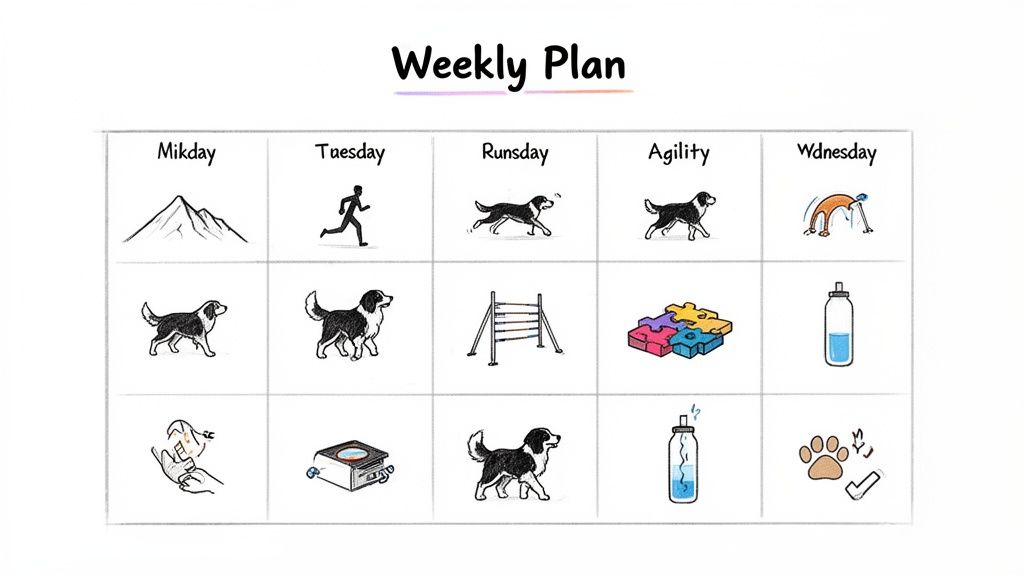
Building a Sample Weekly Plan
So, what does this look like in practice? Below is a sample schedule that works as a fantastic starting point for a healthy, adult Aussie. Just remember to tweak the intensity and length based on your own dog's fitness level, age, and even the weather—a scorching hot day calls for a different plan than a cool one.
Here’s one way to break down the week to keep things fresh and fun.
| Day of the Week | Morning Activity (30-45 mins) | Afternoon/Evening Activity (45-60 mins) |
|---|---|---|
| Monday | On-leash run or fast-paced fetch | Leisurely "sniffari" walk |
| Tuesday | Backyard agility or trick training | Brisk walk or light jog |
| Wednesday | Low-impact swim or long, slow walk | Puzzle toys & scent games |
| Thursday | On-leash run or fast-paced fetch | Leisurely "sniffari" walk |
| Friday | Backyard agility or trick training | Brisk walk or light jog |
| Saturday | A big adventure! 2-3 hour hike on a new trail | Rest and light stretching |
| Sunday | Dog park socialization or a walk with a friend | Relaxed evening stroll |
This structure gives your Aussie’s body and mind a fantastic workout without overdoing it. For high-energy breeds like Australian Shepherds, that Saturday adventure is key. Exploring the varied terrain on longer hikes, like some of the best hikes in the Smoky Mountains, is an incredible way to meet their physical and mental needs.
Essential Safety on the Trail
Getting out for runs and hikes is one of the best parts of owning an Aussie, but safety has to be your top priority. These dogs have so much drive that they can easily push past their limits, so it’s your job to be their spotter and know when to call it a day.
Before, during, and after any big outing, keep a close eye on these three things:
-
Paw Pad Health: Rough trails, hot pavement, and icy patches can be brutal on their paws. Always check their pads for cracks, blisters, or anything stuck in them after a hike. In really tough conditions, a good paw balm or a set of dog booties can be a lifesaver.
-
Proper Hydration: Never, ever leave home without fresh water and a collapsible bowl, even if it feels cool outside. Make a point to offer water regularly—at least every 30-45 minutes when they’re working hard—to keep them from getting dehydrated.
-
Recognizing Overexertion: You need to know the warning signs. If you see excessive panting that doesn’t calm down with rest, your dog lagging behind, stumbling, or a dark red tongue, it's time to stop. Find some shade, offer water, and let them recover. Pushing them past this point is just plain dangerous.
Great Local Hikes for Denver Aussies
If you live in Denver, you’ve hit the jackpot. The Front Range is basically a world-class playground for energetic dogs and their people.
We’ve put together a whole guide on this. For more trail ideas, check out our deep dive on places to hike with dogs near Denver. It’s full of trails that have the perfect mix of challenge and amazing scenery for your four-legged adventurer.
Here are a few local favorites to get you and your Aussie started:
- Mount Falcon Park (Castle Trail): This one gives you a solid climb with some truly rewarding views. It's a great workout for both ends of the leash.
- Elk Meadow Park (Dog Off-Leash Area): With over 100 acres of fenced-in, off-leash freedom, this is an incredible spot for your Aussie to really open up and run.
- Lair o' the Bear Park: The Bear Creek Trail here is beautiful and relatively flat as it follows the water, making it a perfect choice for a less strenuous but equally stunning day out.
When to Call in the Pros for Your Aussie
Let’s be honest—keeping up with the Australian Shepherd exercise needs can feel like taking on a second job. If you're a busy professional, travel often, or are just trying to manage a hectic family schedule, finding one to two hours for intense, focused activity every single day is a tall order. This is where getting professional help shifts from a simple luxury to a crucial part of responsible dog ownership.
Hiring a professional dog runner or hiker isn't just about letting your Aussie burn off some steam. It's about giving them the kind of breed-specific workout that a casual walk around the block can never provide. These services are built to satisfy that high-energy, working drive that’s baked into their DNA.
A pro gets it: an Aussie doesn’t just need to move; they need a purpose. A structured run on a leash or a challenging hike on a new trail gives them the physical test and mental focus they were bred for. It fulfills their innate need for a "job," which is one of the best ways to prevent boredom-fueled troublemaking back at home.
The Professional Difference
Bringing in a professional service is about more than just convenience—it's about peace of mind. A seasoned handler knows how to safely manage a high-drive dog, watch for subtle signs of fatigue, and navigate potential trail hazards or busy city streets. Their expertise means your Aussie gets the workout they desperately need without putting their safety at risk.
Folding professional help into your weekly routine offers some pretty clear advantages:
- Rock-Solid Consistency: Your Aussie gets their workout, even on days you’re swamped with meetings or just not feeling up to it. That kind of routine is gold for their mental and behavioral stability.
- Breed-Specific Exercise: A pro can provide those high-intensity runs or challenging hikes that perfectly match an Aussie's athletic nature, pushing them in ways a simple walk can't.
- Serious Mental Stimulation: A new trail, new smells, and a focused "mission" with a handler is a powerful mental workout that helps keep anxiety and restlessness in check.
- Safety and Trust: Reputable services have safety protocols down cold, experienced staff, and the reliability you need. You can see what separates the pros from the pack when you check out a guide to dog walking services in Denver.
Think of a professional dog runner as a personal trainer for your Aussie. They deliver a specialized session tailored to your dog's specific fitness needs, ensuring they come home tired, happy, and truly content.
An Investment in Your Dog's Happiness
At the end of the day, using a service like Denver Dog Joggers or Hikers is a direct investment in your dog’s quality of life. It closes the gap between the demanding exercise your Aussie requires and what your busy schedule can realistically allow. It ensures their body is worked, their sharp mind is engaged, and their working instincts have a healthy, positive outlet.
This kind of support helps you be the best owner possible, freeing you up to enjoy a calmer, more balanced companion when you walk through the door. It’s a proactive choice that helps both you and your Australian Shepherd live your best lives together.
Got Questions About Your Aussie's Exercise Routine? We've Got Answers.
Even the most dedicated Aussie owner runs into questions. Let's tackle some of the most common ones we hear from people navigating life with these brilliant, high-octane dogs.
Can an Australian Shepherd Really Be Happy in an Apartment?
Absolutely, but it's not a hands-off situation. You have to be deeply committed to their exercise needs. An apartment Aussie still requires that non-negotiable 1 to 2 hours of intense outdoor activity every single day.
Without a backyard to zip around in, every bit of their exercise has to be planned and delivered by you. This is where services like daily dog runners become a game-changer, making this lifestyle not just possible, but successful for owners with busy schedules.
When Can I Start Running with My Australian Shepherd Puppy?
Hold your horses on this one. It's incredibly important to wait until their growth plates are fully closed, which usually happens somewhere between 12 and 18 months old.
Jumping into repetitive, high-impact exercise like running too soon can lead to serious and permanent joint problems, including hip dysplasia. Before you even think about hitting the trails together, get the official green light from your veterinarian.
Think of their joints like the foundation of a new house that's still curing. You can't put heavy stress on it before it's fully set, or you risk creating cracks and weaknesses that will compromise the entire structure for life.
How Can I Tell if My Aussie Is Getting Enough Exercise?
Your dog’s behavior at home is your best report card. A truly tired Aussie is a calm, relaxed companion who’s ready to cuddle up on the couch after a good workout.
If your dog seems to be bouncing off the walls, they're sending you a clear message. Look for these classic tells of a bored, under-stimulated Aussie:
- Destructive Behavior: Are they suddenly chewing up your favorite shoes, the couch cushions, or the door frame?
- Nuisance Barking: Is every little sound outside setting them off? Or are they barking just to hear themselves talk?
- Relentless Pestering: Do they constantly nudge you with a toy, pace restlessly, or demand attention when you're trying to relax?
This isn't them being "bad"—it's their way of screaming, "I'm bored and I have all this energy with nowhere to put it!"
Is Taking My Aussie to the Dog Park Enough?
A trip to the dog park is a great social activity, but it’s rarely enough to satisfy an Aussie’s deep-seated need for a structured workout. The chaotic, stop-and-go play of a dog park just doesn't compare to the mental and physical challenge of a purposeful trail run, a focused game of fetch, or an agility training session.
Treat the dog park like a fun bonus activity—a social hour—not the cornerstone of their fitness routine. It’s a great supplement, but it won’t fulfill the core australian shepherd exercise needs that keep them balanced and happy.
Is your busy schedule making it tough to keep up with your Aussie's energy? Denver Dog delivers the professional, structured runs and hikes your best friend needs to truly thrive. We'll make sure they come home happy, tired, and ready to relax. Book a session today and see the difference a great workout can make.
The Run Down