When you're trying to keep an outdoor dog cool in the summer, it really comes down to three non-negotiables: constant access to fresh water , reliable shade , and scheduling activity to avoid the hottest parts of the day. Think of these as the absolute bedrock of summer safety for your dog.
Understanding the Summer Dangers for Your Outdoor Dog
What feels like a perfect sunny day to us can turn dangerous in a hurry for our dogs. This is especially true in a high-altitude city like Denver, where the sun’s rays are much more intense. We have to shift our mindset from just “summer fun” to “summer awareness.”
It's all about biology. While we sweat all over to cool down, dogs have a much less efficient system. They rely almost entirely on panting and sweating through their paw pads to regulate their temperature. This puts them at a major disadvantage when the heat cranks up.
A dog’s normal body temperature hovers around 101-102.5°F , but that number can climb to dangerous levels much faster than most people realize.
The Science Behind Overheating
Panting works by moving air over the moist surfaces of a dog's tongue and lungs, which creates a cooling effect through evaporation. But there’s a catch. When the air temperature gets too close to their own body temperature, panting just doesn't work as well.
At that point, their internal temperature can skyrocket, leading to heat stress or even life-threatening heatstroke.
Several factors can make a dog even more vulnerable to the heat:
- Breed: Brachycephalic (flat-faced) dogs like Pugs and Bulldogs have a much harder time breathing and panting effectively.
- Coat: Thick, double-coated breeds like Huskies are literally wearing a winter coat, which can trap a lot of heat.
- Age and Health: Puppies, senior dogs, and any dog with an underlying health issue will struggle more to regulate their body temperature.
A Growing Concern for Pet Owners
This isn't just an occasional problem; it's a documented and growing threat. As global temperatures climb, so do cases of canine heatstroke.
One study that looked at over 900,000 dogs found that 14% of dogs admitted for heat-related illnesses died as a result. Worse, those numbers are climbing every year. You can read more about these climate-related findings on Outside Online to get the full picture of this serious issue.
The most important thing you can do is understand your dog's limitations in the heat. Being proactive isn't just a good idea—it's a critical part of being a responsible owner. It's how you turn a potentially dangerous backyard into a safe summer haven for your best friend.
Practical Hydration and Cooling Strategies
When the summer sun is beating down, just sticking a bowl of water in the yard isn't going to cut it. To really keep your outdoor dog safe and comfortable, you need to think about hydration and cooling from a few different angles. The whole idea is to make drinking water not just available, but appealing , while also giving your dog direct ways to beat the heat.
Think about it: a single water bowl gets warm and full of debris in no time. It can even get tipped over. A better approach is to create a full-on hydration station . I always recommend setting up several large, deep water bowls in various shady spots. That way, if one gets dirty or warm, your dog has plenty of other fresh options.
Elevate Your Water Game
One of the best tricks I've found to get dogs to drink more is a circulating water fountain. Something about the sound and movement of the water seems to draw them in, and the filter keeps it tasting fresh. It's a simple change that can make a surprisingly big difference in their daily water intake—their number one defense against dehydration.
You can also sneak extra hydration into their diet with some smart treats.
- Watermelon: Who doesn't love watermelon in the summer? Just give them small, seedless pieces. It’s over 90% water and a huge hit with most dogs.
- Cucumbers: These are another great option. They're low-cal and packed with water, making for a perfect cooling snack.
- Frozen Broth: Pour some low-sodium chicken or beef broth into ice cube trays and freeze them. These "pupsicles" are a fantastic way to deliver fluids and electrolytes.
Remember, a well-hydrated dog is a more resilient dog. Proactive hydration is the foundation of preventing heat stress before it can even begin.
Simple and Effective Cooling Tactics
Getting your dog in water is one of the quickest ways to bring their body temperature down. You don’t need anything fancy. A simple kid's splash pool with a few inches of cool water is perfect for a quick wade and a cool down.
Setting up a misting fan near their favorite shady spot is another game-changer. As the fine mist evaporates off their fur, it creates a powerful cooling effect, kind of like how sweat works for us. For a super simple, low-tech option, just lay a damp towel down on a cool surface like shaded concrete or patio pavers. They'll naturally gravitate to that chilly spot for a nap.
For those of us with busy schedules, it’s all about peace of mind. On brutally hot Denver days when you know you’ll be gone for hours, arranging for a professional to pop in for a midday break can be a lifesaver. You can learn more about how dog walking services in Denver can provide that crucial check-in to make sure your pup is staying safe and cool.
5. Build a Cool and Shaded Outdoor Oasis
When your dog spends a lot of time outside, their immediate environment is your first and best defense against the heat. The first thing I always tell clients is to do a quick "safety audit" of their yard, looking at it through their dog's eyes. You're really focusing on two critical things: maximizing shade and paying close attention to what's under their paws.
Maximize Your Shade
Not all shade is created equal. A big, leafy tree is the gold standard for keeping a spot cool. It does more than just block the sun; trees actually cool the air around them through a process called transpiration. It's nature's air conditioning.
If you don't have mature trees, man-made options are the next best thing. A heavy-duty tarp, a sun sail, or an elevated canopy can create a great patch of shade. Just make sure there's good airflow. A well-ventilated doghouse can also offer relief, but I'd steer clear of those plastic, igloo-style ones. They can turn into little ovens in the direct sun.
This infographic really nails the three most important things you need to get right.
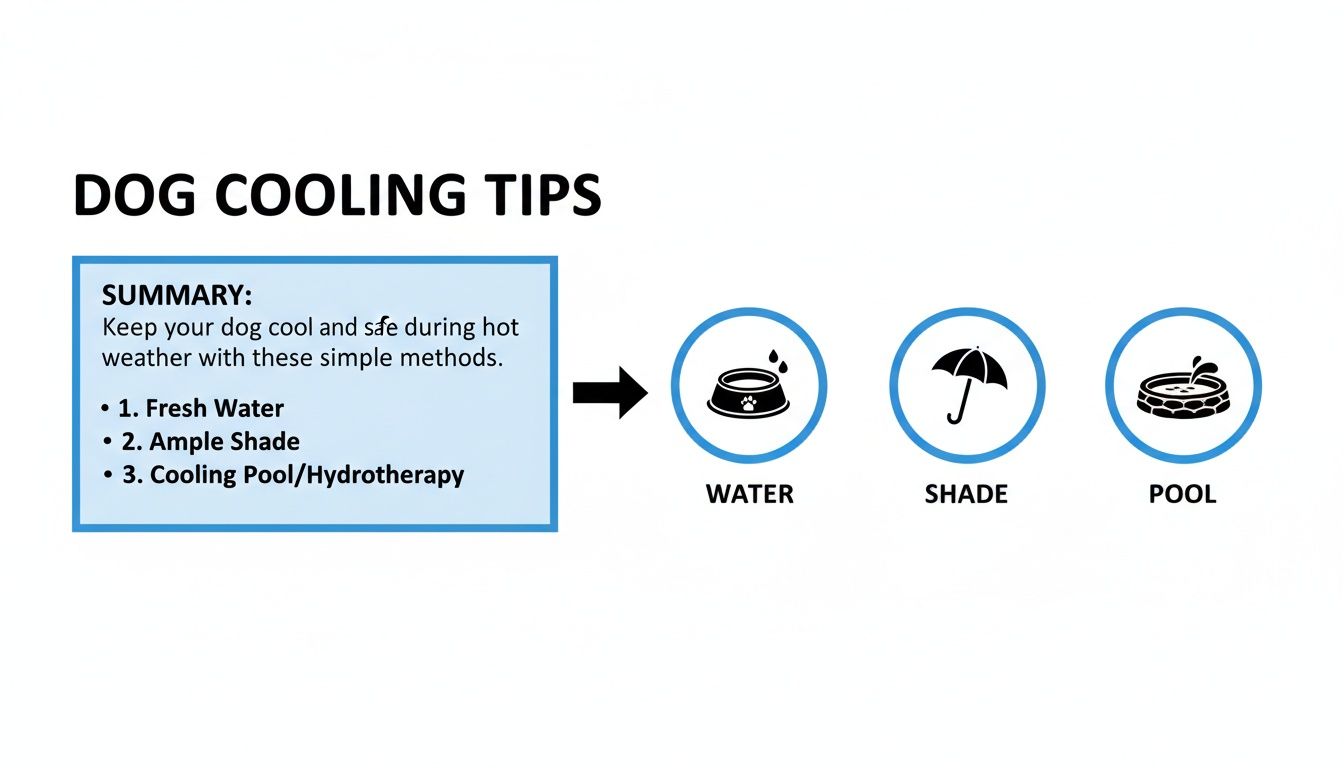
Think of it as your summer safety checklist: constant fresh water, reliable shade, and a fun way to cool off, like a kiddie pool.
Protect Their Paws from Hot Surfaces
What your dog is walking and lying on is just as important as the air temperature. The ground can get dangerously hot, fast. A dog’s paw pads are tough, but they're no match for scorching surfaces that can cause serious burns.
Here are a few common culprits to watch out for:
- Asphalt and Dark Pavers: These are the worst offenders. They soak up heat and can reach temperatures high enough to burn paws in less than 60 seconds .
- Artificial Turf: It might look cool and green, but synthetic grass can get surprisingly hot in the sun. It's a key safety point to consider when you're asking if is synthetic grass safe for dogs.
- Sand and Concrete: Even lighter-colored hardscaping isn't totally safe. During the hottest parts of the day, these surfaces can still be incredibly uncomfortable and potentially damaging.
Pro Tip: The Five-Second Rule
Here’s a simple trick I use all the time. Press the back of your hand firmly against the pavement or surface in question. If you can’t comfortably hold it there for five full seconds , it’s definitely too hot for your dog to walk on.
Whenever possible, keep your dog on natural grass or in a shaded area with cooler ground like dirt or mulch.
The ground can get surprisingly hot, even on a moderately warm day. Here's a quick look at common surfaces you'll find in your yard or on a walk and how safe they are for your dog's paws.
Safe vs Unsafe Summer Surfaces for Dog Paws
| Surface Type | Heat Risk | Safety Recommendation |
|---|---|---|
| Asphalt/Blacktop | Very High | Avoid completely during peak sun. Can cause severe burns in under a minute. |
| Artificial Turf | High | Gets very hot in direct sun. Hose it down with water before use or avoid during midday. |
| Concrete/Pavers | Moderate to High | Absorbs and retains significant heat. Use the five-second rule before walking. |
| Sand/Beach | Moderate to High | Can get extremely hot. Stick to wet sand near the water line or walk during cooler hours. |
| Natural Grass | Low | Generally safe. Stays significantly cooler than man-made surfaces. |
| Dirt/Mulch | Low | A great choice for shaded areas. Retains moisture and stays cool. |
The key takeaway is to be mindful of where your dog is walking and resting. An easy upgrade is to add an elevated, cot-style dog bed to a shady spot. This gets them off the hot ground and allows for crucial airflow underneath, which makes a huge difference in their comfort. Combining smart shade with safe surfaces is the foundation for creating a backyard your dog can enjoy all summer long.
Know What to Look For: Recognizing Heat Stress and Heatstroke
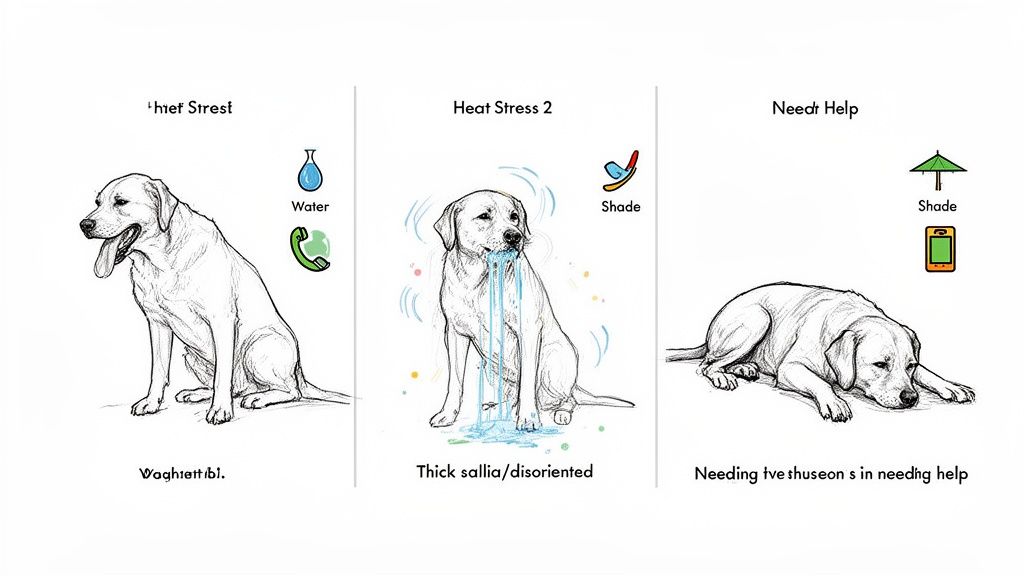
All the shade and water in the world won't help if you can't spot the signs of a dog in trouble. Heat stress can spiral into a life-threatening emergency with terrifying speed, so learning to recognize the earliest warning signs is one of the most important things you can do for your dog.
It often starts subtly. You might notice your dog is panting way harder than usual, even when just lying in the shade. It’s not their normal, happy, post-play pant; it sounds raspier, more frantic. This is your dog's cooling system kicking into overdrive, and it's the first red flag that they’re struggling.
From there, pay attention to their drool. If it becomes thick, sticky, and almost rope-like, that’s another tell-tale sign of distress. Take a look at their gums, too. Gums that are bright, almost brick-red, indicate their body is working desperately to push blood to the surface to cool down.
From Mild Stress to a Full-Blown Emergency
When heat stress progresses to heatstroke, the symptoms shift from physical to neurological. Your dog might suddenly seem clumsy, disoriented, or wobbly on their feet as if they’re drunk. This is a very clear signal that their internal systems are beginning to fail.
These are the critical signs that mean you need to act immediately :
- Excessive Panting: The panting is loud, rapid, and doesn't ease up even after they’ve been resting for a few minutes.
- Thick Saliva and Bright Red Gums: Classic signs of severe dehydration and a body under immense strain.
- Weakness or Collapse: Your dog is stumbling, struggling to stand, or simply can’t get up.
- Vomiting or Diarrhea: As the body becomes overwhelmed by heat, the digestive system is often one of the first things to go haywire.
- Disorientation: They seem confused, don't respond to their name, or have a glazed-over look in their eyes.
Don't underestimate how serious this is. The scale of heat-related pet deaths is a sobering reality. Between 2018 and 2022, there were over 250 formally documented cases of animals dying from heat, and that’s just what gets reported. Texas saw 40 of those deaths, a stark reminder of the risks in hot climates. You can dig into the data on heat-related pet deaths to truly grasp the danger.
If your dog is stumbling, vomiting, or seems confused, you are past the point of "wait and see." This is a medical emergency. Your job is to start cooling them down while getting ready to leave for the emergency vet.
Your Immediate Action Plan
When you suspect your dog is overheating, every single second counts. Your response can absolutely be the difference between a close call and a tragedy.
- Move Them. Now. Get your dog out of the sun and into the coolest spot you can find—an air-conditioned room is best, but deep shade will do.
- Apply Cool Water. Use cool water, never ice-cold , to begin lowering their body temperature. Hosing them down or applying wet towels to their paws, groin, and neck is highly effective because major blood vessels are close to the skin in these areas. Please, no ice water—it can cause blood vessels to constrict, which actually traps heat inside their body.
- Offer Water to Drink. Let them drink small amounts of cool water. Don't force it, though, as they could accidentally inhale it.
- Call Your Vet. This is non-negotiable. Call your vet or the nearest emergency animal hospital and tell them you’re on your way with a dog suffering from heatstroke. This gives them time to prepare. Even if your dog seems to be bouncing back, they need to be checked by a professional for internal organ damage.
Smarter Exercise for High-Energy Dogs in the Heat
If you own a high-energy dog, you know that just skipping a walk on a hot day isn't really an option. A cooped-up Border Collie or an under-exercised Lab can quickly become a destructive, anxious mess. The key isn't to stop moving entirely, but to completely rethink your routine to beat the heat.
Your dog’s biggest enemy on a summer day is the midday sun. It turns a simple walk into a genuinely risky endeavor. The most crucial adjustment you can make is to shift all strenuous exercise—we're talking running, fetching, or intense play—to the coolest parts of the day. That means you're either an early bird, getting out before the sun heats up the pavement, or a night owl, waiting until well after sunset.
Rethink Your Workout Routine
When the temperature soars, it’s time to get creative. High-impact outdoor activities are off the table, but you can swap them for lower-impact alternatives that still provide plenty of physical and mental stimulation.
- Embrace Water Workouts: If you have a water-lover, swimming is the absolute best summer exercise. It’s a fantastic, full-body workout that keeps your dog cool while being incredibly gentle on their joints. A win-win.
- Bring the Fun Indoors: Your air-conditioned living room can easily become a training arena. This is the perfect time to work on new tricks, practice obedience commands, or set up some nose work games by hiding smelly treats around the house. You'd be surprised how tired a dog can get from just using their brain.
- Focus on Skill-Building: Use the heat as an opportunity to work on leash manners or other training goals. Find a cool, shady spot and keep the sessions short and sweet.
A tired dog is a happy dog, but a safe dog is what matters most. Swapping a grueling midday run for a fun, cool indoor training session is a smart trade-off that keeps your high-energy companion fulfilled without the risk of overheating.
Mental Stimulation Is Your Best Friend
Never underestimate how exhausting mental exercise can be for a dog. Puzzle toys, snuffle mats, and focused training games are fantastic tools for hot days.
A solid 15-minute session working on a new command or a complex trick can burn a surprising amount of mental energy, leaving your pup calm, content, and ready for a nap.
For breeds that seem to have endless energy, like Labs, it's vital to understand their specific needs. You can learn more about fine-tuning their activity levels in our guide on Labrador exercise requirements by age, which has great insights that apply to any active breed.
By strategically adjusting when and how you exercise, you can manage your dog’s energy and keep them safe all summer long. A thoughtful, flexible approach ensures they get the stimulation they crave without putting them in danger.
Got Questions About Summer Dog Safety? We've Got Answers.
Even the most prepared dog owner runs into questions when the mercury starts to rise. Getting straight answers helps you make smart, confident choices to keep your dog safe and comfortable when the heat is on.
Let's dive into a few of the most common concerns we hear from fellow dog lovers.
What Are the Best Cooling Products for an Outdoor Dog?
When you're looking at cooling gear, the name of the game is sustained relief. For active dogs, I'm a big fan of evaporative cooling vests—they work wonders when your dog is on the move. But for just lounging around, an elevated mesh bed is non-negotiable. It gets them off the hot ground and lets air circulate underneath.
Pressure-activated gel mats are another solid choice, especially for older or less active dogs who just want a cool spot to nap. A word of caution: always keep an eye on your dog with these to make sure they aren't treating it like a chew toy. You definitely don't want them ingesting that gel. And never underestimate a simple frozen "pupsicle" made from chicken broth for a quick, hydrating treat.
Is It Ever Okay to Leave My Dog Outside All Day in the Summer?
In a word? No. Honestly, leaving a dog outside all day during a summer heatwave, even with plenty of shade and a full water bowl, is playing with fire. A doghouse can quickly turn into an oven, and even a shady spot can become dangerously hot as the sun moves.
Dogs often don't drink enough water on their own to truly counteract extreme heat, which puts them on a fast track to dehydration. The safest approach is always giving them access to an air-conditioned space so they can get out of the heat during the hottest hours of the day.
The gold standard of summer safety is choice. Giving your dog the ability to move between a secure yard and a cool house lets them regulate their own temperature. They know when they need to seek relief better than we do.
How Does Humidity Play a Role in All This?
Humidity is a massive, and often overlooked, danger. We all know dogs cool themselves by panting, a process that works by evaporating moisture from their tongue and respiratory tract.
But what happens when the air is already full of moisture? That evaporation process slows to a crawl, making it incredibly difficult for your dog to cool down. This is why a humid 75°F day can actually be more dangerous than a dry 85°F day. Always look at the "heat index," not just the temperature, to understand the real risk.
You can find more in-depth answers and explore other common questions over in our extensive dog care FAQs section.
Are Certain Dog Breeds More at Risk for Heatstroke?
Yes, absolutely. A dog's breed can make a world of difference in how they handle heat.
- Brachycephalic (Flat-Faced) Breeds: Pugs, French Bulldogs, Boxers, and other pups with short snouts are at the top of the high-risk list. Their compromised airways make it incredibly hard for them to pant effectively.
- Thick-Coated Breeds: Think Huskies, Malamutes, and Bernese Mountain Dogs. Their glorious double coats are fantastic insulators for cold weather, but they can be a real burden in the summer heat.
- Other Vulnerable Dogs: Keep an extra close watch on large and giant breeds, senior dogs, very young puppies, and any dog that's overweight or has an underlying health issue. They are all far more susceptible to overheating.
Knowing your own dog's specific risk factors is the first step to creating a summer care plan that truly keeps them safe.
When your schedule is packed, it can be tough to make sure your dog gets the safe, supervised exercise they need. Denver Dog offers professional on-leash running, walking, and hiking adventures to keep your best friend active and happy. See how we can help at https://www.denverdog.co.
The Run Down