Preventing separation anxiety isn't about managing a problem after it starts; it's about proactively teaching your dog to feel confident and secure on their own. It's a blend of building independence, meeting their needs, and creating a predictable rhythm to their day. When done right, your leaving home isn't a trigger for stress—it's just a normal, peaceful part of their routine.
The Post-Pandemic Problem: Why Dog Separation Anxiety is Spiking
Does the thought of leaving your dog alone tie your stomach in knots? You’re definitely not alone. For thousands of people who brought a dog home during the peak of remote work, the shift back to the office has created a whole new kind of stress. Your dog, who has only ever known a life with you by their side, is suddenly facing hours of solitude for the first time.
This sudden change is causing a massive spike in separation-related behaviors. When a dog is barking, chewing up the doorframe, or having accidents, they aren't being "bad." They're panicking. These are the outward signs of genuine distress from a dog who simply never learned the essential skill of being by themselves.
The Numbers Tell the Story
The data on this is pretty staggering. A major 2022 survey showed a 760% increase in reported cases of dog separation anxiety since 2020. Anxious behaviors shot up from affecting just 5.50% of dogs to a shocking 47.38% . It’s no coincidence that this happened right after more than 23 million American households adopted a dog, often into a home where someone was always present. You can dig into more of the fascinating data from this pivotal study on pet anxiety trends.
This guide is designed to help you get ahead of this modern challenge. We'll lay out a proactive plan with real-world strategies to help you raise a resilient, confident dog who is just as happy napping on the couch as they are greeting you at the door.
The goal is simple: teach your dog that being alone is safe and maybe even a little boring (in a good way!). You want to transform your departure from a moment of fear into a cue for them to settle in for a nice, quiet nap.
What You'll Learn in This Guide
We're going to arm you with everything you need to foster that healthy independence. Here’s a look at what we’ll cover:
- Spotting the Early Warning Signs: Learn to recognize the subtle cues of distress before they snowball into a bigger issue.
- Building Independence, Step-by-Step: We’ll walk through practical desensitization exercises you can start doing today.
- The Power of a Good Routine: Discover how predictable schedules for exercise, enrichment, and quiet time create a powerful sense of security.
- Handling the Bumps in the Road: Get real advice on what to do when training hits a snag and when it’s time to bring in a professional for backup.
By focusing on prevention, you can set your dog up for a lifetime of calm confidence, making your time apart as peaceful as your time together.
Building a Foundation of Independence and Confidence
The key to preventing separation anxiety is to teach your dog that being alone is normal, safe, and nothing to worry about. We're not trying to make them love when you leave—we're giving them the confidence and coping skills to handle it calmly until you get back. It’s all about reshaping their emotional response to solitude, starting with small, achievable steps.
This issue has become much more common recently, largely due to shifts in how we live and work. For many dogs adopted over the past few years, a house full of people 24/7 was their first reality.
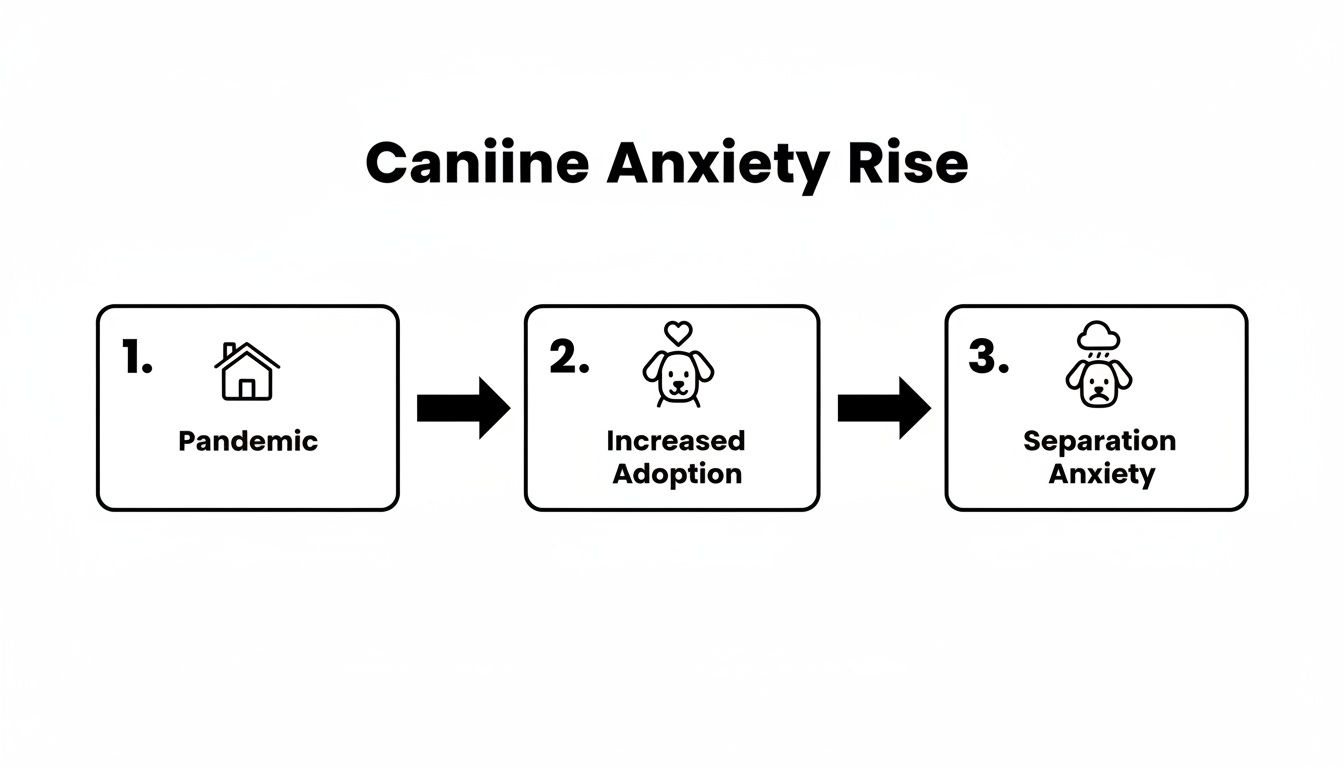
This constant companionship, while wonderful, accidentally set the stage for hyper-attachment. Now, as routines change, these dogs are struggling to adapt.
Desensitizing Departure Cues
Does your dog start pacing the second you grab your keys? That’s because they’ve learned that keys, shoes, and purses are reliable predictors of you leaving. Our job is to make those cues meaningless.
This training technique is called desensitization . You essentially break the association between these everyday objects and the stress of your departure by performing the actions without actually going anywhere.
Think of it as running "departure drills." Throughout the day, when you have no plans to leave, try these:
- Pick up your car keys, walk into the kitchen, and set them on the counter.
- Put on your jacket, then go sit on the couch for 10 minutes before taking it off.
- Grab your work bag and just move it to another room.
Do these "false departures" often. At first, your dog will probably still get anxious, but over time they’ll realize these actions don't always lead to them being left alone. This simple practice can dramatically lower their baseline anxiety.
Fostering Calm Independence
A confident dog is one who understands they can be content without constant attention. This isn’t about ignoring your dog—it’s about intentionally creating moments of calm separation, even while you’re home.
A fantastic tool for this is "place" training. Teaching your dog to go to a designated spot, like their bed, and relax there is a game-changer. Start with very short durations while you’re only a few feet away, rewarding them for staying put. Slowly, you can increase the time and distance, showing them that chilling out on their own is a behavior that earns them good things.
Rewarding your dog for choosing to be independent is far more powerful than only giving them attention when they're demanding it. If you see them resting quietly in another room, walk over and calmly place a treat between their paws.
This helps build a powerful new association in their mind: calmness and independence are rewarding . It shifts their focus from needing you for security to finding that security within themselves. Understanding these subtle signals is crucial, and you can learn more about how to read dog body language for safer, happier walks and interactions: https://www.denverdog.co/how-to-read-dog-body-language-for-safer-happier-walks
The Power of Positive Associations
The last piece of the puzzle is to reframe what "alone time" means. Instead of it being a scary, boring void, we want your dog to see it as an opportunity for something special.
This is where high-value, long-lasting enrichment toys become your best friend. These are the super-exciting treats and puzzles your dog gets only when you're about to leave.
Examples of High-Value Enrichment:
- A Kong stuffed with peanut butter or yogurt and frozen solid.
- A lick mat smeared with their favorite dog-safe spread.
- A tricky puzzle feeder that makes them work for their kibble.
Giving them a mentally engaging and delicious project right before you walk out the door shifts their focus entirely. Their brain gets busy solving the puzzle, and the physical act of chewing and licking is naturally calming for dogs. This simple ritual can turn a moment of potential panic into one of happy anticipation.
For puppies, this training goes hand-in-hand with other crucial early lessons. A big part of their development is learning independence alongside good house manners. For instance, knowing how to potty train a puppy is about more than just preventing accidents; it's about building structure and confidence, which are the cornerstones of a secure, well-adjusted adult dog.
The Power of Structured Exercise and Mental Enrichment
We've all heard the old saying, "a tired dog is a happy dog." And while there's some truth to it, preventing separation anxiety is a bit more nuanced than just running your dog ragged. The real key isn't just physical fatigue; it's about satisfying their deep-seated need for both purposeful work and a mental challenge.
Letting your dog zoom around the backyard for an hour is great exercise, but it often fails to touch the restless, anxious energy that fuels problem behaviors. Sometimes, that kind of unstructured play can even make a dog more wound up. The solution is structured exercise —activities that engage a dog's body and mind at the same time, leading to a much deeper sense of calm and fulfillment.
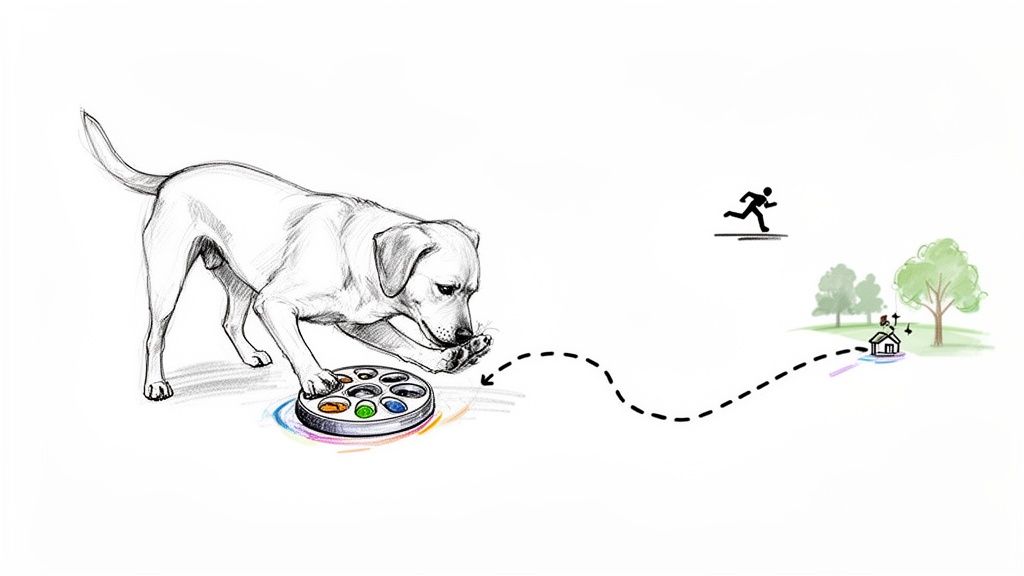
This is the kind of activity that drains the specific pent-up energy that might otherwise become destructive chewing or frantic barking when you're gone. Think of a brisk on-leash walk where they have to match your pace, a focused jog together, or a hike on a new trail with new smells. These are all perfect examples of purposeful physical work.
It's Not Just Physical—Their Brains Need a Workout, Too
True prevention comes from a healthy balance of physical exertion and mental enrichment. Here’s a way to think about it: a long run tires out your dog’s legs, but a puzzle toy tires out their brain. A dog who is only physically exhausted can still be mentally bored, and a bored brain is an anxious one.
A dog’s brain needs a job. When we don't give them one, they often invent their own—like "redecorate the living room with couch stuffing" or "alert the entire neighborhood to the mail carrier's presence."
Enrichment gives them an appropriate outlet for their incredible cognitive abilities, satisfying their instincts to problem-solve, sniff, and explore. This is where getting a little creative pays off big time.
Some of my favorite mental enrichment activities include:
- Puzzle Feeders: Ditch the food bowl and make your dog work for their meal. A simple puzzle toy can turn a two-minute feeding frenzy into a 20-minute cognitive challenge.
- Scent Games: Hide some high-value treats around the living room and encourage your dog to "find it." This taps directly into their powerful sense of smell and is incredibly satisfying for them. It’s like a treasure hunt!
- DIY Obstacle Courses: You don't need fancy equipment. Use pillows, boxes, and blankets to create a simple course in your living room for your dog to navigate.
These activities are perfect for rainy days or as a calming ritual right before you leave the house. They build confidence and teach your dog to channel their energy into something constructive.
Building a Balanced Routine That Works for You
The ultimate goal is to create a predictable weekly schedule that meets all your dog’s needs. For a dog, predictability equals security. A solid routine reduces the uncertainty that can trigger anxiety because they know what to expect from their day.
Let's be realistic, though. For most busy professionals, providing enough structured exercise during a hectic workweek is a major challenge. This is where professional services can be a total game-changer. A midday session with a dedicated dog walker or hiker gives your dog a crucial outlet for energy right in the middle of their day alone. It’s worth taking a look at a guide to dog walking services in Denver to see what kind of options might fit your lifestyle.
To show you how this all comes together, I’ve put together a sample weekly schedule that integrates professional help with easy at-home enrichment.
Weekly Enrichment Schedule for a Busy Professional
This table gives you a practical look at how you can blend professional services with at-home activities to keep your dog's mind and body engaged throughout the week.
| Day | Morning Activity (15-20 min) | Midday Activity | Evening Activity (30-45 min) |
|---|---|---|---|
| Monday | Puzzle feeder with breakfast | Professional Dog Walker | Training session (5-10 min) & Scent games |
| Tuesday | Short walk with "sniff" breaks | Frozen Kong | Structured on-leash neighborhood walk |
| Wednesday | Lick mat with yogurt | Professional Dog Hiker | Cuddle time & calm grooming |
| Thursday | Puzzle feeder with breakfast | Playdate with a known dog | Training session & DIY obstacle course |
| Friday | Short "find it" game | Professional Dog Walker | Long, relaxing walk to decompress |
A schedule like this ensures your dog's day is broken up with engaging activities so they aren't just watching the clock, waiting for you. By combining structured solo walks, professional adventures, and brain games at home, you’re creating a well-rounded dog who is far better equipped to handle time alone.
When you thoughtfully plan their physical and mental stimulation, you're not just preventing bad habits. You're actively building a more resilient, confident, and settled companion.
Creating Predictable Routines and Safe Spaces
Dogs thrive on predictability. Seriously, they're creatures of habit who find immense comfort in knowing what’s coming next. A life without a clear rhythm can feel chaotic and stressful, which is precisely why a consistent routine is one of the most powerful tools we have for preventing separation anxiety.
When your dog understands the basic flow of their day, your departure becomes just another part of that predictable pattern—not a sudden, terrifying abandonment. This structure creates a bedrock of security that acts as a powerful buffer against anxiety, allowing them to relax instead of being on high alert, wondering when they'll eat, go out, or see you again.
Building a Safe Den with Crate Training
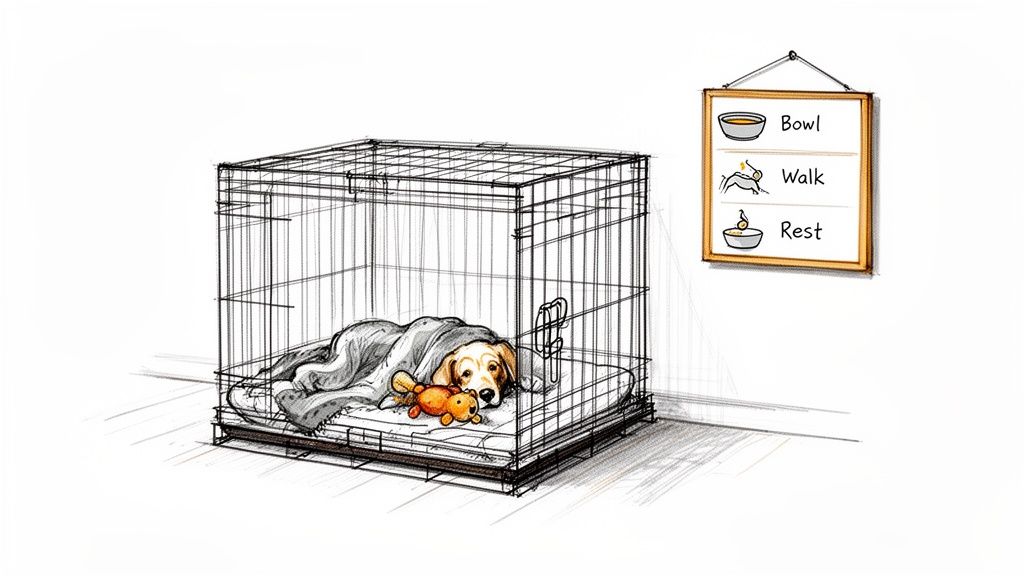
Let’s talk crates. One of the best ways to give your dog a sense of stability is through proper crate training. The key is to completely reframe what a crate is. It’s not a "cage" or a time-out spot. It’s your dog's personal den—a safe, cozy retreat where they can go to feel secure and have their own space.
When we introduce it the right way, a crate taps directly into a dog's natural instinct to seek out small, enclosed spaces for rest. The entire goal is to make the crate the best place in the house.
Here’s how to make it irresistible:
- Exclusive Rewards: Save the really good stuff for the crate. Think puzzle feeders or a frozen Kong that they only get when they’re inside.
- Dining In: Start feeding your dog their meals inside the crate with the door wide open. This builds an incredibly strong, positive link between the crate and something they already love.
- Make it Cozy: Pad it with comfortable bedding and maybe even drape a blanket over the top to make it feel more den-like.
And the golden rule? Never use the crate for punishment. Doing so will completely undo all your hard work and can actually make anxiety worse. The crate must always, always be a sanctuary.
The Power of a Consistent Daily Schedule
Beyond the crate, a predictable daily schedule is your secret weapon. This doesn't mean you need to live by a rigid, minute-by-minute timetable, but having consistent “anchor points” throughout the day makes a world of difference.
A reliable schedule takes the guesswork out of your dog's life. When they learn to anticipate mealtimes, potty breaks, and playtime, it lowers their overall stress. They know their core needs will be met at roughly the same times each day, which makes them far more resilient when their routine is temporarily disrupted by your absence.
Your dog’s internal clock is surprisingly accurate. A consistent routine helps them understand that even if you leave, the good parts of their day—like their evening walk or dinner—are still going to happen right on schedule.
Creating that secure personal space is crucial. For tips on selecting a comfortable carrier that can double as a familiar den, you might find some helpful ideas in this article on choosing an airline pet travel carrier. A well-chosen carrier can serve as a portable safe space, reinforcing feelings of security both at home and on the go.
A simple, repeatable structure is all it takes.
Here’s what some daily anchors could look like:
- Morning: Wake up, straight outside for a potty break, then breakfast (maybe in a food puzzle to engage their mind).
- Midday: Another potty break and a short play or training session. For those with busy work schedules, this is the perfect slot for a dog walker or hiker to come by for that crucial outlet.
- Evening: Dinner, followed by a good structured walk or run to burn off any remaining energy.
- Bedtime: One last potty break, then it’s time to settle down for the night.
By creating this predictable framework, you're giving your dog the stability they need to feel confident and secure. This routine, combined with a safe and inviting den, forms a powerful defense against separation anxiety, teaching them that they are safe and okay—even when they're on their own.
Troubleshooting Setbacks and When to Seek Help
Even with the best game plan, you're going to hit some bumps in the road. Preventing separation anxiety isn't always a straight line; setbacks happen, and that’s perfectly normal. The real skill is knowing when a small hurdle is turning into a persistent problem so you can pivot your strategy.
Maybe your dog, who once loved their crate, suddenly puts on the brakes and refuses to go in. Or perhaps a major life change, like moving to a new house or welcoming a baby, has shaken up your once-confident pup. These moments don't mean you've failed. They just mean it's time to troubleshoot.
When this happens, the first thing to do is go back to the basics. Think shorter, more successful training sessions. Make the crate an amazing place again by loading it with high-value treats they only get inside. If a routine change is the culprit, focus on bringing predictability back into their life wherever you can. It’s all about restoring that sense of security.
Recognizing Common Sticking Points
It helps to know what the common challenges look like so you can jump on them quickly. Spotting these issues early lets you get back on track before a minor worry becomes a deeply ingrained habit.
- Regression in Crate Training: Is your dog suddenly barking, whining, or digging to get out? This is a classic sign you’ve moved a little too fast. Just shorten their time in the crate and double down on making it a positive space with special toys and treats.
- Destruction of a New Item: They're ignoring their puzzle toy and have decided the corner of your new rug is a better chew toy. This could be a signal that the enrichment you’re providing isn't engaging enough or just doesn't last long enough to cover your absence. Time to level up with a more challenging, longer-lasting frozen Kong.
- Barking After a Change in Routine: Your new work schedule means you leave at a different time, and now the neighbors are complaining about non-stop barking. This is a textbook case of a broken routine causing stress. You'll need to re-establish predictability around your new departure time to calm their nerves.
Don't panic if you hit a setback. Honestly, think of it as your dog’s way of communicating that they need a little more help. Just pause, take a step back in your training, and focus on rebuilding their confidence at a pace they're comfortable with.
The goal is always, always to set your dog up for success. If they're struggling, it’s our job as owners to make the task easier until they can win again. This is how you build trust and reinforce the idea that being alone is totally manageable.
When to Bring in a Professional
So, how do you know if you're dealing with a temporary blip or a more serious issue that needs an expert? While the prevention techniques in this guide are incredibly powerful, some situations just call for professional intervention. At this point, you're no longer just preventing—you're treating.
It’s probably time to call for backup if you see any of these signs:
- Destructive behavior that could cause self-injury, like frantically chewing on door frames or trying to break out of a metal crate.
- Constant vocalization (howling or barking) that carries on for most of the time you’re gone.
- Signs of extreme panic, such as excessive drooling, nonstop pacing, or having accidents in the house when they are otherwise perfectly potty-trained.
- Zero progress or worsening symptoms even after you've been consistently applying these strategies for several weeks.
These aren’t just quirks; they are indicators of true separation anxiety, a clinical condition that often requires a much more intensive plan.
Finding the Right Expert
When you need to call in a pro, you have a few excellent options. A Certified Applied Animal Behaviorist (CAAB) or a veterinary behaviorist (DACVB) are the top specialists in this field. They can properly diagnose the issue and create a detailed behavior modification plan.
Your regular veterinarian is also a fantastic starting point. They can rule out any underlying medical issues that might be contributing to the anxiety and, if necessary, may prescribe anti-anxiety medication to support your training efforts.
This is more relevant than ever, as anxieties in dogs have shifted dramatically. A 2022 study revealed that fear of strangers saw a staggering 295% surge post-pandemic, with 47% of owners also reporting separation-related problems. This makes sense—as dogs spent more time with us at home, their world shrank, making outside stimuli more frightening and amplifying their distress when left alone. You can read more about this in the new study on increased anxiety levels in pets. Reaching out to a professional will give you the expert guidance you need to address these deep-seated fears effectively.
A Few Common Questions About Separation Anxiety
When you're working on preventing separation anxiety, a lot of real-world questions pop up. It's totally normal. Let's walk through some of the most common situations I see with dog owners.
I Adopted an Older Rescue. Is it Too Late to Prevent Separation Anxiety?
Not at all! While starting with a puppy is the textbook ideal, you can absolutely build confidence and a sense of security in an older rescue. The key here, more than anything, is patience.
Go right back to the beginning, just like you would with a puppy. That means starting with incredibly short departures—I’m talking 30 seconds out the door and right back in. Reward them with something fantastic when you see calm behavior. Make their crate or a quiet corner of the house their absolute favorite place to be. For a rescue dog, a predictable daily routine is a game-changer; it provides the structure and safety they might have been missing. If you feel like you're stuck, don't hesitate to find a behaviorist who specializes in rescues. They can be worth their weight in gold.
Should I Just Get a Second Dog to Keep Mine Company?
I hear this one all the time. It seems logical, but it’s a huge gamble that almost never pays off. In fact, it can make things much, much worse. Separation anxiety is rarely about being lonely for another dog—it’s about a deep-seated panic over you leaving.
The last thing you want is for your anxious dog to model that behavior for the newcomer. Through social learning, you can end up with two distressed dogs instead of one. Before you even think about adding another furry family member, you need to focus on building your current dog's independence. Once they are confident and relaxed on their own, then you can decide if another dog is a good fit for your life for the right reasons—not as a quick fix for anxiety.
A new dog is a massive commitment, not a band-aid. Always treat the root cause of your current dog's anxiety first.
Once My Dog Seems Okay, How Long Can They Realistically Be Alone?
This really depends on the individual dog—their age, breed, personality, and health all play a role. A healthy, well-adjusted adult dog with no anxiety history can often handle a typical 8-9 hour workday, but only if they get a solid midday break. That break isn't just for a potty trip; it's a crucial reset button for their brain and body.
Puppies under six months old? That's a whole different ballgame. They need to go out far more often and can’t be left alone for more than a couple of hours at a time. Pay close attention to your dog's behavior. If you’re coming home to messes or chewed-up furniture, you’re asking for too much, too soon. The goal is to always make sure their needs are met so they can succeed.
Have more questions about general dog care? You can find a lot more information over on our Denver Dog FAQs page.
A structured midday break with Denver Dog is one of the best ways to ensure your dog’s needs are met while you’re at work. A professional walk, run, or hike gives them the physical and mental stimulation they need to stay happy and relaxed until you get home. Book a session at https://www.denverdog.co.
The Run Down