Is your dog currently treating your living room like a personal racetrack while you stare out at the frozen tundra that was once your backyard? If so, you're in good company. The secret to winter exercise isn't about toughing it out for an hour in the freezing cold; it’s about swapping those long summer strolls for shorter, more intense outdoor sessions and boosting their indoor mental workouts.
This is your game plan for keeping that energetic pup happy, healthy, and tired, even when the temperature plummets.
Why Winter Dog Exercise Is a Whole Different Ball Game
Let's be honest, winter in Denver throws a wrench in our usual dog-walking routines. When the sidewalks are a sheet of ice and the wind feels like it's slicing right through you, mustering the motivation to get outside is tough—for both of us.
This isn't just a feeling; it's a fact. We see a huge drop in dogs' activity levels during the colder months, which often leads to weight gain, boredom, and the kind of destructive behavior that has you hiding your favorite shoes.
This seasonal slump is especially tough on owners of high-energy breeds. Take a young Lab, for example. They need consistent, daily activity to thrive. You can get the full scoop in our guide to Labrador exercise requirements. A missed walk for them isn't just a missed potty break; it’s a buildup of pent-up energy that will find an outlet, one way or another. Hello, chewed-up couch cushions.
The Numbers Don't Lie
A revealing 2021 study put some hard data to what we all experience. It found that a staggering 48.2% of dog owners are less likely to exercise their dogs in cold weather. That number jumps to 64.0% when you factor in icy conditions.
In colder climates, dogs were found to get just 41.6 active minutes a day on average. For anyone in Denver who's stared down an icy Front Range sidewalk, that number probably doesn't come as a surprise. You can dig into the full pet activity study on pmc.ncbi.nlm.nih.gov for more insights.
The goal isn't to perfectly replicate your summer routine in single-digit temperatures. It's about adapting. You need to make your outdoor time more efficient and your indoor time more engaging. This simple shift in mindset is what will get you and your dog through the winter months with your sanity intact.
This guide goes beyond the basic "put a coat on your dog" advice. We're getting into the practical, real-world strategies that actually work.
We’ll cover:
- How to quickly check if it's safe to go outside.
- The essential gear that's worth the investment.
- Creative ways to burn off energy indoors without sacrificing your security deposit.
Think of this as your roadmap to not just survive the season, but to make it a genuinely fun and active time for you and your dog. We'll show you exactly how to keep them physically fit and mentally stimulated, no matter what Colorado's weather decides to do next.
Your Pre-Walk Winter Safety Check
Before you even reach for the leash on a chilly Denver day, there's a quick but essential safety check you need to run through. This is about more than just peeking at the thermostat; it's about developing an instinct for what the conditions really feel like for your dog and knowing how to read their specific needs.
Getting this right is the difference between a fun, brisk walk and a miserable, potentially dangerous outing.
Reading The Environment Beyond The Thermometer
That number on your weather app? It's just a starting point. A 25°F day with a biting wind can feel far more brutal than a still, calm 15°F morning. Always look at the "feels like" temperature to get a true sense of the cold your dog will be facing.
Next, take a look outside. What’s the ground like? Fresh, powdery snow is one thing, but a sheet of ice is a slip-and-fall waiting to happen—for both of you. You also need to watch out for the chemical de-icers and rock salt common on Denver sidewalks. That stuff can cause painful chemical burns on your dog’s paw pads.
- Wind Chill: This is the real enemy. A strong wind can strip heat away from your dog's body in a hurry.
- Ground Conditions: Is it icy? Slushy? Covered in salt? This dictates your route and whether you need paw protection.
- De-Icing Chemicals: If you see that tell-tale white residue on the pavement, it’s a non-negotiable sign to either use paw protection or find a different path.
Understanding Your Dog’s Cold Tolerance
No two dogs are the same when it comes to cold. A Siberian Husky is literally built for this weather, but your neighbor's Greyhound or your friend's little Chihuahua? They're going to get cold, fast. Your dog's breed, coat type, age, and overall health are the biggest clues to how they'll handle the winter chill.
A dog’s excitement to go outside doesn't always equal tolerance for the cold. Their initial enthusiasm can easily mask their body's warning signs. You have to be the one to make the smart call.
Learn to watch their body language closely. If you see any of these signs, it's time to head home immediately:
- Shivering or trembling (the most obvious sign).
- Lifting paws off the cold ground, almost like they're dancing.
- A hunched-over posture with their tail tucked tightly.
- Whining , barking, or acting anxious.
- Suddenly slowing down or trying to pull you back toward home.
A winter walk should be a joy, not an endurance test. If your dog is telling you they're done, listen.
To make things even easier, here’s a quick-reference table to help you assess the day's conditions at a glance.
Winter Weather Safety Checklist for Denver Dogs
| Temperature Range (°F) | Risk Level for Small/Short-Coated Breeds | Risk Level for Large/Double-Coated Breeds | Recommended Gear & Precautions |
|---|---|---|---|
| 45°F and Above | Low | Low | Generally safe for all. Monitor elderly or health-compromised dogs. |
| 32°F to 45°F | Low to Moderate | Low | A light sweater or coat is a good idea for sensitive breeds. Check paws for ice balls. |
| 20°F to 32°F | High | Low to Moderate | Essential: Insulated coat and paw protection (boots or wax). Keep walks short ( 15-20 mins ). |
| Below 20°F | Extreme Risk | Moderate to High | Extreme caution advised. Limit outings to very brief potty breaks. Full gear is mandatory. |
This chart is a great starting point, but always trust your gut and your dog’s signals above all else.
This flowchart can also serve as a simple decision-making tool for those especially cold Denver days.
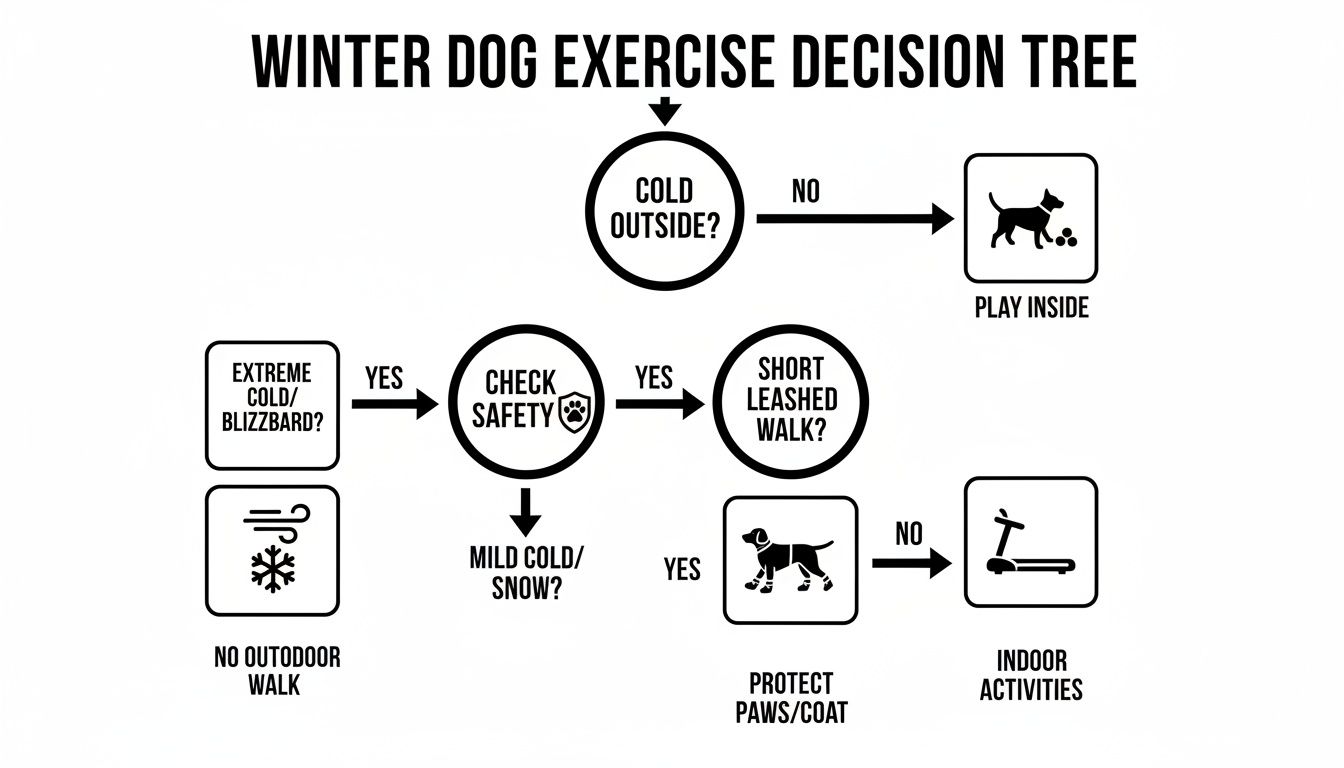
Use this visual guide to help you quickly choose between a safe outdoor adventure and a fun, cozy day of indoor enrichment.
Gearing Up for Winter Adventures
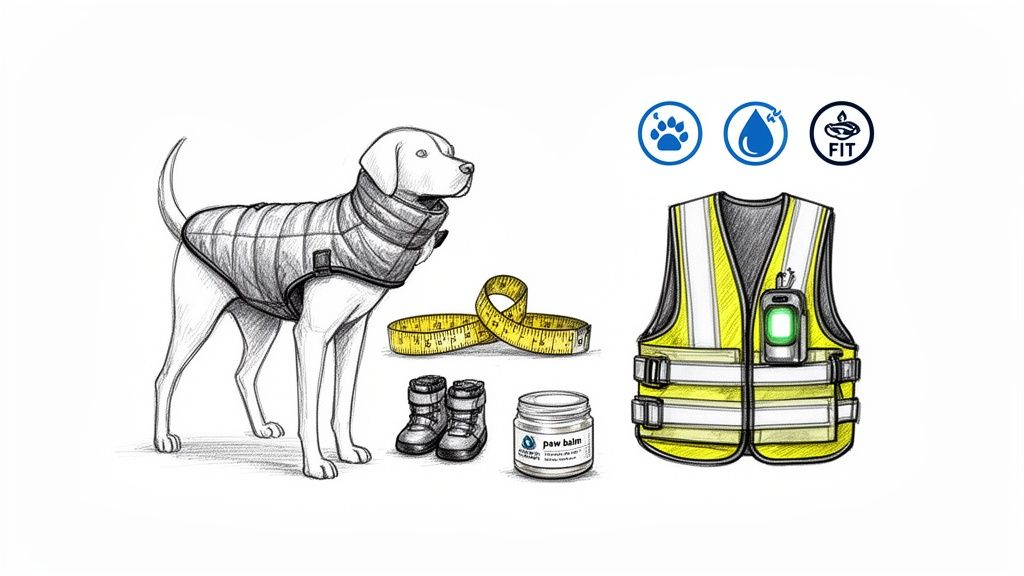
Let's break down the must-haves for your dog's winter wardrobe.
Choosing The Right Dog Jacket
Not all dog coats are created equal. That cute little sweater isn't going to do much when a cold front rolls down from the Rockies. What you really want is a jacket that provides solid insulation but doesn't restrict your dog's movement—they still need to be able to run and play comfortably.
For Denver's climate, a fleece-lined, water-resistant shell is usually your best bet. It does a great job of trapping body heat while keeping snow and slush out. Make sure the coat provides good coverage over their core, from the base of the neck to the tail, since that's where they lose the most heat.
The Great Paw Protection Debate
Your dog's paws are tough, but they're not invincible. Ice, jagged rocks, and especially the salt and chemical de-icers used on our sidewalks can do some serious damage. You basically have two choices here: boots or balm.
- Dog Boots: These offer the most complete protection from sharp ice and chemical burns. When you're shopping, look for a pair with flexible rubber soles for good grip and adjustable straps to get a snug, secure fit.
- Paw Balm or Wax: If your dog absolutely refuses to wear boots (and some definitely will), a good paw wax is the next best thing. It creates a protective barrier that shields their pads from salt and helps prevent those painful ice balls from clumping up between their toes.
If you go the boot route, the fit is everything. Have your dog stand on a piece of paper and trace their paw. Use the widest part of that tracing to find the right size. And please, introduce the boots slowly! Let them wear them around the house for a few minutes at a time, loaded with treats and praise, long before you attempt an outdoor walk.
A common mistake I see is people trying to force boots on their dog for the first time right as they're heading out the door. It rarely goes well. Build a positive association inside first, and they'll see the boots as just another part of the routine.
Being Seen When the Sun Goes Down
Winter in Denver means short days. With the sun setting before you even get home from work, you're going to be walking in the dark a lot more often. That's why visibility isn't just a nice-to-have; it's a critical piece of safety gear. Reflective equipment ensures that drivers, cyclists, and other people can spot you and your pup from a distance.
Here are a few great ways to light yourselves up:
- LED Collars or Harnesses: These things are fantastic. They actively light up, making your dog impossible to miss. Most are rechargeable and have different settings, like a steady glow or a flashing mode.
- Reflective Vests: A simple, lightweight vest can be worn right over their winter coat. They're covered in highly reflective material that lights up like a Christmas tree in a car's headlights.
- Clip-On Lights: These small but powerful little lights are super versatile. You can clip one to your dog's collar, the leash, or even your own jacket for an extra point of light.
By combining a few of these, you create a solid safety system. A dog in a warm coat, protective boots, and an LED collar is a dog that's ready for anything winter throws at them.
How to Adjust Your Outdoor Workouts When It's Cold
When the temperature drops, the game changes. Those long, lazy summer strolls just aren't practical—or safe—in the Denver winter. The new goal is efficiency. We need to shift our thinking to shorter, more intense bursts of activity that pack a powerful punch without prolonged exposure to the cold.
Think of it as trading a marathon for a sprint. These focused sessions burn maximum energy and provide crucial mental stimulation in a much shorter window of time. It’s a smarter way to exercise that keeps your dog safe and respects that all-too-familiar feeling of not wanting to be out in the freezing cold for too long.
The Power of Short, Intense Sessions
You don't need an hour at the park to get the job done. A brisk, 15-minute "power walk" during the warmest, sunniest part of the day can work wonders. This isn't just a quick potty break; it’s a focused walk with a steady, heart-pumping pace for both of you.
Sticking with it is what really matters. A 2017 UK study found that dedicated dog walkers stayed more active even on the coldest, darkest days, getting in an average of 2,900 more steps each day than people without dogs. It just goes to show that a consistent routine is a powerful motivator for both of you. You can read the full breakdown of the University of Liverpool study on ScienceDaily.com.
Your Warm-Up and Cool-Down Are Non-Negotiable
You wouldn't sprint full-speed into the cold without warming up, and neither should your dog. Launching into a high-impact activity on cold muscles is asking for a pulled muscle or other injury. A simple routine before and after your walk is essential.
Pre-Walk Warm-Up (2-3 minutes inside):
- Gentle Stretches: Encourage a "play bow" or a good stretch of their back legs.
- Slow Pacing: Walk them around the house for a minute to get blood flowing.
- Simple Commands: Run through a few "sits" and "downs" to get their brain and body engaged.
Post-Walk Cool-Down (2-3 minutes inside):
- Paw Check: The first thing you should do is wipe their paws with a warm, damp cloth. Get all the ice, salt, and de-icing chemicals off immediately.
- Slow Lap: Let them meander around a room while their heart rate comes down naturally.
- Towel Dry: If they're damp from snow, give them a good towel-off to help them warm up and stay comfortable.
This quick routine does more than just protect their muscles. It creates a clear signal that an activity is starting and ending, which can help calm down that frantic pre-walk excitement and help them settle faster when you get back inside.
Fun and Focused Outdoor Activities
Winter exercise doesn't have to be a chore. The key is to adapt your dog’s favorite games for the snow. A fenced-in yard or a safe, clear area in a park can become your personal winter gym.
Here are a few high-energy ideas to try:
- Snow Fetch: Throwing a ball in the snow is a whole different workout. Your dog has to bound and leap through the powder, which burns a ton of energy fast. Just be sure to use brightly colored toys that are easy to spot!
- Quick Sprints: If you have a clear, ice-free stretch of grass or packed snow, a few short sprints are perfect for burning off that explosive, pent-up energy.
- Winter Hikes: For dogs (and people) with a bit more stamina, a short winter hike is fantastic. The trails are quieter and the scenery is beautiful. For some great local options, check out our guide to paw-approved winter hikes near Denver.
By leaning into these quick, engaging activities, you can give your dog the physical release they need and have them back inside—tired, happy, and ready for a nap—before anyone gets too cold.
Creative Indoor Games That Burn Real Energy
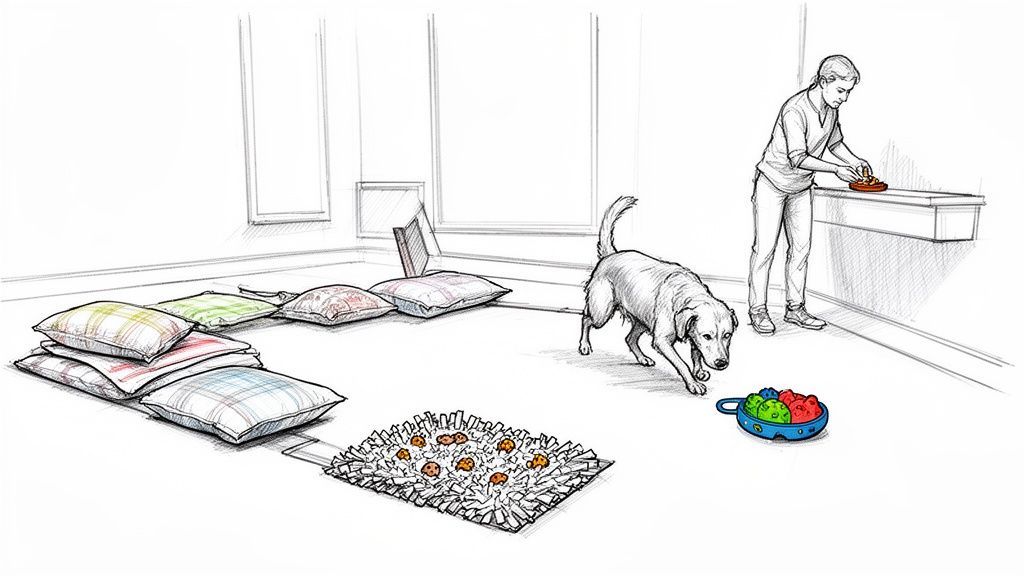
It’s time to think beyond a quick game of fetch down the hallway. You can engage both their brain and body, turning a snow day into a seriously productive (and fun) training opportunity.
Build a DIY Agility Course
You absolutely don't need professional gear to set up a fun agility course in your home. This is a fantastic way to burn off some of that pent-up energy while also sharpening your dog’s coordination and listening skills.
Raid your closets and living room for these everyday items:
- Pillows & Cushions: Arrange them in a line for your dog to weave through or hop over.
- A Broomstick: Lay it across two low chairs or stacks of books to create a simple jump.
- Blankets: Drape one over a couple of chairs to build a makeshift tunnel they can army-crawl through.
Lure your dog through the course with high-value treats and plenty of praise. The mix of physical movement and the intense focus needed to navigate the obstacles is a surprisingly effective way to tucker them out.
Engage Their Powerful Sense of Smell
A dog's nose is a superpower, and putting it to work is one of the best ways to provide enrichment and burn mental fuel. Scent work games are a quiet yet intense workout that can keep your dog happily occupied for ages.
Start with a simple "find it" game. Have your dog stay in one room while you hide a few smelly treats in another. Release them with a cue like "Find it!" and celebrate with them as they sniff out each prize. As they get the hang of it, you can start hiding the treats in trickier spots—under a rug, on a low shelf, or behind a chair leg.
Mental exercise is an "invisible" calorie burner. A 15-minute scent work session can be more exhausting for a dog than a 15-minute leash walk because it forces them to concentrate intensely, using a part of their brain that a simple walk doesn't engage.
For another easy option, try using puzzle toys or a snuffle mat . These tools force your dog to problem-solve for their food, turning a meal into a brain game. They’re also great for slowing down gulpers and providing that critical mental stimulation on days you can't get outside.
Even a focused, 15-minute session working on a new trick or practicing old commands can do wonders to beat cabin fever and keep everyone sane and happy.
Bringing in a Pro for Winter Peace of Mind
Let’s be honest. Some winter days in Denver, between a slammed schedule and sideways-blowing snow, a proper walk just isn't in the cards. This is exactly when leaning on a professional can be a total game-changer, not just for your dog's well-being but for your own sanity.
Hiring an expert is more than a convenience; it's about bringing in a partner who is genuinely invested in your dog's health. A professional dog runner or hiker knows exactly how to handle a dog safely in winter conditions. They show up with the right gear, they know which local trails are a muddy mess and which are good to go, and they have safety protocols down to a science. They know how to handle a powerful puller on an icy patch of sidewalk and can perfectly tailor the workout intensity for your specific dog.
Bridging the Winter Activity Gap
If you feel like your dog is less active in the winter, you’re not imagining it. The data actually backs this up. A massive 2025 study that tracked over 28,000 dogs discovered that their average daily activity plummets to just 41.6 minutes in colder climates.
That’s a big deal, especially for our high-energy Denver dogs, and that slump can quickly lead to problem behaviors. The study also found that 56% of owners admit they cut walks short when the temperature drops. Professional services are designed to bridge this exact gap. You can dive into the full research on canine activity levels on frontiersin.org if you want to see the numbers for yourself.
This isn’t just about a quick trip around the block. A good pro offers structured, engaging exercise that hits both physical and mental needs.
- Structured Runs: A focused run with someone who knows what they're doing can burn off serious energy in a short, safe amount of time.
- Safe Hiking: A pro knows which trails are safe and accessible right now, giving your dog that critical off-pavement enrichment they crave.
- Consistent Routine: Your dog gets their outing, no matter how wild your workday gets. That consistency is key to a happy, well-adjusted pup.
Hiring a professional provides the consistency your dog craves. It ensures they get safe, expert-led stimulation that keeps them happy and healthy all winter, even when your schedule is all over the place.
Ultimately, it’s about making sure your dog gets the expert care they deserve. This is where finding a trusted service becomes so valuable. If you're looking for more guidance on what to look for, check out our guide to dog walking services in Denver for tips on choosing the right fit for your pup. Think of it as an investment in your dog's happiness and your own serenity during the toughest months of the year.
At Denver Dog , we provide the professional, safe, and engaging winter exercise your dog needs. Our experienced team is ready to hit the trails or neighborhood sidewalks, ensuring your dog stays fit and happy, whatever the weather. Learn more about our services at https://www.denverdog.co.
The Run Down