A lot of owners arrive at the same point the same way. The morning walk happened, the food bowl is empty, your dog has already done two laps through the living room, and by midafternoon the zoomies start again. You're busy, your dog is bored, and a basic leash stroll clearly isn't cutting it.
That's where running starts to make sense.
For the right dog, running isn't just a harder walk. It's a shared job, a routine, and a clean way to turn excess energy into something useful. Dogs that struggle with restlessness, pacing, nuisance barking, or relentless toy shoving often aren't “bad.” They're underworked. Many owners are too. A structured run gives both of you something more productive than random bursts of activity around the house.
The benefits of running with your dog are real, but they only show up when the match is right. Some dogs are built for steady mileage. Some need a very gradual start. Some should stick to shorter outings, softer surfaces, or brisk walks instead. That readiness question matters more than most articles admit.
An Introduction to Running With Your Dog
A dog that wants more exercise usually makes that fact obvious. You see it in the pacing after dinner, the leash excitement at the front door, and the way your dog stays physically tired for only a few minutes after a standard walk. In a city routine, that mismatch happens all the time. The owner has a schedule. The dog has energy left over.
Running can solve that problem, but only when it's treated as training, not impulse.
A run asks more of a dog than neighborhood wandering does. It asks for pace, body awareness, leash manners, and enough fitness to handle repeated impact. That's why the idea is so useful. It gives high-energy dogs a clear outlet, and it gives owners a repeatable habit instead of hoping one longer weekend outing will carry the week.
A well-paced run often does more for a busy dog than an unfocused hour of stop-and-go stimulation.
It also changes the relationship. Dogs learn the pattern quickly. We move together, we stay connected, we settle after. That predictability is one reason running can improve not only fitness but also day-to-day behavior at home.
For urban owners, the appeal is simple. You don't need a huge yard. You need a dog that's physically ready, a sensible route, and a plan you can repeat. That's what makes running so valuable. It fits real life when it's done with judgment.
The Full Spectrum of Canine Running Benefits
Running works best when owners understand what it changes. The benefits of running with your dog aren't limited to “burning energy.” The payoff is broader than that. It reaches physical health, mental regulation, and everyday behavior.
Physical health benefits
Running with your dog can improve health on both ends of the leash. In a Swedish study cited by Outside on the benefits of running with your dog, dog owners had a 15% lower risk of cardiovascular disease , and the same source notes that dog owners have been shown to spend three times as much time exercising as non-dog owners. For dogs, Whole Dog Journal reports that running helps maintain weight, improve muscle tone, strengthen the cardiovascular system, and build endurance, as referenced in that same Outside article.
That matters in practice because running creates consistency. Consistency is what changes conditioning. One enthusiastic weekend hike doesn't replace regular, appropriately dosed aerobic work during the week.

A few physical changes owners often notice first:
- Better body condition: Dogs carrying extra weight usually move more efficiently once they have regular, controlled exercise.
- Improved stamina: The dog that starts by fading early often learns to settle into a sustainable rhythm.
- Stronger movement patterns: Repeated, moderate work can build useful muscle and better overall athletic coordination.
If you're building your own training plan, an exercise and workout platform can help organize your side of the routine so the dog's progress isn't held back by an inconsistent human schedule.
Mental and emotional effects
Running is physically demanding, but it also helps regulate the nervous system when the pace is steady and the session is well judged. Patricia McConnell's research summary, as reported in this discussion of health benefits of running with your dog, notes that after treadmill running, dogs and humans both showed increased anandamide, an endocannabinoid linked to runner's high. Walking didn't produce the same response in that study.
That's one reason a proper run often leaves a dog calmer than frantic fetch or chaotic overstimulation. The dog isn't just exhausted. The dog is more settled.
Practical rule: If your dog finishes a run more frantic than when they started, the session was probably too chaotic, too hot, too long, or too fast.
Behavioral improvements at home
Many behavior complaints are really lifestyle complaints. The dog digs, pesters, shreds paper, body-slams guests, or can't switch off in the evening. Owners often assume they need more obedience when the first fix is more appropriate exercise.
A structured running routine helps because it channels drive into something predictable. The dog gets a job, follows a pattern, and learns that forward movement happens under control. That can carry over into calmer leash handling, easier settling after exercise, and fewer stress behaviors indoors.
Running won't fix every training issue. It won't replace cue work, impulse control, or good household management. But with the right candidate, it creates the physical and mental baseline that makes the rest of training easier.
Is Your Dog a Natural Runner? Assessing Readiness
This is the question owners should ask first. Not “Is running good for dogs?” but “Is my dog ready for running right now?”
That distinction matters because many dogs want to go farther than their bodies should. Enthusiasm isn't fitness. It's common for a dog to pull out of the driveway like an athlete and then struggle halfway through because the owner mistook excitement for readiness.
Veterinary guidance summarized by VCA on running with your dog points to two issues owners can't ignore. About 50% of American dogs are overweight , and hot pavement can burn paw pads. The same guidance also warns that dogs should be fit and healthy enough before starting a running routine. That's why screening your own dog matters more than motivational advice.
What to look at before the first run
Start with four practical questions.
- Age: Puppies may have energy to spare, but that doesn't mean they're ready for repeated running. Growth and skeletal maturity matter.
- Body type: Some dogs are efficient movers built for sustained work. Others struggle with heat, impact, or breathing.
- Current condition: A dog who spends most days lounging indoors should not jump straight into jogging.
- Health and comfort: If your dog shows stiffness, hesitation, limping, or poor recovery after normal walks, running is not the next step.
For younger dogs, owners should also be cautious about distance and impact. If you're unsure where normal walking ends and too much begins, this guide on how far a puppy should walk is a useful place to start.
Dog Running Readiness Assessment
| Factor | Low Readiness (Caution) | Moderate Readiness (Start Slowly) | High Readiness (Good Candidate) |
|---|---|---|---|
| Age | Very young puppy or frail senior | Young adult or older dog with some conditioning | Skeletally mature adult with sound movement |
| Weight | Overweight or easily fatigued | Slightly deconditioned but comfortable on walks | Lean, active, recovers well after exercise |
| Breed and build | Flat-faced, heavy-bodied, or heat-sensitive build | Mixed traits, may tolerate short runs | Athletic build suited to steady movement |
| Health status | Existing pain, breathing concerns, or unresolved medical issues | Cleared for exercise but needs close monitoring | Healthy, fit, and comfortable with increased activity |
| Current routine | Mostly sedentary | Regular walks but little sustained aerobic work | Already active and eager without overarousal |
| Surface and climate tolerance | Struggles on pavement or in warm weather | Can handle select conditions with care | Comfortable on suitable surfaces in safe conditions |
No table can replace a veterinarian's judgment, but it can stop the most common mistake. Owners tend to ask what the dog enjoys, when they should first ask what the dog can safely repeat.
Readiness is about repeatability. A dog who can do one excited mile isn't automatically ready for a running program.
Dogs that need extra caution
Some dogs need a slower plan or a different activity entirely. Flat-faced dogs, dogs carrying extra weight, seniors with reduced mobility, and dogs with a history of heat intolerance often do better with brisk walking, hill work at a walk, or short intervals on soft ground.
That doesn't mean they can't exercise. It means they need a program built for their body, not for the owner's ambition.
From Couch to 5K Conditioning Your Canine Partner
Once a dog is cleared and looks like a sensible candidate, the next job is restraint. Most running injuries start with too much enthusiasm in week one.
Whole Dog Journal's guidance, summarized in its article on running with your dog, recommends easing in with alternating walking and running for no more than 20 minutes, three times a week . A typical starting point is 2 minutes of running followed by 2 minutes of walking , and the general guideline is not to exceed a 10% weekly increase in time or distance.

A simple starting plan
Keep the first month boring. That's usually the right speed.
-
Begin with brisk walking
Before any jogging, make sure your dog can walk with purpose without dragging, lagging, or showing sore paws afterward. -
Add controlled intervals
Use the 2-minutes-run, 2-minutes-walk structure. Keep the total session within the recommended time window and stop before your dog looks sloppy. -
Repeat, then build slowly
The body adapts to repetition. Don't add distance because one session felt easy. Add only small weekly increases.
A lot of owners underestimate recovery. The dog may look fine immediately after a run and then move stiffly later that evening or the next morning. That delayed feedback matters. For owners interested in better personal recovery habits alongside their dog's conditioning, this article on optimizing recovery tactics offers useful training context.
Here's a practical visual if you prefer to see progression cues in action:
What progress should actually look like
Progress is not your dog towing you faster. Progress looks cleaner than that.
- Smoother pacing: Your dog settles into the run instead of surging and weaving.
- Better recovery: Breathing normalizes more comfortably after the session.
- Stronger post-run behavior: The dog relaxes, hydrates, and rests instead of looking cooked or overstimulated.
If you want a more structured way to estimate workload before adding volume, Denver owners can use this dog exercise calculator for ideal activity.
Stop the session while your dog still looks good. That's how you build fitness instead of setbacks.
Essential Gear and Safety on the Run
Good gear doesn't make a bad running plan safe, but bad gear can ruin a good one fast. Most problems on dog runs come from friction, heat, poor restraint, or owners missing early signs that the dog is struggling.
The goal is simple. Keep movement efficient, keep communication clear, and avoid adding preventable stress to the outing.

Gear that helps instead of hinders
For most dogs, a well-fitted harness is a better choice than clipping the leash to a flat collar. Running puts repeated forward pressure on the body. A harness spreads that pressure more sensibly and usually gives the handler better control.
A few gear choices matter more than owners think:
- Harness over collar: Choose a non-restrictive fit that allows natural shoulder movement.
- Appropriate leash length: A standard running setup should keep the dog close enough for control but not so close that every stride causes tangles.
- Water and bowl: Dogs don't need marathon-style aid stations, but they do need sensible hydration planning.
- Reflective details: Low-light visibility matters in city neighborhoods and at trailheads.
If you're comparing options, this guide to finding the best running harness for dogs in 2026 can help narrow down what works for running rather than casual walking.
Safety decisions that matter more than gear
A smooth, steady run is part of safety, not just performance. The neurochemical reward discussed earlier depends on a structured pace, not chaos. When dogs surge, overheat, lunge, and stop-start their way through the outing, they're not getting the same settling effect.
That's why route choice matters. Sidewalks with repeated curb hops, heavy traffic, and hot surfaces can create a much rougher session than a calm route on forgiving ground.
Check conditions before you head out.
- Surface heat: Pavement can be the deal-breaker, especially during sunny urban afternoons.
- Weather: Heat, dry air, and abrupt cold all change what the dog can safely handle.
- Traffic and distractions: Some dogs run beautifully on a quiet path and unravel on a busy block.
If you run year-round, Zing Coach's cold weather guide is a useful resource for adjusting sessions when temperatures drop.
What doesn't work
Owners often make the same avoidable choices:
- Using retractable leashes: They add unpredictability exactly when you need control.
- Running on hot pavement because the dog seems eager: Drive can hide discomfort.
- Treating every outing like a fitness test: A good run should look controlled, not heroic.
- Ignoring subtle slowdown: Dogs don't always stop dramatically. Many shorten stride, drift behind, or lose focus.
A safe running dog is not the dog doing the most. It's the dog working comfortably within limits.
Denver Dog Your Partner in Canine Fitness
Busy owners usually don't struggle with motivation. They struggle with consistency. The dog may be a strong running candidate, the harness may fit well, and the route may be fine, but weekday life gets in the way. Meetings run late. Commutes stretch. The dog misses the session that would've helped them settle.
That's where a structured service becomes practical rather than indulgent.

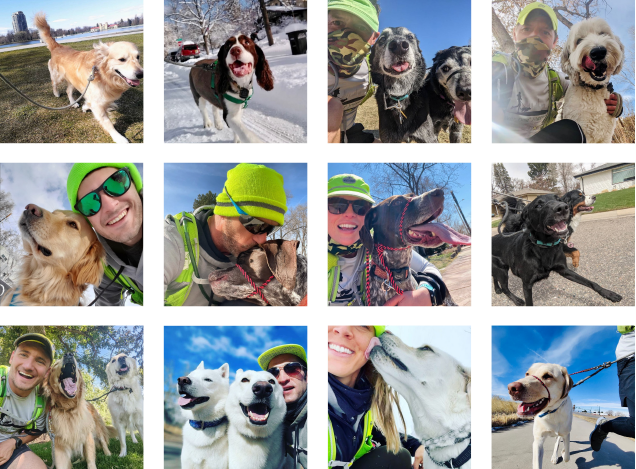
Denver Dog provides on-leash dog running, walking, and hiking built around weekday consistency. The service includes Denver Dog Joggers and Denver Dog Hikers, with sessions matched to the dog's energy level and temperament. That matters because not every dog needs the same outlet. Some need neighborhood jogging. Others do better with controlled hiking and sustained movement at a different pace.
The company also operates with clear safety procedures. Staff are trained and retrained on canine handling, fitness, and welfare, and drivers must maintain a seven-year clean driving record. The business uses in-vehicle camera technology that monitors speeding, following distance, distraction, and drowsiness with real-time coaching. For owners handing their dog over to someone else during the workday, those details matter.
For households in Arvada, Denver, Englewood, Golden, Lakewood, Littleton, and Wheat Ridge, the practical question often isn't whether the benefits of running with your dog are worth it. It's how to make those benefits happen often enough to count. The answer is usually a repeatable weekday plan. You can check Denver Dog's service areas and coverage details to see whether your neighborhood is included.
Consistency beats occasional ambition. Dogs get fitter, calmer, and easier to live with when exercise happens on schedule.
Conclusion Building a Lasting Running Bond
Running with your dog can be one of the most useful things you do together. It can support health, improve daily behavior, and give an energetic dog a clear outlet that a casual walk often can't provide. But its primary value comes from judgment, not excitement.
Start with the dog in front of you. Assess readiness. Build fitness gradually. Choose routes, gear, and conditions that make the work safe and repeatable. If something feels off, slow down and adjust. The best running partners are built through patience.
That's why the readiness question matters so much. Not every dog should run the same way, and some shouldn't run much at all. There's no prize for forcing a dog into a program that doesn't fit their age, structure, weight, or current conditioning.
For the dogs who are good candidates, though, the payoff is hard to overstate. A controlled run gives them movement, rhythm, purpose, and a cleaner path to settling afterward. For owners, it turns “I should exercise my dog more” into a routine with results.
And for busy weekdays, consistency is often the missing piece. Professional help can keep the plan intact when work, traffic, or a packed calendar would otherwise knock it off course.
If your dog needs a more consistent exercise routine and your schedule keeps getting in the way, Denver Dog offers a practical option for busy owners who want safe, structured weekday running, walking, and hiking for their dogs.
The Run Down