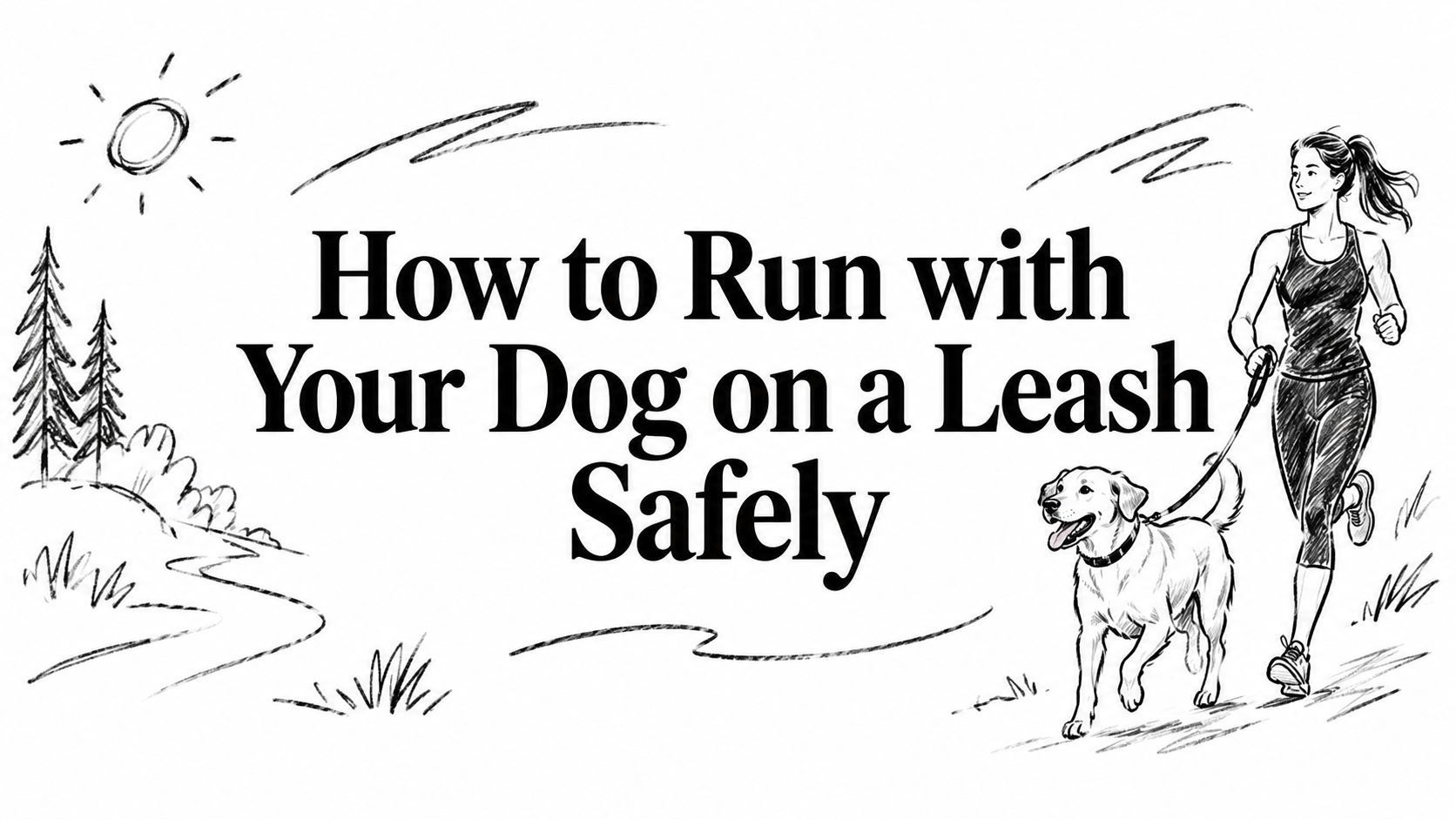
You clip the leash on, step outside, and hope this walk will be different. Then your dog hits the end of the leash before you reach the sidewalk. Your shoulder tightens, your grip changes, and instead of getting a calm reset in the middle of a busy day, you spend the next half hour negotiating pulling, zig-zagging, surprise squirrels, and that one loose dog nobody seems to have under control.
That experience is common. It also gets framed too narrowly.
Most advice about on leash dog walks focuses on the dog's behavior. That matters, but it leaves out the part owners feel in their wrists, lower backs, hips, and knees. A difficult walk isn't just annoying. It can wear down the person holding the leash, chip away at consistency, and turn something that should build connection into something people dread.
Good on leash dog walks don't require perfection. They require better mechanics, better gear, better route choices, and realistic expectations. That's what changes daily life for busy Denver owners.
Reclaiming the Joy of On Leash Dog Walks
A rough walk usually starts before the dog has done anything dramatic. There's tension at the door. The leash goes tight on the first stretch of sidewalk. Your dog forges ahead, pauses hard at every scent, and lunges just enough that you never settle into a normal stride. By the time you get home, your dog may still have energy, and you feel like you've finished a workout you never wanted.
That's why on leash dog walks need to be treated as a human safety issue , not only a training project.

New peer-reviewed research found that routine on-leash walking can challenge human stability in ways many owners don't expect. A quarter of participants experienced leash forces exceeding 45 pounds , and walking with a dog significantly increased gait variability, which is a known risk factor for falls, compared to walking alone, according to the UDC dog walking research summary.
Why this matters more than most owners realize
If your dog pulls hard only a few times on a walk, that's still enough to throw off your posture and rhythm. Many owners compensate without noticing. They lean back, brace through the shoulder, shorten their steps, or keep constant tension in the leash to avoid being surprised. Those adjustments don't create a better walk. They create fatigue.
That's also why people often say, “My dog is fine most of the time,” while still feeling sore after walks. The issue isn't always chaos. Sometimes it's constant low-grade leash tension that never lets the person move naturally.
Practical rule: If the walk changes how you walk, the setup needs work.
What better walks actually look like
A good on leash walk isn't a military heel and it isn't a free-for-all. It's a dog moving with enough freedom to sniff and explore while staying connected to the handler. The leash has slack more often than tension. The dog checks in. The person can keep a steady pace and respond early instead of reacting late.
That kind of walk is possible for most dogs, including energetic ones. But it doesn't happen because an owner “tries harder.” It happens when four things line up:
- The gear fits the dog well and matches the pulling pattern.
- The handler sets the tone early instead of waiting for the dog to settle later.
- The route reduces unnecessary triggers when training is still fragile.
- The expectations stay realistic for the dog in front of you, not the dog you wish you had.
When owners fix those pieces, walks stop feeling like a contest of strength. They become usable again. That's when the dog gets more exercise, the owner stays more consistent, and the relationship improves.
Choosing the Right Equipment for Control and Comfort
Bad gear can make a manageable dog feel harder to handle. Good gear won't train your dog by itself, but it can give you safer mechanics, cleaner feedback, and a better chance of keeping walks calm.
The first choice is simple. Pick equipment based on control, comfort, and predictability , not what looks sleek on the rack.

What each setup does well
Here's the practical comparison I use when evaluating walking gear.
| Gear | Best use | Main advantage | Main limitation |
|---|---|---|---|
| Flat collar | ID tags, calm dogs | Simple and familiar | Not a strong control tool for pullers |
| Front-clip harness | Mild to moderate pulling | Redirects forward drive | Needs proper fit or it rubs |
| Back-clip harness | Casual walks for dogs that already walk well | Comfortable and easy | Gives many pullers more leverage |
| Head halter | Strong, committed pullers | High steering control | Many dogs need careful conditioning |
| Standard leash | Daily neighborhood walks | Consistent handling and distance | Requires the handler to stay engaged |
A flat collar has a role. It's good for identification tags and for dogs that already understand leash pressure well. It's not the tool I'd rely on for a large dog that surges toward distractions.
A front-clip harness is often the most practical middle ground. It helps turn the dog back toward you when they pull forward, which buys time and improves control without asking the neck to absorb that force.
A back-clip harness works for dogs that are already polite on leash or for low-stakes walks where control isn't the problem. For a strong puller, it often feels like attaching yourself to a tow point.
Leash choice matters more than people think
The safest default for most owners is a standard 4 to 6 foot leash in nylon or leather. It's long enough for movement and short enough for control. You always know where the dog is, and your hands learn one set of mechanics.
Retractable leashes create too many variables for busy sidewalks, parking lots, apartment entrances, and trailheads. The distance changes constantly. Tension stays inconsistent. The handle is bulky. If something goes sideways fast, they're harder to manage cleanly.
Good leash handling depends on predictable distance. That's hard to get from equipment designed to add distance on demand.
For owners comparing harness styles for active dogs, this guide to finding the best running harness for dogs in 2026 is a useful next step.
What usually works and what usually doesn't
A few straightforward rules help:
- Use the collar for identification. Don't expect it to solve heavy pulling.
- Choose a front-clip harness first if your dog drags, zig-zags, or lunges toward scents.
- Reserve back-clip harnesses for dogs with established leash manners.
- Condition a head halter slowly if you need more steering control.
- Skip retractable leashes for crowded or unpredictable environments.
Fit matters as much as design. If the harness shifts, chafes, or restricts shoulder movement, your dog won't walk well in it. If the leash handle slips in your hand, you won't either. The best setup is the one that gives both ends of the leash a fair chance to succeed.
Mastering Loose Leash Walking Fundamentals
Loose leash walking starts before the walk starts. If your dog explodes through the front door, scans for stimulation, and hits the end of the leash in the first few seconds, the rest of the outing is usually cleanup work.
The fix isn't to nag the dog all the way down the block. The fix is to make the first moments organized.

Start at the door, not halfway down the street
Most dogs tell you how the walk is going to go before you even leave home. If they're spinning, vocalizing, or pulling while you clip the leash on, lower the intensity before you step outside. Pause. Wait for four paws on the floor. Open the door only when you still have a moment of composure.
That doesn't need to look formal. It just needs to be repeatable.
A useful starting routine looks like this:
- Clip the leash on calmly. No hype, no repeated cues.
- Pause at the threshold. If the dog surges, close the door and reset.
- Release into the walk with intention. Step out when the leash is soft.
- Reward the first few calm steps. Don't wait for a full block of success.
The first 50 feet matter a lot. If the dog learns that pulling works immediately, they'll keep investing in it.
Reward what you want early and often
Owners often wait too long to reinforce good leash behavior. They notice the mistakes, not the check-ins. If your dog glances at you, slows to match your pace, or chooses your side for a few steps, that's the moment to pay.
For many dogs, soft, easy-to-deliver rewards work best on walks. If you need portable options that are quick to use without breaking stride, dog treats in a squeeze format can make timing cleaner than digging into a bag at the wrong moment.
Use rewards for specific behaviors:
- Eye contact or a quick check-in
- Returning to a loose leash after distraction
- Walking beside you through a narrow area
- Passing a trigger at a manageable distance
- Choosing not to forge ahead
The leash shouldn't be your primary teacher. Reinforcement should.
Use the Be a Tree method correctly
“Be a Tree” sounds simple because it is simple. When the dog pulls, you stop. You don't jerk back. You don't reel the dog in. You don't keep walking while repeating cues the dog has already ignored.
But many people quit on this method because they apply it too late or too long.
If the dog is fully committed to dragging you toward a smell, a person, or another dog, standing still may only create frustration. The cleaner version is this:
- Stop the instant the leash goes tight.
- Wait for any softening in the leash, even a small shift.
- Mark that choice with calm praise or food.
- Move forward again before the dog has to guess what earned success.
That teaches the pattern faster than waiting for a perfect sit or full reset in the middle of a stimulating sidewalk.
Build connection into the walk
A useful walk has rhythm. You move, your dog explores, and every so often the dog reconnects with you. Those check-ins are the backbone of good on leash dog walks. If you don't reinforce them, they disappear.
One easy pattern is to reward your dog for finding your side voluntarily. Another is to change direction slightly and reinforce when the dog follows without tension. You're not trying to trick the dog. You're teaching that paying attention to the handler makes the walk continue smoothly.
After you've practiced the basics, this short demonstration is worth watching for timing and handling flow:
Keep sessions short enough to succeed
Owners often make the same mistake in opposite directions. They either don't walk enough, or they turn every walk into a long test the dog can't pass.
For training, shorter and cleaner is usually better. End while the dog is still making decent choices. If your dog falls apart after a certain distance or level of stimulation, that's useful information. Adjust the route or duration instead of pushing through a bad rehearsal.
A dog doesn't learn loose leash skills because you stayed outside longer. A dog learns because the walk gave them many chances to practice the right pattern.
Troubleshooting Reactivity and Persistent Pulling
Some dogs aren't just enthusiastic walkers. They're over threshold fast. One dog appears across the street and your dog stiffens, vocalizes, or lunges. Or they pull nonstop, not from fear, but from frustration because the world is exciting and the leash keeps getting in the way.
Those dogs need management as much as training.
Know which problem you're looking at
Owners get better results when they stop treating every difficult walk as the same issue.
Excitement pulling usually looks bouncy, forward, and scattered. The dog wants to get everywhere faster than the leash allows.
Fear-based reactivity often looks tighter and more intense. The dog may stare, harden through the body, bark sharply, and struggle to increase distance or hold the trigger away.
Frustration-based reactivity can look similar to fear from a distance, but the dog's emotional driver is often blocked access. They want to greet, chase, investigate, or move, and they melt down when they can't.
The strategy changes based on the pattern. Pulling from excitement needs rhythm and reinforcement. Fear needs distance and predictability. Frustration needs structure and alternate behaviors.
Use distance before you use skill
A lot of reactive dog handling improves when the person stops trying to train in the hardest possible place. If your dog can't stay under control on a narrow sidewalk at peak traffic, the answer isn't stricter cues. It's more space.
When you spot a trigger, don't wait to see if your dog can handle it. Move early. Cross the street. Arc away. Step behind a parked car if it gives your dog visual relief. The best handlers look boring because they make decisions before the explosion.
If your dog is already barking and lunging, you're managing a reaction. If your dog can still eat, move, and respond, you're in a training moment.
Three moves that save hard walks
These aren't fancy. They work because they're practical.
- The U-turn. Teach your dog that turning with you leads to movement and reinforcement, not conflict. This is your exit when space suddenly shrinks.
- Find It. Toss a few treats to the ground and let your dog sniff them out. Sniffing can interrupt visual fixation and buy you a few seconds of decompression.
- Hand target or side reset. Ask for a known movement back to your leg or hand, reward it, then leave the area.
If your dog rehearses fence-line explosions at home, that often spills into walks. Reducing visual arousal in the yard can help. Some owners find that changing the dog's view of the outside environment helps, and options like a build a doggie window for fence setup can be part of a broader management plan when used thoughtfully.
What not to do with a reactive dog
Some habits make things worse fast:
- Don't force greetings. On-leash greetings add social pressure and often create bad repetitions.
- Don't stand still too close to the trigger. That can trap the dog in conflict.
- Don't correct the outburst without changing the setup. If the dog keeps failing in the same environment, the environment is part of the problem.
- Don't keep shrinking distance to “prove” progress. Let the dog's body language set the pace.
For owners working through leash outbursts in daily life, these reactive dog training tips that work in 2026 offer helpful companion strategies.
Accept the win that's available
A productive walk with a reactive dog may mean you saw another dog at a distance, turned away cleanly, and nobody erupted. That counts. So does passing one yard without a fence fight. So does a shorter route with calmer repetitions.
Persistent pulling and reactivity improve when the dog practices success often enough that the old pattern stops paying off. That takes patience, but it also takes restraint. Pushing for a perfect neighborhood walk too early is one of the fastest ways to keep the problem alive.
Walk Safety Etiquette and Smart Planning
Good leash manners aren't only about your own dog. They're also about how you move through shared space with other people, dogs, cyclists, runners, kids, and wildlife. Etiquette matters because it prevents conflict before training has to solve it.
In Denver, the rules are clear. Dogs on public property must be secured on a leash no longer than six feet, except within designated off-leash areas , according to this guide to pet-friendly Denver leash rules and outdoor spaces. That standard supports the kind of handling owners need in busy neighborhoods and shared trails.
The basics that make public walks smoother
Whether you're walking in Arvada, Denver, Englewood, Golden, Lakewood, Littleton, or Wheat Ridge, the same habits keep things cleaner:
- Keep to one side of the path. Don't drift across the full width with the leash stretched out.
- Pass with intention. Shorten the leash slightly and move through without stopping for chaos.
- Ask before greetings. “He's friendly” isn't consent.
- Respect wildlife and trail users. Controlled dogs disturb less and keep everyone safer.
A related point often gets missed on trail walks. Research summarized by Preserve Calavera on dogs and wildlife impacts notes that off-leash dogs are worse for wildlife disturbance than on-leash dogs, and off-trail impacts are the most severe. On natural-surface walks, leash use isn't just rule-following. It's stewardship.
Plan walks like you plan errands
Busy owners do better when they stop expecting every walk to serve every purpose. Some walks are for decompression. Some are for structured training. Some are just bathroom breaks with a little movement layered in.
A smart weekly approach often looks like this:
| Walk type | Best time | Main goal |
|---|---|---|
| Quiet neighborhood loop | Lower-traffic hours | Practice loose leash skills |
| Purposeful exercise walk | When you can keep a steady pace | Burn energy without overloading the dog |
| Sniff-focused decompression walk | Calmer route with space | Lower arousal and let the dog explore |
| Trail or park outing | When crowds are lighter | Add novelty while keeping control |
If you travel with your dog or carry emergency supplies for longer outings, broader planning resources on managing travel emergencies can help you think through contingencies that also apply to outdoor dog handling.
Choose routes your dog can actually handle
Owners often repeat stressful routes out of habit. If one block always has barking fence dogs, blind corners, heavy foot traffic, or too many off-leash surprises, stop making that your training ground. Choose the route that gives you room to succeed.
Sometimes the best walk for a dog isn't the most scenic one. It's the one where the leash stays loose, the dog can think, and the person holding the leash doesn't spend the entire outing bracing for the next mistake.
Hiring a Professional On Leash Walking Service
There's a point where the smartest decision isn't squeezing harder control out of your lunch break. It's bringing in help.
For busy owners, a professional on leash walking service can provide consistency that's hard to create during a packed workweek. The value isn't just that someone takes the dog out. It's that the dog gets structured handling, predictable exercise, and repetition under someone who understands pacing, leash management, and route choice.

What to look for before you hire
Not every dog walker is set up for the same kind of work. If your dog pulls, over-arouses easily, or needs a thoughtful on-leash routine, ask better questions.
Use a checklist like this:
-
Handler standards
Ask how the company trains walkers to manage pulling, arousal, and public encounters. -
Safety protocols
Find out what happens if a dog refuses a route, reacts to a trigger, or has equipment issues mid-walk. -
Appropriate matching
Dogs do best when energy level, temperament, and exercise style are matched well. -
Clear communication
You want concise updates on behavior, route success, and anything that needs reinforcement at home. -
Proof of professionalism
Insurance, reliability, and consistent operational standards matter more than a clever app.
Denver pricing also gives useful context. Recent market data indicates that the average starting rate for dog walkers in Denver is approximately $19.94 per hour, which is 22% higher than the national average , reflecting the premium associated with specialized on-leash services, as noted in this Denver dog walking market guide.
When professional help makes the most sense
Some owners need support because their dog has high exercise needs. Others need it because the timing of weekday life itself is an obstacle. A professional service is especially useful when:
- Your dog loses skills with inconsistent walks
- You're recovering from injury or managing mobility concerns
- Your dog needs more structured daytime exercise than you can provide
- You want better leash habits without turning every walk into a struggle
If you're comparing providers, this guide on how to hire a dog walker as a Denver owner is a practical place to start.
For owners in Arvada, Denver, Englewood, Golden, Lakewood, Littleton, and Wheat Ridge, service area coverage matters too. The best setup is one that fits your location, your dog's energy level, and the kind of weekday support you'll use.
Denver Dog offers professional on-leash running, walking, and hiking for busy owners who want safer, more structured exercise for their dogs. If you want dependable weekday support from a Denver-based team that understands fit, control, and thoughtful handling, visit Denver Dog to learn more.
The Run Down