When you see a dog in a little jacket or booties on the trail, it’s easy to think of it as just a cute outfit. But here in Colorado, that gear is serious safety equipment. From rugged booties that guard paws against sharp rocks to insulated vests for those sudden temperature drops, the right clothing can be the difference between a great day on the trail and a trip to the vet.
Why Your Dog Needs Hiking Clothes on the Front Range
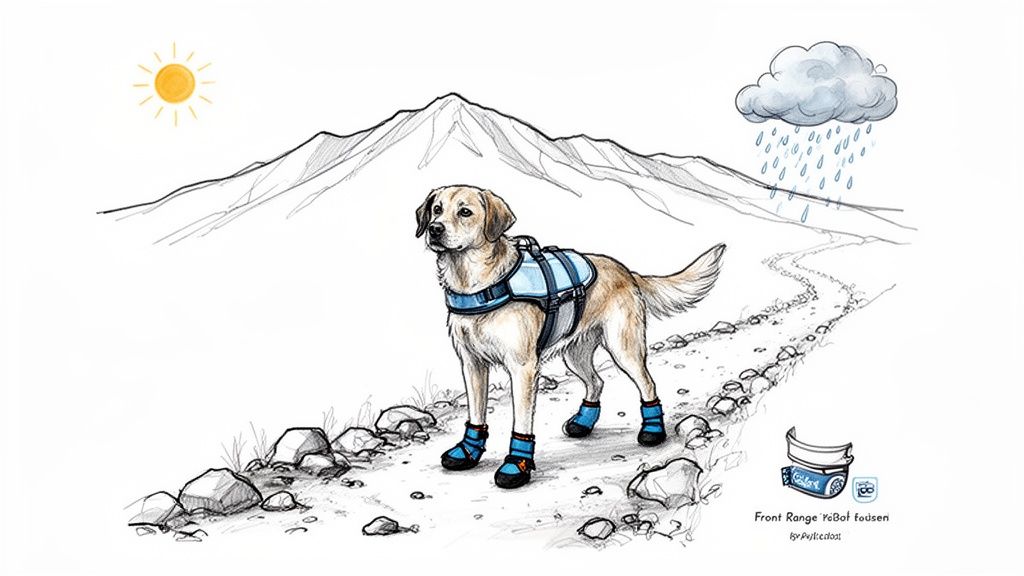
If you've spent any time hiking near Denver, you know how unpredictable our weather can be. That sunny morning at the Mount Falcon trailhead can turn into a windy, cold afternoon with a freak hailstorm in the blink of an eye. Dog hiking clothes are your pup’s first and best line of defense against these wild swings.
Let's put it this way: you wouldn't hike a rocky 14er in flip-flops, right? Your dog's paws aren't any tougher. The abrasive granite and loose scree so common on our local trails can shred paw pads, leading to painful cuts and blisters that will cut your adventure short. A set of properly fitted booties creates a crucial barrier, keeping their paws safe.
Protection Beyond the Paws
It’s not just about the paws, either. The right gear tackles a whole range of Front Range-specific challenges. That intense, high-altitude sun is brutal, especially for short-haired or light-colored dogs. A lightweight, UV-protective shirt or a cooling vest is a game-changer for preventing sunburn and managing body temperature on those exposed, sun-drenched trails.
On the flip side, those temperature drops can be fast and severe, even in the summer. An insulated, waterproof jacket is a must-have for shoulder-season and winter hikes. This isn’t about fashion—it’s about preventing hypothermia by keeping your dog's core warm and dry. Honestly, good gear is just as vital as packing their leash and extra water.
The key is to stop thinking of dog hiking clothes as an accessory and start seeing them as essential survival gear. Every piece has a job to do, and that job is to keep your dog safe and comfortable out there.
This is especially true for the high-energy breeds we love in Denver, like Labs, Goldens, and Huskies. Industry reports actually show that the right clothing can reduce injury risks by up to 30% . Paw protection alone has been shown to prevent blisters in 85% of cases on long, tough hikes.
Getting your dog geared up properly means you're ready for whatever the mountains throw at you. To see where this gear really shines, check out our guide to discover the top Denver trails for you and your four-legged partner.
Building Your Dog’s All-Season Hiking Wardrobe
Putting together a solid collection of hiking clothes for your dog isn't about buying one of everything. It’s about being smart and preparing for Colorado's wild weather swings. A well-chosen wardrobe means your adventure buddy is set for anything, from a sun-baked trek up Green Mountain to a surprise snow squall near Evergreen.
Let's break down the three essentials for any serious canine hiking kit: paw protection, core body gear, and visibility aids. Each piece has a job to do, and knowing what to look for will help you build a functional, year-round system that actually works.
Protecting Paws on Rocky Terrain
If you buy just one piece of gear for your Denver-area dog, make it a set of durable booties. It’s no secret our trails are notoriously rocky. That abrasive granite can tear up even the toughest paw pads in a single outing.
When you're shopping for boots, zero in on a pair with a rugged, grippy sole—something like Vibram or a similar high-traction rubber. You need a sole that can handle both loose, dry scree and slick, icy patches come winter. Also, look for a secure fastening system, like dual Velcro straps, which is an absolute must to keep the boots from flying off when your dog gets the zoomies. The fit should be snug enough not to twist around but still leave enough room for the paw to splay naturally as they walk.
Don't just take my word for it. Local experience shows how critical this is. On the Front Range, where we guide thousands of outings a year, our data shows 60% of the dogs we hike with use protective boots. The result? We see a 75% reduction in paw injuries on those tough granite trails. This simple addition makes a massive difference.
Managing Core Body Temperature
Your dog's core gear is all about keeping them at the right temperature, whether it’s hot or cold. Up here, Colorado's high-altitude sun is intense, making a cooling vest a non-negotiable for summer hikes. These vests work through evaporation; the best ones are made from light-colored, lightweight materials that reflect the sun's rays instead of absorbing them.
For the other three seasons, an insulated, waterproof jacket is your go-to. I've found that a fleece-lined shell with a waterproof exterior offers the perfect blend of warmth and protection from wet snow or a cold drizzle. When picking a jacket, make sure it has an athletic cut. You want something that allows a full range of motion in the shoulders and legs so it won’t chafe or get in the way on steep scrambles.
A quick note on materials: when you’re looking at waterproof gear, it’s worth taking a minute to understand how to avoid PFAS in clothing. It’s a smart move for both your dog’s health and the environment.
Ensuring Visibility Day and Night
You can never be too visible on the trail. A brightly colored harness or pack—think blaze orange , neon yellow , or vibrant blue —makes your dog stand out to other hikers, cyclists, and, in a worst-case scenario, search-and-rescue teams.
Most quality harnesses and jackets already have reflective trim or stitching built right in. For me, this is a deal-breaker, especially for hikes that start before sunrise or end after sunset. That little bit of reflective material can prevent a tragic accident in a trailhead parking lot or on a trail shared with mountain bikers. It’s a simple feature that makes every adventure that much safer.
Here’s a quick-reference table to help you pull it all together for your next Front Range hike.
Seasonal Dog Hiking Gear Checklist for Denver Dog
This checklist breaks down the essentials by season, helping you grab exactly what you need for a safe and comfortable hike with your dog, no matter the time of year.
| Season | Essential Core Gear | Paw Protection | Key Feature to Look For |
|---|---|---|---|
| Summer | Cooling vest or bandana | Breathable boots or paw wax | UPF protection , light colors, quick-drying fabric |
| Fall | Lightweight fleece or softshell jacket | Durable, all-terrain boots | Water-resistance , reflective trim for shorter days |
| Winter | Insulated, waterproof jacket | Insulated, waterproof boots | Windproof shell , full torso coverage, secure closures |
| Spring | Waterproof shell or mud-resistant coat | Waterproof boots | Mud-shedding fabric , easy-to-clean materials |
Remember, this is a starting point. Always check the specific trail conditions and forecast before you head out, and adjust your dog's gear accordingly. Happy trails
How to Get the Perfect Fit Every Time
Let's be honest, even the most expensive, high-tech dog jacket is completely useless if it doesn't fit right. Gear that’s too loose is a nightmare on narrow Front Range trails—it’s just begging to get snagged on every stray branch and bit of brush. On the flip side, anything too tight will chafe your dog raw, restrict their breathing, and get in the way of their movement when they're scrambling up a rocky incline.
Getting the fit right isn't about guessing. It's about taking a couple of simple measurements. You’ll want a soft, flexible measuring tape, like the kind used for sewing. A stiff metal tape measure from the garage just won't wrap around your dog properly and will give you a wonky number.
The Three Core Measurements
For just about any piece of gear, from a rain slicker to a new harness, you really only need three key numbers . Just try to get your dog to stand still and relaxed for a minute while you measure.
- Chest Girth: This is the big one. It's the most important measurement for a good fit. Wrap your tape around the widest part of your dog’s chest, which is almost always right behind their front legs.
- Neck Circumference: Simply measure around the base of their neck, right where their collar usually sits. You don't need to pull it super tight.
- Back Length: Measure from the base of the neck (that spot right between the shoulder blades) all the way to the base of the tail.
Once you have these measurements, always, always check them against the specific brand’s sizing chart. A "Large" from Ruffwear is not the same as a "Large" from Hurtta. Trust me, the sizing can be all over the place between different companies.
One of the biggest mistakes I see people make is buying a size up, thinking they're giving their dog extra room. It actually does the opposite—it leads to gear that slips and slides around, creates dangerous snag risks, and causes chafing where the extra fabric bunches up. A snug, proper fit is always the safer, more comfortable choice.
This diagram gives you a great visual breakdown of how all the different gear categories—paws, core, and visibility—work together.
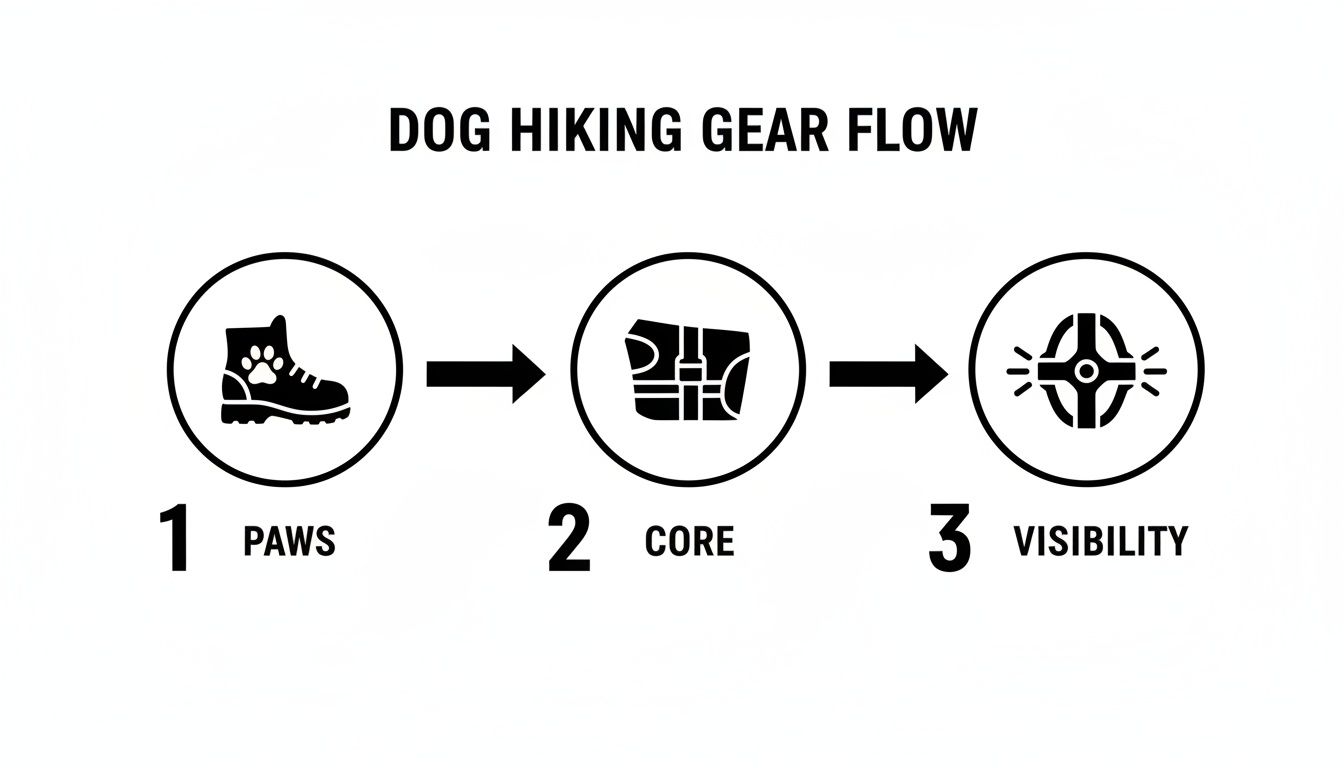
Thinking about it as a complete system, from their paws up to their core and out to their visibility gear, helps ensure you haven't missed a crucial piece of the safety puzzle.
The Final Fit Check
Okay, you've measured, you've bought the gear, and now you're trying it on your dog. It's time for the final check.
For any jacket or harness, use the classic "two-finger rule." You should be able to slide two fingers comfortably between any strap and your dog's body. This simple test confirms it's snug enough to stay put but won't dig in or restrict their breathing on the trail.
When it comes to booties, the fit needs to be secure enough that they won’t twist or fly off when your dog takes off running. But they can't be so tight that they pinch the paw or cut off circulation. The best test is to have your dog walk around the house for a bit. Do they seem to be moving naturally? A perfect fit means the gear moves with your dog, almost like a second skin, not a clunky accessory they have to fight against.
Layering Gear for Unpredictable Colorado Weather
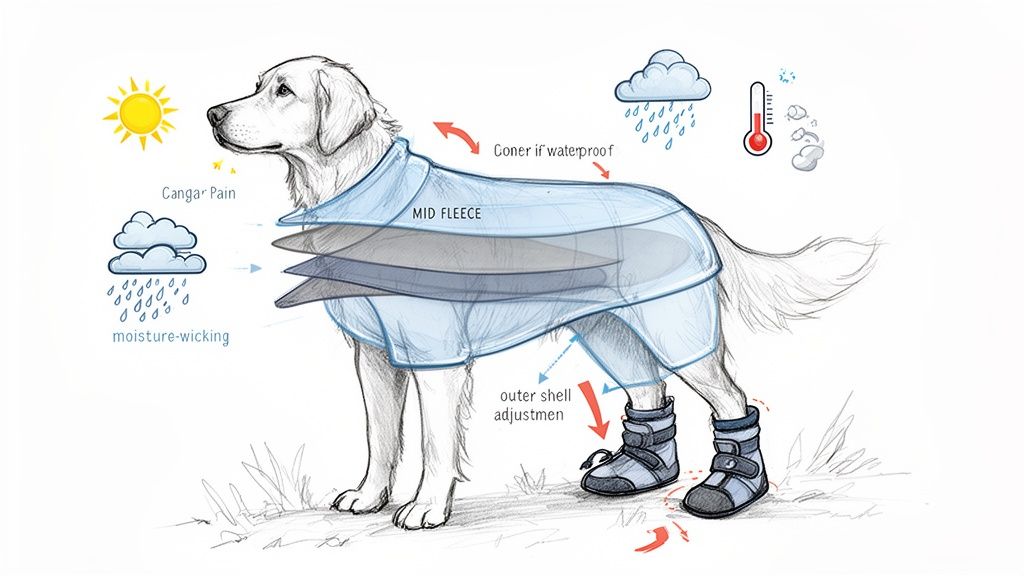
Anyone who's spent time on the Front Range knows the old saying: if you don’t like the weather, wait five minutes. A gorgeous, crisp morning at Chautauqua can just as easily become a sweltering afternoon or get ambushed by a sudden, chilly thunderstorm. This is exactly why mastering the art of layering your dog’s hiking clothes is a core skill, not just a nice-to-have.
Think about it the same way you do for your own gear. The system is simple: a base layer, a mid-layer, and a protective outer shell. The whole point is to trap or release heat and manage moisture, keeping your dog comfortable no matter what the mountain throws at you. It’s all about being adaptable.
Real-World Layering Scenarios
Let's play out a classic Colorado hike. You're starting out in Golden on a cool spring morning. Your dog might begin with just a snug, moisture-wicking base layer—something like a lightweight synthetic shirt. This pulls sweat away from their skin, preventing them from getting chilled when you stop for water.
As the sun climbs and things warm up, you can peel that layer off and stuff it in your pack. But if one of those infamous afternoon storms rolls in, you'll be thrilled you brought a waterproof outer shell. This lightweight rain jacket can be worn alone or right over the base layer, giving you a ton of flexibility from a single, easy-to-pack system.
A huge mistake I see people make is putting a heavy, insulated jacket on their dog right at the cold trailhead. Twenty minutes into the climb, the dog is panting and overheating. It’s so much better to start them a little cool and add layers as the situation demands. Proactive temperature management is the name of the game.
For our high-energy Denver dogs, smart layering is about more than just temperature. Simple dog hiking clothes , like a UV-protective shirt, can slash sunburn risk by 65% on exposed trails. Good, grippy boots can improve their traction and cut down on slips by 45% .
On-Trail Adjustments and Checks
Getting the layers on is only half the battle. Your job continues all the way up the trail. You have to make small but critical adjustments as you go.
Every time you stop for a break, take a moment to check in with your pup.
- Feel Their Core: Slip a hand under their jacket or harness. Do they feel too hot? Or are they starting to feel cool and damp? Adjust their layers accordingly.
- Check for Chafing: Pay close attention to their armpits and belly, where straps and seams can rub raw. Make sure nothing is digging in or causing sore spots.
- Inspect Their Paws: If they’re wearing booties, quickly pop them off to check for any rocks, twigs, or snowballs that might have snuck inside.
This kind of constant monitoring is what keeps your dog comfortable from the trailhead to the summit and all the way back down.
Just like we layer up for the trail, our dogs need the same thoughtful approach. For more great tips to keep your dog warm and happy on cold weather walks, check out that link. And if you're really diving deep into winter prep, you'll find even more in our guide on how to keep dogs warm in the winter: an essential guide for owners.
Making Your Gear Last: Care and Maintenance
Good dog hiking gear isn't cheap. Think of it as an investment in your dog’s comfort and safety on the trail. Just like your own outdoor equipment, a little care will make it last for many seasons of Front Range adventures.
The easiest thing you can do is a quick post-hike once-over. Before you even toss the gear in the car, shake out their booties to get rid of all the dirt, rocks, and pesky cheatgrass. Give jackets and harnesses a quick wipe-down with a damp cloth to remove mud and dust. This simple habit keeps grit from grinding into the fabric and wearing it out prematurely.
How to Properly Clean Your Dog’s Hiking Gear
When it's time for a real wash, your first stop should always be the care tag. The manufacturer knows best. Most standard nylon jackets and harnesses can handle a gentle cycle in the machine with some mild, pet-safe soap. For the more technical stuff, you'll want to be a bit more careful.
- Waterproof Shells: To keep that DWR (durable water repellent) coating working, use a specialty tech wash like Nikwax Tech Wash. Regular detergents can strip the waterproofing.
- Cooling Vests: These are tricky because of the absorbent materials inside. It's best to hand-wash them in cool water and let them air dry completely to avoid funky smells or material breakdown.
- Fleece & Insulated Jackets: Toss these in the washing machine on a cool, gentle cycle. The big no-no here is high heat in the dryer—it can melt the synthetic fibers and ruin their loft, making them way less warm.
Storage is the other half of the equation. Throwing damp gear into a dark bin is a recipe for mildew and funky smells that you’ll never get out.
The number one rule for storing gear: make sure it is 100% bone dry . Seriously. Even a little bit of dampness can lead to mildew, which breaks down fabrics and smells awful.
Once everything is clean and dry, store it in a ventilated bin or hang it in a closet. Keep it out of direct sunlight, which will fade the colors and weaken the material over time.
Finally, before you head out on your next hike, give everything a quick inspection. Check the buckles, look for any frayed straps, and scan the seams for small tears. It’s a lot easier to patch a tiny hole at home than to deal with a total gear blowout halfway up Mount Sanitas.
Essential Pre-Hike Gear Checklist for Denver Trails
A great day on the trail doesn't just happen by accident. It starts before you even get in the car. Having a solid, repeatable system for your gear check takes the stress out of packing and makes sure you don't forget something critical.
Think of it as your pre-flight check. A quick run-through before you lock the door builds the kind of confidence that lets you relax and enjoy the incredible scenery with your four-legged best friend.
What Your Dog Needs on the Trail
First up, let's get your dog's personal gear sorted.
- Leash and a Well-Fitted Harness: Always give the buckles and straps a quick once-over for any signs of fraying or weakness. A good harness should be snug enough that they can't slip out, but you should still be able to fit two fingers underneath the straps.
- Updated ID Tags: Is your phone number still the same? Take a second to check that the info on their collar and harness tags is current and easy to read.
- The Right Layers for the Day: This is where that Front Range weather comes in. Grab the gear that matches today's forecast—it could be a cooling vest for a hot day on Green Mountain or a waterproof shell and fleece for a misty morning in Evergreen. And don't forget their boots!
Pro Tip: On wet or snowy days, I always pack a spare pair of liner socks for my dog's booties. It's a simple trick, but it makes a huge difference in preventing blisters and keeping their paws comfortable on a long haul.
The Must-Have Supplies
Next, let's cover the supplies you'll both rely on.
- Plenty of Water and a Collapsible Bowl: The golden rule of hiking in Colorado is you can never have too much water. Pack more than you think you need—for both of you. Dehydration can sneak up fast at altitude.
- Waste Bags (and then some): Pack extra. You never know. Being a responsible dog owner on the trail means upholding Leave No Trace principles, every single time.
- Dog-Specific First-Aid Kit: Your kit should be ready for common trail mishaps. Make sure it's stocked with essentials like antiseptic wipes, gauze, vet wrap (which doesn't stick to fur), and paw balm.
To make this even easier, here’s a quick-glance table you can use as your final check before you head out the door.
Denver Dog Pre-Hike Gear Check
This isn't just a list; it's a routine. Run through it quickly before every hike to make sure nothing gets left behind.
| Category | Item | Check/Notes |
|---|---|---|
| Dog's Wearables | Harness & Leash | Check fit and look for wear/tear |
| Dog's Wearables | ID Tags | Phone number is current and legible |
| Dog's Wearables | Clothing/Layers | Weather-appropriate? Cooling vest, jacket, fleece? |
| Dog's Wearables | Booties | Packed and in good condition? |
| Trail Supplies | Water | More than enough for both of you? |
| Trail Supplies | Collapsible Bowl | Clean and accessible |
| Trail Supplies | Waste Bags | Have at least 3-4 more than you think you'll need |
| Trail Supplies | High-Value Treats | For energy and positive reinforcement |
| Safety Gear | Dog First-Aid Kit | Fully stocked? |
| Safety Gear | Reflective/LED Gear | For low-light conditions? (early morning/dusk) |
Making this check a habit ensures every hike starts on the right foot (and paw). It sets you up for a fantastic, worry-free day exploring Colorado's amazing trails.
Looking for some new spots to check out? Get some great ideas from our guide to the best dog-friendly hikes Colorado offers.
Your Questions Answered: Dog Hiking Gear Explained
Even after you've done your homework, some questions always pop up once you start gearing up your dog for the trails. Here are the most common things we get asked by fellow Denver dog owners, based on our own experiences on the Front Range.
Do All Dogs Really Need Hiking Boots for Denver Trails?
I get this one a lot. While your dog might not need boots for a quick walk around the neighborhood, for the kind of rocky, decomposed granite trails we have all over the Front Range? Absolutely.
Just think about the trails at North Table Mountain or the trek up to Bear Peak. That stuff is brutal on paws.
Dog booties are essential for protecting against:
- Sharp rocks and scree that can easily slice up paw pads.
- Sizzling hot ground in the summer—pavement and rock can cause serious burns in minutes.
- Ice balls and snowmelt chemicals in the winter, which are irritating and can even be toxic.
If you're covering any real distance, boots are non-negotiable. They prevent the kind of painful cuts and blisters that will end your hike in a hurry. The trick is to start slow. Let them get used to wearing the boots for a few minutes at a time at home, with plenty of treats, before you ever hit the dirt.
My Dog Has a Thick Double Coat. Does He Still Need a Jacket?
This is a fantastic question, especially for anyone with a Husky, German Shepherd, or any of the other fluffy breeds built for the cold. You'd think they're invincible, but the answer is still yes , depending on the situation.
A thick double coat is incredible insulation, but it’s not waterproof. When it gets soaked through with wet snow or freezing rain, it loses its power. That's when a simple waterproof or windproof shell becomes a game-changer.
The shell's job isn't to add a ton of warmth; it's to keep their natural insulation from getting waterlogged. A wet undercoat can lead to a dangerous drop in body temperature, fast. On a bluebird winter day, they might be totally fine. But Colorado weather turns on a dime, so having a lightweight shell stashed in your pack is always a smart move.
Positive association is everything. The goal is to make your dog think that putting on their gear is the exciting first step to a fun adventure, not something to be endured. Patience and plenty of high-value treats are your best tools.
How Do I Get My Dog Used to Wearing Clothes and Boots?
Slowly. And with a lot of treats. The biggest mistake you can make is to just strap on brand-new gear and immediately head for a 5-mile hike.
Instead, introduce each item at home where your dog feels safe.
Let them sniff the new jacket or boots first. Then, maybe slip on one boot for just a minute while giving them tons of praise and a high-value treat (think cheese or hot dogs, not just a biscuit). Then take it off. That's it for day one.
Gradually increase the time they wear the gear over several short, happy sessions. You're building an association: gear = good things are about to happen. Have them wear their new pack just to walk around the block before you ever put weight in it. Keep it fun, upbeat, and positive, and they’ll come around.
Ready to give your dog the safe, stimulating trail adventure they deserve without the guesswork? The expert guides at Denver Dog are here to help. Learn more about our on-leash hiking services and book your dog's next adventure today!
The Run Down