For a busy Denver owner, the best time to run is usually late afternoon or early evening, especially around 5:00 p.m. to 7:00 p.m. , when exercise participation has historically been highest. In hot weather, switch to the coolest safe window, often dawn or dusk, and make the choice work for both you and your dog.
You finish one spreadsheet, answer another message, and glance at the clock. The sunrise jog you imagined has disappeared behind work, while your dog is waiting for the weekday outing that keeps the evening from turning into a burst of restless energy. In Denver, weather complicates the decision further. A crisp morning, blazing pavement at midday, and a cooler evening can all happen within the same season.
The best time to run isn't a universal hour. It's the window that balances temperature, air quality, daylight, personal energy, dog safety, and a schedule you can repeat . For many people, late afternoon or early evening wins because it matches work hours and often falls near the body's performance peak. In summer, however, sunrise may be the smarter choice, particularly for dogs whose paws, breathing, or body shape make heat more dangerous.
Finding Your Ideal Run Window
A typical Denver pet parent may start the day with good intentions, open a training plan, and then spend the morning glued to a spreadsheet. The sunrise run sounds appealing until the alarm rings, the dog is still asleep, and the office schedule stretches toward 6 p.m. By then, the question isn't which time looks perfect on paper. It's which time you can protect without sacrificing sleep, work, or your dog's comfort.
Federal time-use data covering 2009–2015 found that the most popular period for sports and exercise was 5:00 p.m. to 7:00 p.m. NPR's summary of exercise timing research shows a longstanding pattern: people generally exercised more later in the day than earlier. That doesn't prove every runner performs better in the evening, but it does support a practical conclusion. A run that fits naturally after work is often easier to maintain than an idealized dawn routine.
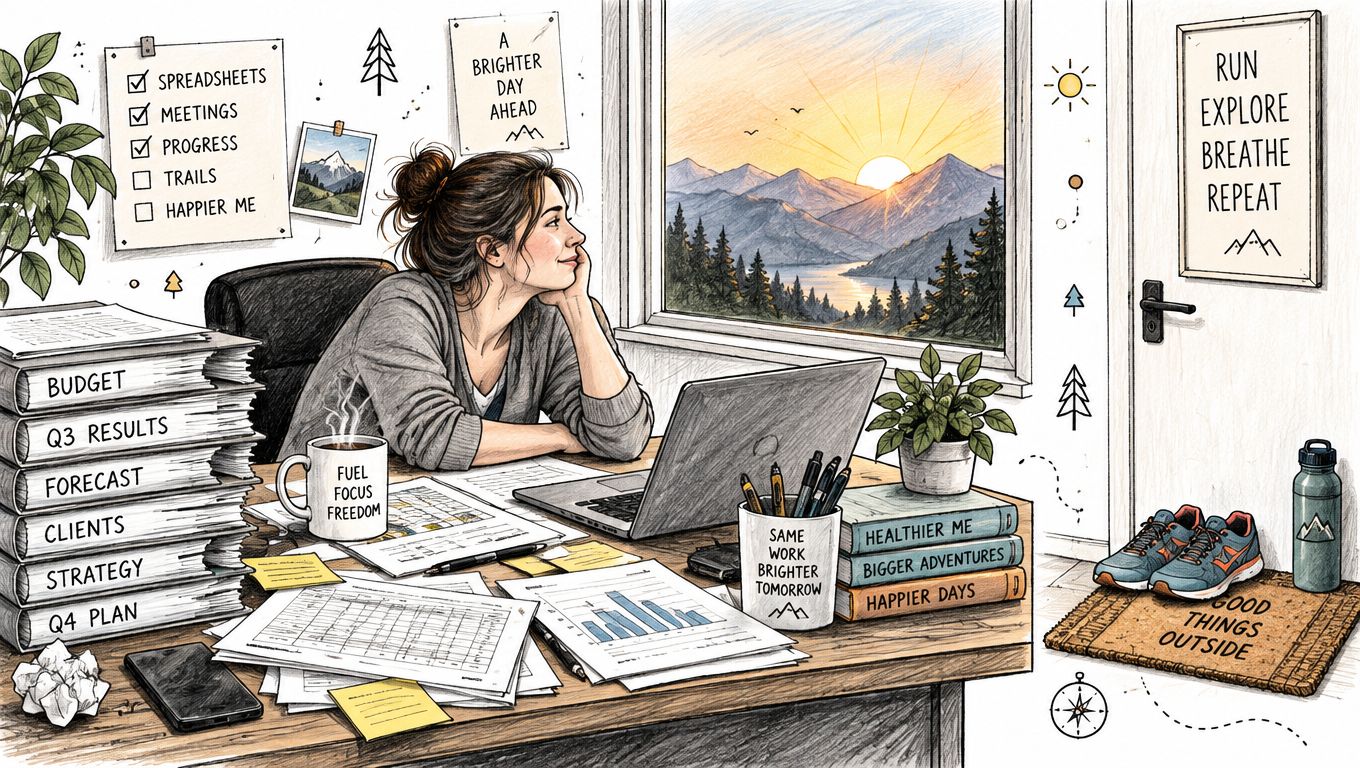
The four-part timing equation
Use these questions before choosing a regular slot:
- Weather: Is the temperature comfortable, or will sun and pavement add unnecessary heat?
- Air: Is ozone or general air quality likely to make hard breathing unpleasant?
- Energy: Are you alert enough to run well, or are you forcing a session against your sleep pattern?
- Routine: Can you repeat the same window on ordinary workdays?
The strongest physiological window may fall in the late afternoon and evening, when body temperature is typically higher and muscles may feel more elastic. Yet consistency matters more than chasing a performance peak. A moderate morning run completed regularly will serve you better than an evening plan that repeatedly collides with meetings, family commitments, or poor sleep.
Denver dog owners also need to account for the shared routine. A human runner can adjust pace, seek shade, or stop early. A dog may keep pushing because excitement overrides caution, and a leash run can expose paws to hot surfaces. For seasonal guidance on combining exercise with safer outings, use this practical resource on the best time to walk a dog in summer.
If your schedule keeps changing, a simple log can help you spot patterns rather than rely on memory. A routine planner app guide from Strive Workout Log can help organize run windows, recovery, and dog exercise around the commitments that fill your week.
The Case for Morning Runs
In a Denver summer, dawn gives you the clearest shot at a cooler, safer outing before the heat builds. Early morning typically brings lower ozone, before sunlight drives formation, so breathing may feel easier for both runner and dog. Midday and afternoon conditions often become less comfortable as sunlight, temperature, and traffic-related pollution increase.
That early start changes the shared routine in practical ways. Your breathing workload stays more manageable, while your dog faces less exposure to hot pavement. Quieter streets and calmer trails also help dogs that become overstimulated by crowds, bikes, or other animals. For owners and dogs, the best time is the window you can repeat safely, not merely the hour that promises the fastest pace.

What morning asks of your body
Morning has a cost: your body is colder and less prepared after sleep. Muscles and joints may feel stiff during the opening minutes, so begin with a gradual warm-up rather than forcing your planned pace.
Walk briskly for several minutes, then add gentle leg swings, ankle circles, and controlled mobility work. Keep the first stretch of running easy before increasing speed. Give your dog the same patience. Older dogs, short-coated breeds, and dogs that dislike cold may need a slower start, an extra layer, or a walk instead of a sustained run when temperatures drop.
Darkness adds another safety problem during part of the year. Wear reflective clothing, carry a light, choose familiar routes, and make your dog visible with reflective equipment. A quiet trail still demands care when drivers, cyclists, or uneven surfaces are difficult to see.
Morning rule: Choose dawn when heat or ozone poses the main risk. Warm up properly, and use enough visibility to control the route.
Morning exercise may also help you feel more energized through the day. Read this explanation of whether exercise gives you energy before deciding whether an early session fits your routine.
Protect your bedtime, prepare clothes and gear in advance, and choose dawn only if you can wake without cutting sleep short. A morning run should make the day easier for both of you. If the alarm repeatedly leaves you tired or resentful, move the shared routine to a safer window that you can maintain.
Midday vs Evening, A Showdown
Midday looks convenient on a calendar. You have a break, the route is visible, and you can finish exercise before the afternoon gets busy. In Denver, though, midday is usually the weakest default for a hard run or an energetic dog outing, particularly during warm weather.
Sun exposure raises the load beyond the air temperature. Pavement stores heat, shade can be limited, and dogs experience the surface much more directly through their paws. Heat and humidity can turn a manageable temperature into a dangerous real-feel environment. A guidance table classifies 80% humidity at 80°F as enough to push the apparent temperature above 100°F in this pet temperature-safety resource. Another running safety guide advises avoiding outdoor running above 98.6°F when humidity reaches 70%–80% .
The air can be less favorable too. Ozone formation increases with sunlight and heat, and urban traffic can add to the pollution burden. A midday run may therefore combine the highest radiant heat with poorer breathing conditions, exactly when a dog is least able to explain that the outing has become too much.
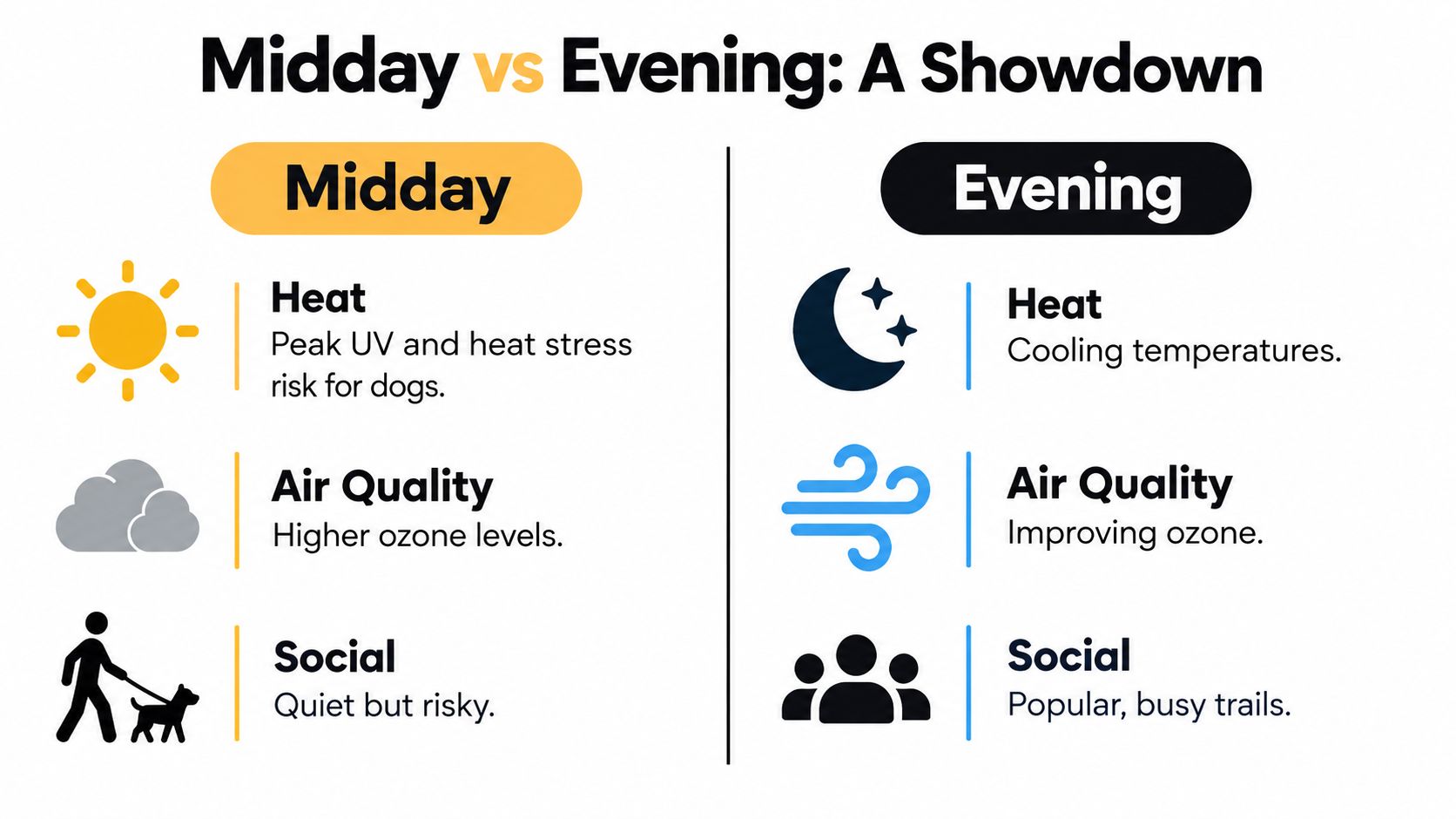
Why evening usually wins
Late afternoon and evening offer a better compromise for many Denver households. Research summarized by Runner's World on morning, noon, and night exercise describes a performance advantage for many athletes between roughly 4 p.m. and 8 p.m. , when body temperature typically peaks and muscle elasticity and perceived effort may improve.
That timing also matches real life. You finish work, your dog gets structured activity, and the run becomes a boundary between professional demands and home life. The social atmosphere can help, too. Popular paths may be busier, but some runners find other people, dogs, and daylight more motivating than an isolated dawn route.
The catch is that evening isn't automatically cool or clean. A hot Denver day can leave asphalt radiating warmth after sunset, and rush-hour pollution may linger. Check the route rather than assuming the clock has solved the problem.
| Time | Main advantage | Main concern |
|---|---|---|
| Midday | Convenient for a work break | Strong sun, hot surfaces, and poorer air may combine |
| Late afternoon | Often favorable for performance and schedule fit | Heat can remain high after a warm day |
| Evening | Cooling conditions and a useful post-work routine | Darkness, crowds, and residual pollution require planning |
For hard efforts, late afternoon may feel best when conditions are moderate. For a dog run in summer, use the cooler end of the evening and reduce intensity when the surface still feels warm. The right decision isn't “evening always.” It's “evening when the environment is safe.”
Scheduling Runs for Your Dog
Dogs do not treat a run as a smaller version of your workout. Breed, coat, age, body shape, fitness, and excitement level all change the risk. A fit retriever and a brachycephalic dog should never get the same heat plan, even if both are eager at the door.
Start with the cooler parts of the day, then adjust for your dog and your route. Cornell recommends early morning or evening outings to avoid the hottest hours, with extra caution around strenuous exercise in hot, humid weather and early summer, before pets acclimate as described in this veterinary guidance. That is the baseline, not a free pass to run whenever the sun is lower. Humidity, wind, shade, altitude, and pavement temperature still decide whether the outing is smart.
A safer pre-run check
Before you clip on the leash, run through this short assessment:
- Touch the surface. If pavement is too hot for the back of your hand, pick grass, shade, or a different time.
- Check the weather. Use temperature, humidity, sun exposure, and wind together. Temperature alone can fool you.
- Review air quality. If local conditions worsen, shorten the outing, reduce effort, or move exercise indoors. As noted earlier, outdoor activity guidance calls for caution when air quality drops.
- Know the dog. Heavy panting, slowing, weakness, confusion, vomiting, or reluctance to continue means stop, cool down, and get veterinary help if the signs are serious.
- Build gradually. A newly adopted dog or an underconditioned dog needs shorter, controlled outings before joining a sustained run.
The comfortable running range for people is often cooler than a typical summer afternoon. One sports-medicine source identifies 7°C to 15°C, or 44°F to 59°F , as an ideal running temperature, and notes that each 5°C, or 9°F, rise above about 18°C can bring roughly 1%–3% performance loss , depending on humidity, wind, and individual tolerance according to the Road Runners Club of America.
Dogs need a more conservative approach. The early-morning and evening rule matters even more for flat-faced breeds, dogs carrying extra weight, seniors, and any pet with respiratory or cardiac concerns. Bring water, use a harness or well-fitted collar, and end the run while your dog still looks comfortable. A tired dog is a happier housemate. Exhaustion is the wrong target.
When You Need a Helping Hand
Sometimes the right run window sits squarely inside your workday. If your calendar blocks the cool part of the day, your dog still needs movement, and waiting until you are free often pushes exercise into heat, traffic, and a rushed mood. A professional service solves that problem without making you choose between your own workout and your dog's weekday routine.
Denver Dog's weekday dog-walking guide for busy professionals is the practical answer when lunch hour is your only workable slot. Denver Dog offers on-leash running, walking, and hiking through its Denver Dog Joggers and Denver Dog Hikers programs, so the outing can match a dog's energy and temperament. Its service area includes Arvada, Denver, Englewood, Golden, Lakewood, Littleton, and Wheat Ridge , all covered on the Denver Dog service area page.
Consistency needs infrastructure
Reliable handoff beats the heroic catch-up run. Denver Dog says its drivers must maintain a seven-year clean driving record , and in-vehicle camera technology monitors speeding, following distance, distraction, and drowsiness. Staff also receive repeated training in canine handling, fitness, and welfare, which gives owners a structured option when timing is tight and the dog still needs a safe outing.
Since 2010 , Denver Dog says it has delivered more than 135,000 sessions and earns top ratings on Google and other platforms according to Denver Dog. Those figures show service history, not a guarantee about the right frequency or distance for every dog. Ask about your dog's breed, health, leash behavior, preferred pace, and weather limits before you book.
Human runners can use objective testing to sort out conditioning instead of guessing from one hard outing. For readers who want a performance benchmark, Telomyx VO2 max testing in Chester offers a way to measure aerobic capacity. A dog's plan still belongs to veterinary guidance and the behavior you see on the leash.
Professional help makes sense when it protects the routine. If your workday blocks the cool window, a scheduled midday walk or run keeps your dog from being stuck until the hottest or most chaotic part of the evening.
Building Your Personal Run Plan
Start with a calendar, not a stopwatch. Put your realistic windows on one side, then compare each with the day's heat, air quality, daylight, and your dog's condition. The best time to run is the slot that clears the safety check and survives ordinary life.
Use a simple decision hierarchy
Choose morning when summer heat is building, ozone is a concern, or you and your dog prefer quiet routes. Give your body time to warm up, use visibility gear when needed, and protect the routine by going to bed early enough.
Choose late afternoon or evening when temperatures are moderate, the route has cooled, and after-work exercise helps you switch out of work mode. This is the strongest default for many busy owners because it aligns with historical exercise habits and the period when many athletes perform well.
Choose midday only when conditions support it. A cloudy, cool day with safe pavement and acceptable air can make a lunch run practical. Don't let a convenient calendar slot overrule heat, humidity, or your dog's breathing.
Choose professional support when your safest window overlaps with work. A trained handler can give your dog structured movement while you protect your own run for a cooler or more suitable time.
Keep a short record for a couple of weeks. Note the time, weather, route surface, your energy, and your dog's behavior afterward. Look for useful signals: a dog that settles calmly, a pace that feels controlled, and a routine that doesn't damage sleep are better evidence than a fashionable morning-versus-evening rule.
Your equipment can support that habit without becoming a distraction. If your watch irritates your wrist or slips during runs, use this guide on how to size a smartwatch strap to improve comfort and keep your training data usable. The tool matters less than whether it helps you notice patterns and return to the next run.
The practical standard: Pick the coolest safe window you can repeat, then adjust the pace and route for the dog in front of you.
Denver's weather can change quickly, so keep a backup plan. A dawn route may be right during a hot spell, while an evening run may suit a cool autumn day. If air quality worsens, shorten the session or move indoors. If your dog shows heat stress, paw discomfort, or unusual fatigue, stop rather than trying to complete the planned distance.
Build the shared routine around safety first, consistency second, and performance third. That order keeps the run useful for both of you.
Denver Dog provides weekday on-leash dog running, walking, and hiking for owners in Arvada, Denver, Englewood, Golden, Lakewood, Littleton, and Wheat Ridge. Visit Denver Dog to arrange structured exercise for your dog when work, weather, or your own run schedule makes the ideal window hard to manage.
The Run Down