The safest times for summer dog walks are early in the morning before 9 a.m. and late in the evening after sunset , when pavement and air temperatures are lowest. In Denver, summer walks should be scheduled before 10 a.m. or after 4 p.m. , and when temperatures exceed 77°F (25°C) , walk time should be cut to 10 to 15 minutes according to summer dog walking guidance.
You're probably here because your dog is standing by the door, leash in mouth, while the sun is already bouncing off the sidewalk. That's a normal Denver summer moment. It's also where a lot of good intentions turn into risky walks.
Dogs still need exercise, routine, and mental stimulation in July and August. But Denver heat isn't mild, and generic advice like “go a little earlier” doesn't go far enough. Between the altitude, the intense sun, and pavement that heats fast, the best time to walk dog in summer has to be treated as a safety decision, not just a scheduling preference.
Your Dog's Summer Dilemma in Denver
At 8:30 a.m., City Park can feel pleasant enough for a normal walk. By the time you circle one open stretch with full sun, your dog is absorbing heat from above and below. In Denver, that shift happens fast.
I see owners get caught by the same pattern every summer. The air feels dry, the breeze seems harmless, and the dog looks eager at the door. But our elevation means stronger sun exposure, and that sun heats concrete and asphalt faster than many people expect. A route that feels manageable for you can turn into a paw and overheating problem within minutes for a dog.
Dry heat also gives people false confidence. Denver often feels less oppressive than a humid city, but dry air does not cancel heat stress. Humidity still matters, and the better metric is the humidity-adjusted heat index, not the air temperature alone. That number catches risk that a quick glance at the forecast can miss.
What owners usually miss
The common mistake is relying on the forecast and ignoring the surface, sun exposure, and how hard the dog has to work. Dogs walk closer to hot pavement, wear a fur coat, and cool themselves far less efficiently than people do during exertion. Add a blacktop block with no tree cover in neighborhoods like RiNo, LoDo, or parts of Wash Park, and the walk changes quickly.
I would rather cut a walk short than test whether a dog can handle "just one more block." That is usually the right trade-off in summer.
What actually works in Denver
Good summer walking habits are simple, but they need to be strict:
- Start with shaded routes, grass, and shorter loops.
- Treat direct sun after the early morning window as a separate hazard, even if the air still feels tolerable.
- Expect midday walks to become potty breaks, not exercise sessions.
- Swap outdoor mileage for indoor enrichment when conditions are questionable.
If your dog has already had a close call, review the early warning signs in this Denver guide to recognizing heat stroke in dogs. For a broader refresher on keeping pets safe during heat, that resource is also worth keeping handy.
In Denver, summer walking is not about sticking to your usual routine. It is about reading the conditions accurately and changing the plan before your dog pays for a bad call.
Recognizing the Unseen Dangers of Summer Heat
Heat injuries often start before people realize there's a problem. A dog doesn't have to collapse for the walk to be unsafe. Trouble often begins with panting that gets heavier, movement that slows, or a dog that starts angling toward shade and trying to stop.
Veterinary guidance puts 82°F to 90°F (28°C to 32°C) in the high-risk zone for overheating , and once temperatures reach 90°F (32°C) or higher , outdoor exercise should be restricted to quick bathroom trips only according to this dog heat safety guide. That's the point where a normal walk stops being exercise and starts becoming exposure.

The danger signs owners need to catch early
Dogs often show distress before people label it as an emergency. Early warning signs include heavy panting, slowing down, and seeking shade. If you see that pattern, the right move is to end the walk, not “push through one more block.”
A few signs deserve immediate attention:
- Heavy panting that escalates: Your dog isn't cooling effectively.
- Lagging or stopping: Many dogs will keep following you longer than they should.
- Shade-seeking behavior: They're trying to regulate heat on their own.
- Low energy or unusual reluctance: That change matters, especially if your dog is usually eager.
If you want a more detailed local breakdown of symptoms, this Denver guide to recognizing heat stroke in dogs is worth bookmarking.
Why the risk feels bigger in the city
Urban surfaces hold and reflect heat. In major urban markets like Denver, pavement temperatures can run much hotter than the air, which makes both paw injuries and whole-body overheating more likely. Owners often think they're managing air temperature while missing what the dog is standing on.
A summer walk can go wrong from the ground up. The air may feel manageable while the sidewalk is already unsafe.
For broader reading on keeping pets safe during heat, I like resources that focus on practical warning signs and prevention instead of telling owners to “be careful.”
The 5-Second Rule and Safe Temperature Guide
The most useful summer walking habit is also the simplest. Before every walk, check the pavement with the back of your hand. If you can't hold it there for five seconds , it's too hot for your dog's paws and you need to switch to grass or a shaded route, as outlined in this pavement safety guidance.
That test matters because paw pad burns happen fast, and owners usually notice the risk too late.

How to use the 5-second rule correctly
Don't tap the sidewalk with your fingertips and call it good. Use the back of your hand , press it firmly against the pavement, and count.
- If five seconds feels easy: You can keep evaluating the walk.
- If you pull away early: The surface is too hot.
- If one patch is shady and another is exposed: Judge the route by the hotter section, not the cooler one.
This test is essential on asphalt, concrete, parking lots, driveways, and sun-exposed trails near trailheads.
A simple way to make the call
You don't need a complicated chart on your phone every morning. What works is a quick decision framework.
| Walking condition | What to do |
|---|---|
| Cool early morning | Normal walk, while still watching your dog |
| Warm but manageable | Shorten the route, stay on grass, seek shade |
| Hot pavement or rising heat | Skip the walk and swap in indoor activity |
| Anything that fails the hand test | No pavement walking |
A lot of owners also want a more specific local reference point before leaving home. This Denver guide on how hot is too hot for a dog is useful for making that call before you leash up.
Later in the day, visual examples can help people understand how fast pavement risk changes:
What works and what doesn't
Some adjustments help. Others don't.
- Works: Grass routes, shaded blocks, shorter outings, and changing the schedule.
- Doesn't work: Assuming your dog will “tell you” before damage happens.
- Works: Turning around early when conditions are changing.
- Doesn't work: Starting on cool pavement and finishing on sun-baked sidewalks an hour later.
If the ground is questionable, the walk is questionable.
Beyond Temperature Breed Age and Humidity
Temperature alone doesn't tell the whole story. Many summer dog walking articles fall short by not acknowledging this, especially for Denver owners who think dry air always means lower risk. Humidity can change the decision fast, and so can the dog at the end of the leash.
The humidity-adjusted rule most people miss
A practical summer benchmark is this: if temperature in °F plus humidity percentage equals 150 or higher , outdoor exercise should be avoided for all dogs according to this humidity-adjusted walking guide. One example from that guidance is 81°F with 70% humidity , which totals 151 and is considered dangerous heat for all dogs.
That's a useful reality check because “it's only the morning” doesn't help if the air is heavy and your dog can't cool efficiently through panting.
Which dogs need stricter limits
Not every dog gets the same summer plan.
Flat-faced breeds need the most caution. For brachycephalic dogs , exercise should be restricted entirely when temperatures exceed 80°F (27°C) because they can't cool efficiently through panting and face a much higher heatstroke risk, as noted in the earlier Denver-focused guidance.
Senior dogs, puppies, overweight dogs, and dogs with health issues also need a lower threshold. For those dogs, conditions that seem merely warm for a fit adult dog may already be too much.
Here's how that plays out in real life:
- Young athletic dog: May handle a short sunrise outing well.
- Older dog with reduced stamina: May need only a brief shaded potty walk.
- Pug or bulldog: Needs a very conservative plan, even when the morning feels “not that bad.”
- Overweight dog or dog with medical issues: Shouldn't be the one you experiment with.
Denver-specific judgment matters
Denver isn't known for muggy summers the way some regions are, but humid mornings do happen, and they catch owners off guard because the air can feel cooler than the risk level suggests. Combine that with strong sun, reflected heat, and little cloud cover, and a walk that looked reasonable on paper can become a poor choice quickly.
The safest owners I work with don't ask only, “What's the temperature?” They ask four questions instead:
- What's the humidity doing?
- What surface will my dog be on?
- How much sun exposure is on this route?
- Is my individual dog a higher-risk dog today?
That last part matters more than people think. A dog's age, breed, body condition, and current energy level should decide the walk.
Safe Alternatives and Professional Support
Some summer days are not walking days. That doesn't mean your dog has to bounce off the walls. It means you switch from physical mileage to safer forms of exercise and mental work.
Good substitutions when it's too hot outside
Indoor enrichment works better than many owners expect when it's done on purpose.
- Puzzle feeders: Give your dog a job and slow down mealtime.
- Short training sessions: Practice place, recall, settle, or leash skills indoors.
- Scent games: Hide treats or toys and let your dog search.
- Tug and controlled fetch inside: Useful if you have enough space and good footing.
If you have outdoor space, it helps to create a dog-safe yard with shade, comfortable surfaces, and room for low-risk activity during hotter months.
When outside help makes sense
Busy weekdays are where heat safety often slips. Owners leave with good intentions, work runs late, and suddenly the available walk window is the hottest part of the day.
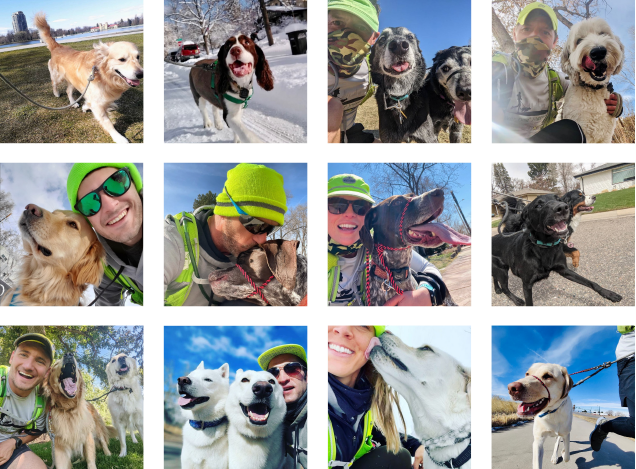
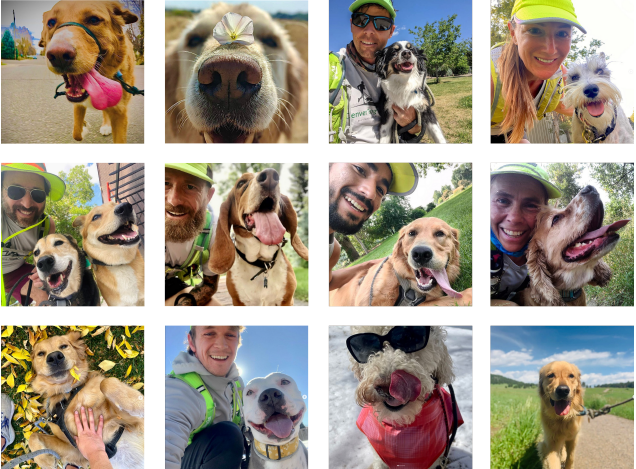
That's one reason some people use a structured weekday service. Denver Dog offers on-leash walking, jogging, and hiking in Arvada, Denver, Englewood, Golden, Lakewood, Littleton, and Wheat Ridge, which can help owners line exercise up with safer parts of the day instead of squeezing it into lunch hour.

For owners comparing options, this Denver owner's guide to hiring a dog walker is a practical place to start.
What doesn't work on hot days
The most common bad backup plan is “I'll just do the usual route, only faster.” That still puts the dog on hot pavement and in direct sun. A rushed hot walk isn't safer than a normal hot walk.
The better alternative is boring but effective. Keep the outdoor part short, then meet the rest of your dog's needs indoors or with help from someone who can work within a safer schedule.
Your Denver Summer Dog Walking Checklist
Summer safety gets easier when you stop deciding from scratch every day. Use the same checklist before every walk, especially in Denver when conditions can shift quickly between sunrise and late morning.

The daily go-no-go list
- Check the time: Aim for before 9 a.m. or after sunset, with Denver walks generally planned before 10 a.m. or after 4 p.m.
- Check the pavement: Do the hand test every time.
- Check the weather: Look at both temperature and humidity, not just one.
- Check your dog: Age, breed, weight, and health all matter.
- Check the route: Favor shade, grass, and shorter loops.
- Check your plan B: Have indoor enrichment ready before you need it.
When to cancel without debating it
Some days should end the discussion immediately.
Your dog does not need to “get a real walk in” every single summer day. Your dog needs to stay safe.
Cancel or switch to a potty-only outing when:
- The pavement fails the 5-second test
- The air and humidity create a dangerous combination
- Your dog is brachycephalic and conditions are too warm
- Your dog is already panting hard before the walk gets going
- You know you'll be walking during the hottest part of the day
That's the practical answer to the best time to walk dog in summer question. The best time is the time that protects the dog in front of you, even if that means changing your schedule, shortening the route, or skipping the walk entirely.
If you need weekday help keeping your dog active without gambling on Denver heat, Denver Dog is one local option to look at. Their on-leash walking, jogging, and hiking programs are built around structured exercise, and their service area includes Arvada, Denver, Englewood, Golden, Lakewood, Littleton, and Wheat Ridge.
The Run Down