Somewhere in Denver this morning, a runner clipped on a leash, headed out feeling motivated, and spent the first mile getting yanked off rhythm. The dog surged at every squirrel track, the runner shortened stride to avoid stepping on the line, and by the time the sun hit the trees the outing felt like a handling drill instead of a run.
That usually isn't a dog problem. It's a setup problem.
The best dog running leash should help both bodies move well together. It should reduce jarring force, keep the dog in a predictable lane, and match the way you run, whether that's a smooth neighborhood jog, a climb on Front Range trails, or a stop-and-start loop through crowded paths. Around Denver, terrain changes fast. So does leash demand. A flat sidewalk in Englewood asks for something different than a rocky incline in Golden or a busy shared trail in Lakewood.
Finding Your Rhythm on the Run
A bad leash makes every mistake louder. A leash that's too short crowds your feet. A static leash transmits every pull into your shoulder. A waist belt that sits wrong on your hips can turn a relaxed run into a lower-back fight.
A good leash does the opposite. The dog settles into position. Your arms swing naturally. The line stays organized. You stop thinking about gear and start paying attention to footing, breathing, and your dog's pace.
That difference matters more in Colorado than many generic buying guides admit. On local trails, a runner may go from pavement to gravel to uneven dirt in one outing. Add hills, wildlife, cyclists, and changing weather, and the best dog running leash becomes a safety tool, not just an accessory. If you're building a routine, our running with your dog guide for Denver pet parents covers the training side that should sit underneath any equipment choice.
Practical rule: If your leash forces you to brace every time your dog changes speed, your setup is working against your mechanics.
The other piece runners forget is environment. A smooth leash system doesn't replace awareness. In foothill and trail-adjacent areas, it's smart to review a practical guide for running safety in wildlife country from Counter Assault before you head out.
The right match depends on three things. Your dog's size and pull style. Your own biomechanics. The kind of ground you cover most often.
Understanding the Main Types of Running Leashes
A leash category matters because each one loads the body differently. The right choice is not just about control. It is about where the force lands when your dog speeds up, cuts across your path, or checks up on a climb.
Most running leashes fit into three practical groups.
| Running leash type | Primary use | Main advantage | Main drawback |
|---|---|---|---|
| Hands-free bungee | Steady jogging, longer outings, side-by-side running | Frees arm swing and softens jolts | Can pull your hips or lower back if fit and dog position are off |
| Fixed-length with bungee | Mixed terrain, runners who want more direct handling | Better control with some shock absorption | Keeps one arm engaged more often |
| Standard fixed-length | Training, dense urban areas, close handling | Precise control | Transfers force directly to the handler |
Hands-free systems
A hands-free leash clips to a waist belt and shifts the connection from your hand to your center of mass. For many runners, that improves rhythm on flat paths and steady dirt roads because both arms can swing naturally. It works best with a dog that holds a fairly consistent lane, usually beside your left or right knee rather than drifting in front.
The trade-off shows up on hills and switchbacks. If the dog surges downhill or pulls across your line on a climb, the belt can rotate and twist your pelvis before you have time to correct. I usually like this style for dogs that already understand pace and position, especially on longer runs along the Cherry Creek path, wide sections of Waterton Canyon, or smoother foothill access roads where footing stays predictable.
Some hands-free leashes also convert to handheld use. That can help on routes that start on pavement and end on narrower singletrack.

Fixed-length with bungee
This is often the most versatile option for Denver runners. You keep a hand on the leash, so you can shorten quickly near bikes, horses, road crossings, and tight trail entries, but the elastic section still takes some sting out of abrupt changes in speed.
Biomechanically, this setup suits runners who want faster corrections without putting every jolt into the shoulder. It also gives better line management on mixed terrain. On crushed gravel, neighborhood connectors, or rolling trails with frequent turns, that extra steering control usually outweighs the freedom of a waist belt.
I recommend this style often for dogs that are willing but inconsistent. They may run well for half a mile, then drift on scent or lag on climbs above 6,000 feet. A handheld bungee gives the runner more room to reorganize pace and position before the leash tension gets messy.
Standard fixed-length leashes
A standard leash has no elastic section and no help when momentum changes. That makes it the clearest communication tool and the least forgiving one.
For short training runs, crowded sidewalks, and dogs with polished leash manners, a fixed line can be the right call. It is also useful for early conditioning work, when the goal is teaching position rather than covering distance. On the other hand, if the dog lunges at wildlife, brakes hard to sniff, or forges on descents, a static leash sends that force straight into the runner's arm, shoulder, or torso.
This style asks the most from both partners.
Traffic handles and close-control features
Some running leashes include a secondary grab handle near the dog. On Denver-area routes, that is a practical feature, not extra decoration. Trailheads get crowded fast. So do parking lots, blind corners, and narrow spots where you need your dog close for three seconds and then back out at running length.
A traffic handle is most useful when the rest of the leash already matches your normal running mechanics. Extra features do not fix a poor category choice.
The best leash type is the one that matches your dog's movement pattern, your own stride mechanics, and the ground you run most often.
Critical Features That Define a Great Running Leash
A running leash should be judged by mechanics first, comfort second, and style last. Most failures show up under load, not in a product photo.
Shock absorption that actually helps
The most important technical feature is a dynamic bungee system . According to this running leash review from Runner's World, the optimal setup uses nylon webbing with an elastic core and provides 36 to 48 inches of total stretch length to absorb sudden force spikes. The same source notes that this configuration can reduce peak impact load on the handler's shoulders and waist by up to 40% compared with static leashes.
That matters on real runs. Dogs don't move at one speed. They check scent, hop around trail debris, accelerate into a downhill, or slow abruptly near another dog. A good bungee takes the edge off those transitions before the force reaches your joints.
Materials and hardware
The best dog running leash also needs durable webbing, stitching that won't creep under repeated strain, and hardware that stays secure when the dog twists or loads the line sideways. A weak clip ruins the whole system.
Look for these details:
- Elastic plus structured webbing: Pure stretch can feel vague. Webbing with controlled elastic usually tracks better.
- Secure clip design: A strong carabiner or similarly secure connector matters more on stronger dogs.
- Comfort at contact points: If you're using a hand-held setup, the handle should feel stable when wet, dusty, or under tension.
- Reflective trim: Early morning and winter evening runs in Denver make visibility worth having.
Fit and adjustability
Good leashes work across environments. Great leashes adapt to them.
A leash that adjusts cleanly lets you run shorter in dense areas and allow more movement when the path opens up. Waist compatibility matters too if you're choosing hands-free. The belt should sit securely without sliding, pinching, or bouncing.
A leash can be durable and still be wrong for running if it doesn't let you manage changing terrain without breaking stride.
Field-tested models worth noting
One model comes up repeatedly for a reason. The Ruffwear Roamer was tested over 100 miles of actual running terrain and identified as the top-performing model for durability and shock absorption in that testing, according to this Outside evaluation of dog running leashes. A separate review also identified the Ruffwear Roamer as the best overall hands-free dog running leash, citing its padded waist belt, shock-absorbing design, and strong carabiner in this hands-free leash review from Treeline Review.
That doesn't make it automatic for every dog. It does make it a serious benchmark when you're comparing build quality and bungee performance.
A Head-to-Head Comparison of Running Leash Styles
The right style depends less on brand loyalty and more on running geometry . Where does your dog run relative to your body? Beside you, slightly ahead, or actively pulling in front? That answer changes the safest choice.
Here's the quick comparison.
| Leash Type | Best For | Shock Absorption | Control | Runner Comfort |
|---|---|---|---|---|
| Hands-Free Bungee | Side-by-side runners, longer trail or neighborhood runs | Excellent | Moderate | Excellent |
| Fixed-Length with Bungee | Mixed terrain, dogs needing more active guidance | Good | High | Good |
| Standard Fixed-Length | Urban training, tight passing situations, highly trained dogs | None | Very High | Fair |

Hands-free bungee in real use
This is the most comfortable option for many recreational runners. Your arms stay free, your stride feels more natural, and a good bungee softens the dog's speed changes. On smoother sections of path, that can feel excellent.
The trade-off is steering. If your dog changes lane often, cuts in front, or drifts wide, the force reaches your hips and lower back before your hands can intervene. That's where some owners get surprised. Hands-free doesn't mean low effort. It means a different loading pattern.
Fixed-length with bungee for active handlers
This style is often the safest middle ground. You keep direct influence over line placement while still getting some force dampening. For runners dealing with a dog that isn't chaotic but isn't polished either, this setup can make a lot of sense.
It also suits Denver-area routes where conditions change within the same outing. You can shorten quickly at intersections, then relax the line once the path clears.
A harness matters just as much as the leash in this setup. If you're dialing in the full system, our guide to finding the best running harness for dogs in 2026 helps match attachment style to your dog's movement pattern.
Standard fixed-length when precision matters most
A standard leash gives the clearest signal and the least forgiveness. For a dog that heels reliably or for short urban training sessions, that's useful. For true running with an athletic dog, it can be punishing.
Every abrupt deceleration travels directly into your wrist, elbow, or shoulder. On pavement, that gets old fast.
Later in the run, this video gives a useful look at movement and setup in action.
The geometry mistake most buyers miss
This is the nuance generic roundups skip. According to a discussion among experienced runners in this Running With Dogs Reddit thread, cheap waist leashes work only when the dog runs beside you, while dogs that pull in front require a canicross kit to distribute force safely.
That distinction matters. A side-by-side dog and a front-pulling dog don't load your body the same way.
- Side-by-side dog: Hands-free bungee often works well.
- Dog slightly ahead but responsive: Fixed-length with bungee gives cleaner management.
- Dog that drives in front: Skip the generic waist leash. Use canicross-specific gear.
- Dog still learning position: Start with more control, not more freedom.
If your dog pulls from in front, the question isn't "Which leash is most comfortable?" It's "Which system distributes force safely?"
Recommended Leash Setups for Your Dog and You
Buying the best dog running leash gets easier when you stop shopping by category and start shopping by pairing. Dog, runner, and terrain should make sense together.
For the strong trail dog
A bigger, enthusiastic dog on dirt or foothill terrain usually needs structure first. For dogs over 26 lbs , a standard-width 1.0 inch running leash is required for adequate tensile strength, while dogs under 26 lbs should use a 0.5 inch lite version to reduce drag, according to this EzyDog Road Runner product specification. The same source recommends adjustable lengths between 3 and 6.5 feet and waist-belt compatibility for 28 to 48 inch hips .
For a high-energy Labrador, pointer, shepherd mix, or similar build, a standard-width leash with controlled bungee and practical adjustability is usually the better call. On steeper or rockier routes, too much line can create delayed feedback and sloppy corners.
For the compact dog that pulls harder than expected
This is the dog many owners underestimate. A compact, muscular dog can create a lot of sideways force. If that dog likes to surge at the start and then settle, a fixed-length leash with bungee is often cleaner than a fully hands-free system.
A Corgi, cattle dog mix, or stocky small-medium dog often does better when the handler can intervene quickly and keep the line from crossing in front of the knees.
For the light small dog
Small dogs don't just need smaller gear. They need lighter-feeling gear. Under the EzyDog specification above, dogs under 26 lbs are better suited to the lite width because it reduces drag and handle weight.
That matters on a small terrier or similar dog that runs quickly but doesn't have the body mass to stabilize a heavier line. If the leash hardware feels oversized for the dog, the setup is probably wrong.
Match the setup to your local route
Use these practical pairings:
- Neighborhood pavement in Denver or Englewood: Adjustable length, moderate control, easy shortening for crossings.
- Wide paths near Littleton: Hands-free can work well if the dog holds position.
- Rolling trail systems in Golden or Arvada: Prioritize direct control and quick shortening.
- Crowded mixed-use routes in Lakewood or Wheat Ridge: Traffic handle and predictable line management matter more than maximum freedom.
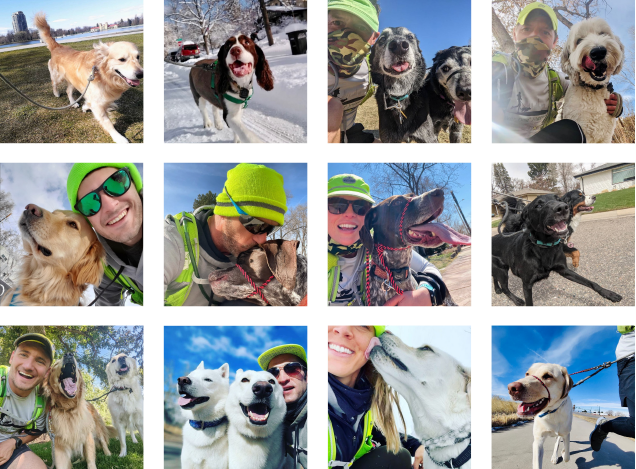
One practical option for owners who don't have time to build this routine themselves is a structured weekday service such as Denver Dog, which provides on-leash running, walking, and hiking built around the dog's energy level and handling needs.
Safe Handling and Denver-Area Trail Etiquette
Good gear helps. Good handling prevents problems.
Adjust before the problem starts
Shorten your leash before you enter a crowded segment, not while you're already in it. On descents, manage bungee tension early so the dog doesn't hit the end of the line as gravity speeds both of you up. On climbs, watch for dogs that drift behind and then slingshot forward when the trail levels out.
If your leash has a traffic handle, use it before passing cyclists, strollers, horses, or narrow blind corners.

Match leash length to the trail
Busy trails reward shorter setups. Open trails let you breathe a little more.
Green Mountain in Lakewood often calls for tighter leash management because of traffic, turns, and variable sightlines. Wider-open paths near Chatfield allow more space, but only if the dog stays predictable. The rule is simple. More users and less visibility mean less leash.
Know local expectations
Keep your dog close when passing. Yield early. Don't let a bungee line drift across the full width of the trail. Shared-space etiquette matters just as much as leash choice.
Local leash rules can vary by city, county, and park, so it's worth checking a practical Colorado leash law guide for Denver pet owners before trying a new route.
Denver-area runners also have to think locally. Trail conditions in Arvada and Wheat Ridge won't feel the same as steeper foothill approaches in Golden, and crowded neighborhood routes in Denver or Englewood call for tighter handling than broad suburban paths in Littleton. If you want a quick sense of where those route patterns show up in our regular coverage area, our Denver metro dog walking and running service areas include Arvada, Denver, Englewood, Golden, Lakewood, Littleton, and Wheat Ridge.
Keep the leash short enough to be polite and long enough to let the dog move naturally. The right number changes with the trail, not your mood.
When to Trust the Professionals at Denver Dog
A weekday run can go sideways fast on a Denver route. The dog is fit enough to pull uphill, the runner is tired enough to lose timing on the downhill, and a leash setup that felt fine on Saturday starts creating tension, drift, or repeated jolts by Tuesday.
That is usually the point where professional handling helps.
At Denver Dog, we have logged more than 135,000 sessions since 2010. At that volume, the pattern is clear. Dogs do not just need exercise. They need repeatable handling that matches their gait, fitness, and pulling style to the person attached to the leash. A strong dog with a long stride can overload a runner with slower turnover. A quick, reactive dog can throw off someone who runs upright and late on leash corrections. On steeper foothill routes and higher-elevation efforts, those mismatches show up even faster.

Busy owners usually do not lack effort. They lack enough consistent reps to build clean habits. One hard weekend outing rarely teaches the same leash discipline as structured weekday runs with the same cues, pace limits, and passing rules.
Professional support also helps when a dog is physically willing but mechanically inefficient. We see dogs that forge downhill, fade at altitude, cross in front when the runner shortens stride, or brace against belt tension because the leash length does not match their natural rhythm. Those problems are fixable, but they improve faster with consistent handling than with occasional trial and error.
Recovery matters too. If your dog looks stiff after runs, read practical solutions for joint pain in dogs so you can tell the difference between normal post-run fatigue and a problem that needs attention.
For some households, that support means regular neighborhood runs. For others, it means controlled hikes, lower-impact conditioning, or shorter outings that build manners before speed. The leash still matters. The handler matters just as much.
If your dog needs more exercise than your weekday schedule allows, Denver Dog offers on-leash running, walking, and hiking built for busy Denver pet parents who want safe, structured outings for energetic dogs.
The Run Down