You leave for work before your dog has had a proper outlet. By the time traffic clears and you're back in your Denver neighborhood, your dog may be pacing, nudging the leash, or turning ordinary household movement into a game. The problem isn't always a lack of love or effort. Often, it's a mismatch between the exercise your dog needs and the pet care you've scheduled.
Pet Care Denver Guide to Runs Walks and Hikes
Introduction to Pet Care in Denver for Busy Owners
Denver pet care is more than arranging a quick visit while you're away. For many owners, it means building a reliable routine around exercise, safety, enrichment, and recovery . Denver Parks and Recreation has estimated roughly 158,000 to 160,000 dogs in the city, while local reporting has noted that this exceeds the number of residents under 18, estimated by the U.S. Census at about 129,000 . A local report on Denver's dog population and pet ownership also cited a 2024 Colorado Polling Institute survey finding that about 50% of Denver residents own a dog and 68% own at least one pet .
That scale helps explain why owners need more than one generic definition of a “dog walk.” A young working breed may need a structured run. A senior dog may benefit from a slower neighborhood outing with time to sniff. A fit, confident dog might thrive on a guided trail hike, while a brachycephalic dog may need a shorter, cooler plan.
The practical question is simple: what workload matches this dog on this day? Breed, age, conditioning, temperament, weather, terrain, and recovery all matter. A service that sounds convenient may be unsuitable if it gives an athletic dog too little activity or pushes a low-conditioning dog too far.
Busy owners can use this guide to understand why hiring a dog walker can help with a busy life, then compare walks, runs, and hikes, evaluate safety practices, and choose a provider serving their part of the metro. By the end, you'll have a clearer way to decide whether your dog needs a calm outing, a sustained run, or a carefully managed trail adventure.
Understanding the Full Spectrum of Pet Care Options
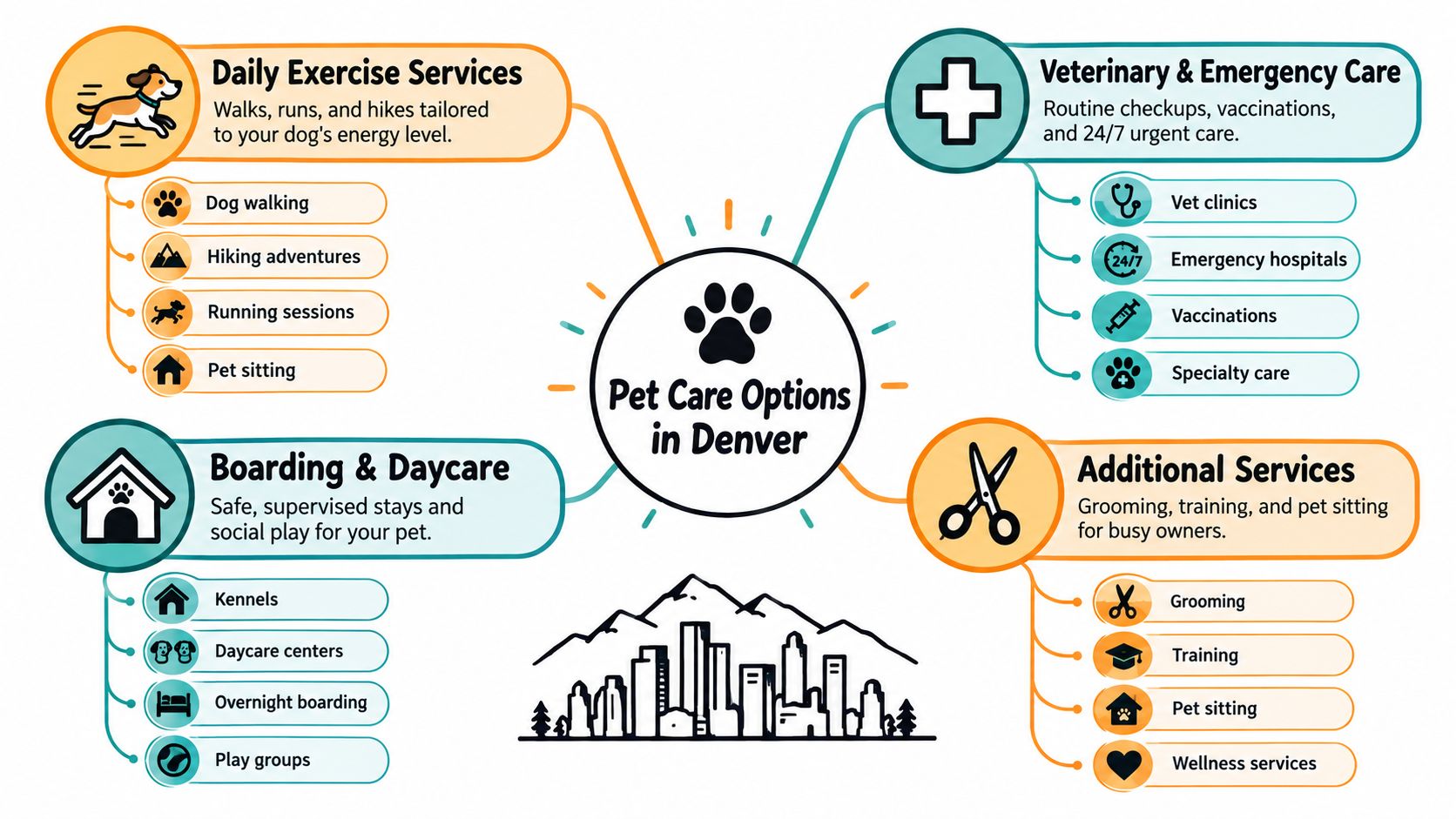
Think of pet care as an interconnected system rather than a collection of unrelated appointments. Daily exercise supports physical outlets and mental stimulation. Veterinary care protects health and identifies problems that can change what exercise is appropriate. Boarding, daycare, grooming, training, and sitting fill different gaps in a household routine.
Daily exercise services
Walks, runs, and hikes answer the same broad need, but they create different workloads. A walk may prioritize steady movement, sniffing, and basic routine. A run raises cardiovascular demand and requires a dog that can maintain movement comfortably. A hike adds uneven terrain, environmental distractions, elevation changes, and trail etiquette.
Owners often make the mistake of treating distance as the only measure. A short rocky route can challenge paws and balance more than a longer flat sidewalk outing. A calm walk with frequent sniffing may also serve a different behavioral purpose than a brisk run.
Health and overnight care
Veterinary clinics handle preventive exams, vaccinations, diagnosis, and treatment. Emergency hospitals address urgent problems that a routine provider shouldn't attempt to manage. These services belong beside exercise planning because pain, breathing limitations, heart conditions, injuries, or illness can change a dog's safe activity level.
Boarding and daycare solve different scheduling problems. Boarding provides care during overnight travel or extended absences. Daycare may offer supervised social time and activity during the day, but owners should still ask how play is managed, how dogs are grouped, and whether rest periods are built into the schedule.
Supporting services
Grooming keeps coats, nails, ears, and skin manageable. Training addresses communication, leash behavior, recall, and household habits. Pet sitting may focus on feeding, medication routines, and companionship without providing a substantial exercise session.
A useful planning question is, which need is urgent today, and which need is recurring? A dog may need veterinary attention for a limp, regular weekday exercise while an owner works, grooming before a coat becomes difficult to maintain, and boarding during travel. Separating those jobs makes it easier to select a provider that's equipped for the actual task.
How Walks Runs and Hikes Compare for Denver Dogs
The difference between a walk, a run, and a hike is not just the label. Each service represents a different combination of time, distance, intensity, terrain, and supervision . A 2026 Denver pricing guide describes neighborhood walks as about 1 to 1.5 miles for 30 minutes , on-leash runs as roughly 3 to 5 miles in 45 to 60 minutes , and guided trail hikes as 60 to 90 minutes . These figures come from the Denver dog walking rates and pricing guide, and they illustrate why owners should compare workload rather than purchase only a duration.
Most healthy adult dogs need about 30 to 120 minutes of exercise per day , according to guidance on dog exercise needs. High-energy breeds often require 90 to 120 minutes or more , but the right amount still depends on age, health, conditioning, and breed structure.
| Service Type | Typical Time and Distance | Intensity Level | Best For |
|---|---|---|---|
| Neighborhood walk | About 30 minutes and 1 to 1.5 miles | Low to moderate | Dogs needing routine movement, sniffing, leash practice, or a manageable outlet |
| On-leash run | About 45 to 60 minutes and roughly 3 to 5 miles | Moderate to high | Conditioned athletic dogs and high-energy dogs that move comfortably at a sustained pace |
| Guided trail hike | About 60 to 90 minutes, with distance varying by route | Variable, often moderate to high | Dogs that enjoy exploration, uneven ground, and supervised outdoor enrichment |
A young husky with strong conditioning may become restless after a short stroll, especially if the outing lacks sustained movement or problem-solving. A senior retriever may need regular activity but not the impact, pace, or distance of a run. A French bulldog, pug, or another brachycephalic dog may face greater breathing and heat concerns, so an owner should prioritize veterinary guidance and conservative conditions.
Workload rule: Choose the format that leaves your dog pleasantly tired and able to recover, not exhausted, sore, or reluctant to move the next day.
The best plan may change. A dog can begin with walks, build conditioning gradually, and later handle short runs. A trail-ready dog may still need a shorter outing during warm weather, after illness, or when the surface is rough. Matching exercise means observing recovery, gait, breathing, enthusiasm, and behavior rather than assuming yesterday's workload remains appropriate.
Seasonal Safety and Trail Smarts in the Mile High City
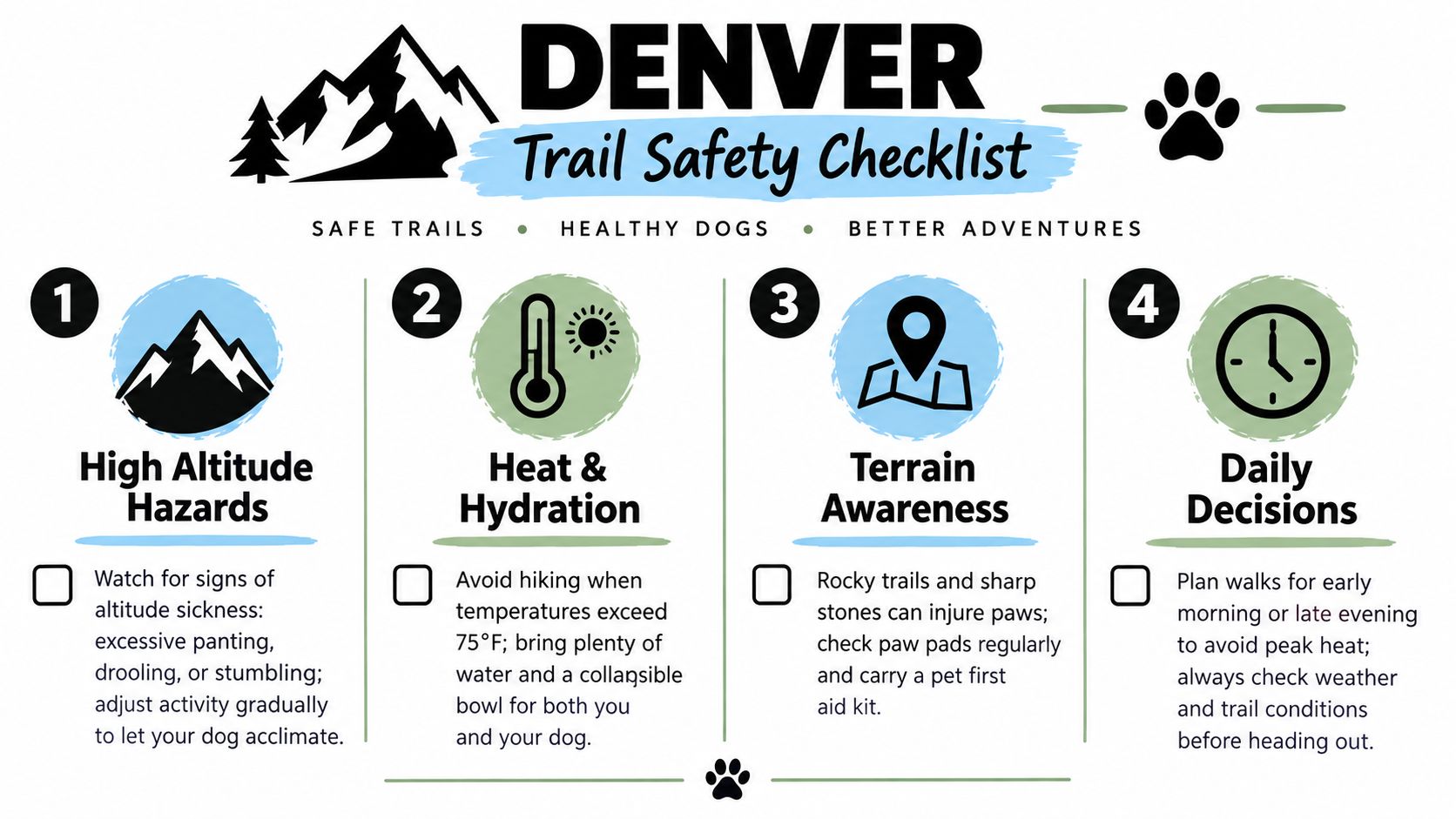
Denver's outdoor access makes trail exercise appealing, but trails combine weather, terrain, wildlife, traffic around access points, and changing dog fitness. Heat deserves the first screening because a dog can look eager at the trailhead and struggle later. Expert trail guidance generally treats 75 to 85°F as a range where fit, acclimated dogs may still hike with shorter distances, frequent water breaks, and shade. 85 to 90°F is marginal, and temperatures above 90°F are unsafe for dog hiking, according to summer dog trail safety guidance.
Heat rule: Schedule hikes early, shorten routes as temperatures rise, and turn around at the first clear sign that your dog isn't coping well.
Read the dog, not just the forecast
Excessive panting, wobbling, drooling, unusual weakness, or refusal to continue should end the outing. Heart-rate data isn't required. Your dog's breathing, coordination, willingness to move, and ability to settle provide practical information.
Bring water for both handler and dog, plus a collapsible bowl. Shade helps, but it doesn't erase heat load. A route that feels manageable at the beginning may become unsafe when the return section offers little cover.
Account for surface and surroundings
Rock, sharp stones, ice, and hot ground can injure paw pads. Check paws during and after outings, and carry basic pet first-aid supplies. Winter routes may require shorter sessions, attention to ice, and protection for sensitive paws when conditions call for it.
Leash control matters near roads, trailheads, cyclists, wildlife, and unfamiliar dogs. A provider should explain how dogs are secured during transport, how handlers respond to distractions, and what happens if a dog slips a collar or becomes frightened. Owners can use the Denver trail safety tips for dog hikes as a practical checklist when assessing any hiking plan.
How to Choose a Trusted Pet Care Provider in Denver
A provider should make the workload understandable before accepting the booking. Start with the dog's age, breed traits, current fitness, leash behavior, medical limitations, and typical recovery. Then ask how the provider turns that information into a walk, run, or hike plan.
Ask about people and procedures
Use these questions to compare providers:
- Training and handling: How often do handlers receive instruction in canine behavior, fitness, first aid, and safe restraint? Can the provider explain how they handle fear, reactivity, heat stress, or an injured dog?
- Leash and trail policy: Are dogs kept on leash? How are groups selected? What situations cause a handler to shorten or cancel an outing?
- Transport standards: If transportation is involved, ask how dogs are secured, ventilated, monitored, and separated when needed.
- Communication: Will you receive notes about distance, behavior, water, bathroom activity, and recovery? Clear updates help you spot patterns.
- Insurance and accountability: Ask about liability coverage, emergency contacts, incident procedures, and references. A resource on step-by-step reputation management can also help explain why consistent reviews and transparent customer communication matter when you evaluate a local service.
- Geographic fit: Confirm that the provider works in your neighborhood and understands the route logistics around it.
Denver Dog describes two structured programs, Denver Dog Joggers and Denver Dog Hikers , alongside walking services. Its published safety information says drivers must maintain a seven-year clean driving record , while in-vehicle camera technology monitors speeding, following distance, distraction, and drowsiness with real-time coaching. The company also says staff are trained and retrained several times a year in canine handling, fitness, and welfare. These are specific practices to compare with the answers you receive from other providers, not substitutes for assessing your individual dog.

Denver Dog's listed service areas include Arvada, Denver, Englewood, Golden, Lakewood, Littleton, and Wheat Ridge through its Denver metro service area page. Its broader coverage is organized through neighborhood-level ZIP-code clusters, which can make scheduling more precise than relying on a broad “Denver metro” label. For a deeper provider checklist, see this Denver dog walker vetting guide.
Real World Examples of Denver Dogs Getting the Right Care
Consider a young husky whose owner leaves for work early and returns after a long commute. A slow neighborhood walk may provide a bathroom break but fail to address the dog's need for sustained movement and engagement. An appropriately paced, on-leash run can be a better match once the dog has the conditioning, leash manners, and health clearance to handle it.
A social doodle may need less intensity and more dependable daytime structure. For that dog, a midday walk with sniffing, calm handling, and consistent timing may support the household better than a high-output session. The owner gets a practical weekday outlet, while the dog receives a predictable break without unnecessary strain.
An adventurous mixed-breed dog that already walks comfortably on varied surfaces may benefit from a guided trail hike. The hike adds changing terrain and environmental enrichment, but the handler still needs to monitor heat, paw condition, leash behavior, and recovery. A trail outing should feel like a managed adventure, not an uncontrolled sprint through unfamiliar surroundings.
A senior dog presents the opposite lesson. The owner may assume that less speed means no exercise, yet a carefully adjusted walk can preserve routine and provide mental stimulation. The provider should notice stiffness, altered gait, reluctance, or delayed recovery and communicate those observations rather than treating the dog like a younger client.
These examples aren't promises of a particular behavioral outcome. They show how the same household need, weekday care, can require different workloads . Denver Dog's public listing reports more than 135,000 sessions delivered since 2010 , which provides a concrete indicator of long-running local service volume. Owners can use that experience as one question in a broader evaluation, while still asking whether the proposed session fits their own dog.
Your Next Steps for Happier Healthier Pet Care in Denver
Start with a plain description of your dog. Write down age, breed or mix, current activity, leash behavior, health restrictions, typical energy after exercise, and how quickly the dog recovers. This turns “my dog has lots of energy” into useful information for choosing a walk, run, or hike.
Next, match the workload. Choose a neighborhood walk when your dog needs a manageable routine or is still building fitness. Consider a run for a healthy, conditioned dog that can sustain movement comfortably. Choose a trail hike when your dog is prepared for varied terrain and the provider has a clear plan for heat, water, leashes, transport, and turn-around decisions.
Then verify the provider. Confirm coverage in your neighborhood, ask about handler training and safety procedures, review communication practices, and discuss what happens when weather or your dog's condition makes the original plan unsuitable. Denver Dog's service-area information can help owners check coverage across Arvada, Denver, Englewood, Golden, Lakewood, Littleton, and Wheat Ridge.
Book a suitable weekday session, observe your dog afterward, and adjust based on energy, gait, appetite, sleep, and next-day recovery. Consistent exercise works best when it's safe, repeatable, and matched to the individual dog , not when every outing aims for maximum intensity.
Denver Dog offers structured on-leash walks, runs, and hikes through its Denver Dog Joggers and Denver Dog Hikers programs, with planning shaped around your dog's energy and fitness. Visit Denver Dog to review the available services and find a suitable next step for your dog's routine.
The Run Down