You're at the dog park when your dog spots another dog near the water fountain. Their bodies loosen, tails move, and one dog drops into a play bow. Then the chase gets faster, the circling gets tighter, and you wonder whether you're watching healthy fun or a problem about to escalate.
That uncertainty is common because dog play behavior isn't defined by one posture or one sound . A play bow can invite interaction, but the surrounding body language, the other dog's response, and what happens next matter just as much. The most useful questions are simple: Can both dogs opt out? Do they take turns? Does the interaction return to calm when someone pauses?
What Healthy Dog Play Looks Like at the Park
Two dogs circle near the fountain. One lowers its chest toward the ground while keeping its rear end high. The other pauses, then springs forward. Their movement is loose and curved rather than rigid, and both owners can see the interaction changing direction every few moments.
That's a promising starting picture. Read play through three qualities: reversible, reciprocal, and contextual . Reversible means either dog can pause, move away, or change the game without being relentlessly followed. Reciprocal means both dogs contribute, even if one initiates more often. Contextual means you interpret the signals alongside age, energy, surroundings, and each dog's history.

Three signs to watch first
- Role reversals: The chaser becomes the chased, or the dog doing the pinning releases and invites another round.
- Self-handicapping: A larger or stronger dog may flop down, slow its pace, or allow the smaller dog to catch up. This helps keep the interaction balanced.
- Voluntary pauses: Dogs stop to sniff, shake off, look around, or stand apart before choosing to reengage.
Loose, bouncy steps, an open relaxed mouth, a curved body, and exaggerated movements usually fit a playful pattern. A dog may slap the ground with its paws or dart away in a wide arc. These actions give the other dog time to understand what's happening.
Stiffness changes the picture. Hard staring, frozen posture, and constant one-sided pursuit deserve attention, especially when the pursued dog can't create space. Healthy play doesn't need constant owner intervention, but it does need room for both dogs to say, “not right now.”
Practical rule: Don't ask only whether your dog started the game. Ask whether both dogs can comfortably end it.
Why Dogs Play and What Research Tells Us
At the park, play can look like a burst of chasing, mouthing, or wrestling. Research gives those actions a wider meaning. A 2024 Purdue review found the clearest support for two functions of domestic dog play, building motor skills and strengthening social cohesion. It also found support for practicing responses to unexpected situations. Play therefore involves movement, coordination, interaction rules, and welfare in its discussion of play's function and welfare implications.
For a puppy, that may mean learning how much pressure is acceptable during mouthing. Adult dogs may practice approaching, retreating, pausing, and restarting. A chase game develops acceleration, turning, balance, and recovery while both dogs adjust to one another.

Play is a conversation, not a contest
The play bow helps manage that conversation. A dog lowers its front end while keeping its rear raised, often using the posture to restart interaction after a pause. Research on adult dyadic play found that play bows appeared most often after a brief pause and helped reinitiate play. They were not a universal sign of happiness or submission as described in the study on play-bow function.
Vocalizations provide another clue. A validated play pant occurred overwhelmingly alongside play behavior. One rater recorded 378 target vocalizations , while another recorded 327 . 96.6% and 90.2% , respectively, occurred with play or play activity in the research validating the dog play pant. Listen for the sound, then check whether the body remains loose and the interaction stays reciprocal.
Brief imbalance does not automatically mean a problem. Research on 203 recorded play sessions at an off-leash dog park in Palermo, Italy, found substantial asymmetry, with no difference between familiar and unfamiliar dogs. Greater asymmetry shortened sessions, while more players lengthened them as described in the original Palermo play study. One dog may lead for a moment. The useful question is whether the other dog can respond, pause, or leave, and whether the interaction resumes by choice.
Play Signals and Body Language You Can Read in Real Time
At the park, a dog may wag while highly aroused, or keep a relaxed-looking face over a tense body. Read the whole dog, then watch what happens over the next few seconds. One signal is a clue. The pattern, and whether both dogs can change course, gives you a better answer to “Are they having fun?”
| Body Zone | Play Signals | Escalation Signals |
|---|---|---|
| Face | Open mouth, relaxed jaw, soft eyes, playful panting | Hard stare, tight mouth, lips pulled back without panting |
| Posture | Curved spine, loose movement, play bow, exaggerated paw slaps | Stiff body, freeze, rigid forward posture |
| Tail | Loose movement that matches the rest of the body | Tail held high and rigid, especially with a fixed posture |
| Interaction | Chase with role reversals, release after contact, voluntary pauses | One-sided pinning, shoulder-checking, repeated pursuit without reciprocity |
| Vocal behavior | Play pant, bouncy grunts, changing vocal intensity | Escalating volume, distress sounds, or vocalization paired with tension |
A confirmed play pant has recognizable acoustic features, including a 0–4 kHz frequency range and 0.1–0.3 second duration , plus a large irregular waveform, high amplitude, and no harmonic bands in the technical description of the canine play pant. You do not need recording equipment at the park. Listen for a sound that stays bouncy and changeable, then check whether the bodies remain loose and the interaction stays mutual.
Track the trajectory
Follow the interaction like a short conversation. After contact, do the dogs soften, separate, and choose to return? Can either dog pause or leave without being chased immediately? Those answers matter more than a single dramatic moment.
A rollover can belong to an ongoing play sequence rather than meaning surrender. Research found that rollover probability was shaped mainly by bout length, not by the partners' size difference [in the foundational play-behavior research]. Use that finding carefully: context still matters, so pair the rollover with posture, facial tension, recovery, and what happens next.
Concern rises when several signals cluster and intensify. Stiffness, a hard stare, rigid tail carriage, and relentless pursuit point away from comfortable play. A loose body that pauses, shakes off, and reengages suggests the dog can regulate and choose again. For a practical method of reading these signals together, follow this guide to reading dog body language for safer, happier walks.
How Age, Breed, and Setting Change the Picture
The same action can mean different things in different dogs. A chase, a mouth near the neck, or a play bow only becomes useful information when you add developmental stage, physical style, and the environment.
Three dogs, three interpretations
A six-month-old Border Collie puppy may nip repeatedly during a chase. The behavior can reflect overstimulation and immature bite control rather than an intent to harm. Watch for the puppy's ability to pause, respond to a break, and soften its body. If nipping continues while the other dog tries to leave, the issue is no longer just youthful enthusiasm. End the interaction and give the puppy a calmer activity.
A three-year-old Husky may chase hard, body-slam, and vocalize in a way that alarms a new owner. Breed-typical physical intensity doesn't make every interaction safe, though. The Husky needs a matched partner who can move away, return voluntarily, and tolerate the style. If the Husky never moderates, never releases, or ignores the other dog's attempts to stop, the interaction lacks reciprocity.
An eight-year-old Greyhound may ignore a bouncy Labrador's invitations. That isn't a social failure. Individual history, energy level, prior socialization, physical comfort, and personal preference can outweigh breed expectations. A dog who turns away, sniffs, or stays beside its handler is communicating that it doesn't want this game.

Adjust your interpretation first
Ask three questions before deciding what you're seeing:
- Can both dogs leave? Space matters more than an appealing posture.
- Do they trade roles or intensity? Self-handicapping and role reversal show social adjustment.
- Does the setting support recovery? A crowded park, narrow gate, or water station can remove the pauses that keep play safe.
A play bow from a tired dog may be an invitation to continue, while the same bow from a dog surrounded by pressure may be a brief attempt to manage distance. Context doesn't make signals meaningless. It makes them readable.
Meeting Play Needs Through Walks, Runs, and Hikes
More dog-park time isn't automatically better enrichment. A recent study of 105 highly toy-motivated pet dogs found 33 with behaviors consistent with addiction-like traits, including craving, salience, reduced self-control, and persistent toy-seeking in the study of addiction-like behavior in toy-motivated dogs. That finding doesn't mean energetic play is harmful. It does mean owners should watch whether play leaves a dog flexible and settled, or increasingly frantic and difficult to redirect.
Structured movement creates a clearer intensity gradient. A scent-rich neighborhood walk can meet olfactory needs without adding the social pressure of a crowded park. A controlled on-leash run can give an athletic dog sustained movement while preserving handler communication. A trail hike combines sniffing, terrain changes, movement, and problem-solving, provided the dog can manage the environment safely.
| Breed Category | Walk Duration | Run/Hike Frequency | Enrichment Focus |
|---|---|---|---|
| Lower-energy or senior dogs | Adjust to comfort and recovery | Occasional, gentle outings when appropriate | Sniffing, choice, calm exploration |
| Moderate-energy companion dogs | Regular neighborhood walks with pauses | Planned runs or hikes based on fitness | Social observation, scent, varied routes |
| High-drive athletic breeds | Consistent movement with recovery periods | Frequent structured runs or hikes when conditioned | Cardiovascular output, terrain, problem-solving |
These are planning categories, not rigid prescriptions. Pain, heat, age, conditioning, and veterinary advice should shape the actual routine. Stop before your dog becomes frantic, stops responding to familiar cues, or remains unable to settle after activity.
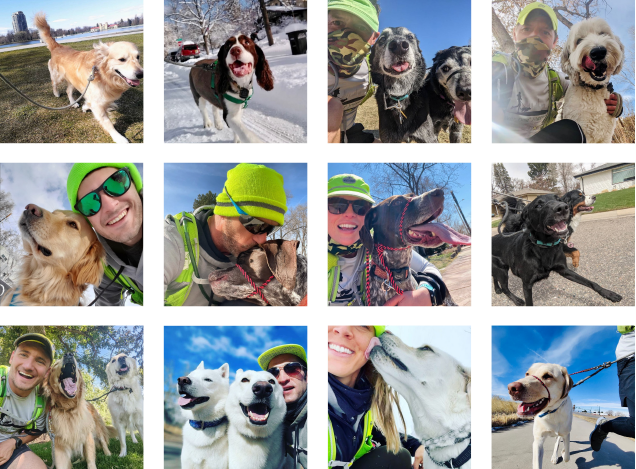
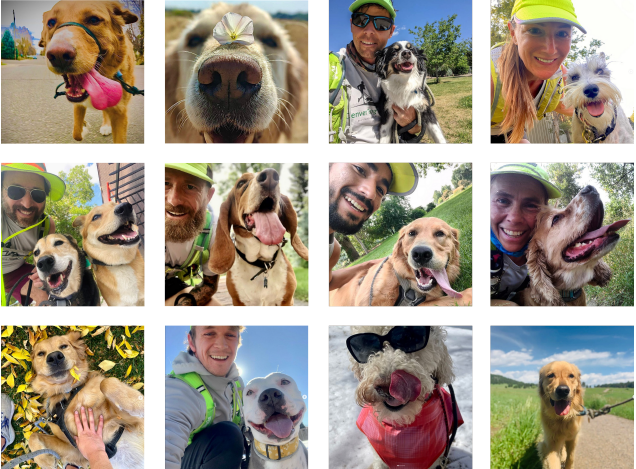
If you're improving a home exercise space, this dog run construction guide can help you think through surfaces, boundaries, drainage, and safe movement areas. For owners who need weekday support, Denver Dog provides on-leash running, walking, and hiking options through its Denver Dog Joggers and Denver Dog Hikers programs. Its service area includes Arvada, Denver, Englewood, Golden, Lakewood, Littleton, and Wheat Ridge.
For a practical approach to building intensity without relying on uncontrolled park play, use this structured exercise guide for dogs.
Stopping Unsafe Play Without Making It Worse
Intervene at the first clear shift, not after a scuffle. The useful threshold is the moment loose, bouncy movement becomes stiffness, hard staring, frozen posture, or repeated pursuit without a break.
Use a calm five-second protocol
- Identify the shift. Notice the change from curved movement to rigid posture, or from mutual chase to one-sided pursuit.
- Interrupt without grabbing. Call the dogs away if they have reliable recalls. You can also scatter treats away from the interaction so both dogs move in separate directions.
- Create physical separation. Use a leash loop, gate, bench, or another barrier. Don't reach between dogs, pull collars with your hands, or shout into the moment.
- Reset independently. Give each dog a parallel activity, such as sniffing for scattered food or walking calmly away, for a short reset period.
- Reassess the setup. Decide whether the problem was the pairing, the location, the crowd, fatigue, or unrestricted off-leash access.

After separation, don't immediately restart because the dogs appear quiet for a moment. Check whether both bodies soften, whether either dog keeps scanning or fixating, and whether each can engage with its handler. A parallel walk may be safer than another direct greeting.
Home management matters too. If an overexcited dog races indoors after the park, washable furniture protection such as waterproof couch covers for pets can make calm decompression easier without turning the return home into another source of stress.
Denver-area owners can also replace a difficult park visit with a force-free trainer, a private Sniffspot rental, or a reactive-dog support group. For dogs whose arousal appears during leash encounters, this practical handler guide to on-leash aggression offers a safer starting point than forcing greetings.
When Play Behavior Warrants Professional Help
Healthy play can be intense, noisy, and physically dramatic. Professional help becomes appropriate when the interaction loses flexibility, one dog cannot escape, or arousal keeps climbing despite distance and interruption.
Watch for one-sided pinning , repeated hard bites without inhibition, stiff posturing that replaces the play bow, and pursuit that continues after the other dog tries to disengage. A dog who shuts down, hides, freezes, or repeatedly seeks its handler may be showing that the interaction is no longer enjoyable. The concern is stronger when these patterns recur across settings or with different partners.
Match the professional to the problem
A general trainer may help with recall, attention, polite greetings, and carefully managed play routines. A Certified Applied Animal Behaviorist , a CDBC-accredited consultant , or a veterinary behaviorist is more appropriate when the behavior involves persistent aggression, severe fear, injury risk, or complicated emotional responses.
A first consultation commonly includes:
- A functional behavior assessment , identifying what happens before, during, and after the play episode.
- Medical rule-outs , because pain or illness can change tolerance and movement.
- Video review , when safe recordings are available.
- A modification plan , including management, gradual exposure, reinforcement, and recovery strategies.
Your own stress response also matters. Tight leash handling, frantic shouting, or repeatedly forcing a dog back into play can raise pressure for everyone. A professional can help you identify the point where your dog's arousal changes and give you a plan that protects both the dog and the human-animal relationship.
Calming products may support a broader plan, but they shouldn't replace assessment or management. If you're exploring options for anxious dogs, review behavior-focused calming products from PetScy alongside guidance from your veterinarian or qualified behavior professional.
A Simple Play-Safety Checklist for Busy Owners
Turn observation into a short habit loop before every walk or park visit. You don't need to memorize every canine signal. You need a repeatable scan that helps you notice softness, reciprocity, and recovery.
Before approaching another dog
- Scan the face: Is your dog's mouth relaxed, with soft eyes rather than a fixed stare?
- Check the shoulders: Do the shoulders and spine look loose, or is the body already braced?
- Read the tail in context: Is the tail carriage consistent with the rest of the relaxed body?
- Choose the setting: Can both dogs move away, or are they trapped near a gate, fountain, or crowded path?
During play or a greeting
- Watch the turns: Does the chaser become the chased?
- Look for self-handicapping: Does the stronger dog slow down or release pressure?
- Notice pauses: Can either dog sniff, shake off, or disengage without being pursued?
- Track arousal: Is the movement still bouncy, or has it become rigid and increasingly intense?
Before you leave
End the session while both dogs can still respond and settle. A calm neighborhood walk, a sniffing activity, or quiet time at home can help your dog recover better than another high-energy round.
Log concerning incidents the same day. Write down the location, the dogs' approximate ages and sizes, what happened before the shift, which signals you noticed, and what helped. That record can reveal patterns and gives a behavior professional useful information.
Confident observation, not constant intervention, keeps parks enjoyable for dogs and the people who love them.
Denver Dog offers structured weekday walks, runs, and hikes through Denver Dog Joggers and Denver Dog Hikers, with service for busy pet parents across Arvada, Denver, Englewood, Golden, Lakewood, Littleton, and Wheat Ridge. If your dog needs calibrated movement and safe enrichment beyond uncontrolled park play, visit Denver Dog to explore the available options.
The Run Down