You get home exhausted, drop your keys on the counter, and find your dog pacing from the window to the kitchen. Maybe there's a chewed cushion, a bark at every passing squirrel, or a dog who can't settle even after a long outing. That behavior often gets labeled as stubbornness or bad manners. In practice, the missing ingredient is frequently a predictable routine for dogs , one that includes movement, food, mental work, transition time, and rest.
A useful routine isn't a rigid timetable. It's a set of repeatable anchors that helps your dog understand what happens next. The strongest plans also account for age, breed, fitness, health, household schedule, and the difference between tiring a dog's body and occupying its brain.
Why Dogs Thrive on Structure
A dog who doesn't know when exercise, food, company, or quiet time will arrive may create its own schedule. That can mean barking at the door, following you room to room, grabbing household objects, or demanding attention just as you sit down to work. The behavior isn't random. Your dog is trying to meet a need with whatever strategy has worked before.
Structure gives that need a safer outlet. A morning walk, a predictable meal, a midday break, and an evening decompression period create reliable reference points even when the rest of the day changes. Dogs don't need every minute controlled, but they do benefit from knowing that important events happen in a familiar order.
What a repeatable day looks like
A longitudinal study of dogs in the UK and Republic of Ireland found that dogs were most commonly walked twice per day at 16 weeks, 9 months, and 15 months . The study included 2,225 dogs at 16 weeks, 1,200 at 9 months, and 808 at 15 months , with younger puppies commonly receiving about 30 total minutes of walking on weekdays and weekends , while dogs at 9 and 15 months commonly received 1 hour on weekdays and 2 hours on weekend days . The Bristol study offers a useful historical baseline, not a universal prescription.
The practical lesson is more important than copying those durations. A routine usually works through repeatability , and exercise needs often change as a dog matures. A puppy may need several brief, carefully managed outings, while a fit adolescent may need longer physical and cognitive challenges.
Practical rule: Build the day around dependable anchors, not an unrealistic perfect schedule.
Why intensity alone fails
A single exhausting outing won't necessarily solve a dog's restlessness. Some dogs become fitter without becoming calmer, especially if every walk is fast, stimulating, and crowded with triggers. A slower sniff walk, a food puzzle, short training, and a protected nap may produce a better evening than adding more distance.
Dogs also learn patterns quickly. If barking reliably earns play, or pacing reliably earns a late walk, the dog may repeat that behavior. Predictable timing lets you reward calm before the demand escalates, which strengthens the bond without turning every household interaction into a negotiation.
Building Your Morning and Evening Routine
A routine fails in real homes when it ignores transitions. A dog may cope well with the same anchors on a quiet day, then become frantic when a work call, school run, rain, or a delayed meal changes the handoff between activities. Set the order first, then adjust the spacing and intensity.

Adjust the morning to the dog in front of you
A food-motivated dog may focus better after a small portion of breakfast, using the rest for training or a puzzle. That can prevent frantic pulling or scavenging on the first outing. Keep the activity gentle after eating, and review whether your dog should walk before or after eating when meal timing and exercise overlap.
Puppies often need a different setup. A young puppy may require an extra toilet trip before the household is ready to leave, followed by a small meal and another opportunity to eliminate. If one full breakfast leaves the puppy uncomfortable or distractible, divide the daily food into smaller meals according to veterinary guidance. The routine then has more handoffs, so prepare the food, toilet access, and rest area in advance.
Adult dogs usually tolerate a simpler morning, but they still benefit from a quiet landing after movement. Use a bed, pen, or baby gate while you shower, work, or prepare the children. A short sniffing walk, a few training repetitions, or a food puzzle can provide mental work without turning the morning into a high-arousal event.
Build a calmer evening
If your dog returns home wound up, start with a toilet opportunity and lower-key contact. Choose sniffing, gentle play, or brief training instead of immediately launching into a fast game. Feed dinner in a quiet place, then reduce noise and household demands.
Allow a clear transition from activity to rest. Reserve roughly 5 to 10 minutes for settling, treating that range as a practical observation rather than a medical rule. Some dogs need longer after visitors, crowded walks, or intense play. Reward calm behavior before pacing or barking becomes the strategy for getting attention.
Keep weekend changes modest. A longer outing or later meal can fit the familiar framework, but large shifts may leave a sensitive dog unsettled when the workweek returns. Watch appetite, stool, sleep, and recovery, then adjust one part of the routine at a time.
Matching Exercise to Energy and Age
Exercise targets depend on the individual dog, not a universal minute count. Breed recommendations can range from more than 30 minutes per day for many small breeds to more than 2 hours per day for many large breeds , while the often-cited USDA 30-minute minimum rests largely on expert opinion rather than strong evidence. The survey and veterinary discussion supports a practical conclusion: set the starting point by breed, age, health, and recovery, then adjust the complete routine rather than chasing a fixed number.
Use the dog in front of you
Puppies need brief, controlled opportunities. Their coordination, joints, and soft tissue are still developing, so repeated high-impact fetch, long runs, and sustained jumping can create more strain than useful fitness, even when a puppy keeps asking for more. Check gait, enthusiasm, sleep, and recovery after each activity.
Older dogs often benefit from regular movement, with slower surfaces, cooler conditions, and longer recovery periods. Brachycephalic dogs may have greater heat and breathing challenges, making brisk exercise in warm weather a poor trade-off. Dogs with pain, obesity, heart disease, or another medical concern need veterinary input before intensity increases.
For a low-fit or obese dog, begin with 5-minute leash walks three times per day and progress toward 30 to 45 minutes per day as fitness improves. Increase duration or intensity gradually, not both at once. Stop and seek veterinary advice if movement becomes painful, breathing changes, or recovery worsens.
A practical matching matrix
| Dog profile | Useful routine emphasis | Watch for |
|---|---|---|
| Young puppy | Brief outings, gentle play, simple training, frequent rest | Limping, prolonged fatigue, or reluctance to move |
| Healthy adult companion | Regular walks with sniffing, training, and moderate movement | Restlessness despite adequate sleep and enrichment |
| Working or sporting adult | Structured running, retrieving, skill practice, and novel environments | Repetitive high-impact work without recovery |
| Senior or medically compromised dog | Low-impact walks, scent games, and carefully paced activity | Heat stress, pain, breathing changes, or delayed recovery |
| Brachycephalic dog | Cool, short outings with close breathing and temperature monitoring | Labored breathing or overheating |
Mental stimulation changes the daily workload. A deliberate sniff walk may serve a dog better than a faster route that allows no investigation. Food-based enrichment, cognitive games, and short training sessions can also provide useful work when weather limits outdoor activity. Adult working or sporting breeds may need 90 or more minutes daily , but that time should include decompression and rest, not only intense exercise. Guidance on exercise and enrichment explains why sensory work belongs in the plan.
Safety affects the schedule as much as fitness. A secure outdoor area can support controlled exploration for dogs that should not exercise off leash. If fencing is part of your setup, this guide to the best fencing for your dog helps compare containment approaches. Use the dog exercise calculator for a starting estimate, then adjust the routine according to recovery, behavior, weather, and veterinary advice.
Creating a Complete Weekly Schedule
A good week alternates demands. If every outing is a hard run, your dog may become physically conditioned while missing sniffing, problem-solving, social exposure, and rest. If every walk is slow and predictable, a high-drive dog may remain under-challenged.
A peer-reviewed survey found that 65.8% of respondents regularly exercised with their dogs . The most common canine exercise block was 30 to 60 minutes per day, reported by 35.0% , followed by 15 to 30 minutes at 26.1% , 60 to 90 minutes at 16.5% , more than 90 minutes at 13.2% , and 0 to 15 minutes at 9.2% . The survey supports a moderate, measurable routine, but your dog's needs still determine the right mix.
Three ways to organize the week
Busy professional: Keep weekday anchors simple. Use a morning potty and walk, arrange a midday break when needed, add a food puzzle or short training session after work, and reserve one longer outing for the weekend.
Remote worker: Divide activity into smaller blocks. A morning walk, a midday sniff break, a short recall or impulse-control session, and an evening decompression walk can prevent your dog from waiting all day for one large event.
Active owner: Pair demanding days with easier recovery days. A trail outing can be followed by scent games and gentle movement, while a training walk can replace a hard run when your dog needs mental work more than speed.
A review of dog-walking behavior found a median of 160 minutes per week across a median frequency of four walks per week , making four sessions of roughly 40 minutes a practical example of a repeated habit rather than a one-off outing. The NPR summary of that review provides context for organizing a week.
Keep disruptions from becoming collapse
When a meeting, storm, or illness interrupts the plan, preserve the order even if you shorten the activity. Potty, a brief sniff, food enrichment, and quiet time can maintain the familiar architecture. Replace distance with low-impact training, scatter feeding, or chewing rather than skipping every form of engagement.
Supplementing with Professional Services
DIY exercise works well when your schedule is stable, your dog's needs fit your available time, and you can handle the dog safely. Professional support becomes useful when office hours overlap with the dog's most restless period, when a high-energy dog needs weekday running, or when your own injury or workload makes consistency unreliable.

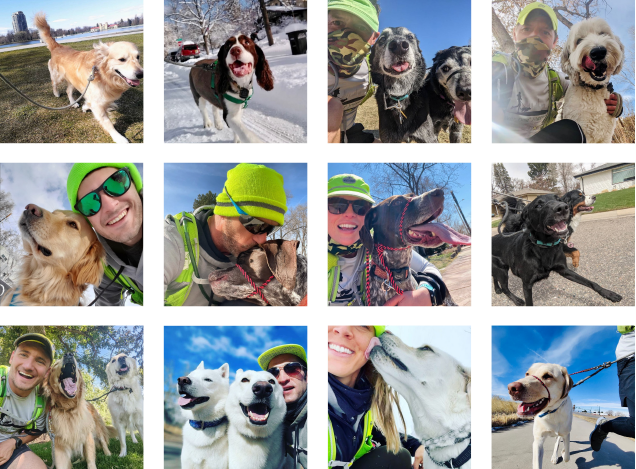
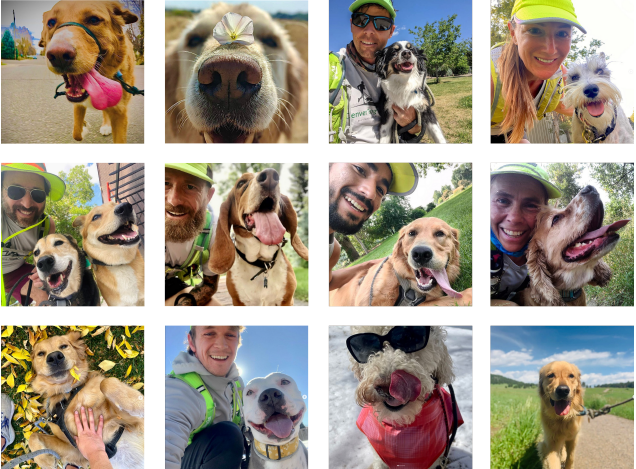
Denver Dog offers on-leash walking, running, and hiking through its Denver Dog Joggers and Denver Dog Hikers programs in Arvada, Denver, Englewood, Golden, Lakewood, Littleton, and Wheat Ridge . Sessions are matched to fitness level and temperament, which makes them different from just sending every dog on the same route or pace.
A service should extend your routine, not replace your knowledge of your dog.
Compare providers using practical criteria:
- Handling standards: Ask how staff manage pulling, reactivity, heat, rest, and emergencies.
- Transport safeguards: Confirm how drivers are screened and how dogs are monitored in vehicles.
- Activity fit: A senior may need a controlled neighborhood walk, while an athletic dog may benefit from an on-leash run or trail hike.
- Scheduling reliability: A recurring weekday slot is more useful than occasional availability if routine is the problem.
- Cost clarity: Review visit length, transport, cancellations, weather policies, and any extra charges before booking.
Denver Dog states that its drivers maintain seven-year clean driving records , while in-vehicle camera technology monitors speeding, following distance, distraction, and drowsiness. Staff receive repeated training in canine handling, fitness, and welfare. Read what professional dog walkers do and how to hire one before comparing services.
For food-based enrichment at home, a suitable topper can make meals more engaging when used with veterinary and dietary guidance. You can browse pet products at Loyaltie as one example of the kind of product owners may consider.
This video offers another way to understand structured dog activity:
Troubleshooting Common Routine Challenges
A dog can resist a walk, race around at night, or panic when left alone even when its exercise plan looks adequate. Start with the pattern: when the behavior appears, what happened immediately before it, whether sleep is sufficient, and whether the activity helps the dog settle or only increases arousal. A complete routine includes transition periods and mental work, not just more physical effort.
| Symptom | Questions to ask | First adjustment |
|---|---|---|
| Resistance to morning walks | Is the dog tired, sore, frightened, or uninterested in the route? | Try a shorter, quieter outing and check health or environmental triggers |
| Evening hyperactivity | Was the day empty, or did stimulating activity happen without decompression? | Add earlier enrichment and a calm transition before dinner |
| Leash pulling | Is the dog overexcited, under-exercised, or reacting to distractions? | Increase distance, practise loose-leash skills, and choose suitable equipment |
| Difficulty being alone | Is the dog distressed, bored, noise-sensitive, or trying to escape? | Make departures predictable, provide appropriate enrichment, and seek veterinary or behavior support |
Leash safety needs its own review. The AVMA review reports that dog-walking injuries represented only 0.04% to 0.06% of all emergency injuries , yet leash forces can still be substantial. In one study, a quarter of participants experienced 45 pounds or more , while half recorded at least 28 pounds during a typical walk. Equipment choice, handling, and injury prevention must be considered together.
For a strong puller, fit a Y-shaped or front-clip harness correctly and keep enough leash control to prevent sudden lunges. Practise in a quiet area before adding traffic, dogs, or other distractions. Tightening devices should not be the default. A flat collar may be unsuitable for strong pullers or brachycephalic dogs, and the handler's balance and position matter as much as the dog's equipment.

Separation-related behavior can involve noise sensitivity, boredom, escape-seeking, or inconsistent time alone. Pair movement with predictable departures, suitable enrichment, and a gradual transition into solitude. Severe distress calls for veterinary or behavior support. AVMA's discussion of separation-related behavior reinforces the need to identify the trigger before prescribing more miles.
Your Action Plan for Dog Routine Success
Start smaller than your ideal schedule. A routine that survives busy mornings is more valuable than an elaborate plan you abandon after a few days. Track what your dog does afterward, including settling, appetite, sleep, stiffness, and renewed restlessness.
A one-page routine checklist
Every day
- Morning anchor: Potty, suitable movement, breakfast, and a protected settling period.
- Midday support: Potty relief, sniffing, enrichment, or a professional visit when the household is empty.
- Evening anchor: Moderate activity, dinner, final potty break, and quiet decompression.
- Mental work: Rotate sniffing, food puzzles, chewing, and short training rather than relying on cardio alone.
- Safety check: Review weather, surfaces, breathing, gait, equipment, and your own handling position.
Every week
- Change the activity: Include brisk walks, sniff walks, training walks, and suitable novel experiences.
- Schedule recovery: Follow demanding activity with lower-impact movement and rest.
- Review disruptions: Decide which anchors can remain when work, weather, or health changes the plan.
Every month
- Assess fit: Look for persistent boredom, excessive fatigue, pain, weight change, or worsening anxiety.
- Adjust gradually: Change one variable at a time, such as duration, pace, enrichment, or timing.
- Seek help when needed: Involve a veterinarian, qualified behavior professional, or reliable walking service.
New adopters can make the transition in stages. Use the first week to stabilize potty and feeding times, add exercise structure in the second week, and introduce greater enrichment variety in the third. Existing dog owners should improve one weak point first rather than changing the entire day at once.
For owners, regular dog walking can also support personal activity. Adult guidelines advise accumulating at least 150 minutes of moderate-to-vigorous physical activity per week , with activity performed in bouts of at least 10 minutes . The physical-activity guidance gives dog walks a useful place in a shared weekly plan, provided the pace and duration suit both of you.
A successful routine for dogs isn't a destination. It's a living system that becomes more accurate as you observe your dog. Start with dependable anchors, add variety carefully, and let recovery tell you whether the plan is working.
Denver Dog provides structured on-leash walks, runs, and hikes through its Joggers and Hikers programs for dogs in Arvada, Denver, Englewood, Golden, Lakewood, Littleton, and Wheat Ridge. Visit Denver Dog to explore weekday exercise options that can keep your dog's routine consistent when your schedule can't.
The Run Down