Have you ever searched for a leash for an invisible dog and wondered whether you're looking at a joke, a transparent lead, or a real way to control a dog without holding anything? That confusion isn't your fault. The phrase combines novelty merchandise, invisible fencing, training language, and off-leash fantasies into one search.
The useful question is more practical: what visible, reliable setup keeps your dog safe, comfortable, legal, and under control on Denver sidewalks and trails? Once you separate the meanings, the answer becomes much clearer.
What People Actually Mean by a Leash for Invisible Dog
The phrase usually points to one of three very different ideas. Identifying the category first prevents you from buying a prop when you need safety gear, or relying on a boundary system when you need handling support.
The novelty gag product
The traditional meaning is a joke leash for a dog that isn't there . The product usually includes an empty collar or harness, a stiff visible handle, and a leash section designed to create the illusion that someone is walking an invisible pet. This idea became popular in the 1970s and 1980s, and one product description places the toy leash at about 4 to 5 feet , roughly the length of a standard walking leash. You can see the history and design described in this overview of the invisible dog leash gag.
A buyer expects a funny gift, Halloween accessory, photo prop, or party item. What they get is a performance object, not equipment that can restrain a dog. The “leash” is generally a visible prop attached to an empty collar or harness.
The transparent leash
Some shoppers use “invisible” to describe a clear or transparent lead. A person might see a viral photograph where the leash blends into the background and search for the same effect. They expect a nearly hidden leash for pictures or videos, but they still receive a physical lead with material that can catch, wear, or become difficult to see around pedestrians and cyclists.
That last point matters. A leash that disappears visually in a photograph may also become harder for other trail users to notice. If you're evaluating how conspicuity affects injury claims, visibility is part of responsible public-space handling, not merely an aesthetic detail.
The invisible-control concept
The third meaning describes a dog that appears to walk freely because the owner relies on recall training, a GPS collar, or an invisible fence. In this interpretation, “leash” is metaphorical. The owner expects technology or training to replace a physical connection, but the result depends on the dog's behavior, equipment function, and surroundings.

Before purchasing anything, decide whether you want a joke, a photo effect, or dependable control . Only the third goal belongs in a serious walking, running, or hiking plan.
Why the Term Confuses So Many Dog Owners
A single search phrase creates three separate shopping intents. Someone buying a gag gift wants humor. Someone seeking a clear lead wants a product comparison. Someone considering off-leash freedom needs training and safety guidance. Those buyers may land on the same search results even though they're solving unrelated problems.
| Meaning | What It Is | Typical Buyer Expectation | Real-World Result |
|---|---|---|---|
| Novelty gag product | An empty collar, handle, and visible prop leash | A funny gift or costume accessory | Creates an illusion, but provides no dog control |
| Transparent leash | A physical lead made or marketed to blend into images | A discreet-looking leash for photos or videos | Still needs inspection, handling, and visibility awareness |
| Invisible control | A fence, GPS collar, or trained recall replacing a lead | Freedom without holding a leash | Control depends on technology, training, and context |
The collision gets worse because product listings often use “invisible” for appearance, while behavior discussions use the term to describe a training exercise. A shopper who saw a transparent leash in a short video might be shown novelty products first, then advertisements for buried-wire fence systems. The search page answers the wording, but not the owner's actual need.
Three expectations, three outcomes
A person searching for a gag leash expects an object that makes people laugh. A person shopping for a clear lead expects a usable physical connection that looks subtle on camera. A person considering a boundary collar expects the dog to remain in a defined area without a conventional fence.
Those expectations shouldn't be evaluated by the same standard. The joke product succeeds if the visual joke works. A walking lead succeeds if it stays attached and gives the handler control. A containment system must be judged by boundary reliability, animal welfare, escape risk, and what happens when another dog, person, vehicle, or wildlife enters the situation.
Practical rule: Decide whether you're buying entertainment, appearance, or control before you compare products.
Safety and legality provide the common thread. Denver sidewalks and shared trails don't care whether a lead looks fashionable, transparent, or invisible. They require owners to manage the dog in front of them, around the people and animals sharing that space.
Safety Risks of Truly Invisible or Boundary-Only Control
What happens when your dog suddenly changes direction and there is nothing you can grab? A squirrel crossing the trail, a cyclist approaching fast, or a tense encounter with another dog can expose the weakness of any control method that provides no physical connection.
Why boundary systems aren't physical fences
An invisible fence typically combines a buried wire or wireless boundary with a receiver collar. As the dog nears the limit, the collar usually gives a warning tone, followed by an electrical shock if the dog continues. The setup marks an area, but it cannot block a determined dog, stop a vehicle, or keep another person or animal out of the yard. A power outage, equipment fault, weak battery, or inconsistent training can remove that protection.
Animal-welfare concerns are another reason owners approach these systems carefully. This discussion of invisible fence welfare risks describes possible concerns such as anxiety, burns, cardiac fibrillation, and displaced aggression. An explanation of how invisible fences operate makes the underlying limitation clear: the system depends on a receiver collar and correction instead of a physical barrier.
A report found that 73% of respondents believed invisible fences can harm pets , while 54% preferred traditional fences . It also reported that 41% believed these fences are harmful , 32% thought they're dangerous on occasion , and 17% felt they should never be used . These figures indicate substantial concern, even though individual dogs and training outcomes can differ.

GPS collars and recall-only walking
GPS and smart collars create a different problem. A delayed signal, dead battery, or interrupted subscription may tell the owner where the dog was without giving immediate restraint. Recall training helps, yet a dog can chase, panic, or react to another dog before the handler can reach it.
A recall is a response. A leash is a physical connection.
Leash tension also affects handler safety. A 2024 study recorded tension of 125 N or greater for half of participants , with the largest pull reaching 412.5 N , and concluded that pulling can challenge balance and contribute to injury risk through loading or falls. The findings are available in the PubMed leash-walking study.
For a clearer comparison between physical barriers and boundary-signaling systems, the CT Fence Works dog fence types guide describes several dog-fence options. The practical lesson is straightforward: boundary-only control can fail at the moment immediate restraint matters most. On Denver sidewalks and trails, a visible leash, secure attachment, and attentive handler provide a more direct safety setup.
Legal and Leash-Law Realities in Denver and Beyond
A novelty invisible leash doesn't satisfy leash law because it doesn't connect a real dog to a handler. A transparent leash may satisfy the physical-connection requirement if it's attached correctly, but its low visibility can create practical problems around pedestrians, cyclists, and enforcement officers. A recall-only dog may be well trained and still be in the wrong legal category for that location.
Denver-area rules vary by jurisdiction and location. City sidewalks, Denver Mountain Parks, and Jefferson County Open Space can apply different standards for leash length, designated off-leash areas, and voice or sight control. Owners should verify the current rule for the exact route rather than assuming that a permitted off-leash area changes the rules everywhere nearby. This guide to Colorado leash law for Denver pet owners is a useful starting point for that check.
Read the rule as an enforcement test
A practical way to interpret leash requirements is to ask three questions:
- Is a physical leash required here? If yes, a trained recall or invisible boundary isn't a substitute.
- Does the rule limit leash length? A retractable lead extended across a path may create a control and obstruction problem even if it remains attached.
- Does “under control” require more than a voice cue? Some settings permit voice or sight control under specific conditions, while others require the leash to be held.
| Jurisdiction | Max Leash Length | Control Standard | Typical Fine |
|---|---|---|---|
| Denver city areas | Check the current municipal rule | Follow the city's on-leash or designated-area requirements | Varies by violation and enforcement |
| Denver Mountain Parks | Check the park-specific rule | Follow posted leash and control requirements | Varies by park rule and violation |
| Jefferson County Open Space | Check the property-specific rule | Follow posted leash, voice, or sight-control standards | Varies by property rule and violation |
The table intentionally avoids invented fine amounts. Rules change, signage controls the immediate location, and the same phrase can mean different things across agencies.
Why “invisible” doesn't help at a citation
An officer needs to see that you can control the dog under the applicable rule. A stiff gag prop attached to an empty collar proves nothing. A transparent lead can be difficult to identify from a distance. A dog walking beside you without a physical lead may still violate an on-leash requirement, even if the dog has excellent manners.
The safest assumption on Denver sidewalks and ordinary shared paths is straightforward: use a visible leash, hold it securely, and reserve off-leash exercise for clearly designated areas where the posted rules allow it.
Gear and Techniques That Work Better Than an Invisible Leash
The closest safe equivalent to the freedom promised by an invisible leash is not no leash. It's a setup that gives the dog room to move while keeping the handler connected, balanced, and able to shorten control instantly.
Build the setup around the environment
For ordinary walks, start with a 4 to 6 foot fixed leash . It offers predictable distance and avoids the extended line that can cross a sidewalk or wrap around a passerby. Add a traffic handle when you need close control near a trailhead, intersection, elevator, or crowded park.
Runners may prefer a waist belt, particularly when the belt includes a secure attachment and the handler can maintain an upright posture. A two-dog household might use an EzyCheck quick-release coupler, but every connection still needs an individual inspection before leaving home.
The leash advice from Nandog Pet Gear can help owners compare construction, attachment points, and handling features without treating appearance as the main measure of quality.

Choose equipment for the dog in front of you
A retractable leash gives distance, but distance increases the time needed to regain control. Handle locks can slip, thin cords can be hard for other path users to see, and a dog can build speed before the handler applies the brake. A fixed lead doesn't eliminate pulling, but it makes the available control easier to predict.
Harness choice also requires care. A 2021 controlled study reported median maximal leash tension of 0.62 kg-force, or 6.08 N , and mean leash tension of 0.28 kg-force, or 2.75 N . It also found that back-connection harnesses were associated with greater pulling than neck collars when dogs were motivated by food. The Frontiers veterinary science study supports a more careful conclusion: equipment changes force distribution and behavior, but a harness doesn't automatically stop pulling.
For a strong puller, a properly fitted front-clip or non-tightening harness can improve steering without placing tightening pressure around the neck. For a runner, a bungee hiking lead can soften sudden movement, but it must still be paired with a secure attachment and clear stopping plan. If running is your main goal, this guide to choosing a dog-running leash offers a practical way to compare those options.
Safe On-Leash Running and Hiking Practices for Busy Owners
A good leash setup only works when the handler prepares for the route. Running with a dog through a quiet park differs from moving through a shared path where cyclists, strollers, and reactive dogs converge.
Prepare before you leave
Fit the waist belt snugly before starting. The connection should sit where you can maintain balance and turn your hips without letting the dog pull you into a twist. Test the clasp and attachment point while standing still, then begin at a walk so you can assess the dog's pace and your own stability.
Choose softer terrain, such as grass or an appropriate dirt trail, when it suits the dog's conditioning and paws. Hard surfaces can feel different underfoot, and uneven trails create their own demands. Keep the leash short enough for passing, but not so tight that the dog spends the entire outing against constant tension.

Use a simple departure checklist
- Water and cooling: Carry water and plan breaks, especially under Colorado sun. Watch for unusual slowing, heavy panting, weakness, or reluctance to continue.
- Paw check: Look for cracks, cuts, burrs, and debris before and after the outing.
- Identification: Confirm the ID tag is secure and readable.
- Dusk visibility: Use a light-up collar or another visible light when conditions make the dog harder to see.
- Waste bags: Keep them accessible rather than buried in a pack.
- Backup connection: Carry a backup carabiner for an equipment failure, using it only when it's appropriate for the leash and harness hardware.
- Phone and route plan: Carry your phone and share the route with someone when hiking alone.
Intersections need a separate rhythm. Slow down before the crossing, yield to cyclists and pedestrians, shorten the lead, and keep your dog on the side away from traffic. On descents, reduce speed and brace through your hips rather than letting the dog pull your shoulders forward.
Busy owners often know this routine in theory but can't execute it consistently around meetings, commutes, and compressed walk windows. That's where reliable help becomes a practical safety measure, not an indulgence.
When a Professional On-Leash Service Is the Smartest Move
A professional walker becomes the sensible option when the dog's needs and the owner's schedule no longer fit together safely. A reactive dog may need careful route selection and distance management. A dog recovering from injury or surgery may need a slow outing with attention to footing. A senior dog may benefit from a shorter, unhurried walk instead of a rushed attempt to burn energy.
The same applies after vaccination when a veterinarian recommends limiting exposure, or during work periods when the owner's available walk window keeps changing. The question isn't whether the owner cares. It's whether the dog receives a safe, repeatable outing when the owner can't provide one.
What accountable handling looks like
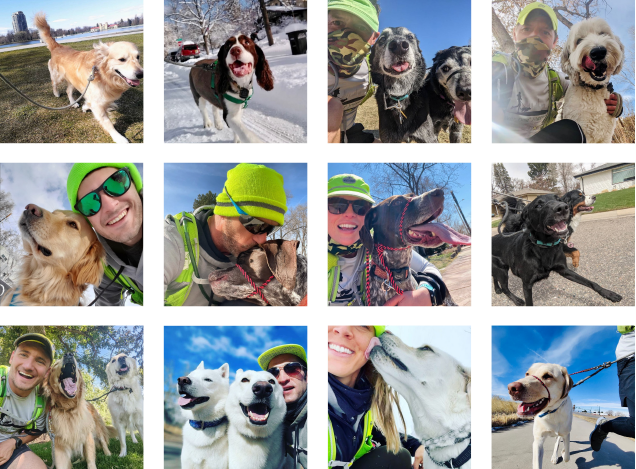
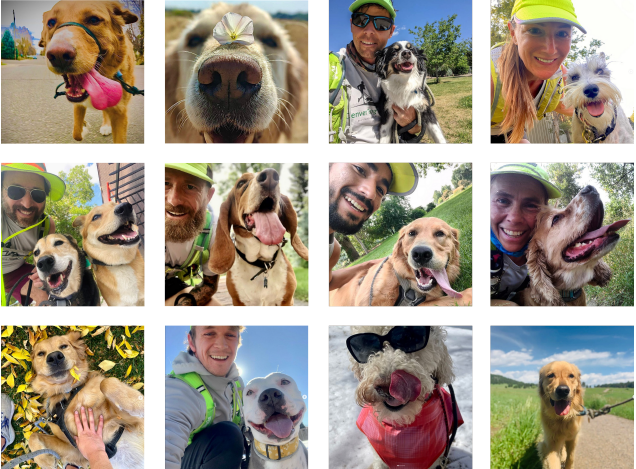
Denver Dog provides on-leash running, walking, and guided hiking through programs designed around a dog's energy level and temperament. Its handlers use custom-designed Denver Dog leashes for control, and a safety-first outing can include a standard fixed leash, a front-clip harness for a puller, and two-hand handling on busy routes such as Wash Park, Highland, and Capitol Hill.
The difference from an invisible-leash fantasy is accountability. A trained person can shorten the leash, move to the side of a path, create distance from a reactive dog, and physically intervene when the environment changes. GPS-tracked walks and photo report cards also give owners proof that the scheduled outing happened and provide useful context about the dog's activity.
Owners comparing providers can use this guide to professional dog walkers and hiring questions before booking.
Questions to ask before hiring
- Leash policy: Does the provider use fixed leashes, and what equipment do handlers carry?
- Insurance: Can the company explain its coverage for handling and transportation?
- Training: Do staff receive documented canine-handling or behavior training?
- Emergency response: What happens if the dog is injured, escapes equipment, encounters a loose dog, or becomes ill?
- Communication: Will the owner receive walk notes, photos, or location information?
- Service fit: Can the provider handle the dog's age, energy, temperament, and route requirements?
Denver Dog serves Arvada, Denver, Englewood, Golden, Lakewood, Littleton, and Wheat Ridge , giving local owners a way to replace an unreliable invisible-control idea with a visible leash and an accountable handler.
Denver Dog offers on-leash walking, running, and guided hiking for dogs that need safe, structured exercise while their owners work. Visit Denver Dog to review service options and arrange dependable weekday care across the Denver area.
The Run Down