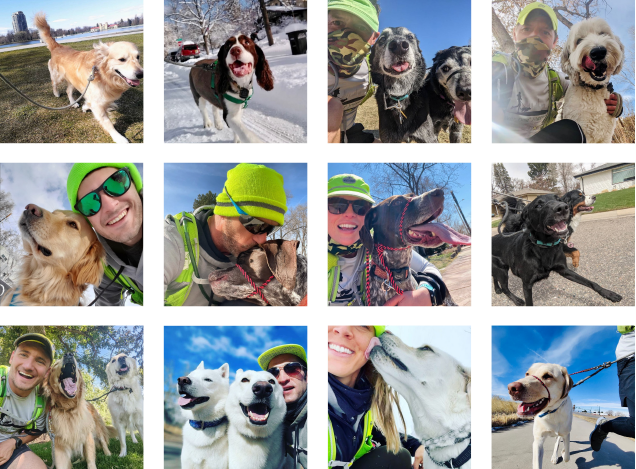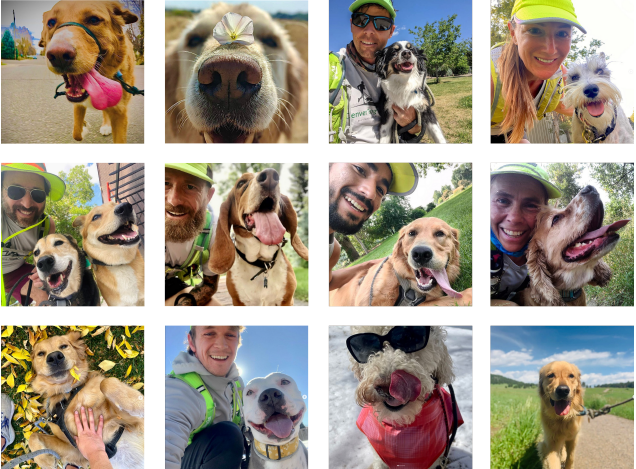
You're trying to leave for a midday meeting, your dog is already pacing by the door, and the text thread with the walker you found on short notice still feels shaky. That's a common Denver problem. You don't need a generic pet sitter who “likes dogs,” you need a dog walker in Denver who can match your schedule, handle your dog's behavior, and show enough professionalism that you're not worrying while you're in LoDo or stuck in traffic on I-25.
Denver's market makes that choice more serious than many realize. Walkers aren't priced like a casual favor here, and the local service scene includes simple neighborhood walks, structured jogs, and trail-based hikes. If you pick wrong, you usually find out the hard way, after a rushed first visit, a messy handoff, or a dog that comes home more revved up than before.
What a Denver Dog Walker Actually Does on a Tuesday

It's a Tuesday, you're trying to make a lunch meeting in LoDo, and your dog has decided that the second you reach for your bag is the exact moment to start staring at the front door. A real walker doesn't just “take the dog out.” They work around timing, route, leash behavior, weather, and the kind of dog that's waiting on the other end of the leash.
A solid walker in Denver usually fits into one of three buckets. The first is a casual neighborhood walk, the kind that keeps a dog on a predictable block loop and gets the mid-day break done. The second is a structured running or jogging session, where the dog needs more pace and more control than a standard stroll can offer. The third is a trail-based hike, which is a different job entirely because terrain, logistics, and energy management all matter more.
Practical rule: if the walker can't tell you how they handle pace, route selection, and return timing, they're not really running a service, they're improvising.
The point is simple. You're not only hiring a person, you're choosing a program. For a dog with calm leash manners, a basic walk may be enough. For a dog with a stronger drive, the right fit is often a more structured service, which is exactly why Denver Dog separates neighborhood walking from its Denver dog walking service offerings for joggers and hikers.
That distinction matters because Denver isn't one-size-fits-all. A dog walker in Denver who's great with a mellow companion dog may be the wrong choice for a puller, a trail runner, or a reactive rescue. The market rewards specialization, not just availability.
Match the Walker to Your Dog's Energy, Temperament, and Leash Skills

Start with energy level
If your dog needs a brisk release, don't hand them to someone who only does slow loops around the block. Energy level should decide whether you're hiring a calm walker, an on-leash jogger, or a hiker who can manage a dog that needs more than a sniff-and-return outing. The wrong match usually shows up as restlessness later in the day, or a dog that comes back only halfway satisfied.
Then look at temperament
Temperament is where a lot of owners fool themselves. A dog that is friendly at home can still be tense with strangers, noise, bicycles, or passing dogs, and that changes everything. A professional should ask about reactivity, stranger comfort, and handling before they quote you a recurring schedule, because that tells you whether they're thinking about safety or just filling slots.
Don't ignore leash manners
Leash manners decide how much control the walker really has. A dog that surges, stops, spins, or fixes on distractions needs a walker who has a plan, not just patience. If your dog hasn't been consistently leash-trained, a structured primer like this leash training guide is worth reading before you expect a walker to solve the problem for you.
A simple self-check helps. Ask yourself three blunt questions before you shop:
- Does my dog need exercise, or do they need structure?
- Does my dog relax around new people, or do they need slow introductions?
- Can my dog walk politely on leash, or do they pull hard enough to put a walker at risk?
The service choice becomes easier. Calm, social, well-mannered dogs can often do fine with standard neighborhood walks. Higher-drive dogs usually need something more controlled. Reactive or hard-to-handle dogs need a walker who knows what they're doing and has the operational safeguards to back it up.
Denver Pricing Tiers for Walks, Jogs, and Hikes
A Denver dog walk does not price the same way as a jog or a hike, and that split matters. For a standard neighborhood walk, local guidance puts a dog walker in Denver at about $15 to $35 for a 30-minute visit ( Denver pricing guide). That range fits the reality of city routing, parking, and the dead time between clients that eats into a walker's day.
For regular weekday service, market listings give you a usable anchor. Care.com shows an hourly figure around $19.88 per hour for Denver, and Rover shows a median of about $20 per walk after fees ( Care.com Denver dog walkers, Rover Denver dog walking). Use those numbers as the baseline, then expect the price to move up when the work gets harder or the dog needs more control.
What pushes the price up
Jogs and runs cost more because the walker is doing more than a bathroom break and a slow loop around the block. They are managing pace, handling pull pressure, and keeping leash control while the dog works harder. Denver pricing guidance places dog jogs and runs at $35 to $60 , group hikes at $45 to $75+ , and private adventure sessions at $60 to $100+ ( Denver pricing guide). For the broader rate structure behind those tiers, see the Denver dog walking service rates guide.
Denver Dog's Joggers and Hikers programs fit that split cleanly. A calmer dog with decent manners can stay in a standard walk lane. A high-drive dog that needs real movement belongs in a jog or hike model, where the provider is set up for more pace, more route planning, and more supervision. That is the right way to match energy level to service, instead of forcing every dog into the cheapest slot.
A bargain listing can look attractive until you ask what is missing. Insurance, bonding, travel time, and the ability to handle an athletic or reactive dog are part of the job cost. If a provider prices under the local anchor and cannot explain safety, route planning, or emergency handling, you are not getting a deal. You are taking on risk.
| Service Type | Typical Use | What Drives Cost |
|---|---|---|
| Standard walk | Mid-day relief, light exercise | Travel time, leash control, urban routing |
| Jog or run | High-energy dogs, stronger exercise needs | Fitness demand, pace control, safety handling |
| Group hike | Athletic dogs, trail sessions | Transportation, trail logistics, supervision |
| Private adventure | Dogs that need dedicated attention | Custom planning, longer session, overhead |
That rate spread is why weekday care becomes a line item, not a casual add-on. Care.com's Denver figures translated to about $798 per week for a 40-hour workweek and about $2,592 per month for 130 hours in November 2025 ( Care.com Denver dog walkers). If you shop only by the lowest listed price, you usually miss the cost of reliability.
Vetting Walkers with Insurance, Driving Records, and Interview Questions
A real professional should be able to show you paperwork, not just enthusiasm. At minimum, ask for liability insurance , bonding , documented background-check details, and a written emergency and veterinary escalation process before the first booking ( Denver vetting guide). If they can't provide that, keep looking.
The safety checklist I'd use
- Insurance proof: Ask what policy covers the dog while they're responsible for it, not just vague reassurance.
- Bonding information: This matters when someone enters your home or handles your property.
- Driving record standards: If the walker transports dogs, ask for their driving-screening standard and how often it's checked.
- Emergency plan: You want to know exactly what happens if a dog gets hurt, overheats, or stops moving on trail.
- Communication habits: Ask how quickly you'll hear from them after a visit and what a normal update looks like.
Denver Dog says its drivers maintain a seven-year clean driving record , and that's the kind of standard worth respecting because transportation safety is part of the job, not a bonus feature. Its staff are also monitored with in-vehicle camera technology that tracks speeding, following distance, distraction, and drowsiness , with real-time coaching to keep scores high. Those are operational controls, and they're the difference between a service and a liability.
Questions to ask on the call
- How do you handle a leash-reactive dog on a narrow sidewalk or busy path?
- What do you do if a dog refuses to move, limps, or goes down on a trail?
- Do you ever change routes because of weather, traffic, or another dog nearby?
- What does your post-visit update include, and how fast do you send it?
- If you drive dogs, what safety systems are in the vehicle and who reviews the footage?
- What's your process for confirming the dog's energy level and temperament before the first walk?
If the answer sounds casual, rushed, or defensive, move on. A good walker treats safety like a system.
The driving-record question is especially useful for owners who need pickup service or trail transport. A good walker will answer directly, without dodging. A weak one will try to talk around it, and that's usually the answer.
Service Models That Fit Denver Schedules and Trails
Denver's walker market is segmented by schedule, not just by neighborhood. One provider focuses on mid-day walks Monday through Friday from 10am to 3pm , which is ideal if you need a weekday relief window and your dog does best with routine. Another offers 7 days a week from 7:00am to 9:00pm , which helps owners with irregular schedules or shifting office days ( Updog Denver).
Three service models, three different jobs
A weekday-only specialist is built for office workers who need a reliable lunch break for the dog and don't need much weekend flexibility. The trade-off is obvious, if your schedule changes often, that model can be awkward. A broader 7-day provider fits people whose hours move around, and it usually helps when the dog's care has to slot into a less predictable week.
Then there's the athletic niche. Denver Dog's Joggers and Hikers programs fit dogs that need on-leash running or trail-based exertion rather than a polite neighborhood loop. That matters across the Denver metro because some dogs need more movement than a standard walk can give them, and some owners want exercise that feels closer to a workout than a bathroom break.
For a trail-minded owner, a planning mindset similar to Cartograph Coffee's backpacking guide is useful, because the core issue is not just distance, it's route, timing, and logistics. The same logic applies to your dog. You're matching terrain, pace, and handling to the animal in front of you.

| Service Model | Typical Hours | Best For | Price Band |
|---|---|---|---|
| Mid-Day Weekday-Only Specialist | 10 a.m. to 3 p.m., Monday to Friday | Office workers needing a quick midday break | $18 to $25 per walk |
| 7-Day Broad-Coverage Provider | 6 a.m. to 8 p.m., seven days a week | Flexible schedules and variable weeks | $20 to $30 per walk |
| On-Leash Jog and Hike Program | Early morning and late afternoon, scheduled trail sessions | High-energy dogs needing athletic exercise | $35 to $60 per session |
The choice comes down to consistency versus intensity. If your dog just needs predictability, don't overbuy. If your dog needs work, don't pretend a sidewalk loop will do the job.
Running a Trial Walk Before You Commit

A trial walk should feel like a controlled test, not a favor. Book a short meet-and-greet first, hand over the leash, and watch what happens in the first few minutes. Good walkers don't rush the dog, and they don't act offended if you want to see how they clip, guide, and redirect.
What to watch during the visit
Look at leash pressure, route choice, and how the walker reads your dog's body language. A competent walker notices whether the dog is scanning, pulling, freezing, or settling, and they adjust without turning it into a drama. If the route seems chaotic or the dog comes back overstimulated, that's useful information.
After the walk, check the update. You want to know whether they mention behavior, timing, and anything unusual they noticed. If you get a vague “went great!” message with no detail, that's not professional communication, it's filler.
A two-week onboarding rhythm
- First visit: Meet-and-greet, short walk, no assumptions.
- Second visit: Repeat the same route or session type and compare the dog's reaction.
- Third visit: Add the exact time slot you'd use, then evaluate timing and handoff.
- End of week two: Decide whether the walker fits the dog, not just your calendar.
Read the dog, not the marketing. If the dog settles faster after the second or third visit, you're probably on the right track.
The three questions I'd ask after those first visits are blunt. Did the walker control the leash without force? Did the dog come home calmer, or just more tired? Did the communication make you feel informed or managed?
If the answer to any of those is no, switch. A mismatch doesn't always mean the walker is bad, it may just mean the service type is wrong. A reactive dog may need a different handler, a stronger routine, or a jog or hike program instead of a basic neighborhood walk.
Putting It Together and Booking with Confidence
The smartest Denver owners don't start with price alone. They start with the dog, then the schedule, then the safety file, then the service model. That order prevents the usual mistakes, like hiring a casual walker for a leash-pulling dog or paying for trail-level exercise when your dog really just needs dependable mid-day relief.
Use this decision stack. First, assess energy level, temperament, and leash manners . Second, set a budget range based on the local walk, jog, or hike tier, not on the cheapest listing you can find. Third, ask for insurance, bonding, background-check proof, and the emergency plan before you book recurring service.
If you want a provider that already works across Denver, Arvada, Englewood, Golden, Lakewood, Littleton, and Wheat Ridge , review the service area details on Denver Dog's coverage page and compare that with other local options. A service area page won't tell you everything, but it will quickly tell you whether a provider is positioned to serve your part of the metro.
The best next step is boring on purpose. Make a short list, call two or three walkers, ask the same questions, and run a trial before you commit to a recurring schedule. If the dog is calmer, the updates are clear, and the safety answers are clean, you've found a real fit.
A CTA for Denver Dog.
The Run Down