If you've ever seen your normally confident dog turn into a quivering, panicked mess when a storm rolls in, you know how heartbreaking it can be. It's easy to blame the loud claps of thunder, but what's really happening is much more complex. Storm anxiety in dogs is a genuine phobia, and the fear often starts long before we hear the first rumble.
Why Your Dog Is Terrified Of Thunderstorms
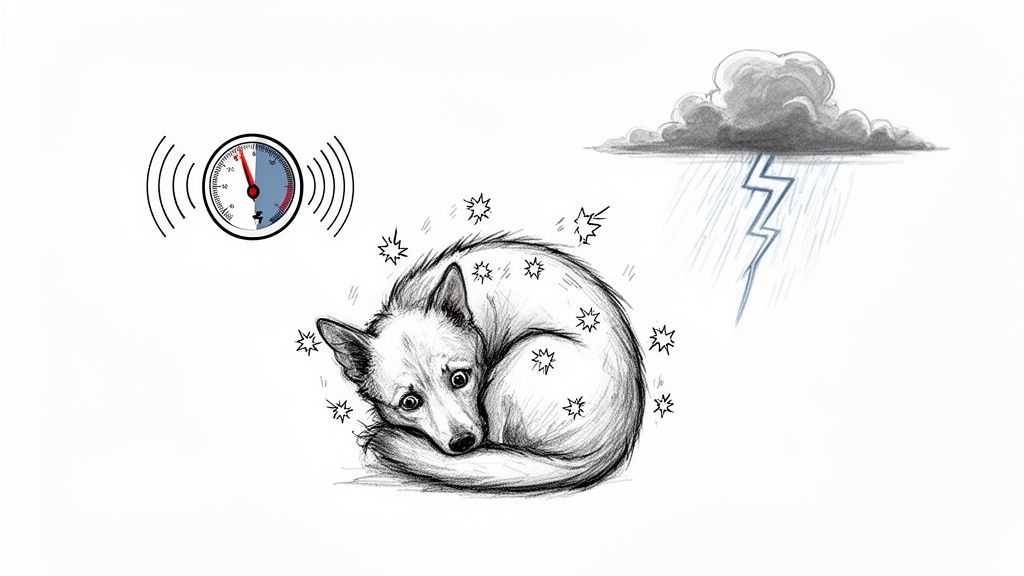
Imagine your dog has a super-sensitive, built-in weather station. They're tuned into a whole symphony of environmental shifts that we humans completely miss. For them, an approaching storm isn't just one thing—it’s a multi-sensory assault that triggers a true fight-or-flight panic.
This isn't just bad behavior. It's a very real, very overwhelming experience.
More Than Just a Loud Noise
A dog's storm phobia is rarely caused by a single trigger. It’s the buildup of several unsettling things happening all at once that sends them over the edge. Getting a handle on these different elements is the first step to helping your dog feel safe again.
Here's what they're likely experiencing:
- Barometric Pressure Drops: Long before the clouds darken, dogs can feel the air pressure change. This subtle shift is a major red flag for them that something is wrong.
- Static Electricity Buildup: The air literally crackles with static electricity before a storm, which can cause an uncomfortable tingling in their fur or even deliver tiny, unpleasant shocks.
- Low-Frequency Rumbles: Their hearing is incredible. They can pick up on distant, low-frequency sounds from a storm that are completely inaudible to us.
- Wind and Rain Sounds: Add the howl of the wind and the percussive sound of rain hitting the roof and windows, and you've got a recipe for sensory overload.
A dog’s response to a storm is not a choice; it's an overwhelming physiological and psychological reaction. Their panic is genuine, much like a person’s intense fear of heights or spiders. It is a true phobia that needs compassionate management.
The Widespread Nature of Noise Anxiety
If you're dealing with this, you're far from alone. Noise anxiety is a massive issue for dogs. While studies show different numbers, the trend is clear. One analysis of over 5,000 dogs revealed that about 23% had fearful reactions to loud noises, with thunder topping the list.
Even more striking, a more recent survey found that 57.41% of dogs now show anxious behaviors related to loud noises—a huge jump in recent years. You can learn more about these findings on dog anxiety to see just how common this is.
This tells us that storm anxiety in dogs isn't some random quirk. It's a serious welfare issue that needs our attention and a solid plan to manage.
How to Recognize the Signs of Storm Phobia
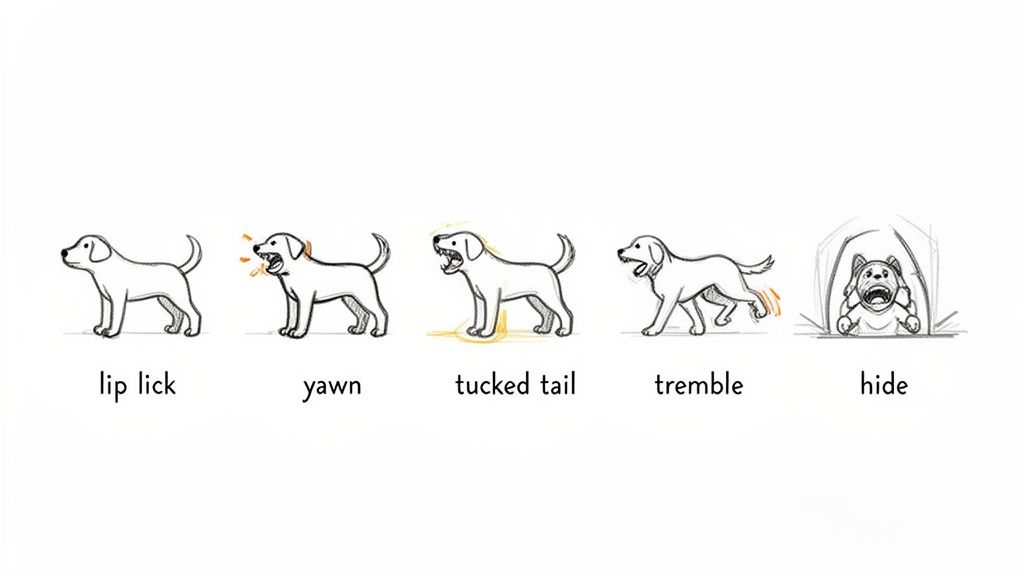
Learning to spot the early warning signs of storm anxiety can make all the difference. For many dogs, the fear doesn’t start with the first clap of thunder; it begins with subtle changes long before we even notice the sky darkening. When you can recognize these behaviors, you can step in with support before their stress spirals into full-blown panic.
Think of it this way: your dog might start panting heavily while the sun is still shining. To you, it seems completely random. But he might be reacting to a drop in barometric pressure, a clear signal to him that a storm is brewing. That seemingly out-of-place pacing and panting are the first chapters of a very familiar, very scary story for him.
A dog’s incredible senses can sometimes detect atmospheric changes up to three days before a storm rolls in. This means their anxiety can start building well in advance and linger long after the weather has cleared. To get a better sense of this powerful canine intuition, you can explore the details of how dogs anticipate storms on dogthunder.com.
Subtle Clues Versus Obvious Panic
The signs of storm anxiety in dogs fall along a spectrum. Some are so subtle they’re easy to miss or brush off as a weird quirk, while others are impossible to ignore. Paying close attention to those smaller signals is key, as they are your dog's first attempts to tell you, "I'm not okay."
Think of these early signs as a quiet alarm bell. It's much easier to provide comfort when that bell is just beginning to chime than when it’s blaring at full volume.
These subtle behaviors often include:
- Frantic Lip Licking: A quick flick of the tongue when there’s no food around is a classic stress signal.
- Excessive Yawning: A big, tense yawn when your dog isn't tired is another way they try to release nervous energy.
- "Whale Eye": This is when you can see the whites of your dog's eyes in a half-moon shape, indicating fear or anxiety.
- Tightly Tucked Tail: A tail held low or clamped between the legs is a clear sign of insecurity.
Understanding these quieter moments is a game-changer. Our guide on how to read dog body language for safer, happier walks can give you even more insight into what your dog is trying to communicate.
A Breakdown of Storm Anxiety Symptoms
As a storm gets closer, the signs of anxiety usually become more intense and obvious. It’s helpful to categorize them by severity so you can get a clear picture of just how much your dog is struggling. This also helps you match your response to their level of distress.
A dog with a storm phobia isn't being 'bad' or 'dramatic.' Their brain and body are in a genuine state of panic, compelling them to seek safety through behaviors like hiding, pacing, or vocalizing.
To help you see the progression, here’s a breakdown of common behaviors you might observe as anxiety builds from mild discomfort to severe panic.
Symptoms Of Storm Anxiety From Mild To Severe
This table outlines common behaviors associated with storm anxiety, helping you pinpoint where your dog falls on the spectrum of fear.
| Symptom Category | Mild Signs | Moderate Signs | Severe Signs |
|---|---|---|---|
| Body Language | Pinned ears, tucked tail, wide eyes, occasional yawning. | Pacing, restlessness, trembling, constantly seeking owner. | Freezing in place, frantic attempts to escape, destructive behavior. |
| Vocalizations | Low whining, whimpering. | Persistent barking, agitated howling. | Inconsolable, high-pitched barking or screaming. |
| Physical Signs | Light panting, some lip licking. | Heavy panting, drooling, shedding more than usual. | Incontinence (urination/defecation), self-harm (chewing skin). |
By identifying where your dog lands on this chart, you can take more effective action. Catching those mild signs early gives you the best chance to intervene and keep the fear from spiraling, turning a potential crisis into a manageable event for you both.
Calming Your Dog When The Storm Hits
The sky goes dark, the wind starts to howl, and you can see the panic setting in your dog's eyes. When a storm is brewing, your dog's anxiety can go from zero to one hundred in a matter of minutes. This is where having a game plan is absolutely essential. Your goal isn't to magically "cure" the fear in that moment—it's to manage the situation and give your dog a sense of safety until it all blows over.
Think of it as crisis management. You are the calm, reassuring pilot navigating them through some serious turbulence. Your steady hand and quick thinking can make a world of difference, keeping their stress from completely taking over.
Create a Safe Den Immediately
First thing's first: give your dog a secure place to retreat. When dogs get scared, their first instinct is to find a small, enclosed space that feels like a protective den. You can easily create this for them on the fly.
Pick a spot away from windows where they can’t see the lightning or hear the glass rattle. An interior room without outside walls, like a walk-in closet or even a bathroom, can be a perfect temporary sanctuary. The whole point is to make it feel cozy and insulated from the chaos outside.
Your dog isn't just looking for a place to hide; they're searching for a sanctuary. This "safe den" should be a place where the storm's intensity is muffled, allowing their nervous system a chance to calm down. It becomes their go-to shelter.
If your dog is already crate-trained, you're one step ahead. Their crate is the ideal foundation for a storm shelter. Just drape a few heavy blankets over it to help block out sound and light. The golden rule? Always leave the door open so they feel in control and never trapped. Getting the right size is also key to that feeling of security; a comprehensive guide to dog kennel sizing can help you make sure their den is a perfect, comforting fit.
Manage the Sensory Overload
A storm is a full-on assault on a dog's senses. Your next move is to buffer what your dog can see and hear. By muffling the external chaos, you can dramatically lower their anxiety levels.
Start with the visuals. Close the blinds, draw the curtains—do whatever you can to block out the flashes of lightning. Those sudden, unpredictable bursts of light can be just as terrifying as the thunder that follows. Creating a darker, more predictable environment is a huge help.
Next, tackle the noise. You need to drown out the deep rumbles and sharp cracks of thunder with a more consistent, neutral sound. Here are a few things that work wonders:
- White Noise Machine: The steady hum is fantastic for masking the unpredictable sounds of the storm.
- Calming Music: You can find playlists on streaming services specifically designed for canine relaxation. They often use tempos and frequencies that are known to have a soothing effect on dogs.
- Turn on a Fan or Television: Even the constant whir of a fan or a quiet TV show can provide a helpful auditory buffer to make the thunderclaps less jarring.
Use Calming Tools and Your Own Demeanor
Once the environment is under control, you can bring in some specific calming aids. An anxiety wrap or a compression shirt, like the popular ThunderShirt, applies gentle, constant pressure around your dog's torso. For many dogs, this feels like a comforting, secure hug and can have an immediate calming effect.
But honestly, the most powerful tool in your arsenal is your own behavior. Dogs are masters at reading our emotional cues. If you’re anxious and stressed, they’ll pick up on that energy in a heartbeat, which only confirms their suspicion that something is terribly wrong.
Here's your in-the-moment storm checklist:
- Stay Calm: Seriously. Take a few deep breaths and move with purpose, not panic. Speak in your normal, soothing voice.
- Move to the Den: Gently guide your dog to their safe space. No frantic energy, no forcing them.
- Muffle Sights and Sounds: Pull the curtains shut and turn on your white noise or music.
- Offer a Distraction: If your dog seems open to it, offer a high-value chew toy like a bully stick or a simple puzzle feeder to get their mind on something else.
- Provide Comfort, Not Coddling: It's fine to sit quietly with your dog and offer slow, gentle pets if they lean into you for comfort. Just avoid that high-pitched, "It's okay, you're okay!!" baby talk—it often signals to them that there is something to be scared of.
By taking these immediate steps, you provide the stability and security your dog desperately needs when storm anxiety in dogs kicks in. Your calm leadership is what will see them through.
Your Proactive Training Plan For Lasting Calm
While creating a safe space offers some much-needed relief in the moment, the real, lasting fix for storm anxiety in dogs involves proactively changing how they feel about storms. This isn't a quick fix. It’s a patient, long-term training strategy built on two powerful principles from the world of animal behavior: desensitization and counterconditioning .
Think about it like helping someone get over a fear of heights. You wouldn’t start them on a skyscraper roof, right? You’d begin on the very first step of a ladder, making sure they feel safe and rewarded before ever asking them to go higher. We're going to use that same gradual, positive approach to reshape your dog's emotional response to the weather.
The whole point is to turn storms from a terrifying event into something they barely notice—or maybe even look forward to. It takes time and consistency, but the payoff is a happier, more confident dog who doesn't fall apart when the clouds roll in.
Understanding Desensitization and Counterconditioning
These terms might sound a bit clinical, but the idea behind them is actually pretty simple. They are two sides of the same coin, working together to change your dog's emotional response to a trigger.
- Desensitization: This is all about gradually exposing your dog to the thing that scares them—in this case, storm sounds—but at a level so low it doesn't even register as a threat. The key is to start well below their freak-out point.
- Counterconditioning: This is where the magic happens. While you’re playing those barely-there storm sounds, you’re also pairing them with something your dog finds absolutely amazing, like bits of chicken or a favorite game of tug.
You're essentially rewriting their internal script. The goal is to change their brain from "Oh no, that sound means the world is ending!" to "Oh, that sound means I'm about to get the best snacks ever!" With enough repetition, that positive feeling starts to win out over the fear.
Your Step-By-Step Training Guide
Your greatest tool here is patience. Keep your training sessions short and sweet— 5 to 10 minutes maximum —and always, always end on a high note. If you see even a hint of stress (panting, yawning, wide eyes), you’ve pushed too far. Just stop for the day and try again tomorrow at a lower volume.
Here's how to get started:
- Find Quality Storm Sounds: Hop online and find some high-quality audio or video of thunderstorms. Look for recordings with variety—gentle rain, distant rumbles, and eventually, the louder cracks of thunder.
- Prepare High-Value Rewards: This is not the time for boring old kibble. You need the good stuff, the treats your dog would do backflips for and only gets during this training. Think tiny pieces of boiled chicken, cheese, or freeze-dried liver.
- Start Below the Threshold: Play the storm sounds at a volume so quiet you can barely hear them. Your dog might notice the sound, but they should remain totally relaxed.
- Introduce the Reward: The instant the sound begins, start doling out a steady stream of those amazing treats. The second you stop the sound, the treats stop, too. You want to make it crystal clear: the sound makes the good stuff happen.
This simple guide illustrates the core comfort measures that work hand-in-hand with your training.
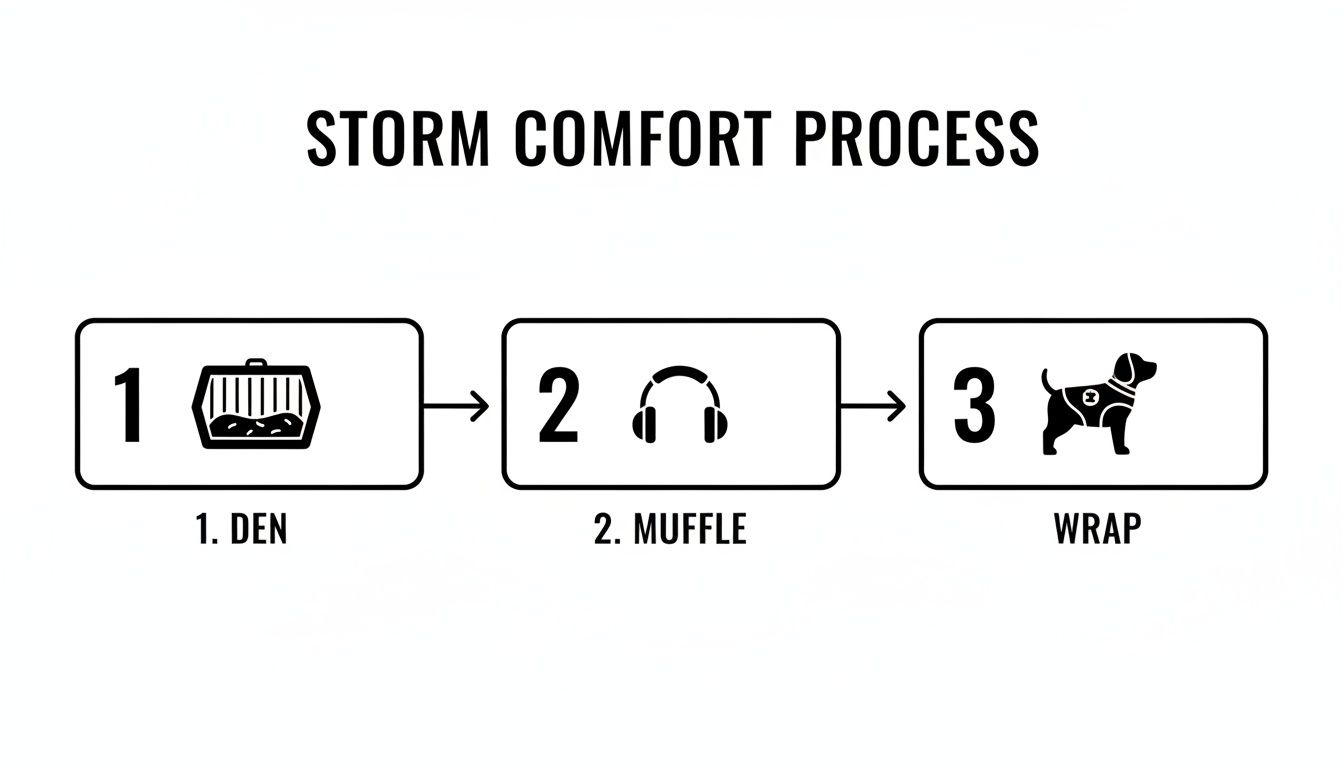
Creating a cozy den, muffling scary noises, and using a compression wrap are fantastic ways to help your dog feel secure while you work on the underlying fear.
Gradually Increasing the Intensity
Once your dog is totally cool with the lowest volume—maybe even looking at you expectantly when they hear it—you can slowly start to turn it up. I’m talking a tiny, barely noticeable increase. Over many sessions, you'll gradually work your way up, always pairing the sound with fantastic rewards.
The golden rule here is to always let your dog set the pace. Progress isn’t about how fast you can crank up the volume; it’s about your dog staying calm and happy through the process.
Eventually, you can start mixing up the sounds, introducing different types of rain and thunder. The formula never changes: sound starts, treats flow. Sound stops, the treat bar closes. This repetition is what builds that powerful new emotional connection in their brain. If your dog's fears are more complex, our guide on powerful reactive dog training tips that work can offer some additional strategies for building their confidence.
By putting in the time with this proactive plan, you're doing more than just managing a phobia—you're teaching your dog how to be brave. You're giving them the coping skills they need, deepening your bond, and making your home a true safe haven, no matter what the weather is doing outside.
How A Well-Exercised Dog Becomes More Resilient
There’s a reason trainers and experienced dog owners always say, "a tired dog is a calm dog." When you're dealing with something as tricky as storm anxiety in dogs , that simple piece of wisdom becomes one of your most powerful tools. Regular, heart-pumping exercise isn't just about keeping your dog physically fit; it’s a cornerstone of their mental and emotional health.
Imagine your dog’s anxiety is a glass of water that’s already half-full with pent-up nervous energy. Little daily stressors add a bit more water, and by the time a storm rolls in, that glass is primed to overflow. Consistent exercise helps empty that glass every day, giving your dog a much higher tolerance for stressors before they hit a breaking point.
Physical activity does more than just burn off steam. It actually helps flush out excess cortisol (the main stress hormone) while encouraging the brain to release endorphins—those feel-good chemicals that promote a sense of calm and well-being. A dog who has just come back from a great run or an engaging hike is simply in a better headspace to begin with.
Building Confidence Through Structured Activity
The benefits go far beyond just being tired. Structured activities, like the professional outings offered by Denver Dog, provide essential mental stimulation that builds a dog's overall confidence. When a dog regularly explores new trails, encounters different smells, and successfully navigates a group run, they learn to trust not only their handler but their own abilities.
That kind of learned confidence doesn't stay on the trail—it comes home with them. A dog who feels secure navigating the outdoors is better equipped to handle other overwhelming challenges, like the frightening sounds and sensations of a thunderstorm. The routine and positive leadership from a professional handler create a stable, predictable high point in their week, which acts as a powerful counterbalance to the unpredictable fear of storms.
A well-exercised dog has less emotional energy tied up in boredom or frustration. This frees up their mental resources to cope with environmental triggers. Investing in their physical outlet is a direct investment in their mental stability.
The need for this proactive approach is more urgent than ever. Recent data shows a worrying spike in canine anxiety, with noise sensitivity—which includes storm phobia—jumping from 32.40% of dogs in 2020 to a staggering 57.41% in 2022. That's a 77% increase in just two years, and it really underscores why services that provide positive, structured outdoor time are so vital. You can learn more about the rising trend of pet anxiety to see the full picture.
Practical Ways Exercise Reduces Anxiety
Making quality exercise a non-negotiable part of your dog's routine is one of the most practical things you can do. It’s a proactive strategy that works hand-in-hand with training methods like desensitization. Here’s how it directly helps with storm fears:
- Lowers Baseline Anxiety: Daily activity keeps a dog’s general stress levels down, making them less likely to overreact to a trigger.
- Provides a Mental Workout: A good hike or run is mentally challenging, leaving less brain space for fixating on the weather.
- Creates Positive Outdoor Associations: Fun, supervised outings help build a positive connection with being outside, which can counteract the fear storms create.
- Promotes Deeper Sleep: A genuinely tired dog is more likely to rest soundly, even if a storm is brewing.
By making sure your dog is getting enough of the right kind of exercise, you're doing so much more than just wearing them out. You are actively building a more emotionally balanced and resilient companion who is far better prepared to weather any storm. Even when it's cold, keeping that routine going is key; you can check out our guide on how to exercise a dog in winter safely.
When It's Time to Call in Reinforcements
For some dogs, storm phobia isn't just a mild worry—it's a deeply rooted terror. If your training efforts feel like they're hitting a wall and your dog's panic is severe, destructive, or even getting worse, it’s absolutely time to bring in some extra support.
Think of it this way: you can't teach a child complex math during a full-blown panic attack. The first step is to help them feel safe and calm. The same principle applies here. These tools aren't a shortcut; they're essential for lowering your dog's anxiety enough so that your training can finally sink in. They create a window of opportunity for learning.
It's critical that any plan involving medications or supplements is made with your veterinarian or a certified veterinary behaviorist. They're the experts who can guide you safely.
Exploring Calming Products and Supplements
Before jumping to prescriptions, there are quite a few over-the-counter options worth discussing with your vet. For dogs with mild to moderate anxiety, these can be a fantastic first step and work best when paired with your ongoing training and management strategies.
A few common choices include:
- Pheromone Diffusers: Products like Adaptil mimic the calming pheromones a mother dog releases to comfort her puppies. Plugging one in can help create a background sense of security in your dog's safe space.
- Nutritional Supplements: You might be surprised what certain ingredients can do. Supplements with L-theanine (an amino acid from green tea) or tryptophan can naturally promote a calmer state of mind.
- CBD Oil for Dogs: There's a lot of buzz around CBD, and many owners have seen great results. Early studies are promising, but the quality and dosage can be all over the map. This is one where veterinary guidance is non-negotiable to ensure you're using a safe, effective product.
Remember, these aids are here to support your training, not replace it. They help take the edge off your dog's fear, making them more receptive to learning new, positive things about those scary storm sounds.
When to Discuss Prescription Medication
If a storm sends your dog into a state where they might hurt themselves, tear up the house, or panic for hours on end, medication can be the most compassionate and effective choice you can make.
Modern veterinary medications aren't about just sedating your dog. They are sophisticated tools that work on brain chemistry to genuinely reduce fear and panic.
Your vet will likely talk to you about two main approaches:
- Situational Medications: These are given on an "as-needed" basis, usually an hour or so before a storm is expected to hit. Medications like Sileo or Trazodone are often prescribed to prevent the panic from ever taking hold.
- Daily Medications: For dogs whose anxiety is a constant, simmering issue (not just during storms), a daily medication like fluoxetine (the doggy version of Prozac) can help lower their overall stress level day-to-day. This makes them less likely to be pushed over the edge by a trigger.
A veterinarian or veterinary behaviorist will perform a full health checkup to figure out the right path for your dog. By combining the right medical support with a solid, positive training plan, you give your dog the very best shot at finally finding peace when the skies turn gray.
Common Questions About Storm Anxiety In Dogs
It's completely normal to have questions as you start trying to help your dog with their storm anxiety. Putting new training and management techniques into practice often brings up new uncertainties about what you're seeing. Let's tackle some of the most common concerns owners have.
Getting a handle on these details can give you a real confidence boost. It helps you know you're on the right track to giving your dog the support they desperately need when the skies turn dark.
Will My Dog's Storm Anxiety Get Worse Over Time?
Unfortunately, it usually does. If left unaddressed, a dog's fear of storms tends to get worse with each one that passes. Every time a storm triggers that panicked reaction, it reinforces the fear, making their anxiety more intense and easier to set off the next time.
This is exactly why getting ahead of it with training like desensitization is so important. Instead of letting the fear dig its roots in deeper, you're actively working to build new, positive feelings about those storm sounds and sensations.
Should I Coddle My Dog During A Storm?
This is a tricky one, but the goal is to provide calm support, not frantic coddling. Your first instinct might be to scoop up your trembling dog and soothe them with "It's okay, it's okay!" in a high-pitched voice, but that can actually make things worse. All that frantic energy can send a clear signal to your dog that, yes, there is something to be terrified of.
Your calm, steady presence is the most powerful tool you have. Your dog takes their cues from you, and when you act like everything is normal, it shows them the situation is under control—even if it's loud and scary outside.
Instead, try to project a quiet confidence. Sit on the floor with your dog, offer a slow, steady petting if they seem to want it, and speak in your normal, even-toned voice. Your stability is what truly helps them feel secure.
Why Is My Dog Only Afraid Of Some Storms?
That’s a great observation, and it points to the fact that your dog's triggers are probably more complex than just thunder. When a dog panics during one storm but ignores another, it often means they are highly sensitive to specific, subtle changes in the atmosphere.
Their fear might be more connected to things like:
- A sudden drop in barometric pressure , which they can feel long before we can.
- The buildup of static electricity in the air, which can cause an uncomfortable tingling sensation in their fur.
- The unique smell of rain hitting hot asphalt or the low-frequency rumble of high winds.
For your dog, a storm with a lot of wind and static might be far more frightening than one with just a few loud claps of thunder. Watching for these patterns can help you get much better at predicting which weather systems will be a problem.
One of the best things you can do for an anxious dog is to ensure they have a consistent routine with plenty of structured exercise. At Denver Dog , we offer professional on-leash running, walking, and hiking services that are built to keep your pet both physically tired and mentally satisfied. See how our adventures can help build a more resilient and balanced dog by visiting us at https://www.denverdog.co.
The Run Down