Bringing a new puppy into your life is a huge deal, but before you get lost in all that puppy breath and those tiny paws, a little prep work goes a long way. The goal is to make the transition as smooth as possible for everyone involved—especially your new little friend. We’re talking about getting the right supplies, setting up a safe space, and basically making sure your home is ready for the beautiful chaos that's about to arrive.
Gathering Your Puppy Essentials Before Day One
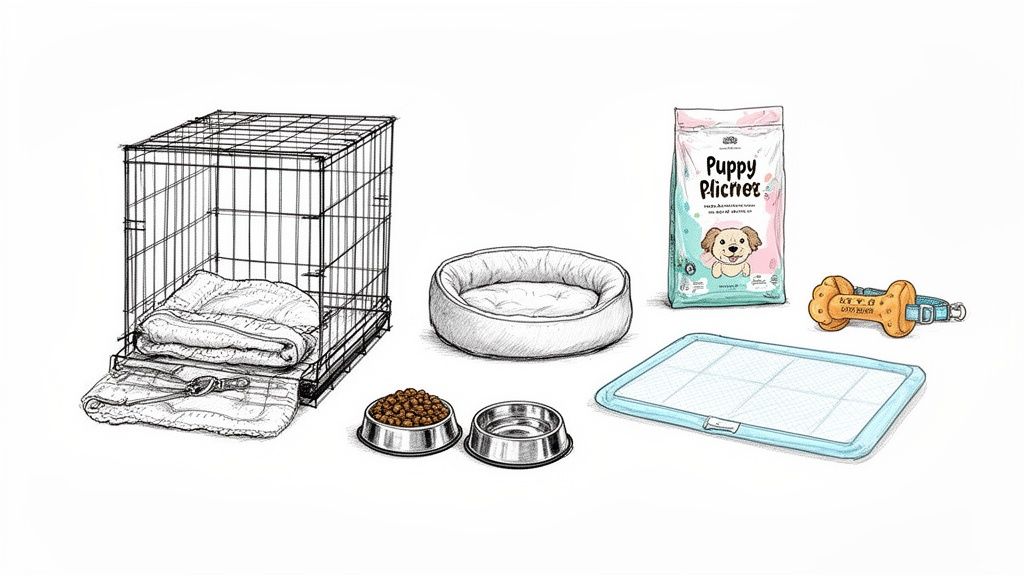
The first 24 hours with your new puppy sets the tone. Trust me, you don't want to be making frantic, last-minute trips to the pet store because you forgot food or a leash. Having everything you need already in place means you can focus on what really matters: making your puppy feel safe and starting that bonding process from the moment they walk through the door.
Getting this right is more important than you might think. With so many people welcoming new dogs, we've learned a lot about the common hurdles. For instance, a recent ADM survey revealed that a staggering 40% of new dog owners struggled with their pet's nutrition in the last year. This really highlights why having the right food from day one isn't just a convenience—it's crucial for their health and your peace of mind.
The Ultimate Puppy Arrival Shopping List
To make sure you don't miss a thing, I've put together a comprehensive shopping list. Think of this as your go-to guide for that pre-puppy shopping trip.
| Category | Essential Items | Pro-Tips for Denver Owners |
|---|---|---|
| Safe Space & Comfort | Crate, comfy bed/blankets, durable chew toys | Get a crate with a divider to adjust as your puppy grows. Throw in an old t-shirt with your scent to help them settle in. |
| Feeding & Nutrition | Food/water bowls (stainless steel/ceramic), puppy food (same as breeder/shelter) | Denver’s dry climate means fresh water is key. Consider a gravity waterer to ensure they never run dry. |
| Training & Walking | Collar/harness, 6-foot leash, ID tags, poop bags | A harness is great for puppies to protect their necks on our varied city and mountain terrain. Get ID tags immediately! |
| Cleanup & Grooming | Enzymatic cleaner, potty pads, puppy shampoo, brush, nail clippers | Enzymatic cleaner is non-negotiable for house-training accidents. Start getting them used to grooming tools early. |
Having these items ready will help you handle almost any situation that comes your way during those first few weeks.
Your Puppy's Safe Space
One of the best things you can provide for your puppy is a "den" of their own. This is where the crate comes in. It's not a punishment zone; it's a safe, private space where they can go to decompress and rest. Make sure it's just big enough for them to stand up and turn around in—too much space, and they might decide to use one end as a bathroom.
To make it the coziest spot in the house, you'll want to add:
- A comfy bed or some soft blankets: This makes the crate feel less like a box and more like a den.
- Safe chew toys: Puppies explore the world with their mouths. Giving them appropriate things to chew on will save your shoes and furniture.
- A water bowl: A clip-on bowl is a great option to prevent spills while ensuring they stay hydrated.
This personal space is a game-changer for house training and helps your puppy build confidence in their new environment. For more tips on setting a solid foundation, check out these 10 essential tips for new dog owners in 2026.
Nutrition and Feeding Supplies
Puppies have very different dietary needs than adult dogs. To avoid tummy troubles, start with a small bag of the exact same food the breeder or shelter was using. The stress of moving to a new home is enough of an adjustment without adding a sudden diet change to the mix.
A sudden change in diet combined with the stress of a new home can easily lead to an upset stomach. If you plan to switch foods, do so gradually over 7-10 days by mixing the new food with the old.
You'll also need a good set of food and water bowls. I always recommend stainless steel or ceramic because they're durable, easy to sanitize, and won't harbor bacteria the way scratched-up plastic bowls can. Plus, they're heavier, so your pup is less likely to send them skidding across the kitchen floor.
Essential Gear for Training and Walks
You and your puppy are about to start a grand adventure together, and that means you need the right gear for training and exploring.
Here's what you'll need right off the bat:
- A lightweight collar or harness: For most puppies, especially smaller breeds, a harness is a better choice as it prevents any strain on their delicate neck.
- A standard leash: A simple 6-foot leash is perfect for teaching good walking manners. Steer clear of retractable leashes—they offer very little control and can teach bad habits.
- ID tags: This is non-negotiable. Even if your puppy is microchipped, an ID tag with your name and number is the fastest way to get them back if they ever get lost.
- Potty pads and enzymatic cleaner: Accidents are a guarantee. Enzymatic cleaners are a must because they actually break down the organic matter in urine, completely eliminating the scent so your puppy isn't drawn back to the same spot.
Turning Your House into a Puppy-Proof Haven
Once you’ve got your gear, it’s time to look at your home through a puppy’s eyes. And the best way to do that is to literally get on your hands and knees. You'll be amazed at what you discover from their perspective. Puppies are curious by nature, and they investigate the world with their mouths, which means anything and everything is a potential chew toy.
This isn’t just about protecting your new shoes; it's about setting your puppy up for success from the very beginning. With over 900 million dogs in the world and millions needing homes right here in the U.S., providing a safe, welcoming space is part of our commitment as responsible owners. Simple things like tucking away electrical cords, moving a toxic houseplant, or blocking off a tight space can prevent a frantic trip to the emergency vet. If you're interested in the bigger picture of pet ownership, a Health for Animals report offers great insights into global pet populations.
Tackling Common Household Hazards
Walk through your home room by room, scanning for anything that could be a danger. Your mission is to remove temptation and stop accidents before they can happen. If a curious toddler could get into it, a puppy definitely can.
Keep an eye out for these common culprits:
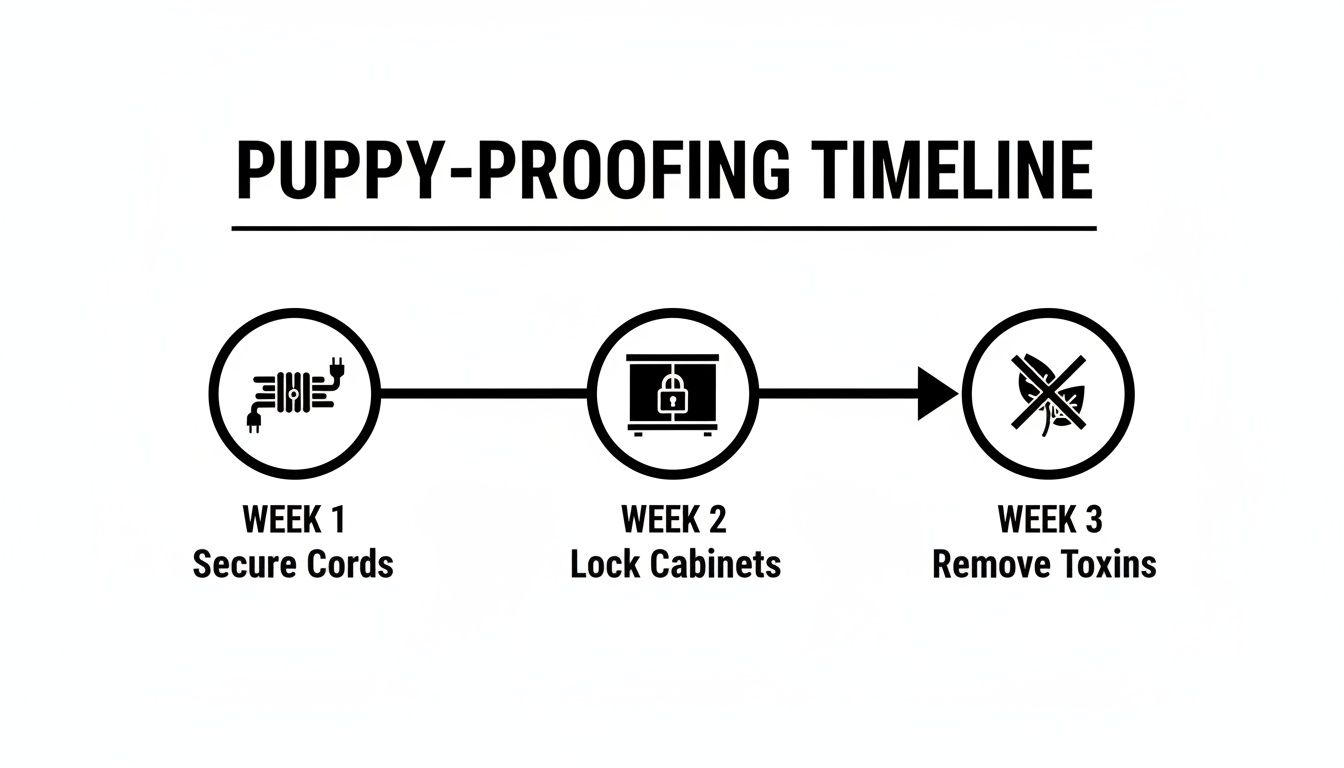
- Electrical Cords and Wires: Those dangling phone chargers and TV cables are irresistible. Tame them with cord concealers or heavy-duty covers that run flush against the wall.
- Cleaning Supplies and Chemicals: All those bottles under the sink are a huge risk. Move them to a high shelf or get some simple childproof locks for your cabinets. Even a small spill can be toxic.
- Human Foods and Medications: You’d be surprised what's dangerous for dogs. Chocolate, grapes, onions, and xylitol (an artificial sweetener) are big no-nos. Get in the habit of keeping countertops clear and pantry doors closed. The same goes for medications—never leave them on a low nightstand.
A quick tip from experience: Puppy-proofing isn't a one-and-done task. As your pup gets bigger, bolder, and more creative, you'll need to re-evaluate your setup.
Setting Up Safe Zones and Boundaries
Your puppy doesn't need access to the entire house right away—in fact, that can be overwhelming for them and impossible for you to supervise. Designating specific "puppy zones" makes life easier for everyone. Baby gates are an absolute game-changer here. Use them to block off stairs, keep them out of the kitchen while you're cooking, or protect a room full of things you don't want to be chewed on.
Your floors are another big part of the equation. Accidents will happen, and you'll want flooring that's easy to clean. You'll also want a surface that gives their little paws good traction. If you're considering an upgrade, this ultimate guide to pet proof flooring breaks down the best options that can handle the zoomies and the messes.
Don't Forget the Yard
For those of us in Denver, a good backyard is prime real estate for a puppy. But it needs to be just as safe as the inside of your house. Before you let your new friend loose, do a thorough perimeter check. You're looking for any small gaps in the fence a tiny, determined furball could wiggle through.
Also, be sure to scan for and remove these outdoor hazards:
- Toxic Plants: Many beautiful garden staples like azaleas, tulips, and sago palms are poisonous to dogs.
- Lawn Chemicals: If you treat your lawn, make sure the products are pet-safe and have dried completely before letting your puppy play.
- Yard Tools: Rakes, shovels, and other tools can be dangerous. Always store them safely in a garage or shed.
Taking the time to tackle these things now builds a secure foundation for your puppy to explore and grow, which lets you relax and enjoy the experience.
Building a Solid Routine for the First Month
Those first 30 days with your new puppy are everything. You're not just trying to get through the chewing and potty accidents; you're laying the groundwork for your entire life together. The single most important tool in your arsenal right now? Consistency.
A predictable routine is a puppy's best friend. It helps them make sense of their strange new world, reduces their anxiety, and builds their confidence. Remember, they just left their mom and littermates—a solid schedule for meals, naps, playtime, and potty breaks becomes the language they understand. It reassures them that they're safe and their needs will be met, which is a huge step in preventing future issues like separation anxiety.
Your Game Plan for Week One
The first week is all about adjustment. Forget about fancy tricks for now. Your only job is to make your puppy feel secure and to get a reliable potty schedule in motion. Think positive associations and predictability, nothing more.
During this initial phase, you’ll want to take your puppy outside for a potty break every single hour they are awake. That's on top of trips immediately after they wake up, right after a play session, and about 10-15 minutes after they eat. It sounds like a lot, I know, but this frequency is the secret sauce to minimizing accidents and teaching them the spot to go.
Those first few nights can be rough. Your puppy is going to miss their family, so some crying is totally normal. My best advice is to put their crate right in your bedroom where they can see and smell you. That little bit of proximity works wonders and lets them know they haven't been abandoned.
Progressing Through Weeks Two and Three
Once you've got the basic potty rhythm down, you can start layering in more structure. Weeks two and three are perfect for reinforcing good habits and introducing the absolute basics of training and socialization. You can likely start stretching the time between potty breaks just a little as their bladder control gets better, but stay vigilant.
This is also a great time to introduce a simple command like "sit." Keep these sessions super short and sweet—we're talking one or two minutes at a time, just a few times a day. Lavish them with praise or a high-value treat the second their butt hits the floor. The goal isn't perfect obedience; it's showing them that learning with you is fun.
Start introducing them to the world in small, controlled ways.
- Let them feel different textures under their paws, like grass, pavement, or a shaggy rug.
- Let them hear normal household sounds, like the vacuum cleaner, but from a safe distance.
- Arrange very brief, positive meetings with a calm, vaccinated adult dog you trust or other friendly people.
These tiny encounters help build a resilient, confident dog who doesn't see the world as a scary place.
The critical socialization window for a puppy is between 3 and 16 weeks of age. Positive experiences during this time have a lifelong impact on their temperament and ability to cope with new situations.
Solidifying Habits in Week Four
By week four, you and your pup should be hitting your stride. The daily schedule of waking, potty, meals, and play should start to feel less chaotic and more like a comfortable rhythm. Be warned: this is also when teething often kicks into high gear. Arm yourself with an arsenal of appropriate chew toys to save your hands and furniture.
This timeline gives you a simple, phased approach to puppy-proofing as your little one gets bolder and more curious.
Now is also the time to start practicing loose-leash walking. Begin indoors by letting them wear a collar and leash for a few minutes, rewarding them for staying close. Once that’s no big deal, take it outside for incredibly short, fun "walks" around the yard or block. These early outings are for exposure, not exercise.
For busy Denver owners, integrating professional help early can be a lifesaver. Finding reliable dog walking services in Denver can support your puppy's routine and ensure they get the right amount of activity as they grow. Think of this first month as your blueprint for raising a happy, well-behaved companion for years to come.
Your Puppy's First Vet Visit and Health Plan
One of the most important relationships you'll build for your new dog is with their veterinarian. Don't wait until there's an emergency—the goal is to get ahead of any potential issues and establish a solid health plan right from the start.
Try to schedule this first check-up within 72 hours of bringing your puppy home. This visit is all about establishing a baseline. Your vet will do a complete nose-to-tail exam, screen for any congenital problems, and check for common puppy ailments like parasites they might have picked up from their litter. Think of it as your first big opportunity to ask questions and start building that partnership in your dog's care.
Deciphering the Puppy Vaccination Schedule
Puppies get some initial immunity from their mother, but that protection starts to fade quickly, leaving them vulnerable to some really serious diseases. The puppy vaccination series is designed to bridge that gap and build up their own robust immune system.
Your vet will lay out the exact plan for your pup, but you can generally expect a series of shots given every 3-4 weeks . This process typically starts when they're around 6-8 weeks old and continues until they're about 16-20 weeks old.
Here are the heavy hitters—the core vaccines every single puppy needs:
- Canine Distemper: A severe and contagious virus with no cure.
- Parvovirus: A highly contagious and often deadly virus, especially for young puppies.
- Canine Hepatitis: A viral infection that targets major organs like the liver, kidneys, and lungs.
- Rabies: A fatal virus that can spread to humans. The rabies vaccine isn't just a good idea; it's required by law.
Depending on your lifestyle, your vet might also recommend "non-core" vaccines. For example, if you're planning on using doggy daycare or boarding facilities, the Bordetella (kennel cough) vaccine is a must.
Preventive Care That's Critical for Denver Dogs
Vaccines are just one piece of the puzzle. A truly comprehensive health plan involves ongoing preventive care, which is especially important for active Denver dogs who are constantly exploring trails and parks.
Your vet will almost certainly start a deworming protocol immediately, as most puppies are born with intestinal parasites. Next on the list is year-round flea and tick prevention . With our outdoor lifestyle, the risk of ticks carrying diseases like Lyme disease or Rocky Mountain spotted fever is real, making this a non-negotiable part of your dog's routine.
Spaying or neutering is another cornerstone of responsible pet ownership. It’s not just about preventing unwanted litters; the procedure carries significant health benefits, like reducing the risk for certain cancers and curbing some behavioral issues. Most vets recommend scheduling the surgery for when your pup is between six and nine months old.
Your Vet Visit Checklist: Questions to Ask
That first vet appointment can feel like a whirlwind of information. The best way to get the most out of it is to show up with a list of questions. Being prepared means you’ll leave feeling confident and clear on your puppy’s path forward.
Jot these down before you go:
- Based on my puppy's breed, what kind of food do you recommend?
- How much food should they get each day, and how many meals?
- When do you think is the best time to schedule the spay/neuter surgery?
- Are there any local plants or environmental risks in the Denver area I need to worry about?
- Could you recommend a good 24-hour emergency vet clinic nearby?
- For a puppy this age, what are the most common signs of illness I should watch for?
Starting this relationship on the right foot ensures you have a trusted expert in your corner for the entire journey, from the chaotic puppy days to their calm and happy senior years.
Shaping a Confident and Well-Behaved Dog
From the moment your puppy tumbles through the door, you’re not just raising a pet—you're shaping a lifelong companion. Those early weeks are absolutely crucial. Think of it as building the foundation of a house; what you do now will determine how strong and stable your dog’s behavior will be for years to come. Getting it right makes everything that comes after so much easier.
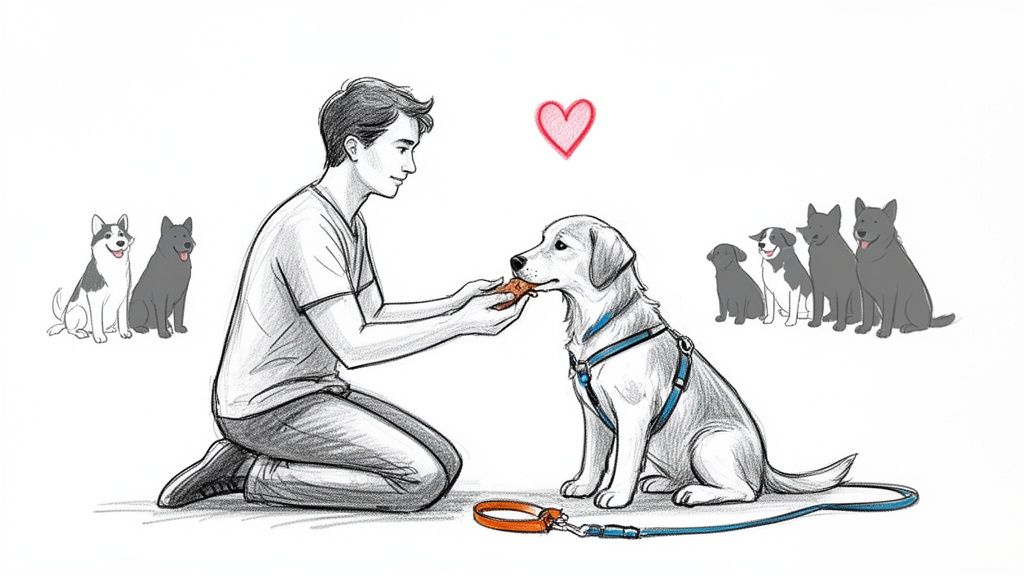
This stage is about so much more than just teaching “sit.” It’s about carefully and positively introducing your puppy to our big, weird human world. With an estimated 1.2 million puppies born worldwide every single day, the need for thoughtful guidance is huge. After being completely helpless for their first two weeks, these little sponges are primed for learning by the time they get to you.
The Critical Socialization Window
Here’s the thing you absolutely can’t miss: a puppy's prime learning window is incredibly brief, running from about 3 to 16 weeks of age. What they experience—or, just as importantly, don’t experience—during this time has a massive impact on their adult personality.
The goal isn't to bombard them with chaos. Quality over quantity is the name of the game. A calm, five-minute introduction to a friendly, vaccinated adult dog is worth a hundred times more than a stressful hour at a packed dog park. You're trying to build a library of positive experiences they can draw on for the rest of their lives.
Your socialization checklist should include gentle, controlled exposure to:
- A Variety of People: Let them meet people of all shapes, sizes, and ages. Think hats, sunglasses, beards, and kids (always supervised!).
- Household Sounds: Don't shield them from everything. Let them hear the vacuum cleaner, doorbell, or blender from a safe distance, tossing them a treat for staying calm.
- Different Surfaces: Encourage them to walk on grass, pavement, carpet, and maybe even a wobbly cushion to build their physical confidence.
- New Places: Short, happy car rides and quick trips to a pet-friendly patio or a friend's quiet yard can work wonders.
Positive Reinforcement is Your Superpower
Puppies learn best when they think they're playing a game. That’s why positive reinforcement —using rewards like treats, toys, or praise to encourage good behavior—is so effective. It builds a powerful bond based on trust and fun, not fear.
When you're house-training, for example, the second they finish their business outside, throw a little party! Lavish them with praise and a super tasty treat. They'll quickly connect "potty outside" with "awesome things happen." If there's an accident inside, don't scold them. Just clean it up with an enzymatic cleaner (to eliminate odors that attract them back to the spot) and make a mental note to take them out sooner next time.
The secret to positive reinforcement is simple but incredibly effective: reward what you want to see more of. It turns training into a fun collaboration and strengthens the incredible connection you have with your new puppy.
To help you stay on track, here's a general timeline of what to focus on during that critical socialization window.
Puppy's First 16 Weeks Socialization and Training Milestones
This table breaks down the key developmental stages and gives you a roadmap for what to prioritize as your puppy grows.
| Age (Weeks) | Socialization Goals | Training Focus |
|---|---|---|
| 8-10 | Introduce to immediate family and a few calm, vaccinated adult dogs. Explore different rooms of the house and the backyard. Hear gentle household noises. | Crate training fundamentals, house-training routine, name recognition, and gentle handling (paws, ears, mouth). |
| 10-12 | Short car rides. Meet new people outside your home in a controlled way. Walk on different surfaces like pavement and grass. Visit a pet-friendly store for a few minutes. | Basic cues like "Sit" using positive reinforcement. Leash and collar/harness introduction. Redirecting nipping. |
| 12-16 | Attend a well-run puppy socialization class. Experience slightly busier (but not overwhelming) environments. Continue meeting new people and dogs. | "Come" and "Leave It" basics. Fading food lures. Building focus amid minor distractions. Start working on preventing separation anxiety in dogs. |
Remember, every puppy is an individual, so adjust this timeline to fit their unique personality and comfort level. The goal is progress, not perfection.
Handling Normal (But Annoying) Puppy Behaviors
Let’s be honest, puppies can be little land sharks. Nipping, jumping, and chewing are all 100% normal behaviors, but they need to be channeled in the right direction.
For Nipping and Mouthing: When your puppy’s teeth make contact with your skin, make a quick, high-pitched "Ouch!" and briefly pull your hand away. This mimics how their littermates would tell them they're playing too rough. After a second or two, offer them a toy they are allowed to chew on.
For Jumping Up: Jumping is just an over-enthusiastic "Hello!" To stop it, turn your back and ignore them the moment their paws leave the floor. The instant all four are back down, calmly turn around and give them the attention they wanted. They’ll learn fast that polite greetings get rewarded.
Professional Support for Busy Denver Owners
Life in Denver moves fast, and balancing a demanding job with a puppy's endless need for attention, exercise, and training can feel like a marathon. This is where bringing in a professional can be a total game-changer.
A great dog walking or hiking service does more than just let your puppy out. It provides structured socialization, managed play, and a fantastic energy outlet. A skilled handler can reinforce good leash manners on the trails and help your pup build confidence in the real world. This support system ensures your puppy's needs are consistently met, even on your busiest days, helping you raise a happy, tired, and well-behaved dog.
Answering Your Top Puppy Prep Questions
Bringing a new puppy home is exciting, but let's be honest—it can also feel like you're suddenly facing a million tiny decisions and a whole lot of self-doubt. You're not the first to wonder if you're doing it right, and you definitely won't be the last.
We've been through this with countless new owners, so we've gathered some of the most common questions that pop up right before (and right after) the puppy arrives. Getting these answers sorted out now will make those first few weeks feel much more manageable.
Just How Much is This Puppy Going to Sleep?
One of the biggest surprises for new owners is just how much puppies sleep. It’s a ton. A young pup, especially between 8 and 12 weeks old , will likely sleep 18 to 20 hours a day. I know it sounds like a lot, but this isn't them being lazy—it’s absolutely critical for their development.
All that snoozing is hard work. It’s when their brain, immune system, and central nervous system are growing at an incredible rate. You'll see this play out in a cycle of wild, energetic bursts followed by a sudden crash into a deep nap. That’s completely normal. My advice? Cherish the quiet moments and let them rest.
A quick tip from experience: Don't mistake a sleeping puppy for a bored one. Making nap times happen in their crate is a game-changer. It teaches them how to settle down and prevents them from getting overtired, which is a major trigger for frantic nipping and chewing.
What on Earth Should I Be Feeding My New Puppy?
The world of puppy food is confusing, but the first week is simple. The number one rule is to keep them on the exact same food the breeder or shelter was using. Their tiny digestive system is already stressed from the move, and a sudden diet change is a recipe for an upset stomach.
Once they're settled and you're ready to pick a long-term food, here’s what to look for:
- A "puppy" formula: This isn't just marketing. These foods are specifically designed with the right balance of protein, fat, and minerals for a growing dog.
- Real ingredients: The first thing on the ingredient list should be a specific meat source, like "chicken" or "lamb," not a vague "meat by-product" or filler grain.
- Your vet's blessing: Always run your choice by your veterinarian. They can give you personalized advice based on your puppy's breed, size, and individual health needs.
And remember, the feeding chart on the bag is just a guideline. Keep an eye on your puppy’s body condition and adjust amounts as needed.
Seriously, How Often Do I Need to Take the Puppy Out?
When it comes to house-training, it's all about being proactive, not reactive. For a tiny puppy ( 8-12 weeks old ), the best rule of thumb is to take them out every single hour they're awake. It feels like a lot, but you're getting ahead of accidents before they even have a chance to happen.
On top of the hourly schedule, make sure a potty break happens immediately after these key moments:
- The second they wake up in the morning.
- The moment they stir from any nap.
- About 10-15 minutes after they finish a meal.
- Right before they go into their crate for the night.
As your puppy gets older and gains more bladder control, you can start to stretch out the time between trips. But in the beginning, consistency is everything.
When Can My Puppy Finally Meet Other Dogs?
Socialization is one of the most important things you'll do for your dog, but it has to be done safely. A puppy isn't fully protected from dangerous diseases like parvovirus until they've finished their entire vaccination series, which is typically around 16 weeks of age.
But that doesn't mean they have to live in a bubble! You can—and should—introduce them to adult dogs you personally know are calm, friendly, and fully vaccinated . A well-managed puppy socialization class, where proof of age-appropriate shots is required for all attendees, is another fantastic, safe option. Just steer clear of dog parks and other high-traffic areas until your vet gives you the official all-clear.
Here at Denver Dog , we know that a tired puppy is a good puppy. When your little one is old enough for bigger adventures, our professional on-leash walking, running, and hiking services are the perfect way to provide the safe, structured exercise they need to grow up happy and healthy. See how we can support your puppy's journey at https://www.denverdog.co.
The Run Down