You bring a dog home in Colorado thinking about trail miles, patio afternoons, and a calm companion riding shotgun to the foothills. Then reality shows up fast. Your new puppy shreds a leash. Your adolescent rescue drags you down the block. Your athletic dog paces the house at 6 p.m. because one walk around the neighborhood did nothing.
That is a normal start.
A lot of Colorado dog owners are not dealing with a “bad dog.” They are dealing with a mismatch between the dog in front of them and the routine they can realistically maintain. Busy workdays, long commutes across the metro, and high-energy breeds create problems that look like disobedience but often start with unmet needs, unclear communication, and inconsistent practice.
Professional help exists for a reason. The global dog training services market was valued at USD 43.8 billion in 2026 and is projected to reach USD 99.95 billion by 2035 , with North America holding a 50-55% market share , according to Business Research Insights. That growth reflects more pet owners taking training seriously and recognizing that it changes daily life, not just sit-stay performance in a class.
If you are searching for dog training colorado , you probably do not need hype. You need a clear way to decide what kind of training your dog needs, which format fits your schedule, what credentials matter, what the process costs, and why exercise has to be part of the plan for many Colorado dogs.
Welcome to Dog Ownership in Colorado
Colorado is a great place to have a dog. It is also a great place to accidentally underestimate one.
A young Lab, Border Collie, Australian Shepherd, Vizsla, or mixed-breed athlete can look manageable in the first few days. Then the pattern starts. Mornings are rushed. The dog gets a quick potty break. You promise a longer outing later. By afternoon, the dog is barking at hallway sounds, grabbing sleeves, jumping on guests, or pinballing around the house.
None of that is unusual here. Colorado owners often want dogs to join an active lifestyle, but many dogs need training before they can safely enjoy that lifestyle. Loose-leash walking matters on city sidewalks. Recall matters in transition spaces. Calm settling matters before and after activity. Basic handling matters at trailheads, around bikes, around kids, and around other dogs.
The dream and the reality
The dream is simple. A dog that can hike, rest, greet politely, and come home tired in a good way.
Even friendly dogs need structure. Puppies need skills. Adult rescues need consistency. High-drive dogs need both mental work and physical outlets.
Good training makes Colorado life larger for your dog. It gives you more places you can go, more confidence in public, and fewer daily arguments over every small thing.
Training is not just for “problem dogs”
Owners often wait too long because they think training is only for severe issues.
It is not.
Training is how dogs learn what earns access, what behavior pays off, and how to handle stimulation without unraveling. It also teaches owners how to be clear. Most failures I see are not because someone does not love their dog. They are because the household has no repeatable system.
A dog does better when the rules are obvious, the rewards are timely, and the routine is steady.
Colorado rewards prepared owners. If you want a dog who can handle sidewalks, patios, visitors, trailheads, and neighborhood distractions, training is not extra. It is part of the equipment.
Understanding Colorado Dog Training Foundations
Think of training like building a house. If you skip early construction steps, you do not get a stylish shortcut. You get problems later.
Puppy training is the foundation
Puppy work is not about flashy obedience. It is about habits.
That means house training, handling, name recognition, leash introduction, reward timing, settling, and prevention of bad rehearsals. It also includes learning how to be alone for short periods, how to relax in a crate, and how to move through the world without panic or over-arousal.
For owners working on confinement, humane crate training practices are worth reviewing because the crate should teach rest and predictability, not frustration and fear.
Puppy training solves different problems than adult obedience. It prevents rehearsal of chaos before chaos becomes routine.
Basic obedience is the framing
Once the foundation is in place, obedience gives shape to daily life.
Cues like sit, down, place, leash manners, leave it, recall foundations, and polite greetings begin to matter at this stage. The point is not to collect commands. The point is to make ordinary moments smoother. Doorways, meals, guests, elevators, vet visits, and walks become easier when the dog has default behaviors.
A lot of owners spend too much time asking for sits and not enough time teaching practical transitions. I would rather see a dog calmly clipped into a leash, wait at a threshold, and walk without towing its owner than do a fast trick routine in the kitchen.
Behavior modification is the wiring and plumbing
Many households realize they need more than a standard class when they reach this point.
Behavior modification addresses fear, reactivity, resource guarding, separation-related distress, handling sensitivity, over-arousal, and patterns that are self-reinforcing. These issues usually need a more careful plan because the dog is not just untrained. The dog is having a hard time coping.
If your dog blows up at the end of the leash, practical reactive dog training tips that work can help you understand where management ends and real training begins.
Obedience tells a dog what to do. Behavior work changes how the dog feels, responds, and recovers.
That difference matters. A reactive dog may know sit perfectly and still struggle outside. Skills alone do not fix emotional overload.
Sports and advanced work are the finish carpentry
Dog sports, advanced scent work, agility foundations, trick training, and specialty work sit on top of the rest.
They are useful for some dogs because they provide challenge, teamwork, and outlets. They are not a substitute for core life skills. A dog that cannot walk through your neighborhood calmly is not ready for “advanced” work in any meaningful sense.
Where most owners should start
If you are unsure what lane your dog belongs in, use this simple filter:
- New puppy: Start with household habits, social exposure, handling, and calm routines.
- Adolescent dog with pulling and chaos: Basic obedience plus management at home.
- Adult dog with barking, lunging, or fear: Behavior modification first.
- High-drive dog who knows cues but still acts wild: Training plus a serious look at exercise and recovery.
The order matters. Strong foundations save time later.
Comparing Training Formats Group vs Private vs Board-and-Train
The right format depends less on what sounds impressive and more on what your dog can handle, what you can afford, and whether your schedule supports follow-through.

Many Colorado providers emphasize multi-week programs or immersion options, but clearly communicated weekday flexibility is often harder to find, which matters for full-time owners trying to fit training into real life, as noted by American Canine Academy.
Group classes
Group classes are best for dogs who can function around other dogs and people without melting down.
They work well for puppies, beginners, and owners who want structure and repetition at a lower entry cost. Group classes also expose handlers to common mistakes. That has value. Owners often improve just by watching timing, leash handling, and reward delivery in a room full of teams.
The downside is obvious. You are sharing attention. If your dog is overwhelmed, reactive, or too distracted to learn, a group class can become a weekly frustration session.
Private sessions
Private work is the most adaptable option for many households.
You can train in your home, your block, your building hallway, or the exact park where problems happen. That matters because dogs do not generalize well. A dog that can walk nicely in a training room may still lose its mind outside your front door.
Private training is often the best fit for leash pulling, adolescent chaos, home manners, and moderate behavior concerns. It also works for busy professionals who need a training plan built around a real schedule instead of a class calendar.
Board-and-train
Board-and-train can help when a dog needs intensive handling and the owner needs a jump start.
It makes the most sense for households facing severe problems, owners who need a reset, or dogs who benefit from concentrated repetition with skilled handlers. It can also be useful when the owner physically cannot execute the first stage of the work safely.
Its weakness is transfer. If the dog performs beautifully for the trainer but the owner does not learn the same handling and reinforcement habits, the change fades quickly after the dog comes home.
The dog is not the only student. Any training format that leaves the owner out of the process has limits.
Dog Training Formats Compared
| Format | Best For | Pros | Cons |
|---|---|---|---|
| Group Classes | Puppies, beginners, dogs needing social exposure | Socialization, lower cost, routine | Less personalized, more distractions |
| Private Sessions | Real-life household issues, leash work, moderate behavior problems | Personalized, flexible, location-specific | Higher cost, less peer socialization |
| Board-and-Train | Severe issues, jump starts, intensive skill building | Professional handling, concentrated practice | Most expensive, dog is away from home, transfer can be weak |
How busy owners should decide
Use these questions instead of asking which format is “best.”
- Can my dog learn around other dogs? If no, skip group for now.
- Do I need training in my actual environment? If yes, private usually wins.
- Am I short on time, skill, or physical control? Board-and-train may help, but only if owner coaching is built in.
- Do I need flexibility on weekdays? Private sessions often offer the cleanest fit.
- Is my issue socialization or behavior fallout? Group helps the first. It often worsens the second if chosen too early.
The wrong format wastes money. The right format makes practice more likely, and practice is where results come from.
How to Select a Reputable Colorado Dog Trainer
Colorado does not require dog trainers to hold a state license. That means the burden is on the owner to ask better questions.
According to The Academy of Pet Careers, certifications from accredited programs are especially important in Colorado, and certified trainers can achieve up to 25% faster obedience acquisition using evidence-based methods.

What to look for first
Credentials are not everything, but they matter.
A trainer should be able to explain their education, continuing study, training philosophy, and how they handle common problem behaviors. Good trainers also welcome questions. They do not get defensive when you ask what happens if the dog gets it wrong.
Look for a trainer who can describe what they will reinforce, what they will prevent, and how they will adapt the plan if the dog stalls.
Green flags
These signs usually point to thoughtful work:
- Clear methodology: The trainer explains how they teach behaviors, not just what package they sell.
- Owner coaching: They teach you mechanics, timing, and management instead of creating trainer-dependent dogs.
- Positive reinforcement fluency: They can use food, toys, praise, distance, and environment access in a deliberate way.
- Realistic expectations: They do not promise a perfect dog in a fixed number of sessions.
- Practical homework: They give repeatable assignments that fit normal life.
Red flags
Some warning signs show up in the first conversation:
- Guaranteed results: Behavior is not a haircut. No honest trainer can guarantee outcomes across every dog and household.
- Vague language: “We fix anything” is not a training plan.
- Punitive framing: If the trainer talks more about dominance, stubbornness, or “showing the dog who is boss” than about learning, pause.
- No owner transfer plan: If the dog learns with the trainer but you get little coaching, expect backsliding.
- Tool-first sales: Equipment can support training, but it should not replace a method.
Questions worth asking before you book
Ask these directly:
- How do you teach a new behavior?
- How do you handle leash pulling, reactivity, or fear when the dog is already over threshold?
- What does a typical homework week look like?
- How do you measure progress?
- Will training happen in the environments where my dog struggles?
- How do you involve the family or primary handler?
- What happens if my dog does not progress as expected?
If a trainer cannot explain their process in plain language, do not assume the process is better than your understanding. Move on.
A reputable trainer should leave you feeling informed, not pressured.
Budgeting for Dog Training Costs and Timelines
Most owners do not mind paying for training. They mind paying without knowing what they are buying.
Colorado pricing varies by format and intensity. Based on pricing summarized by Chill Out Dog Training, group classes can start around $149 to $250 for a multi-week course, private sessions often run $275+ per hour , and board-and-train programs for more serious issues can cost $2,000 to $4,500 .
What those price ranges usually mean
A lower-cost group class can be a good buy if your dog is ready for the environment and your goals are foundational.
Private sessions cost more because the trainer is customizing the work, traveling, coaching you directly, and troubleshooting your exact setup. That is often money well spent when the issue happens in your living room, your hallway, or on your block.
Board-and-train carries the highest cost because it includes handling time, facility overhead, repetition, and often a more immersive structure.
Cost is not the only variable
A cheaper format can become more expensive if it is the wrong fit.
If a reactive dog washes out of a group class, you still paid for the class. If a board-and-train sends a polished dog home to an unprepared owner, you may still need follow-up private sessions. A modest private package can outperform both if the core issue is owner handling.
Training timelines are usually misunderstood
Dogs can learn a cue quickly and still fail in real life.
That is because learning a behavior in a quiet setting is not the same as performing it around distractions, stress, speed, distance, novelty, and excitement. Generalization takes practice in many places. Maintenance takes repetition after the dog appears to “know it.”
A realistic view looks like this:
- Skill learning: The dog starts to understand the task.
- Fluency: The dog can do it with less help.
- Generalization: The dog can do it in different places.
- Reliability: The dog can do it when life is happening around them.
How to budget without wasting money
Use your budget on the bottleneck.
If the bottleneck is social exposure and owner basics, start with group. If the bottleneck is your apartment hallway and leash pulling on weekdays, spend on private help. If the bottleneck is severe behavior and safety, consider immersive support.
Then reserve money for follow-through. The owners who get the most from training are not the ones who buy the biggest package first. They are the ones who keep practicing after the package ends.
The Missing Link Integrating Exercise for Better Behavior
For many Colorado dogs, training is only half the plan.
The state has no shortage of obedience classes, behavior packages, and intensive programs. But there is a clear gap in training designed specifically for high-energy and athletic dogs, and behavioral issues in these dogs are often misread as disobedience when inadequate physical and mental stimulation is the problem, as noted by Faithfully K9.

What exercise does and does not do
Exercise is not a substitute for training.
A long run does not teach loose-leash walking. A hike does not automatically create impulse control. A tired dog can still rehearse bad habits if the dog has no structure and no clear reinforcement history.
But the opposite mistake is just as common. Owners ask a dog with a full tank of energy to make good decisions in a tiny behavioral box. Then they are surprised when the dog cannot stay settled, focus, or recover from stimulation.
Structured exercise changes the starting point. It lowers pressure. It gives the dog a legal outlet. It makes it easier for the dog to practice self-control because the body is not screaming for movement.
High-energy dogs need a weekly system
Athletic dogs often do worst with random effort.
One huge outing on Saturday and under-stimulation during the week creates a familiar cycle. The dog spikes, crashes, then starts accumulating frustration again. Training stalls because the dog is never in a stable place for long.
A better plan usually combines:
- Skill sessions: Short, deliberate work on cues and manners.
- Structured aerobic outlets: Running, brisk walks, or hiking matched to the dog.
- Mental tasks: Food work, pattern games, scent activities, handling drills.
- Rest and recovery: Calm decompression, sleep, and low-conflict downtime.
Why busy professionals struggle here
Time is the constraint.
A full-time owner may absolutely understand what the dog needs and still not be able to deliver weekday consistency. That is where exercise support can make the training plan work in real life. Not because someone else “fixes” the dog, but because the dog stops bringing unmanaged energy into every training rep.
I have seen this repeatedly with adolescent sporting mixes and herding breeds. The owner practices well on weekends, but the dog spends weekdays underworked. By the time evening training starts, the dog is frantic, mouthy, or unable to think. The owner thinks the dog is blowing them off. The dog is often just under-exercised and over-ready.
Good exercise does not replace obedience. It creates the conditions where obedience can take hold.
The practical integration model
Think in layers instead of either-or choices.
Use formal training to teach leash skills, calm starts, engagement, recall foundations, and recovery after excitement. Pair that with dependable physical outlets during the workweek. The point is not to “wear the dog out” blindly. The point is to meet the dog’s needs in a structured way so the rest of training sticks.
Confidence work matters too, especially for dogs who are energetic but environmentally sensitive. These dog confidence building exercises for a happier, braver pet fit well beside obedience and exercise because confidence often improves handling, resilience, and decision-making.
Signs your dog needs more than obedience class
Watch for these patterns:
- Your dog knows cues indoors but falls apart outside.
- Evening behavior gets worse, not better.
- Pulling, scavenging, barking, and rough play spike on low-activity days.
- Your dog struggles to settle after only a brief walk.
- Training sessions feel frantic instead of focused.
When that pattern shows up, adding more commands is rarely the fix. Better structure is.
Navigating Local Leash Laws and Training-Friendly Spaces
A good training plan has to fit the places where you walk your dog.

Local rules change by city, park system, and trail manager, so owners should check the current regulations for the exact area they plan to use. That matters for safety and liability, not just etiquette. If you are dealing with a bite incident or a serious handling dispute, legal guidance such as this overview from a Dog Bite Lawyer Colorado can help you understand the stakes.
Where training usually goes best
The best places to train are often the least exciting ones.
Wide paths, quiet neighborhood parks, school perimeters when not in use, and open areas with enough distance from triggers are better for early work than crowded dog-heavy hotspots. Owners often sabotage sessions by choosing a place that is too stimulating because it feels more “real.” Realism matters later. Early success matters first.
What to practice where
Match the exercise to the environment.
- Neighborhood sidewalks: Loose-leash walking, check-ins, doorway transitions.
- Quiet park edges: Settle work, pattern games, longer duration cues.
- Parking lot perimeters: Car exits, focus around movement, start-stop control.
- Low-traffic trails: Endurance with manners, passing etiquette, decompression on leash.
Common location mistakes
A few errors show up constantly:
- Going too busy too soon: Farmers markets and packed trailheads are not beginner classrooms.
- Unclipping early: Reliable on one path does not mean reliable everywhere.
- Training after the dog is already over-aroused: The dog should enter the space ready enough to learn.
- Ignoring exits: Good handlers know where to move when a trigger appears.
A training-friendly space is one where your dog can succeed, not one that proves how brave you are.
For owners planning local outings, a practical roundup like your guide to the top 10 dog-friendly hikes in Colorado for 2026 can help you think about trail options, but always verify current rules before you go.
Colorado gives you plenty of places to practice. Pick locations that support the skill you are building, not locations that test your dog beyond what they know.
Frequently Asked Questions About Dog Training in Colorado
What is the difference between positive reinforcement and balanced training
Positive reinforcement means the trainer rewards behaviors they want repeated. That can include food, toys, praise, space, movement, or access to something the dog values.
Balanced training is a broader label and can mean different things depending on the trainer. Ask exactly what tools they use, what happens when the dog is wrong, and how they decide when to add pressure. Labels are less useful than specifics.
Is my older rescue dog too old to train
No.
Older dogs can learn new behaviors, new routines, and new emotional responses. They may need a slower pace, better management, or more decompression time, but age alone is not the barrier many assume it is.
Are e-collars effective or humane
That depends on the trainer, the dog, the conditioning process, and the reason the tool is being considered.
An e-collar is not a shortcut for missing skills, poor timing, or under-exercised behavior. If a trainer suggests one, ask what problem it solves that cannot be solved another way, how the dog will be conditioned to it, and how owner handling will be taught. Tool decisions should come after a serious discussion, not during a sales pitch.
How do I continue training after class ends
Keep the behaviors alive in daily life.
Use cues at doors, before meals, on walks, before greetings, and during transitions. Practice in short bursts. Reward what you want before the dog offers the old habit. If a behavior starts to slip, reduce difficulty and rebuild instead of repeating the cue louder.
How often should I train
Short sessions done consistently beat occasional marathon sessions.
For most households, several small reps built into daily routines work better than trying to carve out one giant practice block. Good training fits into life. It does not wait for perfect conditions.
What if my dog gets worse outside than in class
That is common.
Dogs do not automatically transfer skills from one environment to another. Lower the difficulty, increase distance from distractions, simplify the task, and reward earlier. Outside progress usually depends on setup quality more than owner effort.
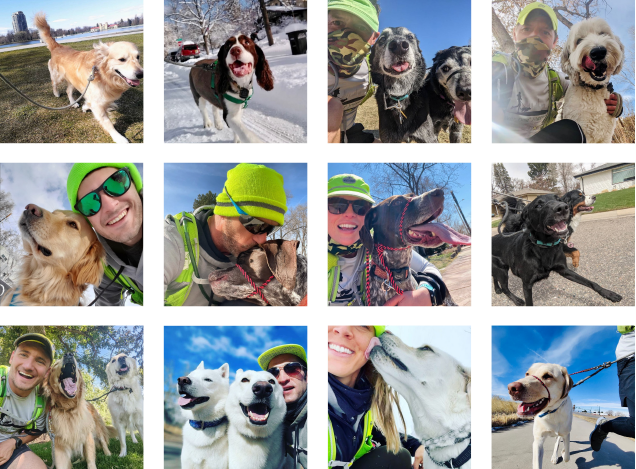
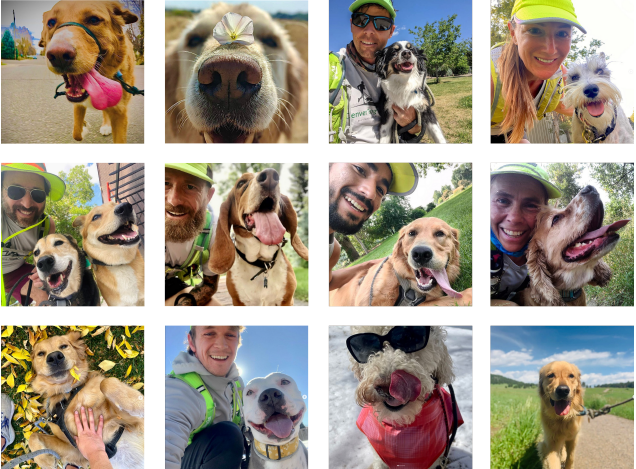
If your dog needs more than a quick walk to stay sane during the workweek, Denver Dog offers on-leash running, walking, and hiking built for busy Denver owners who want safe, structured exercise to support better behavior, steadier routines, and a happier dog.
The Run Down