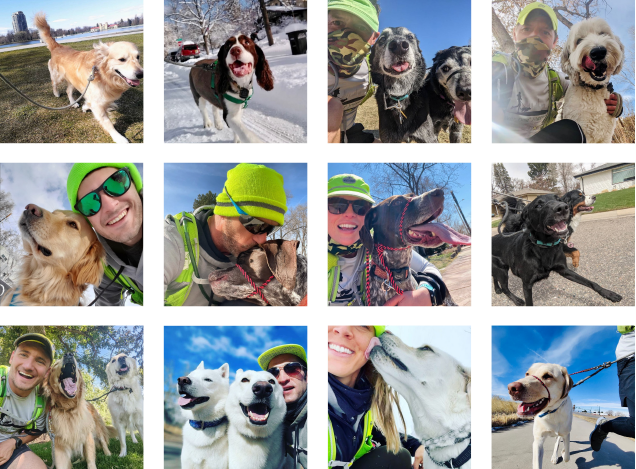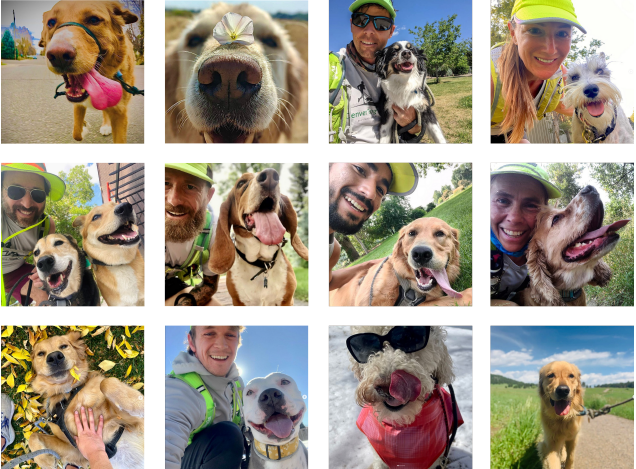
A lot of Denver dog owners know this scene. You reach for the leash, and your dog is already spinning at the door, nails tapping on the floor, nose working, whole body saying the same thing. Finally. Let's go.
That excitement is part of why national walk your dog day lands so well here. In late February, Denver can give you sun, wind, slush, dry sidewalks, or all four in one afternoon. It’s not always glamorous, but it’s a perfect reminder that dogs still need real movement, fresh air, and time with their people, even when schedules get crowded and winter hasn’t fully let go.
Make This National Walk Your Dog Day Unforgettable
National walk your dog day is observed every February 22 and was formally created in 2010 to raise awareness about regular exercise and responsible pet ownership, according to this history of the observance. The timing makes sense for Denver pet parents. Spring feels close, but routines are often still in winter mode.

Treat the day like an outing, not a checkbox
The best way to celebrate isn’t to force a heroic hike on a dog who usually gets one loop around the block. It’s to make the walk more intentional than usual.
For one dog, that might mean a slow sniff-heavy route through a familiar neighborhood with extra time at every tree and snowbank. For another, it means loading up early, choosing a foothills trail, and giving a hard-charging young dog the kind of structured outing that satisfies them.
That’s the practical difference experienced handlers see every week. Dogs don’t all need the same “special” walk. They need the right walk for their age, conditioning, confidence, and temperament.
Practical rule: A memorable walk isn’t the longest route. It’s the one your dog can enjoy safely from the first minute to the last.
What makes it worth celebrating in Denver
Denver gives you unusual range in a single metro area. A weekday neighborhood route in Wheat Ridge or Englewood can be calming and easy to fit in. A more ambitious trip toward the foothills can feel like a real adventure without driving all day.
That local flexibility matters for busy pet parents. If your schedule is packed, national walk your dog day doesn’t have to become one more thing you failed to do perfectly. A well-planned neighborhood stroll counts. A short outing done attentively often beats a longer walk where the dog is cold, overfaced, or rushed.
A good celebration usually includes one simple upgrade:
- Add time for sniffing: Don’t rush the first part of the walk.
- Change the route: Even one new block can make a familiar outing feel fresh.
- Match the walk to the dog: Senior dogs, puppies, and athletic adults shouldn’t all do the same thing.
- Bring better gear: The right leash, harness, and weather layer can completely change the experience.
- Stay present: Put the phone away for part of the walk and watch your dog.
National walk your dog day works best when it resets habits. One solid outing can turn into a better weekly routine, and that matters far more than one photo-worthy afternoon.
Your Denver Dog Adventure Preparation Checklist
A good walk starts before the front door opens. In Denver, preparation matters because conditions can change block by block. Dry pavement turns into ice in the shade. A calm neighborhood stroll turns into a windy, cold outing once the sun drops.
Start with an honest fitness check
A lot of owners overestimate their dog’s conditioning because the dog is enthusiastic. Excitement isn’t the same as fitness.
That distinction matters because approximately 60% of dogs in the U.S. are overweight, and that condition can shorten life by an average of two-and-a-half years. Regular walking helps maintain healthy weight, supports joints, and lowers the risk of serious health problems.
Use these questions before you pick a route:
- How does your dog recover after walks? If your dog comes home spent, stiff, or unusually sleepy after a basic outing, don’t turn February 22 into a big mileage day.
- What does your dog do on weekdays now? If the usual routine is a quick potty loop, build up gradually instead of jumping straight to a demanding trail.
- Does your dog pull because they’re fit, or because they’re overstimulated? Those are different issues and need different plans.
- What stage of life are they in? Puppies need controlled exposure. Seniors often do better with shorter, steadier routes and better footing.
If you want help thinking through frequency and routine, this guide on how often dogs should be walked in Denver gives a useful local framework.
Pack for Denver, not for a generic dog walk
Winter and shoulder-season walks in the metro can punish unprepared dogs. Salted sidewalks can irritate paws. Slush balls up in fur. Cold wind hits harder on thin-coated dogs standing still at intersections.
A practical kit usually includes:
- A secure harness: Better control, especially on slick surfaces or trail descents.
- A standard leash: Skip retractables for busy sidewalks, parking lots, and mixed-use trails.
- Waste bags: Bring more than you think you’ll need.
- Water and a portable bowl: Especially if you’re heading toward the foothills or dealing with dry air.
- Paw protection: Booties for some dogs, paw balm for others.
- A warm outer layer for cold-sensitive dogs: On frigid or windy days, a fitted option like a Pandemonium Millinery dog coat can help smaller, leaner, or short-haired dogs stay comfortable without restricting movement.
Cold dogs don’t settle into a walk. They brace, hurry, or shut down.
Know the rules before you load the car
Local regulations matter more than people think. Leash rules vary by location, and trail systems often have posted requirements that owners miss when they’re in a hurry. A dog who is lovely at home can still create a problem on a narrow path, at a trailhead, or in a busy parking area.
Before heading out, check:
- Leash requirements for your destination
- Parking and access details
- Whether the route allows dogs at all
- Surface conditions from recent weather
- How crowded the area is likely to be
This prep doesn’t make the walk less fun. It makes it smoother. Dogs pick up on our stress fast, and the calmest outings usually belong to owners who planned the details at home.
Neighborhood Stroll or Front Range Trail
Some dogs need novelty. Others need predictability. National walk your dog day gets better when you pick the setting that matches your dog, not the setting that sounds more impressive.
When a neighborhood stroll is the better choice
A neighborhood route is often the smartest option for puppies, senior dogs, reactive dogs, recent rescues, and owners squeezing in a quality outing before work. There’s less logistical friction. You can bail out easily if weather turns, paws get cold, or your dog is telling you they’re done.
In the west metro, Olde Town Arvada works well for dogs who enjoy a slower urban walk with plenty to smell. In Lakewood, the areas around Belmar can give you a nice mix of sidewalks, green space, and manageable distance. In Littleton and Englewood, tree-lined residential loops can be ideal for dogs who do better when stimulation stays predictable.
A neighborhood walk also lets you structure the outing with intention. Start slow. Let the dog sniff. Cross the street before a tense dog-to-dog greeting. Use benches, curbs, and pauses to practice calm behavior. For many households, that kind of clean, successful walk is more valuable than trying to “make the day special” with a trail that’s too much dog, too much weather, or too many people.
When the foothills make sense
For a fit, trail-savvy dog, a Front Range outing can be the right choice. Places like Lair o' the Bear or Mount Falcon can give dogs more room to settle into a rhythm, more natural scents, and more satisfying terrain than a standard city loop.
That doesn’t mean every energetic dog should go straight to a longer hike. Terrain, footing, elevation change, and trail traffic all matter. A dog that drags you down the sidewalk may still struggle with sustained climbing or become overaroused by bikes, runners, horses, or wildlife scent.
This is also where owners sometimes make the day about themselves. They want a workout, a view, and a photo. The dog needs a safe effort level. If your personal goal is fitness, it helps to think separately about your own training and optimize running and lifting without assuming your dog should match that plan.

Denver Walk Decision Guide Neighborhood vs. Front Range
| Factor | Neighborhood Walk | Front Range Hike |
|---|---|---|
| Best for | Puppies, seniors, recent rescues, reactive dogs, busy weekdays | Fit adult dogs with trail manners and good conditioning |
| Time commitment | Easier to fit into a workday | Requires travel, packing, and extra recovery time |
| Surface | Sidewalks, parks, pavement, occasional ice or salt | Dirt, rock, mud, snow, uneven terrain |
| Control | Easier to shorten, pause, or head home early | Harder to exit quickly once you’re committed |
| Mental load | Predictable, good for training and confidence-building | Rich scenting, novelty, and broader environmental exposure |
| Gear needs | Basic harness, leash, waste bags, weather layer if needed | Add water, trail-ready leash handling, stronger recall-to-handler habits on leash, paw protection |
| Common mistake | Rushing and not letting the dog decompress | Choosing a route beyond the dog’s current capacity |
A simple way to choose
Pick the neighborhood walk if your dog needs success more than challenge.
Pick the trail if your dog already handles longer outings well, stays responsive on leash, and can keep a steady pace without getting frantic or fading.
If you want route ideas before committing, this local roundup of dog walking trails near Denver is a useful starting point.
The right choice is the one that lets your dog finish loose, engaged, and comfortable. Not just tired.
Essential Safety and Etiquette for Your Walk
Good outings stay good because the handler pays attention early. In Denver, that means watching your dog, the ground, the weather, and the traffic around you all at once.

A useful reality check comes from a meta-analysis showing dog owners who walk their dogs are 2.74 times more likely to meet weekly physical activity guidelines. That’s a strong benefit for the human. It’s also where people sometimes push too hard. Your dog isn’t a wearable device goal.
Watch pace, breathing, and gait
Most problems show up before they turn serious. The dog starts lagging. Their trot gets choppy. They stop choosing to sniff and start looking flat. On cold days, some dogs lift paws, hunch, or try to head back toward the car without any drama at all.
Look for:
- Changes in stride: Shorter steps, stiffness, or repeated stopping
- Stress signals: Lip licking, scanning, refusal to move, frantic pulling, or inability to settle
- Cold discomfort: Paw lifting, shivering, tucked tail, reluctance to stand still
- Fatigue: Falling behind, slower recovery after hills, less interest in the environment
If you see those signs, shorten the walk. Don’t negotiate with them because you’re trying to “get your steps.”
Practice trail and sidewalk manners
The fastest way to make dog-friendly spaces worse is sloppy handling. Keep your leash short enough for control but loose enough that your dog can move normally. Don’t let your dog block the full width of a path. Don’t assume every dog or person wants a greeting.
On trails and multi-use paths:
- Yield thoughtfully: Step aside early when bikes, runners, or other dogs approach.
- Clean up fully: Bag waste and carry it out. Don’t leave bags beside the trail “for later.”
- Manage greetings: Ask first, then skip the interaction if either dog looks tense.
- Protect the space: Stay on designated paths and keep the outing low-impact.
A short visual refresher helps many owners keep the basics sharp:
Think about wildlife and urban edges
Coyotes show up in more places than visitors expect, including neighborhoods, greenbelts, and trail corridors. You don’t need panic. You do need awareness, especially around dawn and dusk. Keep your dog leashed, stay off the phone, and know what you’d do if a coyote showed interest. This guide to non-lethal coyote deterrents is a practical read for Front Range dog owners.
Give wildlife space early. Most bad encounters start when people notice too late.
Urban safety counts too. Watch for broken glass, de-icer residue, tight blind corners, and dogs exiting cars or front doors suddenly. Neighborhood walks look easy on paper, but city handling often demands more constant leash management than a quieter trail.
Beyond the Walk Social Ideas and Community Support
Some of the best national walk your dog day celebrations don’t end when the leash comes off. They turn into a ritual your dog starts to recognize.
Make it a small event
One easy format is a two-household walk with dogs that already know each other and move at a similar pace. Keep it small. Start with motion, not a sidewalk meet-and-greet where everyone tangles leashes and stares at each other.
Another good version is a “paws and patio” outing. Take the walk first, then settle somewhere dog-friendly after your dog has already burned off the initial excitement. Calm dogs enjoy public spaces more than dogs who just hopped out of the car with a full tank.
Keep group walks selective. Familiar, compatible dogs make the day fun. Random dog pack-ups often do the opposite.
Mark the day in a way you’ll actually repeat
You don’t need a big production. A few habits work well:
- Take one solid photo: Not fifty. One that captures the walk you had.
- Note what worked: Best route, best gear, best time of day.
- Plan a follow-up outing: If your dog did well, put the next one on the calendar.
- Add one enrichment layer at home: A rest chew, a grooming session, or a quiet decompression nap area.
If you want more local inspiration after the holiday, this roundup of fun things to do with your dog in Denver can help you keep the momentum going.
Use the day to support local dogs too
A lot of owners like to pair the walk with something useful. Drop off unopened supplies at a local shelter. Share a thoughtful post that highlights leash manners or adoption support instead of just a cute photo. If your dog is social and steady, invite a friend with a new rescue on an easy route that won’t overwhelm them.
That community piece matters. Dogs benefit from movement, but owners also benefit from having other dog people around them who understand routine, training setbacks, and the constant weather math of Denver life.
Let Denver Dog Lead the Adventure
Busy schedules are where good intentions usually fall apart. The dog still needs exercise. The owner still cares. The day fills up, the weather gets weird, and the plan shrinks to a rushed potty break.
That gap hits hardest with athletic dogs. An estimated 20-30% of U.S. dogs are high-energy breeds requiring 60+ minutes of vigorous activity daily , and generic advice often misses what those dogs need, according to this overview of walking needs and breed energy. For those dogs, a casual loop around the block often isn’t enough to create a calmer home life or a balanced routine.

Why structured exercise changes the picture
A professional on-leash run or hike isn’t just “someone else walking the dog.” It solves a real problem for owners whose dogs need more intensity, more consistency, or more skillful handling than a basic midday outing can provide.
That matters in Denver because routines here aren’t one-size-fits-all. Some dogs need a brisk neighborhood run. Some need a foothills hike with controlled exposure and steady leash work. Some need the same weekday structure over and over before they settle into a healthier rhythm.
What to look for in a service
If you’re trusting someone else with your dog, the standards should be high.
Look for a team that emphasizes:
- On-leash handling experience
- Ongoing staff training in canine fitness and welfare
- Strong transportation standards
- Clear fit between the service and your dog’s energy level
- A routine that supports safety, not chaos
Denver Dog is built around that kind of structure through Denver Dog Joggers and Denver Dog Hikers. The company serves Arvada, Denver, Englewood, Golden, Lakewood, Littleton, and Wheat Ridge , with experienced handlers, recurring training, and in-vehicle camera technology that supports safer driving and accountability during transport. If you want a local option that’s designed for weekday exercise and real-world consistency, you can review the full Denver Dog service area and program details.
For many owners, that’s the difference between hoping the dog gets enough exercise and knowing they do.
If your dog would benefit from safer, more consistent weekday exercise, Denver Dog offers structured on-leash walking, jogging, and hiking built for busy Denver-area pet parents.
The Run Down