You leave for work thinking your dog will nap most of the morning. You come home to shredded blinds, a wet spot by the door, and a note from a neighbor about barking. Or maybe the damage is quieter. A dog that shadows you room to room, stiffens when you pick up your keys, and starts panting before you even touch the doorknob.
That pattern is exhausting. It also doesn't mean your dog is stubborn, spiteful, or trying to punish you.
Effective dog separation anxiety solutions start with a simple shift in mindset. This is a distress problem, not a manners problem. The most reliable plans combine careful behavior work, smart management, and enough daily physical and mental output that the dog is capable of settling when alone. For busy owners, especially in a city where schedules are packed and many dogs live with constant stimulation, that third piece is often the one people underestimate.
Recognizing the Signs of Separation Anxiety in Your Dog
A lot of owners first notice the problem after the fact. They see the torn cushion or hear that their dog barked for a long stretch after they left. Others catch the early version. Their dog follows them to the bathroom, watches every pre-departure routine, and starts escalating before the owner is even out the door.

What separation anxiety looks like
Separation anxiety is best understood as panic tied to isolation or the absence of a specific person. That matters because the treatment is different from what you'd use for boredom, incomplete house training, or normal puppy frustration.
A survey reported that 52% of pet owners have observed separation anxiety in their pets , and 41% noticed a mental health shift in their dogs post-pandemic , with signs including following them to the door at 48% and vocalizing after departure at 33% ( dvm360 survey summary).
Those numbers line up with what many owners describe in real life. The behavior often starts in a tight time window around departure. The dog isn't just active. The dog is distressed.
Common signs that point to panic, not mischief
Look for clusters of behavior, not one isolated incident.
- Pre-departure distress . Your dog tracks you closely, trembles, pants, whines, or becomes hyper-alert when you put on shoes, grab a bag, or pick up keys.
- Exit-focused destruction . Scratching or chewing around doors, windows, crates, or barriers often points to a dog trying to get back to the person who left.
- Vocalizing after departure . Barking, howling, or whining that starts soon after you leave is one of the clearest red flags.
- Pacing and inability to settle . Some dogs don't destroy anything. They can't relax.
- House soiling in a trained dog . If it happens specifically during absences, it deserves a closer look.
- Shadowing when you're home . Velcro behavior doesn't prove separation anxiety by itself, but it often shows up alongside it.
Some dogs look dramatic when left alone. Others look shut down. Both can be struggling.
What people often misread
Owners commonly tell me, "He has toys, so he can't be anxious," or "She only does it when she's bored." Sometimes that's true. Often it isn't.
A bored dog may chew a random object, then settle. A dog in panic usually shows a pattern linked tightly to separation. Timing matters. Location matters. The dog's body language before you leave matters.
One of the best first steps is filming the first part of an absence. You don't need a complicated setup. A simple phone or home camera can tell you whether your dog lies down after a few minutes or spirals immediately.
If your dog's behavior sounds familiar, this guide on preventing separation anxiety in dogs with practical steps for a confident pup is a helpful companion for building better routines early.
Implementing a Phased Desensitization Program
Owners usually want one clean fix. Leave a special chew. Walk the dog longer. Ignore the barking. Buy a calming gadget. If the dog is mildly uneasy, some of those supports can help. If the dog is panicking, they won't solve the core problem.
The most successful treatment is systematic desensitization combined with counterconditioning , and studies found significant improvements in all treated dogs even when owners were inconsistent. Medication such as fluoxetine can also help dogs reach calmer responses faster than therapy alone ( clinical review on canine separation anxiety).

Start below the dog's panic point
The mistake I see most often is going too big too fast. An owner leaves for ten minutes because ten minutes sounds short. For an anxious dog, ten minutes can be a full rehearsal of panic.
Your starting point needs to be easy enough that the dog stays under threshold. That might mean standing up, touching the doorknob, opening the door, stepping out for a moment, and returning before the dog escalates.
Consider physical rehab after an injury. You don't test the weak area by overloading it. You build capacity with controlled repetitions.
A practical phased plan
Phase one: measure the baseline
Set up a camera and leave exactly as you normally would. Watch the recording for the first signs of stress.
You're looking for things like:
- Head snaps toward the exit
- Whining or barking
- Pacing loops
- Door fixation
- Refusal to engage with food
- Scratching at barriers
Don't guess. Record it. Baseline matters because many owners think their dog can handle more alone time than the video shows.
Phase two: suspend full absences when possible
Training goes faster when the dog isn't repeatedly practicing panic.
That doesn't mean life stops. It means you get strategic. Use help from family, neighbors, pet sitters, daycare when appropriate, or scheduled care blocks so the dog isn't left to unravel during the early stages of training.
Practical rule: Every full panic episode teaches the dog that being alone is dangerous. Preventing rehearsal is part of treatment, not a convenience.
Phase three: build micro-absences
Begin with departures short enough that your dog stays calm.
Examples might include:
- Pick up keys, then put them down.
- Walk to the door and return.
- Open the door and close it.
- Step outside briefly and come right back.
- Increase duration in very small increments.
Owners often get impatient at this stage. Don't jump from five seconds to two minutes because the dog looked okay once. Repeat successful reps until they look boring to the dog.
Phase four: add counterconditioning
Counterconditioning means pairing your departure routine with something the dog loves, as long as the dog is calm enough to take and enjoy it.
That could be:
- A stuffed Kong
- A lick mat
- A scatter of high-value treats
- A favorite long-lasting chew, if safe for that dog
If your dog won't touch food once you start leaving, that's useful information. It usually means the exercise is too hard and you need to shorten the absence.
Work the departure cues too
Some dogs don't wait for the owner to leave. They start panicking when they hear shoes, keys, or a laptop bag zipper.
That means you need to separate those cues from actual departures.
Try these cue drills
- Pick up your keys and sit back down
- Put on shoes and make coffee
- Open the garage, then stay home
- Walk to the door several times a day without leaving
The goal is simple. Keys stop predicting panic. Shoes stop predicting isolation. The cues become neutral.
What owners get wrong
A lot of well-meaning advice backfires.
| Approach | Why it often fails |
|---|---|
| Leaving the dog to "cry it out" | Panic doesn't improve through forced flooding |
| Punishing destruction | The dog connects punishment to fear, not to being calm |
| Making big jumps in absence time | One failed session can undo confidence |
| Depending only on toys | Toys don't change the underlying association if the dog is already over threshold |
The point isn't perfection. The point is precision .
A solid desensitization plan is usually quiet and repetitive. That's why it works. You're changing the dog's prediction about what happens when you leave.
Keep sessions short and winnable
Short sessions are easier to repeat, easier to fit into a real schedule, and less likely to trigger a setback.
A few tips make a big difference:
- Train when the dog's needs are met. Don't run a departure exercise when the dog is bursting with energy or overdue for a bathroom break.
- End on calm behavior. Stop before the dog gets edgy.
- Track what happened. Write down the cue, the duration, and the dog's response.
- Use one variable at a time. Don't add distance, duration, and dramatic departure cues all at once.
If progress feels inconsistent, that's normal. Many dogs improve in uneven waves. What matters is that the overall pattern moves toward faster recovery, less agitation, and longer calm periods.
Building a Supportive Daily Exercise and Enrichment Routine
Desensitization teaches a dog that your absence isn't dangerous. Daily structure makes that lesson easier to learn.
A dog that's under-exercised, under-stimulated, and over-attached is much harder to settle. That's especially true in high-energy breeds and mixes that were built for work, movement, and regular environmental engagement.

For busy professionals, structured on-leash running or hiking programs fill a critical gap , and 30 to 60 minute outings are described as essential for high-energy breeds to burn energy and build confidence in an area where many articles focus only on home-based training ( PetMD overview on helping dogs with separation anxiety).
Exercise isn't a cure, but it changes the whole picture
Exercise alone won't resolve true panic. A marathon walk won't teach a dog to feel safe during owner absences. But the right exercise plan lowers arousal, improves rest, and gives the dog an outlet that many homes cannot provide consistently during the workweek.
That matters more than people think.
High-energy dogs often don't need random motion. They need structured output . A leash walk with stops every few feet may not touch the nervous system of a dog bred to cover ground, solve problems, and work in partnership with a human.
What useful exercise looks like
Not all activity helps in the same way.
Better options
- Purposeful on-leash runs for dogs that are physically suited to jogging
- On-leash hikes that add terrain, scent work, and novelty
- Brisk decompression walks where the dog can sniff and move without constant interruption
- Short training games layered into walks, such as hand targets, pattern games, and recall check-ins
Less helpful options
- Endless ball throwing that spikes arousal
- Chaotic dog park sessions for dogs who are already stress-sensitive
- A quick loop around the block with no real mental engagement
- Saving all exercise for weekends and expecting the dog to coast through weekdays
Why routine matters so much
Dogs with separation struggles usually do better when the day has shape.
A workable weekday rhythm often includes:
- Morning movement before the owner starts work
- Midday activity or relief so the dog isn't holding tension all day
- Predictable feeding and rest windows
- A calm evening, not a frantic catch-up session
If you're trying to judge whether your current schedule is enough, this guide on how often to take your dog out for potty breaks and walks helps owners think more clearly about timing, not just total effort.
Urban dogs often need more intentional outlets
In a place like Denver, many dogs live in apartments or homes with active neighborhoods, lots of visual stimulation, and owners who commute or work long professional hours. Those dogs may be loved and still not get the kind of regular physical outlet that supports emotional regulation.
That gap is where structured weekday support can help. In practical terms, owners in Arvada, Denver, Englewood, Golden, Lakewood, Littleton, and Wheat Ridge often need a plan that goes beyond "walk him when you can."
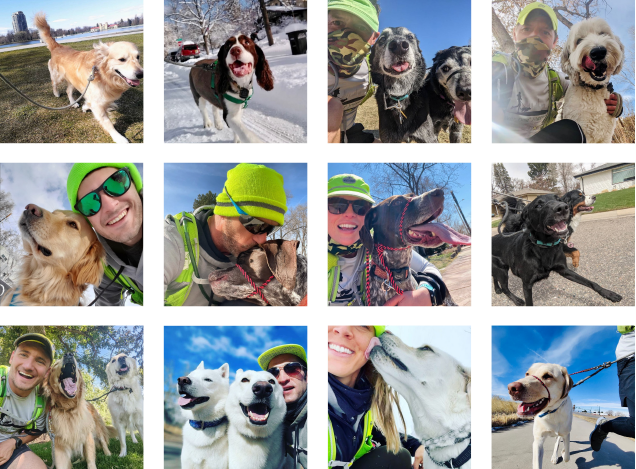
A professional on-leash runner or hiker can provide consistency, especially for dogs who benefit from predictable movement and don't do well in overstimulating free-for-all environments.
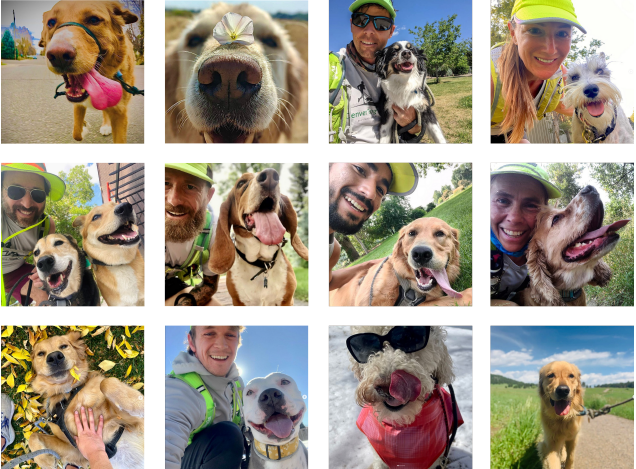
Here's a useful visual example of how structured outings can look in practice:
A calmer dog at home often starts with a more fulfilled dog earlier in the day.
Enrichment should support calm, not just fill time
Enrichment works best when it matches the dog's emotional state.
Try rotating options such as:
- Food puzzles for dogs who like to work for meals
- Snuffle mats for scent-heavy foraging
- Frozen stuffed toys during low-stakes alone time
- Novel chew options approved for your dog
- Simple nose work games around the house
If a dog is already spiraling, enrichment won't perform miracles. But in a dog with mild to moderate struggle, or in a dog doing active desensitization work, enrichment can make settling easier and departures less loaded.
Mastering Management and Crate Training Strategies
Tuesday, 8:15 a.m. You have a commute, a meeting at 9, and a young cattle dog mix in a Denver apartment who starts pacing the second you pick up your keys. In that moment, management is not a side topic. It is what prevents another full rehearsal of panic while the training plan catches up.
For separation anxiety cases, I treat management as daily damage control. Every panicked absence makes the next one harder. A good setup lowers the odds of barking, escape attempts, self-injury, and the stress spiral that can undo careful desensitization work.
The crate can help. It can also sharply increase distress in the wrong dog.

Decide whether a crate helps your dog
Some dogs settle better in a smaller, den-like space with familiar bedding, low light, and a practiced routine. Other dogs experience confinement as part of the problem. I see this often in high-energy urban dogs who already spend a lot of their day managing frustration. If a dog is under-exercised, overstimulated, and then confined, the crate can become the place where panic explodes.
Watch behavior, not hopes.
A crate is more likely to fit when the dog:
- Seeks out enclosed resting spots on their own
- Can relax in the crate with the door open
- Shows little or no barrier frustration
- Has a calm history with confinement
A crate is usually the wrong choice when the dog:
- Bites bars or claws frantically
- Pant-heaves or slams into the door
- Has injured paws, nails, or teeth trying to escape
- Panics the moment confinement begins
Build crate value before you use it during absences
Crate training starts when you are home, calm, and not racing the clock. The goal is not to get the dog to "deal with it." The goal is to create a predictable resting place that stays below the dog's stress threshold.
A practical progression looks like this:
- Toss treats in and let the dog exit freely.
- Feed meals in the crate with the door open.
- Add bedding the dog already likes.
- Close the door briefly, then open it before concern rises.
- Increase duration in very small increments.
- Sit nearby, then stand up, then move around, then step out briefly.
Slow work produces better results here. Owners are often tempted to rush this step because they need a solution for tomorrow's workday. I understand that pressure. In real cases, faster crate training often creates a stronger link between confinement and owner departure, especially in busy households where departures are already loaded.
For high-energy dogs, physical outlet changes the picture. A dog who has had a structured morning run or hike on leash is often better able to rest in a crate or gated area than a dog who has only had a quick potty break. That matters in Denver, where many owners live in condos or smaller homes and need the dog to settle well before and after work. Purposeful weekday exercise is not a bonus in these cases. It supports whether management tools work at all.
Set up a safe zone if a crate is not the answer
Many separation anxiety dogs do better in a larger, controlled area with fewer confinement triggers. That might be an exercise pen, a gated kitchen, a laundry room with safe surfaces, or a bedroom that has been cleared of hazards.
The best safe zone does three jobs at once. It prevents injury, limits rehearsal of destructive behavior, and feels less restrictive than a crate for dogs who panic behind barriers. If you need help choosing a setup or reading your dog's early stress signals, working with a certified Colorado dog training professional can save weeks of guesswork.
If you're choosing a crate or kennel, size matters. A space that's too tight can add pressure, and one that's poorly matched can make settling harder. These dog kennel size recommendations offer a practical reference for matching the enclosure to the dog.
Manage the departure environment
Home setup affects the first few minutes after you leave. Those minutes often decide whether the dog settles or spirals.
Use management that fits your dog's pattern:
- Block windows if outside movement triggers arousal
- Clear the area around exits so shoes, bags, and furniture do not become targets
- Keep departures plain and repeatable so your routine stops acting like a warning signal
- Add white noise or soft audio if hallway sounds or street noise set off barking
- Leave familiar resting items that support settling without creating risk
One more practical point. Crate training is not a substitute for treatment, and management alone will not resolve true separation anxiety. It works best as part of a larger plan that includes desensitization, smart scheduling, and enough structured physical work to bring the dog's baseline arousal down. For many busy owners, professional on-leash running or hiking is what makes the rest of the plan realistic and consistent.
Choosing the Right Tools Medications and Professional Help
Most owners reach this stage after trying the basics. They've walked the dog more. They've left a Kong. They've tried to be low-key at departures. The dog still struggles.
That doesn't mean the case is hopeless. It means it's time to choose support based on severity, not guesswork.
The gold standard starts with micro-absences below the dog's anxiety threshold , and for many dogs vocalization begins in under 3.25 minutes . Coaches who specialize in separation cases also note that virtual guidance can speed progress, especially when paired with support that suspends absences and prevents panic rehearsal ( Malena DeMartini's training methods for canine separation anxiety).
What tools can and can't do
Calming aids have a place, but they should be treated as supporting actors.
A few common categories:
| Tool | Best use | Limitation |
|---|---|---|
| Calming vest | Dogs who settle with gentle body pressure | Won't stop true panic by itself |
| Pheromone diffuser | Mild cases or as part of a broader routine | Effects can be subtle |
| Food toy or lick mat | Early-stage departures below threshold | Useless if the dog is too anxious to eat |
| Camera | Tracking progress and catching early stress signs | Observation isn't treatment |
If a product helps your dog settle a bit faster, that's useful. If the dog still panics when left, the plan still needs behavior modification.
When medication belongs in the plan
Medication shouldn't be treated as failure. It also shouldn't be the first random thing owners try without veterinary guidance.
Medication may deserve a veterinary conversation when:
- Your dog escalates quickly and intensely
- Training stalls because the dog can't stay under threshold
- The dog injures itself or risks escaping
- Daily life makes suspended absences hard to maintain
- The dog's distress spills into other anxiety patterns
Some dogs improve with training alone. Others learn far better when medication lowers the level of panic enough for the training to work.
If the dog can't access calm, the dog can't practice calm.
Choosing professional help that matches the problem
Not every trainer handles separation cases well. This issue needs precision, data tracking, and a willingness to move in very small increments.
Look for a professional who:
- Uses desensitization and counterconditioning
- Talks about thresholds instead of dominance
- Asks for video, not just owner memory
- Doesn't advise flooding or punishment
- Builds a plan around the owner's real schedule
For severe cases, a specialist focused on separation anxiety is often the best fit. For owners sorting through credentials and local options, this guide to finding certified dog training pros in Colorado is a useful place to start.
The strongest plans are often layered. A veterinarian addresses panic physiology. A qualified trainer builds the desensitization protocol. Reliable daytime support reduces forced absences. That combination is usually more effective than leaning too hard on any single tool.
Troubleshooting Setbacks and Setting Realistic Timelines
Owners want a finish line. That's understandable. They need to go to work, run errands, and live a normal life. Separation work rarely moves in a straight line, though, and expecting a quick fix creates the wrong kind of pressure.
One hard session doesn't erase progress. A setback just tells you the plan got too difficult, too fast, or too inconsistent.
What to do after a bad absence
If your dog had a panic episode, resist the urge to test again right away at the same level.
Do this instead:
- Drop back to the last easy duration
- Tighten management for a few days
- Review the video if you have one
- Check whether exercise, sleep, and bathroom timing were off
- Return to smaller reps before increasing again
That approach feels slow. It's often the fastest way forward.
Adult rescues need a different lens
A newly adopted adult dog can look fine for a few days, then start unraveling once the novelty wears off and attachment forms. That's one reason owners of adult rescues get blindsided.
An underserved question is how to prevent separation issues in these dogs. Recent data suggests that combining desensitization with daily structured hikes or runs yields 70% improvement in newly adopted adult dogs , with the physical outlet and endorphin release helping build resilience ( VCA Hospitals overview on separation anxiety in dogs).
That doesn't mean every rescue needs intense exercise. It means adult adoptees often benefit from two things at once: a very clear alone-time protocol and a dependable physical outlet that lowers tension and builds confidence.
Signs your timeline expectations need adjusting
A realistic plan usually includes these truths:
- Progress may be uneven
- Thresholds can change with stress, sleep, weather, and routine disruptions
- Weekend inconsistency can slow weekday progress
- Big life changes often cause temporary regression
The dog isn't giving you a hard time. The dog is having a hard time.
If your dog is improving, even in small pieces, keep going. Look for trends like shorter recovery time, less frantic pre-departure behavior, and better ability to stay engaged with food or rest.
The best dog separation anxiety solutions are rarely dramatic. They're steady. They protect the dog from repeated panic, build independence in tiny layers, and support the nervous system with enough exercise and routine that calm becomes possible.
If your dog needs more weekday structure, Denver Dog provides on-leash running, walking, and hiking designed for busy owners who want practical support, not chaos. For dogs in Arvada, Denver, Englewood, Golden, Lakewood, Littleton, and Wheat Ridge, that kind of consistent outlet can pair well with a thoughtful separation anxiety plan and make daily life more manageable for both ends of the leash.
The Run Down